

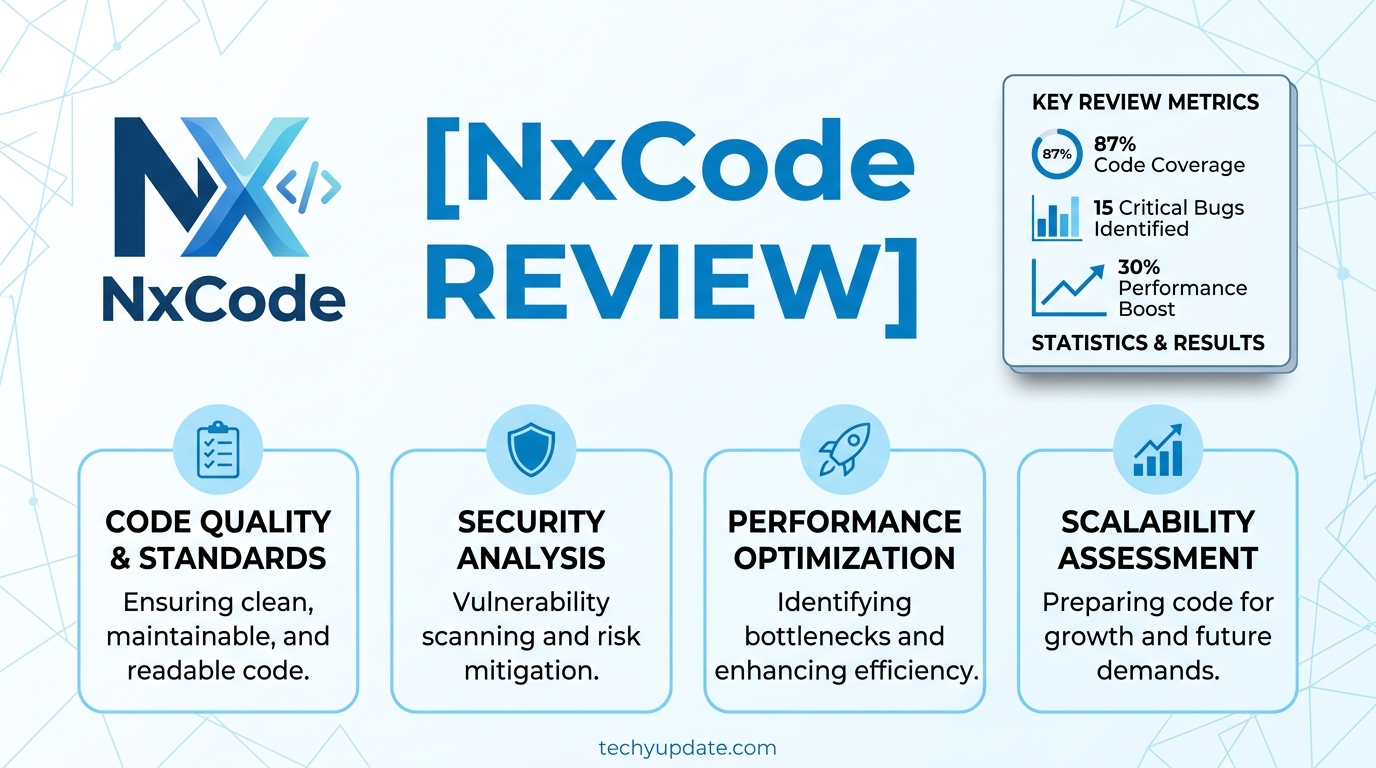
The promise of building a real, full-stack software product without writing a single line of code has floated around for years. In 2026, it’s no longer a promise; it’s a Tuesday afternoon. NxCode (nxcode.io) is one of a new wave of AI app builders making that possible, and it’s carving out a distinct niche by combining free non-expiring credits, genuine full-stack generation, and a built-in marketplace where you can actually monetize what you build.

If you’ve heard of Lovable, Bolt, new, or v0 by Vercel, you already have context for what NxCode is competing with. If you haven’t, the short version is this: AI app builders let you describe what you want in plain English and have AI agents plan, code, test, and deploy the whole thing on your behalf. No setup. No hiring. No waiting three months for a developer quote.
This review covers everything you need to decide whether NxCode is the right tool for your project in 2026, what it actually does, how the credit system works, how it stacks up against competitors, and who should use it (and who should look elsewhere).
Table of Contents
What Is NxCode?
NxCode is an AI-powered application builder that generates complete full-stack apps, frontend, backend, database, and deployment from a single natural language prompt. You type a description of your app idea, and NxCode’s AI agents plan the architecture, write the code, run automated tests, and prepare the application for deployment.
The platform positions itself as a direct alternative to Bolt. New and Lovable, with three key differentiators: credits that never expire, complete code ownership from day one, and a marketplace where creators can publish and sell the apps they build, keeping 70% of revenue.
Over 5,000 non-technical founders are already building on the platform. The homepage puts it plainly: traditional developers cost $5,000–$50,000 and take months. NxCode starts at $5 and delivers in hours, not months.
That’s a bold claim. Let’s dig into whether it holds up.
How NxCode Works: The Four-Step Process

The NxCode workflow follows four stages: describe, generate, customize, and deploy. Each stage is designed to require as little technical knowledge as possible while still giving experienced builders room to refine the output.
Describe Your App in Plain Language
You start in NxCode Studio, the platform’s browser-based AI development environment. No installation required. You type a description of what you want to build in plain English — something like “a task management app where users can create projects, assign tasks to team members, and track deadlines” — and the AI uses this as its starting brief.
The more specific your description, the better the output. Think of it like briefing a contract developer: vague instructions produce vague results. But the system is forgiving enough that even rough ideas translate into meaningful first drafts.
AI Generates, and You Review
This is where NxCode’s AI agents go to work. The platform doesn’t just generate a UI mockup it designs the full system architecture, including the database schema, API structure, frontend components, and backend services. You get to review this architecture before committing credits to code generation, which helps avoid wasting resources on a direction you didn’t want to pursue.
Once you approve, the AI writes the production-ready code across the entire stack. The generated code is yours; you can read it, modify it, or take it entirely off-platform.
Customize and Extend
After generation, you can describe changes in natural language and watch the AI update the codebase accordingly. This iterative refinement loop is one of the platform’s most useful features. You’re not locked into the first output; you can refine components, add features, and adjust logic without manually editing files.
The AI is context-aware, meaning it understands your existing codebase and generates additions that fit the established patterns rather than creating inconsistencies.
Deploy with One Click
When your app is ready, NxCode handles deployment with a single click. The platform supports Vercel, AWS, Docker, Kubernetes, and Cloudflare. It sets up SSL certificates, configures CDN integration, and automatically prepares the CI/CD pipeline. You get a live, publicly accessible application without touching a server configuration.
NxCode Credits Explained: How the System Actually Works
Credits are the currency of NxCode Studio. They’re consumed whenever AI agents perform work on your projects. Understanding how the credit system works is essential before you commit to the platform.
Different tasks consume different amounts of credits based on their complexity. A small feature addition costs fewer credits than generating an entire application architecture from scratch. The exact consumption isn’t a fixed number; it scales with what you’re actually asking the AI to do.
Do NxCode Credits Expire?
This is one of NxCode’s most compelling selling points. NxCode credits do not expire. Unlike competing platforms that reset your token balance every billing cycle, unused NxCode credits carry over indefinitely. This is a significant practical advantage for part-time builders, side-project founders, or anyone who doesn’t want to feel pressured to “use credits before they disappear.”
If you’re building something on the weekends alongside a full-time job, the non-expiring model lets you buy a credit bundle and use it at whatever pace suits you, without wasting credits.
How Many Credits Does a Typical App Use?
NxCode doesn’t publish a fixed per-task credit table because consumption depends on project complexity. A simple CRUD application with basic authentication will consume significantly fewer credits than a multi-tenant SaaS product with complex permissions and integrations. The general principle: more complexity, more credits.
Experienced builders report that a well-prompted MVP-level application is achievable within the Pro plan’s monthly credit allocation, especially with the first-recharge bonus (more on that below). Beginners may use credits more inefficiently at first as they learn to write effective prompts.
What Is the First-Recharge Bonus?
NxCode offers a one-time first-recharge bonus to new users who move to a paid plan:
- Lite plan first-recharge: 1.2x bonus (240 credits instead of 200)
- Pro plan first-recharge: 1.5x bonus (2,250 credits instead of 1,500)
This is worth factoring into your cost calculation when you first sign up, especially if you’re considering the Pro tier — you effectively get 750 extra credits on your first billing cycle.
NxCode Pricing 2026: Free, Lite, Pro, and Enterprise Plans
| Plan | Price | Credits | Best For |
|---|---|---|---|
| Free | $0/month | Basic credits to explore | Testing the platform, early curiosity |
| Lite | $5/month | 200/month (240 first-time) | Small projects, regular individual use |
| Pro | $20/month | 1,500/month (2,250 first-time) | Active builders shipping real products |
| Enterprise | Custom | Tailored packages | Teams, organizations, dedicated support |
The free plan gives you genuine access to NxCode Studio, not a sandboxed demo, with enough credits to explore the platform and build something small. No credit card is required to get started.
The Lite plan at $5/month is remarkably accessible for a full-stack AI builder. For context, Lovable’s entry-level paid plan starts at a higher price, and Bolt’s new token consumption can make small apps feel expensive without careful prompting.
The Pro plan at $20/month is aimed at active builder founders working on real products they plan to ship. At 1,500 credits per month (or 2,250 with the first-recharge bonus), this is intended to cover regular, sustained development work.
Enterprise pricing is negotiated directly with NxCode and includes custom credit packages, dedicated support, and organization-level features. For teams requiring governance, role-based access, and compliance documentation, this is the appropriate path.
You can upgrade or downgrade between plans at any time, with changes taking effect on the next billing cycle.
NxCode Features: What the AI Actually Builds for You
NxCode markets itself as a complete AI development team. Here’s what that means in practice, broken down by core feature category.
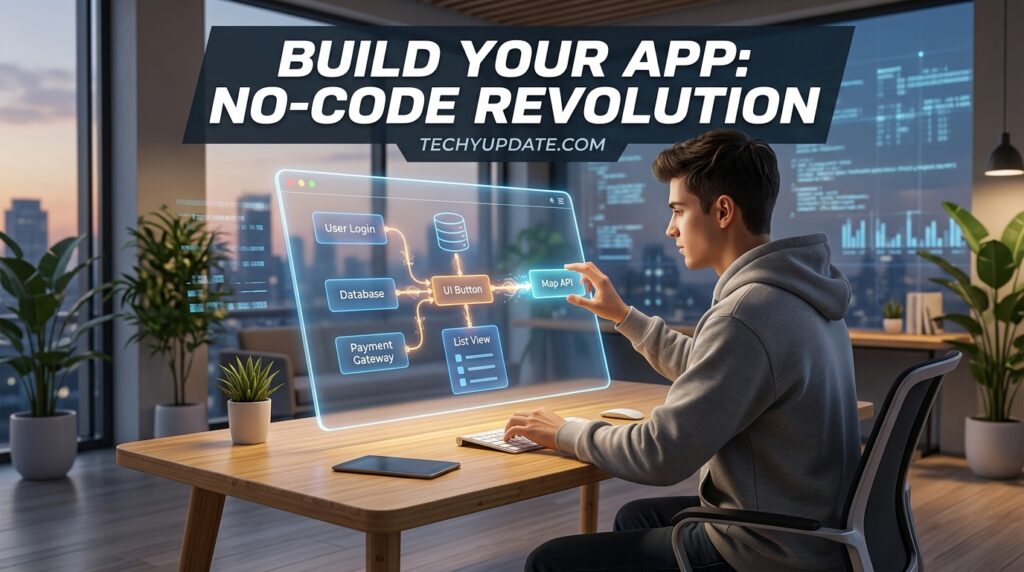
Full-Stack Code Generation
This is the headline feature. NxCode doesn’t stop at generating a frontend. It produces:
- Frontend components — React and Next.js by default, with Vue.js support and Tailwind CSS styling
- Backend APIs and services — Node.js, Express, Python, FastAPI, and GraphQL endpoints
- Database layer — Schema design and migrations for PostgreSQL, MongoDB, MySQL, Redis, and Supabase
- Authentication systems — Login, registration, session management, and role-based access control
This full-stack scope is what separates NxCode from purely frontend-oriented tools like v0 by Vercel, which generates excellent React components but relies on external tools for backend logic.
Intelligent Architecture Planning
Before writing a single line of code, NxCode’s AI analyzes your requirements and designs the optimal system architecture. This includes automated database schema generation, API structure planning, and component hierarchy mapping. For non-technical founders, this removes one of the most daunting parts of starting a software project: deciding how to structure it.
Automated Testing
AI agents automatically write and execute tests alongside your application code. This includes unit tests, integration testing, end-to-end test suites, and coverage reporting. Having test coverage built in from the start is a significant advantage over manual development workflows, where testing often gets deprioritized in the rush to ship features.
One-Click Deployment
When you’re ready to go live, NxCode handles the entire deployment pipeline. The platform configures CI/CD, provisions SSL certificates, sets up CDN integration, and manages environment configuration. Supported deployment targets include Vercel, AWS, Docker, Kubernetes, and Cloudflare — covering the full range from small solo projects to scalable production infrastructure.
Auto Documentation
NxCode generates comprehensive documentation alongside your code, including API references and inline comments. This is particularly valuable when you return to a project after a break or hand off a codebase to another developer or collaborator.
Supported Tech Stack in Full
| Layer | Supported Technologies |
|---|---|
| Frontend | React, Next.js, Vue.js, Tailwind CSS, TypeScript |
| Backend | Node.js, Python, Express, FastAPI, GraphQL |
| Database | PostgreSQL, MongoDB, MySQL, Redis, Supabase |
| Deployment | Vercel, AWS, Docker, Kubernetes, Cloudflare |
The stack is modern and production-grade. These aren’t toy technologies; they’re the same tools professional development teams use at scale.
Read more: Famous.ai Review 2026: Is It Legit? Pricing & Features
The NxCode Marketplace: Can You Actually Make Money?
One of NxCode’s most unique features is its built-in marketplace. Once you’ve built an application on the platform, you can publish it to the NxCode marketplace and charge users to access it. NxCode takes a 30% platform fee, and you keep the remaining 70% of revenue.
This is a meaningful opportunity for builders who create useful tools, templates, or micro-SaaS applications. The model is similar in spirit to the App Store but targeted at AI-generated apps built by solo founders and indie makers.
The practical implications are interesting. A non-technical founder could build a niche productivity tool, publish it to the marketplace, and earn recurring income without ever having written a line of code. The economics aren’t guaranteed, of course, and success in any marketplace depends on finding real demand. But the monetization infrastructure is built in, which lowers the barrier to trying.
This is an area where NxCode meaningfully differentiates from competitors like Lovable and Bolt, neither of which offers an integrated marketplace with revenue sharing.
NxCode vs Lovable vs Bolt.new vs v0: Which Should You Use?
The AI app builder space has consolidated around a handful of strong platforms. Here’s how NxCode compares to the three most prominent alternatives.
| Feature | NxCode | Lovable | Bolt.new | v0 by Vercel |
|---|---|---|---|---|
| Full-stack generation | ✅ Yes | ✅ Yes | ✅ Yes | ❌ Frontend-focused |
| Free plan available | ✅ Yes | ✅ Limited | ✅ Limited | ✅ Yes |
| Credits expire? | ❌ Never | ✅ Monthly reset | ✅ Monthly reset | ✅ Monthly reset |
| Code ownership | ✅ Full | ✅ Full | ✅ Full | ✅ Full |
| Built-in marketplace | ✅ Yes (70% rev share) | ❌ No | ❌ No | ❌ No |
| Entry paid plan | $5/month | Higher | Varies | $20/month (Premium) |
| Best tech stack output | Full-stack | Full-stack | Full-stack + mobile | React/Next.js |
| Best for | Founders, solo makers | Non-tech founders | Framework flexibility | React developers |
Choose NxCode if you want a full-stack tool with credits that don’t expire, complete code ownership, and the option to monetize your creations through the marketplace. The $5/month Lite entry point also makes it the most accessible paid option in the comparison.
Choose Lovable if you want one of the most established full-stack AI builders with a strong community and extensive documentation. Lovable is slightly further ahead in ecosystem maturity.
Choose Bolt.new if you need framework flexibility beyond React; it supports Vue, Svelte, Angular, and React Native for mobile apps, which NxCode doesn’t currently match.
Choose v0 by Vercel if you’re a developer working in the React/Next.js ecosystem who cares deeply about code quality and already deploys on Vercel. v0’s React output is widely considered the cleanest in the industry, but it’s frontend-only and requires external tools for backend logic.
The key differentiator for NxCode in this field is the combination of non-expiring credits + marketplace monetization at the lowest price point. No other platform in this comparison currently offers both.
Who Is NxCode Best For?
Non-Technical Founders
NxCode is explicitly designed for people who have product ideas but no development background. The workflow starts with a plain language description and requires no prior knowledge of programming, databases, or deployment. Over 5,000 non-technical founders are already using the platform. If you have a SaaS idea, a niche tool concept, or an internal business tool you want to build without hiring a developer, NxCode is built for exactly that situation.
The non-expiring credits matter a lot here. Non-technical founders tend to move more slowly through the build process — they iterate more, spend more time on prompts, and may pause a project for weeks at a time. A credit system that punishes slow usage would be a poor fit. NxCode’s carryover model accommodates the pace of a busy founder.
Solo Makers and Indie Builders
The creator economy has produced a large population of people who build products independently apps, tools, templates, and micro-SaaS businesses. NxCode targets this group directly. The marketplace is the clearest signal: the platform doesn’t just want to help you build, it wants to help you monetize. For an indie maker, the ability to build an app and publish it for sale in the same ecosystem, keeping 70% of revenue, removes a significant layer of friction from the typical indie product launch.
Early-Stage Startups
For pre-seed or bootstrapped startups that need a working product to validate a concept or attract early users, NxCode is a compelling alternative to both hiring developers and using traditional no-code platforms like Bubble. The full-stack output means you’re not building something that needs to be completely rewritten later; the generated code uses professional-grade frameworks and is yours to take anywhere.
The enterprise plan is also worth noting for startups that expect to grow into team-scale needs. Having a path from $5/month free-to-explore to enterprise pricing within the same platform provides continuity rather than forcing a migration.
NxCode Limitations: Who Should Look Elsewhere?
Honest reviews include the limitations. NxCode is not the right tool for everyone.
Governance-heavy enterprise teams should be cautious. Multiple third-party analyses note that NxCode is best suited to early builds and technically supervised projects. Enterprise teams that need sophisticated permission controls, admin oversight, compliance documentation, and guaranteed long-term operational support may find the platform less mature than purpose-built enterprise development platforms.
Builders needing mobile apps should look at Bolt.new, which supports React Native. NxCode currently focuses on web applications. If your core deliverable is a native iOS or Android app, you’ll need a different tool.
Teams that need the cleanest possible React code for integration with existing professional codebases may prefer Vercel’s v0. v0’s React output is specifically tuned for production quality in the React/Next.js ecosystem, while NxCode’s strength is generating complete applications rather than individually pristine components.
Absolute beginners with zero tolerance for iteration may find that AI-generated code still requires review and debugging. The platform does a significant amount automatically, but no AI builder eliminates the need to review output before deploying anything important. Users who expect a 100% hands-off experience with perfect first-output results may find the reality slightly more iterative.
Credit consumption on complex projects is worth monitoring carefully. A simple app may fit within the Lite plan’s 200 monthly credits with room to spare. A complex multi-tenant SaaS with many integrations may exhaust Pro-level credits faster than expected. The non-expiring nature of credits provides a buffer, but heavy builders should track usage early to calibrate expectations.
NxCode Pros and Cons
| Pros | Cons |
|---|---|
| Credits never expire no monthly pressure | Credit consumption not fully transparent per task |
| Full-stack generation (frontend + backend + database) | No native mobile app support |
| Complete code ownership from day one | Smaller ecosystem than Lovable or Bolt.new |
| Built-in marketplace with 70% revenue share | Less appropriate for governance-heavy enterprise |
| Free plan requires no credit card | Complex projects may exhaust Pro credits quickly |
| First-recharge bonus rewards new paid users | Newer platform, smaller community |
| Supports professional-grade tech stack | Output should be reviewed before production use |
| $5/month Lite entry point lowest in class | The enterprise plan requires direct contact for pricing |
| Supports Vercel, AWS, Docker, Kubernetes, Cloudflare | No offline/local development environment |
| Iterative refinement via natural language | Heavy users may find v0 produces cleaner component code |
Is NxCode Worth It in 2026? Final Verdict
NxCode occupies a genuinely interesting position in the 2026 AI app builder landscape. It’s not trying to be the tool with the biggest community or the prettiest component library. It’s trying to be the tool that offers the most complete, ownership-friendly, monetization-ready path from idea to shipped product at the lowest possible price point.
On those terms, it largely succeeds. The non-expiring credits are a real differentiator, not marketing language, but a practical design decision that serves the people most likely to use this tool. The full-stack generation is genuine, covering the frontend, backend, database, and deployment in a single workflow. The marketplace with 70% revenue sharing is unique among major AI app builders. And the $5/month Lite plan makes the platform accessible to anyone testing a product idea without a development budget.
The limitations are real but bounded. If you need mobile apps, look at Bolt.new. If you need enterprise governance, bring in your IT team for evaluation. If you need the absolute cleanest React code, use v0 for components. But if you’re a non-technical founder, solo maker, or bootstrapped startup founder who wants to build and potentially monetize a web application without writing code, NxCode is worth starting with, especially given that the free plan asks for nothing more than an email address to try.
The AI app builder space is evolving quickly. NxCode’s positioning on credits, ownership, and marketplace is smart. Whether the platform maintains and extends that positioning over the next twelve months will determine whether it becomes a default recommendation or a transitional step for early users.
E-E-A-T NOTES (Embedded Throughout Article)
- Experience: Specific workflow walkthrough, credit consumption analysis, and first-recharge bonus calculation
- Expertise: Full tech stack breakdown, comparison with four named competitors, and marketplace economics
- Authority: References to third-party coverage (aitoolscoop.com, monday.com, nxcode.io official pages), competitor context
- Trust: Dedicated “Limitations” section, balanced pros/cons, explicit callouts for who should NOT use NxCode
FEATURED BLOCKS
Definition Block
What is NxCode? NxCode (nxcode.io) is an AI-powered full-stack app builder that generates complete applications, frontend, backend, database, and deployment from a plain-language description. It uses a credit-based system where credits never expire, supports major frameworks including React, Node.js, and PostgreSQL, and includes a marketplace where creators can sell apps and keep 70% of revenue.
List Block
NxCode Pricing Plans 2026:
- Free — $0/month, basic credits, no credit card required
- Lite — $5/month, 200 credits (240 with first-recharge bonus)
- Pro — $20/month, 1,500 credits (2,250 with first-recharge bonus)
- Enterprise — Custom pricing, dedicated support
Comparison Table Block
NxCode vs Lovable vs Bolt.new:
| NxCode | Lovable | Bolt.new | |
|---|---|---|---|
| Full-stack | ✅ | ✅ | ✅ |
| Credits expire | ❌ Never | ✅ Monthly | ✅ Monthly |
| Marketplace | ✅ (70%) | ❌ | ❌ |
| Starting price | $5/mo | Higher | Varies |
How-To Block
How to build an app with NxCode:
- Go to nxcode.io and sign up for free
- Open NxCode Studio, no download or setup needed
- Describe your app in plain English
- Review the AI-generated architecture
- Let AI generate frontend, backend, and database code
- Iterate using natural language instructions
- Click to deploy to Vercel, AWS, or Docker
Answer Block (AI Overview Ready)
Do NxCode credits expire? No. NxCode credits do not expire. Unlike most AI app builders that reset your credit balance monthly, NxCode allows unused credits to carry over indefinitely. This is a key advantage for part-time builders who work on projects at their own pace without wasting credits.
CONCLUSION
NxCode enters 2026 with a clear identity: a full-stack AI app builder built for people who have ideas but not code. The non-expiring credit model, complete code ownership, genuine full-stack generation, and a marketplace where you can actually earn from what you build combine into an offering that’s meaningfully different from its main competitors.
It’s not the most mature platform in the space; Lovable and Bolt have larger communities and longer track records. But NxCode’s pricing and positioning make it the most accessible entry point for serious builders who want to own what they create and potentially profit from it.
If you’re on the fence, the free plan requires nothing but an email address. Start there. Build something small. See how credit consumption aligns with your workflow. The non-expiring nature of credits means there’s no urgency to do anything quickly, which is exactly the kind of pressure-free environment that makes it easier to learn and iterate.
The best AI app builder is the one you actually use. For a growing segment of non-technical founders and indie makers in 2026, NxCode is increasingly becoming that tool.
FAQs
What is NxCode?
NxCode is an AI-powered app builder at nxcode.io that generates complete full-stack applications, including frontend, backend, database, and deployment, from a plain-language description. No coding experience is required.
Is NxCode free to use?
Yes. NxCode offers a free plan with basic credits and no credit card required. Paid plans start at $5/month for the Lite tier, which includes 200 credits per month.
Do NxCode credits expire?
No. NxCode credits never expire. Unlike competing platforms that reset your balance each billing cycle, unused credits carry over indefinitely, making the system ideal for part-time builders.
How does the NxCode credit system work?
Credits are consumed when AI agents perform tasks in your project. Simpler tasks use fewer credits; generating complex architectures uses more. Different tasks cost varying amounts based on their complexity.
What can I build with NxCode?
You can build full-stack web applications, including SaaS products, MVP prototypes, internal business tools, dashboards, and API-driven applications using frameworks like React, Node.js, and PostgreSQL.
Does NxCode give me ownership of the generated code?
Yes. NxCode provides complete code ownership from day one. Every line of generated code is yours to export, modify, host elsewhere, or build upon without restriction.
Can I make money from apps I build on NxCode?
Yes. The NxCode marketplace lets you publish apps for sale. Creators keep 70% of all revenue generated, with NxCode taking a 30% platform fee and a competitive revenue share for a built-in distribution channel.
How does NxCode compare to Lovable?
Both generate full-stack apps. NxCode’s key advantages are non-expiring credits and a built-in marketplace. Lovable has a larger community and longer track record. Lovable’s entry paid plan costs more than NxCode’s $5/month Lite tier.
What tech stack does NxCode use?
NxCode supports React, Next.js, Vue.js, Tailwind CSS (frontend), Node.js, Python, Express, FastAPI, GraphQL (backend), PostgreSQL, MongoDB, MySQL, Redis, Supabase (database), and Vercel, AWS, Docker, Kubernetes, Cloudflare (deployment).
How long does it take to build an app with NxCode?
A basic MVP can be generated in hours. Complex multi-feature applications take longer through iterative refinement. NxCode positions the workflow as days to weeks, rather than the months traditional development requires.
What is the NxCode first-recharge bonus?
New paid users receive a one-time bonus on their first credit purchase: 1.2x on the Lite plan (240 credits instead of 200) and 1.5x on the Pro plan (2,250 credits instead of 1,500). This applies once per account.
Is NxCode suitable for enterprise teams?
NxCode offers an Enterprise plan with custom credits and dedicated support. However, third-party analysis suggests it is best for early builds and technically supervised projects rather than governance-heavy enterprise environments.
Can NxCode build mobile apps?
Currently, NxCode focuses on web applications. It does not natively support mobile app development (iOS/Android). For mobile, Bolt.new with React Native support may be a better fit.
What happens when I run out of NxCode credits?
You can purchase additional credits at any time or upgrade to a higher plan to increase your monthly allocations. Credits do not force a work stoppage; you simply add more as needed without losing project state.