

Synthesia and HeyGen are the two most-compared names in AI avatar video, and most head-to-head content oversimplifies the choice as “HeyGen for creators, Synthesia for enterprise.” That framing is directionally right, but misses the real cost and compliance nuances that change the decision specifically for mid-sized teams. This section covers features, pricing, security, and persona-by-persona verdicts.
Quick Comparison Table
| Category | Synthesia | HeyGen |
|---|---|---|
| Avatar count | 150–240+ | 100–500+ (source-dependent) |
| Languages | 140+–160+ | 175+ |
| Entry price | $29/mo ($18–22 annual) | $29/mo |
| Pricing model | Minutes/month, no rollover | Marketing, realism, and personalization |
| Custom avatar | $1,000/year add-on | Included on Creator plan |
| Best for | Enterprise training, L&D | Marketing, realism, personalization |
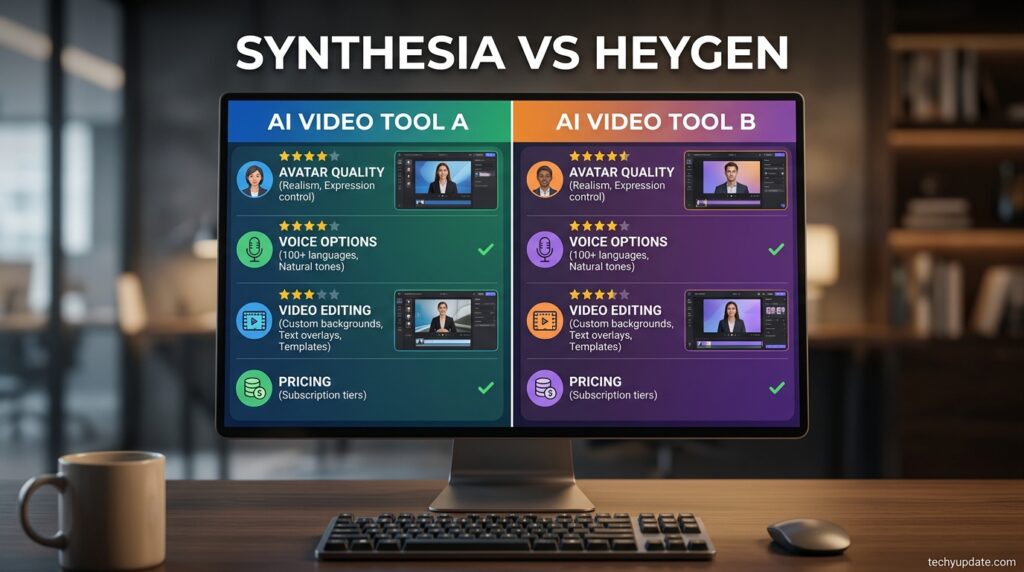
Feature-by-Feature Breakdown
Avatar quality is the most-cited differentiator: HeyGen features Avatar IV, its most realistic avatar model, which supports script-synced gestures and expressions, while Synthesia counters with Express-2 avatars, which include micro-expressions like nods and eyebrow raises and are included in all paid plans at no extra cost.
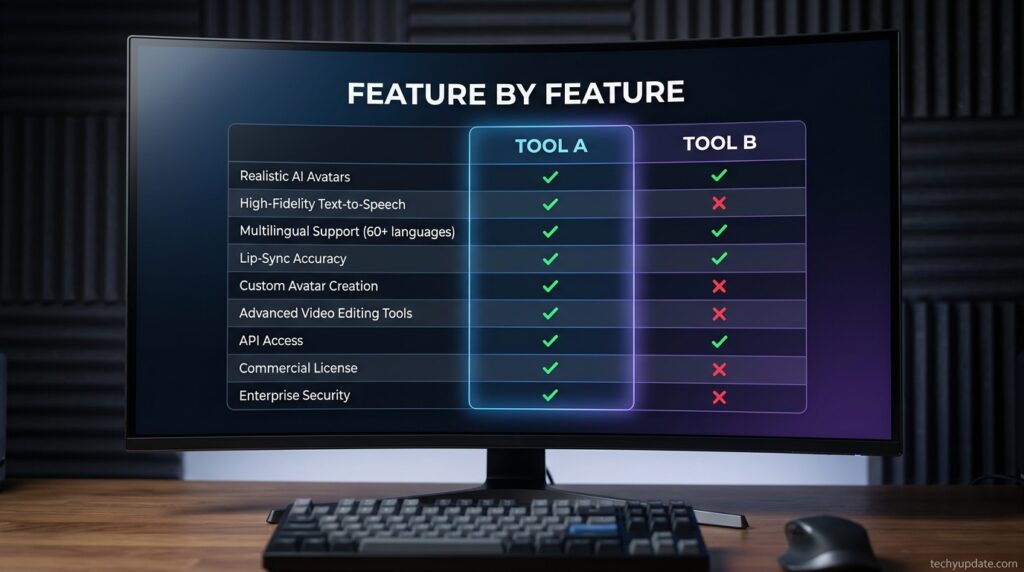
The trade-off is cost predictability. HeyGen’s Avatar IV burns Premium Credits quickly at 20 credits per minute, so heavy users need to budget carefully, while Synthesia’s Express-2 avoids that credit-surprise entirely.
On editing, both platforms use a similar scene-based approach: Synthesia’s interface resembles a slide-deck editor built scene by scene with text boxes and images, while HeyGen uses a comparable scene-based editor but with a larger library of creative templates and a richer built-in asset library.
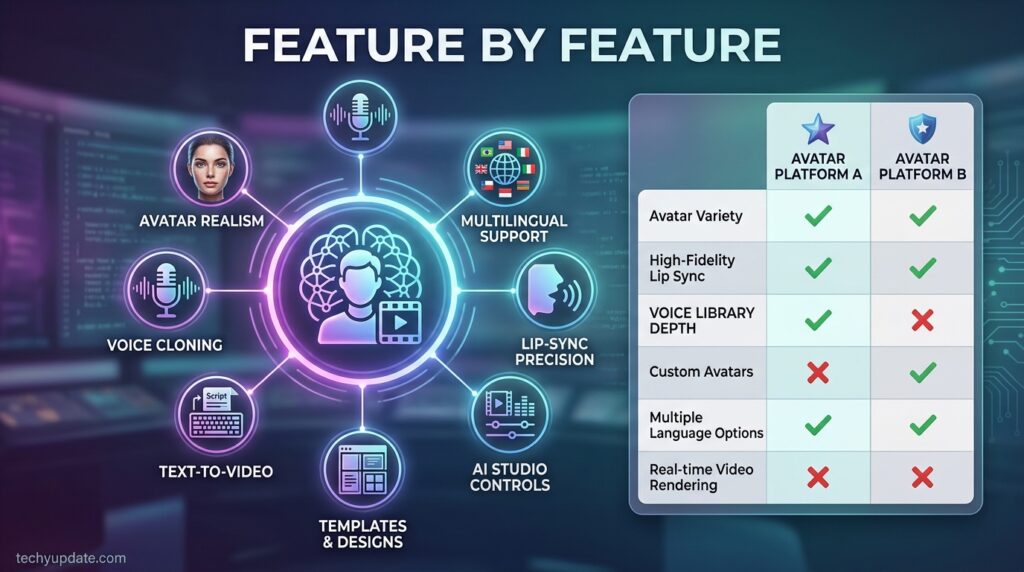
Pricing Comparison
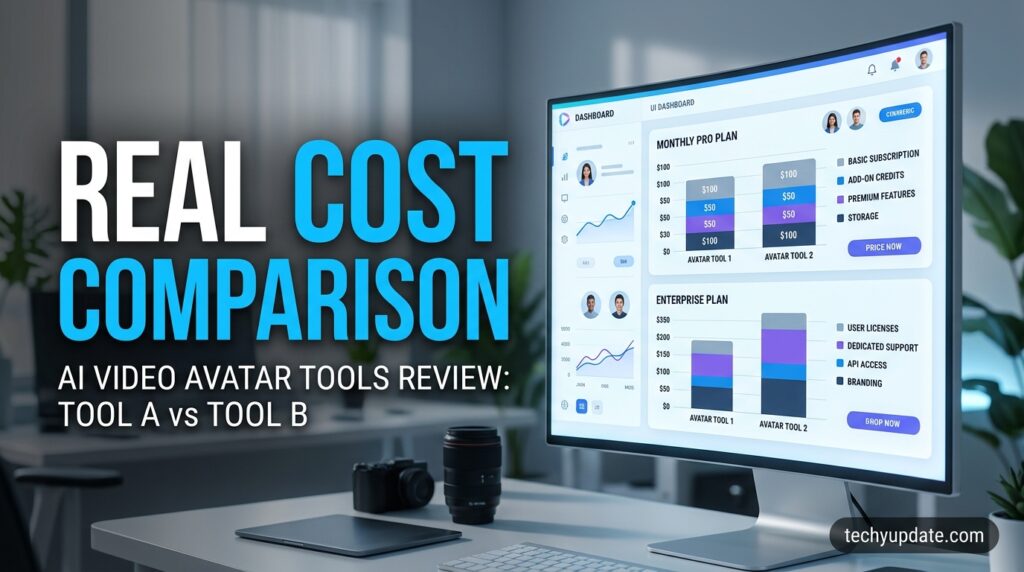
Headline prices look nearly identical, but the metering model creates very different real-world costs: Synthesia caps output by video minutes per plan — 10 minutes/month on Starter, 30 on Creator — while HeyGen runs on monthly credits that drain faster on its premium avatar engines. A hands-on 50-video test made the gap concrete: the tester spent $384 for 50 minutes of Avatar IV content on HeyGen, compared to $95 for equivalent output on Synthesia — the same 50 minutes of premium avatar content, four times the bill once HeyGen’s credits ran out.
Performance Comparison
Speed favors HeyGen in most hands-on tests: reviewers consistently describe HeyGen’s avatars as more expressive, with more natural head tilts, micro-expressions, and gestures than Synthesia’s. Synthesia’s advantage is consistency rather than raw speed — output tends to look acceptable on the first export without heavy iteration.
Ease of Use
Both platforms use a comparable scene-based editing model, but reviewers note a difference in onboarding flow: Synthesia has the gentler learning curve thanks to its slide-based editor and template library. HeyGen counters with a more conversational creation flow for users who prefer prompting over manual scene-building.
Best-For Split
Synthesia remains the stronger pick for enterprise teams building training and internal comms at scale, given its compliance features, brand kit controls, and large avatar library, while HeyGen wins for marketing teams and creators who need more creative flexibility, thanks to lip-sync accuracy and faster custom avatar turnaround.
Persona Verdicts
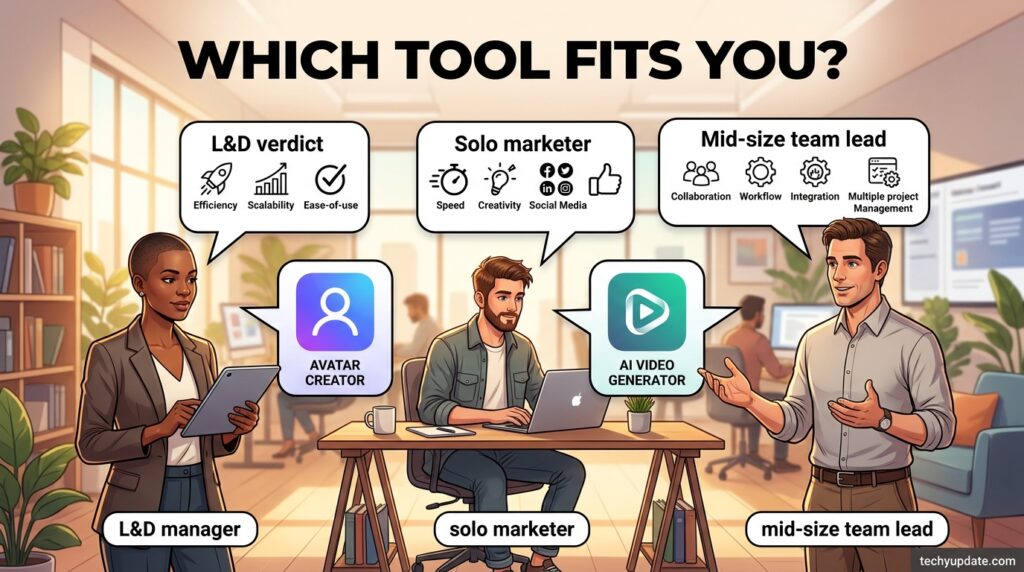
- L&D manager at a 500-person company: Synthesia — compliance certifications and structured editing win here.
- Solo marketer needing a realistic spokesperson avatar: HeyGen — cheaper, faster custom avatar access.
- Mid-market team (15–30 people): Neither platform fits cleanly — this segment falls into a real pricing dead zone, since HeyGen optimizes for solo creators and small teams while Synthesia optimizes for larger procurement cycles, meaning teams in between should expect to negotiate custom pricing or overpay on a plan built for a different buyer.
- Healthcare/financial services buyer: Caution on both — neither platform has published HIPAA compliance documentation as of 2026, which matters for any workflow that might touch PHI.
Security & Privacy Comparison
Synthesia leads on certifications, holding SOC 2 Type II, ISO 27001, ISO 42001, GDPR, CCPA, SAML SSO, SCIM provisioning, and role-based access control, all available on Enterprise plans. HeyGen holds comparable core certifications, but both platforms hold SOC 2 Type II and GDPR certifications, with Synthesia additionally adding ISO 27001 and ISO 42001 — a meaningful edge for regulated industries specifically.
Commercial usage rights differ in a way many buyers miss: HeyGen grants full commercial rights on all paid plans, while Synthesia restricts the use of stock avatars in paid advertising campaigns — a critical check for anyone planning to run AI-avatar ad creative.
Customer Support Comparison
Enterprise customers on both platforms get dedicated support, though Synthesia’s Enterprise tier includes a dedicated Customer Success Manager who guides a personalized onboarding process. HeyGen’s support model leans more self-serve on lower tiers, consistent with its smaller-team-first positioning.
Pros & Cons of Each Tool
| Synthesia Pros | Synthesia Cons |
|---|---|
| Stronger compliance certifications | Custom avatars cost $1,000/year extra |
| Predictable minute-based pricing | Restricts stock avatars in paid ads |
| Gentler learning curve | Less expressive avatars in close-ups |
| HeyGen Pros | HeyGen Cons |
|---|---|
| More realistic Avatar IV engine | Custom avatars included on the Creator plan |
| Full commercial usage rights | Fewer enterprise certifications (ISO) |
| Custom avatars included on Creator plan | Optimized for smaller teams, not enterprise procurement |
Read more: Synthesia Pricing 2026
Read more: Synthesia Review 2026: Is It Legit?
FAQ
Which is cheaper, Synthesia or HeyGen?
Headline prices are nearly identical at the entry tier, but the real cost depends on usage — HeyGen’s credit system can be significantly more expensive for premium avatar features, while Synthesia’s minute-based model is more predictable.
Which has better avatar realism, Synthesia or HeyGen?
HeyGen generally leads on avatar realism, particularly with its Avatar IV engine’s natural gestures and lip-sync, though Synthesia’s Express-2 avatars have closed much of that gap.
Is HeyGen or Synthesia better for enterprise compliance?
Synthesia holds more enterprise certifications, including ISO 27001 and ISO 42001, making it the safer default for regulated industries and large-scale procurement.
Can I use either tool for paid advertising?
Check the terms carefully — HeyGen grants full commercial rights on paid plans, while Synthesia restricts stock avatar use specifically in paid ad campaigns.
Conclusion
Neither tool is objectively “better”; they’re built for different buyers. Synthesia wins for enterprise training, compliance, and predictable-cost L&D workflows. HeyGen wins for marketing teams and creators who need more realistic avatars and full commercial flexibility, provided they budget carefully around its credit system. Mid-sized teams sitting between these two profiles should expect to negotiate rather than take either platform’s self-serve pricing at face value.