

Blogging in 2026 has become one of the most reliable ways to build an online income system, personal brand, and long-term digital asset. Unlike earlier years, modern blogging is no longer about simple writing or casual publishing. It is a structured content business model where success depends on strategy, consistency, and value-driven content creation.
Today, we approach blogging as a complete ecosystem that encompasses niche selection, website setup, SEO optimization, content creation, audience building, and monetization. Each step plays a critical role in transforming a basic blog into a profitable online platform.
We start by choosing a profitable niche that matches audience demand and search trends. After that, we built a professional blog website using reliable hosting and a content management system that allows flexibility and scalability. Once the foundation is set, we focus on creating high-quality, SEO-optimized content that targets real user search intent and drives organic traffic.
In 2026, blogging success is strongly influenced by semantic SEO, user experience, and content authority. Search engines now prioritize depth, relevance, and helpfulness over keyword stuffing. This means we must create content that solves real problems and provides clear, actionable value.
Monetization is the final stage, where we convert traffic into income through affiliate marketing, display ads, digital products, and sponsorships. With the right strategy, blogging can generate both passive and active income streams.
This step-by-step guide explains exactly how to build, grow, and monetize a blog successfully in 2026 using proven, scalable methods.
What Blogging Means
Blogging in 2026 has evolved into a highly strategic digital publishing ecosystem where content creators build authority, generate income, and influence global audiences. We no longer view blogging as simple online journaling; instead, it is a multi-channel content engine integrated with search engines, social platforms, AI tools, and monetization systems.
Modern blogging blends content marketing, personal branding, and digital entrepreneurship. Every successful blog operates as a content hub, distributing information across various formats such as written articles, videos, podcasts, and micro-content. We structure blogs to capture attention, deliver value, and convert visitors into loyal audiences.
Key Characteristics of Blogging in 2026
- Data-driven content creation based on search intent and analytics
- AI-assisted writing and optimization to enhance productivity
- Mobile-first and voice-search optimized content
- User experience-focused design and structure
- Integration with social media ecosystems
We create blogs that are not just informative but also highly engaging, interactive, and conversion-focused. Each post is designed to rank, retain readers, and generate measurable results.
The Evolution of Blogging
We recognize that blogging has transitioned into a long-term digital investment. A well-optimized blog becomes a self-sustaining income-generating asset capable of producing passive revenue streams.
In 2026, blogs function similarly to online businesses, supported by:
- Search engine visibility
- Brand partnerships
- Affiliate ecosystems
- Digital product sales
We build blogs with scalability in mind, ensuring that every piece of content contributes to topical authority and domain strength.
Why Blogging Is Important
Blogging remains one of the most profitable online ventures because it combines low startup costs with unlimited earning potential. We leverage content to attract organic traffic and convert it into revenue across multiple channels.
1. Evergreen Traffic SEO
Search engines continue to drive high-intent organic traffic. We create content that ranks for valuable keywords, ensuring a consistent flow of visitors over time.
2. Diverse Monetization Opportunities
Blogging in 2026 offers multiple income streams, allowing us to build financial stability and scalability.
Top Revenue Channels
- Affiliate marketing commissions
- Display advertising networks
- Sponsored content partnerships
- Digital products and courses
- Subscription-based content models
By combining these strategies, we maximize earnings while maintaining flexibility.
3. Authority and Personal
A blog establishes us as an industry authority, opening doors to:
- Consulting opportunities
- Speaking engagements
- Brand collaborations
We position ourselves as trusted experts, increasing both influence and income potential.
4. Automation and Passive Income
Modern tools enable us to automate:
- Content distribution
- Email marketing
- Sales funnels
This allows blogs to generate passive income with minimal ongoing effort once systems are in place.
Opportunities for Beginners
Despite increasing competition, blogging still offers massive opportunities for beginners who adopt a strategic approach. We focus on identifying gaps, leveraging tools, and delivering exceptional value.
1. Niche Domination Strategy
We target specific, underserved niches instead of broad topics. This approach allows us to:
- Rank faster in search engines
- Build a loyal audience
- Reduce competition
Examples include:
- AI tools for small businesses
- Remote work productivity systems
- Personal finance for specific demographics
2. Leveraging AI for Content Creation
We utilize AI tools to:
- Generate content ideas
- Optimize keyword usage
- Improve writing efficiency
This enables beginners to compete with established blogs by producing high-quality, optimized content at scale.
3. Content Clusters and Topical Authority
We build content clusters around core topics, strengthening our authority in search engines.
Example Structure
- Pillar article (comprehensive guide)
- Supporting articles (specific subtopics)
- Internal linking between all pages
This structure improves rankings and increases user engagement.
READ MORE: How to Start a Business Without Money for Students
Modern Blogging Platforms
We select tools that enhance performance, scalability, and efficiency.
Essential Blogging Tools in 2026
- Content Management Systems (CMS) for flexibility
- SEO tools for keyword research and optimization
- Analytics platforms for tracking performance
- Email marketing software for audience growth
We integrate these tools into a streamlined workflow that supports consistent growth.
Content Creation Strategies
We focus on creating high-value, in-depth content that satisfies search intent and keeps readers engaged.
Key Content Principles
- Clarity and depth over volume
- Structured formatting for readability
- Use of visuals and media elements
- Actionable insights and practical steps
High-Performing Content Types
- Comprehensive guides
- Tutorials and how-to articles
- Product reviews and comparisons
- Case studies with real results
We ensure that every piece of content delivers maximum value and relevance.
SEO in Blogging: Dominating Search Rankings
Search engine optimization remains at the core of blogging success. We implement advanced SEO strategies to outperform competitors.
Core SEO Elements
- Keyword research targeting high-intent queries
- Optimized titles and meta descriptions
- Strategic internal linking
- High-quality backlinks
User Experience Signals
We optimize for:
- Page speed
- Mobile responsiveness
- Low bounce rates
- High engagement time
Search engines prioritize blogs that deliver exceptional user experiences.
Building an Engaged Audience
Audience building is critical for long-term success. We focus on creating a community around our content.
Audience Growth Methods
- Email list building with lead magnets
- Social media engagement
- Consistent content publishing
- Interactive content formats
A loyal audience increases:
- Repeat traffic
- Conversion rates
- Brand trust
Monetization Strategies for Maximum Profit
We design blogs with monetization in mind from the start.
High-Converting Monetization Models
Affiliate Marketing
We promote relevant products and earn commissions for each sale generated.
Digital Products
We create:
- eBooks
- Online courses
- Templates
These products provide high profit margins and scalability.
Advertising Revenue
We integrate ads once traffic reaches sustainable levels.
Premium Content
We offer exclusive content through paid memberships.
Blogging as a Digital Business Model
Blogging today works as a content-driven business structure. We publish optimized articles, attract search traffic, and convert visitors into revenue.
The core system includes
- Content production engine
- Traffic acquisition channels
- Monetization layers
- Audience retention system
We treat blogging as an asset-building process, not a random posting activity.
Select a Memorable Domain Name
We secure a brandable, keyword-rich domain name that is easy to remember and type.
Best Practices
- Keep it short and clean
- Use relevant keywords
- Avoid hyphens and numbers
- Choose a .com extension whenever possible
A strong domain builds trust and improves click-through rates from search engines.
Profitable Niche Selection Strategy
A niche defines direction, audience, and potential for income. We choose niches with high demand and monetization strength.
High-performing niches
- Artificial intelligence tools
- Personal finance growth
- Health optimization
- Online income systems
- Skill learning platforms
Niche selection rules
- Solve real problems
- Strong search demand
- Affiliate product availability
- Evergreen content potential
Domain Identity and Hosting Foundation
A strong domain builds trust and brand identity. Hosting defines speed and stability.
Domain selection principles
- Short and memorable
- Easy spelling
- Brand-focused naming
- Keyword relevance without overload
Hosting comparison table
| Type | Performance | Cost | Best For |
| Shared | Medium | Low | Beginners |
| Managed WordPress | High | Medium | Growth stage |
| Cloud Hosting | Very High | High | Large traffic |
Blog Website Structure Setup
We design blogs for user flow and readability performance.
Core structure
- Homepage overview
- Category segmentation
- Article pages
- Navigation clarity
Essential pages
- About the identity page
- Contact access page
- Privacy compliance page
- Disclaimer transparency page
Design a Professional Blog
We create a clean, mobile-friendly design that enhances readability and engagement.
Essential Design Elements
- Minimalist homepage
- Clear navigation menus
- Fast-loading theme
- Optimized typography
- Strategic call-to-action buttons
A well-designed blog builds credibility and keeps visitors engaged longer.
Content Creation System for Ranking Growth
Content is a central asset. We build content that satisfies search intent and user value.
Writing principles
- Problem-solving approach
- Clear explanation format
- Structured readability
- Keyword natural integration
- Long-form depth coverage
Content types
- Guides
- Tutorials
- Reviews
- Comparisons
- Case insights
Traffic Generation Framework
We generate traffic using a multi-channel strategy system.
Organic traffic sources
- Search engine visibility
- Content clustering
- Internal linking system
Social traffic channels
- Pinterest visual reach
- Facebook group engagement
- Instagram short content
- LinkedIn professional reach
Traffic comparison
| Source | Speed | Sustainability | Cost |
| Search traffic | Slow | High | Free |
| Social traffic | Fast | Medium | Free |
| Paid traffic | Instant | Low-medium | Paid |
Monetization Architecture
We build income through multiple layers.
Income streams
- Display advertising networks
- Affiliate partnerships
- Digital product sales
- Sponsored collaborations
Revenue optimization strategy
- High-value content targeting
- Buyer-intent keywords
- Product-focused articles
- Conversion-optimized layouts
Affiliate Income System
Affiliate marketing converts content into commissions.
Best performing content types
- Product comparisons
- Review articles
- Best tool lists
- Solution guides
Advantages
- No product creation
- Scalable income
- Global audience reach
Digital Product Revenue Model
We create and sell digital assets.
Product types
- eBooks
- Online courses
- Templates
- Membership access
Benefits
- High profit margins
- Passive income structure
- Brand authority building
Audience Building Strategy
We convert traffic into a loyal audience.
Methods
- Email subscription system
- Lead magnets
- Newsletter content
- Community engagement
Why audience matters
- Repeat traffic
- Direct monetization
- Strong brand loyalty
Content Scaling Framework
Scaling transforms blog into business.
Scaling methods
- Content outsourcing
- Automation tools
- Content scheduling
- Analytics tracking
Automation benefits
- Time saving
- Efficiency increase
- Consistent publishing
Comparison: Beginner vs Scaled Blog
| Feature | Beginner Blog | Scaled Blog |
| Content | Manual | Outsourced |
| Traffic | Low | High |
| Income | Unstable | Consistent |
| System | Basic | Automated |
Choose a Profitable Blogging Niche in 2026 and Set a Strong Foundation for Success
We begin by building a strong foundation for blogging success through selecting a profitable niche, securing a memorable domain name, and choosing reliable hosting. These essential steps define our blog’s direction, branding, and performance, ensuring long-term growth, visibility, and monetization potential from the very start.
What Is a Niche in Blogging?
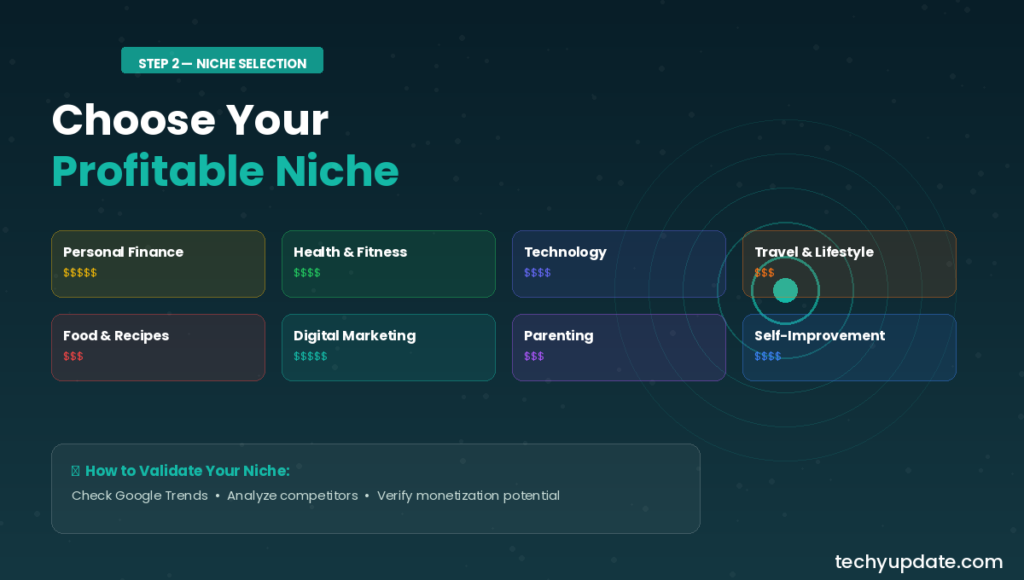
In modern blogging, a niche represents a clearly defined topic or audience segment that we focus on to build authority, attract targeted traffic, and generate revenue. Instead of covering broad subjects, we narrow our focus to a specific problem, interest, or market demand, allowing us to stand out in a crowded digital space.
A niche is not just a topic it is a strategic positioning tool. It determines the type of content we create, the audience we attract, and the monetization opportunities we unlock. By choosing a well-defined niche, we ensure that every article we publish contributes to topical authority and long-term search engine visibility.
Core Elements of a Strong Blogging Niche
- Audience clarity: A specific group with defined needs
- Content focus: A consistent subject area
- Monetization potential: Products, services, or offers tied to the niche
- Search demand: Keywords that people actively search for
We position our blog as a go-to resource within a niche, making it easier to build trust and influence.
Best Niches for Making Money in 2026
We identify niches that combine high demand, strong monetization potential, and long-term growth trends. The most profitable niches are those where audiences are actively seeking solutions and willing to spend money.
1. Technology and AI Tools
The rapid expansion of artificial intelligence has created a highly lucrative blogging niche. We focus on:
- AI productivity tools
- Automation software
- Tech tutorials and reviews
This niche offers opportunities for affiliate marketing, SaaS partnerships, and sponsored content.
2. Personal Finance and Wealth Building
Finance remains one of the most profitable blogging categories due to its high-value audience. We create content around:
- Budgeting strategies
- Investing guides
- Passive income methods
Financial blogs benefit from high-paying affiliate programs and premium ad rates.
3. Health, Fitness, and Wellness
The demand for health-related content continues to grow. We target:
- Weight loss strategies
- Mental health improvement
- Fitness routines
This niche supports monetization through coaching services, digital products, and brand collaborations.
4. Online Business and Freelancing
As remote work expands, we capitalize on content such as:
- Freelancing platforms
- Online income strategies
- Digital marketing techniques
This niche is ideal for course sales, consulting, and affiliate promotions.
5. Education and Skill Development
We focus on:
- Online learning platforms
- Career advancement skills
- Language learning
Educational blogs attract a highly engaged audience and generate revenue through courses and affiliate partnerships.
How to Validate Your Blogging Niche
Selecting a niche is only the first step; we must validate it to ensure profitability and sustainability.
1. Analyze Search Demand
We research keywords using SEO tools to confirm that people are actively searching for topics within the niche. We prioritize:
- High search volume keywords
- Low to medium competition phrases
2. Study Competitor Blogs
We evaluate existing blogs to identify:
- Content gaps
- Weaknesses in coverage
- Opportunities for differentiation
This allows us to create better, more comprehensive content.
3. Check Monetization Potential
We ensure the niche supports multiple income streams:
- Affiliate products
- Digital services
- Advertising opportunities
A niche without monetization pathways limits long-term growth.
4. Test Content Ideas
We publish initial articles and track performance metrics such as:
- Traffic growth
- Engagement rates
- Conversion potential
This data-driven approach confirms whether the niche is worth scaling.
Pick a Domain Name and Hosting
Tips for Choosing a Domain Name
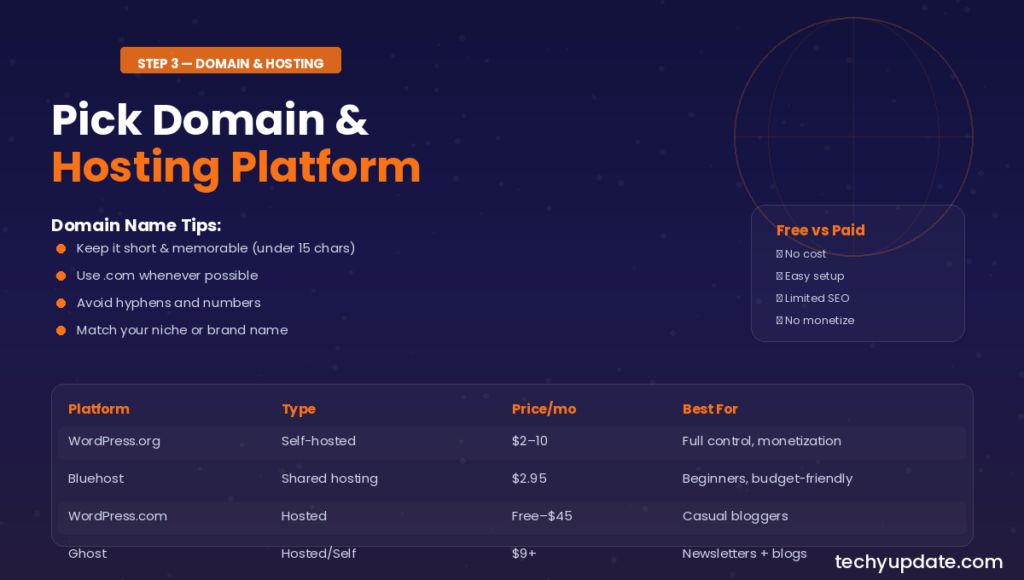
A domain name is the foundation of our blog’s identity and brand presence. It influences credibility, memorability, and search visibility.
Characteristics of a Strong Domain Name
- Short and easy to remember
- Relevant to the niche
- Simple spelling and pronunciation
- Free of numbers and hyphens
We prioritize names that are brandable yet keyword-relevant, ensuring both recognition and SEO benefits.
Domain Naming Strategies
- Use partial keywords combined with brand elements
- Create unique, memorable brand names
- Avoid overly generic or competitive terms
A well-chosen domain name strengthens trust and improves click-through rates.
Best Hosting Platforms for Beginners
Reliable hosting ensures that our blog is fast, secure, and always accessible. Performance directly impacts user experience and search rankings.
Key Features We Look For
- High uptime reliability
- Fast loading speeds
- Strong security measures
- Scalability for future growth
Recommended Hosting Types
Shared Hosting
Ideal for beginners due to its affordability and ease of use. It provides:
- Basic performance
- Simple setup
- Low cost
Managed WordPress Hosting
Offers optimized performance for WordPress blogs, including:
- Automatic updates
- Enhanced security
- Faster speeds
Cloud Hosting
Best for scalability and performance. It allows:
- Flexible resource allocation
- Improved reliability
- High traffic handling
We select hosting that aligns with our growth goals, ensuring that our blog can scale without performance issues.
Free vs Paid Blogging Platforms
Choosing between free and paid platforms determines the level of control, flexibility, and monetization potential we have.
Free Blogging Platforms
Free platforms provide a quick way to start, but come with limitations.
Advantages
- No upfront cost
- Easy setup
- Minimal technical knowledge required
Limitations
- Limited customization
- Restricted monetization options
- Lack of full ownership
Free platforms are suitable for testing ideas, but not for building a long-term profitable blog.
Paid Blogging Platforms
Paid platforms offer complete control and scalability.
Advantages
- Full ownership of content
- Unlimited customization
- Advanced monetization options
Key Components
- Domain name purchase
- Hosting subscription
- Premium themes and plugins
We invest in paid platforms to build a professional, scalable blogging business.
Building a Strong Blogging Foundation
By combining a profitable niche, strategic domain name, and reliable hosting, we create a foundation that supports long-term growth and success. Every decision at this stage influences future performance, making it essential to approach each step with precision.
We focus on:
- Clear niche positioning
- Strong branding
- High-performance infrastructure
This structured approach ensures that our blog is optimized for visibility, authority, and revenue generation from the very beginning.
Set Up Your Blog Website: A Complete Guide to Building a Professional Blog in 2026
We establish a powerful blogging foundation by building a fully optimized website with the right tools, structure, and essential pages. A properly configured blog ensures fast performance, strong branding, and seamless user experience, allowing us to scale traffic and monetize effectively from the start.
Installing Blogging Platforms (CMS Tools)
We begin by selecting and installing a Content Management System (CMS) that provides flexibility, control, and scalability. A CMS allows us to create, manage, and optimize content without needing advanced technical skills.
Choosing the Right CMS for Blogging
We prioritize platforms that offer:
- Full customization capabilities
- SEO-friendly architecture
- Plugin and extension support
- Scalability for long-term growth
Top CMS Options in 2026
1. WordPress (Self-Hosted)
The most widely used blogging platform, offering:
- Complete control over website design and functionality
- Thousands of themes and plugins
- Advanced SEO optimization features
We install WordPress through our hosting provider using one-click installation, ensuring quick and efficient setup.
2. Website Builders with CMS Features
Platforms with integrated CMS tools provide:
- Drag-and-drop functionality
- Built-in hosting and security
- Simplified design process
These are suitable for beginners but offer less flexibility compared to WordPress.
Step-by-Step CMS Installation Process
We follow a streamlined approach to install our blogging platform:
- Access Hosting Dashboard
We log into our hosting account and navigate to the control panel. - Use One-Click Installer
Most hosting providers offer a one-click installation for CMS platforms. - Configure Basic Settings
We set:- Website name
- Admin username and password
- Default language
- Secure the Website
We enable:- SSL certificate
- Basic security settings
- Access the Dashboard
Once installed, we access the CMS dashboard to begin customization.
This process ensures that our blog is fully functional and ready for content creation within minutes.
Basic Blog Design and Structure
A well-designed blog enhances user experience, engagement, and credibility. We focus on creating a layout that is both visually appealing and highly functional.
Key Elements of a Professional Blog Design
1. Clean and Minimal Layout
We avoid clutter and prioritize:
- Clear content presentation
- Easy navigation
- Focus on readability
2. Mobile-Responsive Design
With the majority of users accessing content via mobile devices, we ensure:
- Responsive themes
- Fast mobile loading speeds
- Optimized layout for smaller screens
3. Fast Loading Speed
We optimize performance by:
- Using lightweight themes
- Compressing images
- Minimizing unnecessary plugins
Speed directly impacts user retention and search engine rankings.
Essential Blog Structure
We organize our blog to guide visitors efficiently and improve SEO performance.
Homepage
The homepage acts as the central hub, featuring:
- Latest blog posts
- Featured content
- Clear navigation menus
Category Pages
We group content into categories to:
- Improve organization
- Enhance user navigation
- Strengthen internal linking
Individual Blog Posts
Each post is structured with:
- Compelling headings
- Clear formatting
- Optimized images
- Internal and external links
Navigation Optimization
We design intuitive navigation menus that include:
- Home
- Blog categories
- About page
- Contact page
This ensures users can easily find relevant content, increasing engagement and time spent on the site.
Essential Pages Every Blog Must Have
A professional blog requires specific pages to build trust, credibility, and compliance. These pages are critical for both users and search engines.
1. About Page
The About page establishes our brand identity and authority. It provides visitors with insight into:
- Who we are
- What the blog offers
- Our expertise and mission
We craft a compelling narrative that builds connection and trust with readers.
2. Contact Page
The Contact page allows visitors, brands, and partners to reach us with ease. It includes:
- Contact form
- Email address
- Social media links
A clear contact page enhances professionalism and business opportunities.
3. Privacy Policy Page
The Privacy Policy page ensures legal compliance and transparency. It explains:
- Data collection practices
- Cookie usage
- User rights
This page is essential for:
- Ad network approval
- Affiliate program participation
- Building user trust
4. Terms and Conditions Page
We include terms that outline:
- Website usage rules
- Content ownership
- Liability limitations
This protects our blog and establishes clear guidelines for users.
5. Disclaimer Page
For monetized blogs, a disclaimer is necessary to:
- Disclose affiliate relationships
- Clarify content intent
This ensures compliance with advertising regulations and transparency standards.
Optimizing Blog Setup for SEO and Performance
We integrate SEO best practices into our blog setup to ensure maximum visibility.
Technical SEO Essentials
- Clean URL structure
- XML sitemap generation
- Search engine indexing setup
On-Page Optimization
- Keyword-focused headings
- Meta tags and descriptions
- Image optimization
Plugin Configuration
We install essential plugins for:
- SEO optimization
- Security
- Performance enhancement
Enhancing User Experience and Engagement
We design our blog to maximize user interaction and retention.
Key Engagement Features
- Clear call-to-action buttons
- Comment sections for interaction
- Social sharing options
Visual Elements
We incorporate:
- High-quality images
- Infographics
- Embedded media
These elements make content more engaging and shareable.
Scaling Your Blog Infrastructure
As traffic grows, we prepare our blog for scalability.
Advanced Setup Strategies
- Upgrade hosting plans
- Implement caching systems
- Use content delivery networks (CDNs)
These steps ensure consistent performance even with increased traffic.
Create High-Quality Content
We build a successful blog by focusing on high-quality, SEO-driven content that delivers real value, ranks well in search results, and keeps readers engaged. Content is the core asset that drives traffic, authority, and revenue, making it essential to approach it with precision and consistency.
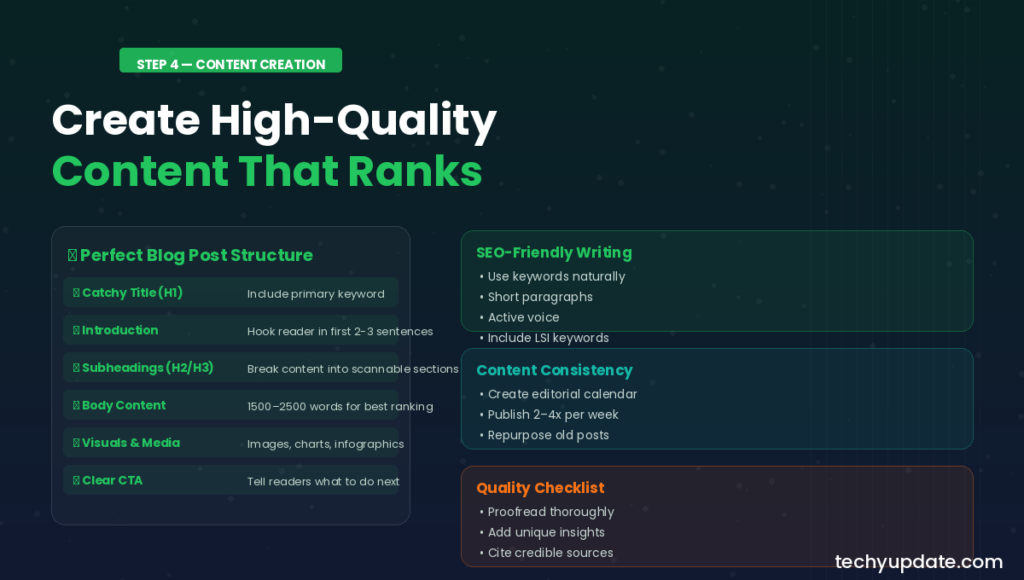
Importance of SEO-Friendly Content
We create content that is not only valuable for readers but also optimized for search engines. SEO-friendly content ensures that our blog appears in front of the right audience at the right time.
Key Elements of SEO-Friendly Content
- Strategic keyword placement in titles, headings, and body text
- Clear structure using H1, H2, and H3 tags
- Optimized meta descriptions for higher click-through rates
- Internal linking to strengthen site authority
- Image optimization with alt text
We focus on matching search intent, ensuring that every article answers the exact query users are searching for. This approach increases visibility and improves rankings.
Writing Blog Posts That Rank
We craft blog posts that outperform competitors and dominate search results by combining depth, clarity, and optimization.
Core Structure of a High-Ranking Blog Post
- Compelling headline with primary keyword
- Engaging introduction that hooks the reader
- Well-organized sections with keyword-rich subheadings
- Detailed, actionable content that solves problems
- Strong conclusion with clear takeaways
Content Optimization Techniques
- Use long-tail keywords naturally throughout the content
- Include semantic keywords to enhance relevance
- Maintain readability with short paragraphs and bullet points
- Add internal and external links for authority
We ensure each post is comprehensive, informative, and easy to consume, increasing both rankings and user engagement.
Content Consistency Strategy
Consistency is critical for building authority, trust, and steady traffic growth. We follow a structured content plan to maintain regular publishing.
Effective Content Strategy Framework
- Create a content calendar with planned topics
- Publish regularly (2–3 posts per week or as per capacity)
- Focus on topic clusters to build authority
- Update and refresh old content for better performance
Benefits of Consistent Publishing
- Improves search engine indexing
- Builds audience trust and loyalty
- Increases organic traffic over time
We treat content creation as a long-term system, ensuring every post contributes to overall growth and visibility.
Learn SEO for Blogging Success
We achieve sustainable blogging growth by mastering search engine optimization (SEO), ensuring our content reaches the right audience and ranks consistently on search engines. SEO transforms a blog from a simple content platform into a traffic-generating and revenue-driving digital asset.
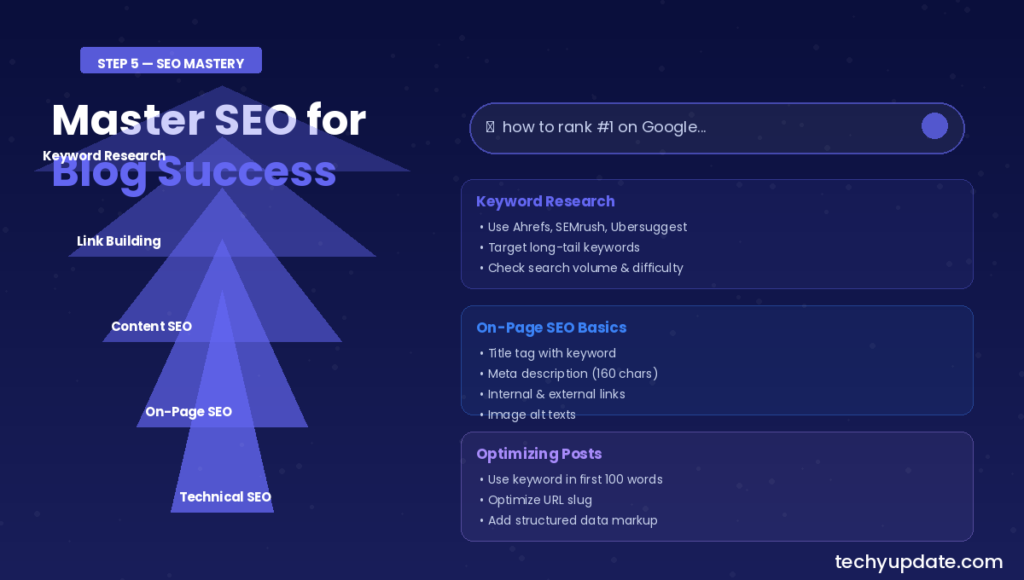
On-Page SEO Basics
We structure every blog post with precise on-page SEO techniques to maximize visibility and performance.
Essential On-Page SEO Elements
- Title Tag Optimization: We naturally include the primary keyword in a compelling, click-worthy title.
- Meta Description: We craft engaging summaries that improve click-through rates.
- Heading Structure (H1, H2, H3): We organize content for readability and keyword relevance.
- URL Optimization: We keep URLs short, clean, and keyword-focused.
- Internal Linking: We connect related articles to strengthen site authority and improve navigation.
- Image SEO: We use descriptive file names and alt text for better indexing.
We ensure every page is clear, structured, and optimized for both users and search engines.
Keyword Research Strategies
We identify and target the most valuable keywords that drive relevant traffic and conversions.
Effective Keyword Research Process
- Focus on long-tail keywords with lower competition
- Analyze search intent (informational, transactional, navigational)
- Study competitor keywords to find opportunities
- Use keyword variations and semantic terms
Types of Keywords We Target
- Primary keywords for main topics
- Secondary keywords for supporting relevance
- LSI (semantic) keywords to strengthen context
We select keywords that align with user needs and monetization goals, ensuring our content attracts high-quality traffic.
Optimizing Blog Posts for Traffic
We design each blog post to maximize organic traffic and user engagement through strategic optimization.
Content Optimization Techniques
- Place keywords naturally in the title, introduction, and headings
- Write engaging introductions that capture attention immediately
- Use short paragraphs and bullet points for readability
- Add visual elements like images and infographics
- Include strong internal links to guide users across the site
User Experience Enhancements
- Ensure fast loading speed
- Optimize for mobile devices
- Maintain clear formatting and structure
Engagement and Retention Strategies
- Add call-to-action elements
- Encourage comments and interaction
- Provide valuable, actionable insights
We continuously refine and update content to maintain rankings and increase traffic over time.
Drive Traffic to Your Blog
We grow a successful blog by implementing powerful traffic-generation strategies that attract consistent visitors, increase visibility, and build long-term authority. Traffic is the engine that fuels engagement, conversions, and revenue, making it essential to leverage both free and paid methods effectively.
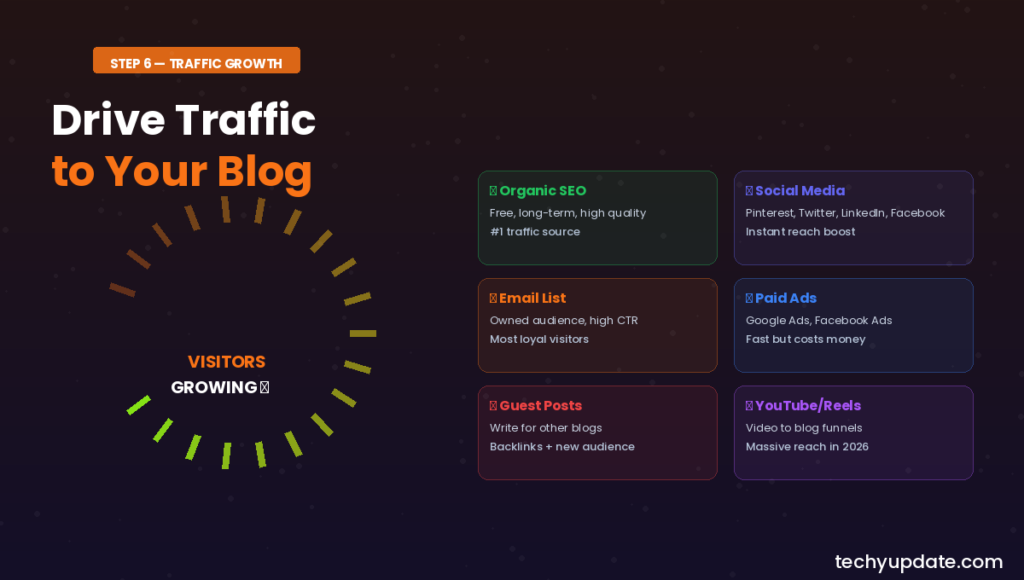
Free Traffic Methods (SEO, Social Media)
We focus on organic traffic sources that deliver sustainable, long-term results without ongoing costs.
Search Engine Optimization (SEO)
SEO remains the most reliable method for generating high-quality, targeted traffic. We optimize our blog to rank for relevant keywords and capture users actively searching for information.
Key SEO Traffic Strategies
- Target long-tail keywords with strong search intent
- Publish in-depth, valuable content consistently
- Build internal links to strengthen site structure
- Acquire high-quality backlinks from authoritative sources
- Optimize for mobile performance and page speed
SEO allows us to generate passive traffic that continues to grow over time.
Social Media Traffic
We leverage social media platforms to expand reach and drive visitors to our blog.
Effective Social Media Strategies
- Share blog posts with engaging captions and visuals
- Repurpose content into short-form posts, reels, or threads
- Join niche communities and actively participate
- Maintain a consistent posting schedule
Platforms like Facebook, Instagram, Pinterest, and LinkedIn help us attract targeted audiences and build brand awareness.
Content Repurposing for Maximum Reach
We transform blog content into multiple formats:
- Infographics
- Short videos
- Email newsletters
This multiplies exposure and ensures our content reaches different audience segments.
Paid Traffic Options
We accelerate growth by using paid traffic strategies to drive immediate visitors and test content performance.
Popular Paid Traffic Channels
Search Engine Ads
We run targeted campaigns to appear at the top of search results for high-converting keywords.
Social Media Advertising
We use platforms like Facebook and Instagram to:
- Target specific demographics
- Promote blog posts and offers
- Retarget previous visitors
Native Advertising
We place content on popular websites to attract relevant audiences.
Advantages of Paid Traffic
- Immediate visibility and results
- Precise audience targeting
- Scalable traffic generation
We combine paid campaigns with organic strategies to create a balanced traffic system.
Building an Audience
We focus on developing a loyal audience that returns to our blog and engages with our content regularly.
Email List Building
We capture visitors’ email addresses to build a direct communication channel.
Strategies for Growth
- Offer lead magnets such as free guides or templates
- Use opt-in forms and pop-ups
- Send regular newsletters with valuable content
An email list allows us to drive repeat traffic and higher conversions.
Community Engagement
We actively engage with our audience by:
- Responding to comments
- Encouraging discussions
- Creating interactive content
This builds trust and long-term relationships.
Consistency and Branding
We maintain:
- A consistent publishing schedule
- A recognizable brand voice
- High-quality content standards
Consistency strengthens our presence and keeps the audience engaged.
Scaling Traffic for Long-Term Growth
We continuously analyze performance and optimize strategies to increase traffic.
Growth Optimization Techniques
- Track analytics and user behavior
- Update high-performing content
- Expand into new keyword opportunities
- Test different traffic channels
By refining our approach, we create a scalable system that drives continuous growth.
Monetize Your Blog
We transform a blog into a revenue-generating digital asset by implementing multiple monetization strategies that maximize earnings and scalability. By combining advertising, partnerships, and product-based income streams, we create a diversified and sustainable income model.
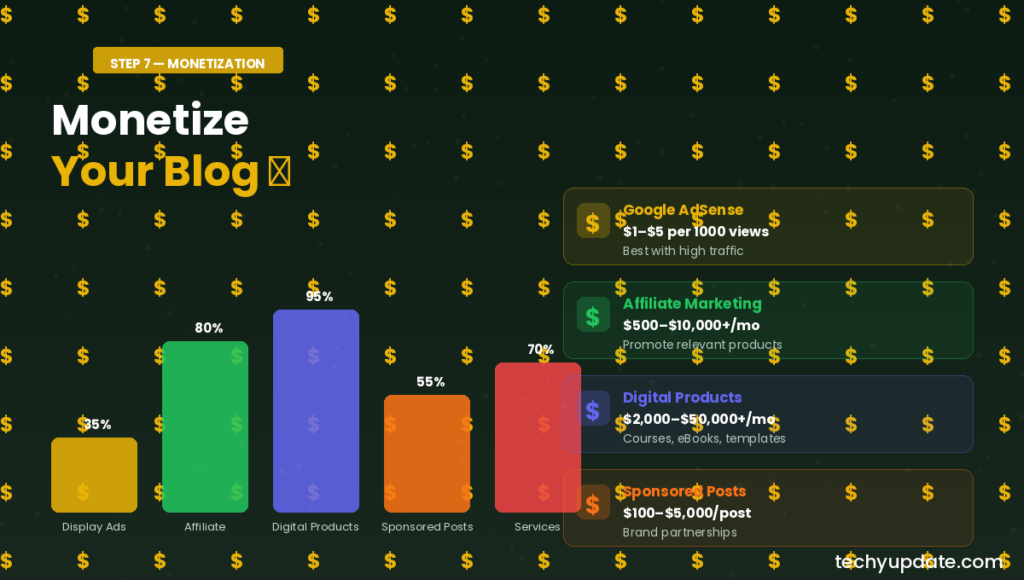
Google AdSense and Display Ads
We generate passive income through display advertising, earning revenue based on traffic and user engagement.
How Display Ads Work
We place ads on our blog, and revenue is generated through:
- Impressions (CPM) – earnings per thousand views
- Clicks (CPC) – earnings when users click ads
Best Practices for Ad Optimization
- Place ads above the fold for visibility
- Integrate ads within content without disrupting user experience
- Optimize for mobile responsiveness
- Focus on increasing traffic volume
As traffic grows, display ads become a consistent and scalable income source.
Affiliate Marketing
We earn commissions by promoting products or services relevant to our niche. This is one of the most profitable monetization methods for bloggers.
How Affiliate Marketing Works
We include affiliate links within our content. When users make a purchase through these links, we receive a commission.
High-Converting Affiliate Strategies
- Write detailed product reviews
- Create comparison articles
- Recommend tools within tutorials
- Use call-to-action buttons
Key Advantages
- No need to create products
- High earning potential
- Scalable with content growth
Affiliate marketing allows us to monetize targeted traffic effectively.
Selling Digital Products and Services
We create and sell our own digital assets, offering high profit margins and full control over pricing.
Popular Digital Products
- eBooks and guides
- Online courses
- Templates and toolkits
- Membership content
Service-Based Monetization
We offer services such as:
- Consulting
- Coaching
- Freelancing
Benefits of Digital Products
- One-time creation with recurring income potential
- Full ownership and branding
- Higher profit margins compared to ads
By leveraging our expertise, we build premium offerings that generate significant revenue.
Sponsored Posts
We collaborate with brands to publish paid content on our blog.
How Sponsored Content Works
Brands pay us to:
- Feature their products or services
- Write dedicated reviews or promotions
- Include brand mentions in existing content
Maximizing Sponsored Opportunities
- Build strong domain authority
- Maintain high traffic levels
- Develop a clear niche audience
Advantages
- High one-time payments
- Opportunities for long-term partnerships
- Increased brand credibility
Sponsored posts become more valuable as our blog grows in authority and influence.
Building a Profitable Monetization System
We combine multiple income streams to create a stable and scalable revenue model.
Diversification Strategy
- Use ads for passive income
- Leverage affiliate marketing for conversions
- Sell digital products for high margins
- Accept sponsored content for premium earnings
This balanced approach ensures consistent income while reducing reliance on a single source.
Scale Your Blogging Business
We scale a blogging business by shifting from basic content creation to a structured, system-driven model that increases output, grows audience reach, and maximizes revenue. Scaling is the stage where a blog transforms into a full digital business with predictable growth and automated workflows.
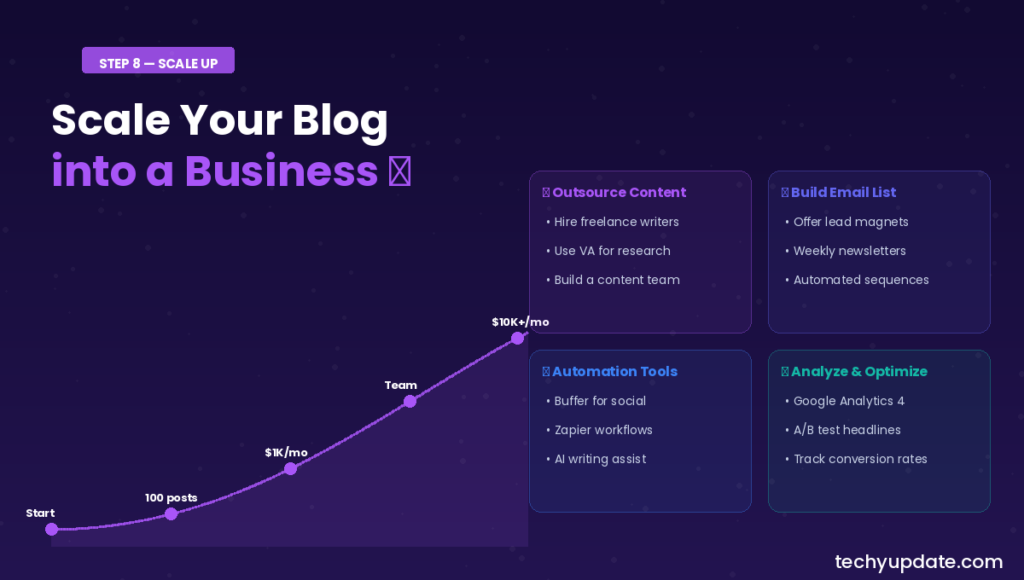
Outsourcing Content
We increase productivity and efficiency by outsourcing content creation to skilled writers and freelancers. This allows us to focus on strategy, SEO, and monetization while maintaining consistent publishing.
Why Outsourcing Matters
- Saves significant time and effort
- Increases content production speed
- Allows focus on growth and strategy
- Improves consistency and scalability
What We Can Outsource
- Blog post writing
- Keyword research
- Graphic design and visuals
- SEO optimization tasks
Best Practices for Outsourcing
- Hire experienced niche writers
- Provide clear content guidelines
- Maintain strict quality control
- Use editing processes before publishing
We ensure that outsourced content continues to align with our brand voice, SEO strategy, and audience expectations.
Building Email Lists
We scale our blogging business by creating a direct communication channel with our audience through email marketing. An email list is one of the most powerful assets in digital business.
Why Email Lists Are Important
- Direct access to our audience without algorithms
- Higher conversion rates compared to social media
- Ability to promote products and content instantly
- Builds long-term audience relationships
Email List Growth Strategies
- Offer lead magnets (free guides, checklists, eBooks)
- Use pop-ups and opt-in forms on blog pages
- Add signup forms in high-traffic articles
- Promote subscriptions through social media
Email Marketing Strategy
We use email campaigns to:
- Share new blog posts
- Promote affiliate products
- Launch digital products
- Engage and retain subscribers
A strong email list becomes a reliable traffic and revenue source independent of search engines.
Automation Tools
We scale efficiently by using automation tools that streamline repetitive tasks and improve productivity.
Key Areas of Automation
- Content scheduling and publishing
- Email marketing campaigns
- Social media posting
- Analytics tracking
- SEO optimization workflows
Essential Automation Tools
We integrate tools for:
- Email automation sequences
- Social media scheduling platforms
- SEO analysis and keyword tracking
- Content management workflows
Benefits of Automation
- Saves time and reduces manual effort
- Ensures consistent content distribution
- Improves efficiency and accuracy
- Allows focus on strategy and growth
Automation helps us run a blog like a real business system rather than a manual task-based operation.
Building a Scalable Blogging System
We combine outsourcing, email marketing, and automation to create a fully scalable blogging ecosystem.
Scalability Framework
- Content production through outsourcing
- Traffic retention via email lists
- Efficiency through automation tools
- Continuous optimization through analytics
This structure allows us to grow without being limited by time or workload.
Common Mistakes to Avoid in Blogging
We build a successful blogging business by avoiding critical mistakes that can slow growth, reduce traffic, and limit monetization potential. Many beginners fail not because blogging is ineffective, but because they overlook strategic fundamentals, consistency, and SEO discipline.
Choosing the Wrong Niche
One of the most damaging mistakes we can make is selecting a low-potential or misaligned blogging niche. A weak niche limits both traffic and income opportunities.
Why Niche Selection Matters
A niche determines:
- Audience size and engagement
- Monetization potential
- Competition level
- Long-term scalability
Common Niche Mistakes
- Choosing overly broad topics with no focus
- Selecting niches with low search demand
- Ignoring profitability factors
- Following trends without long-term value
We focus on niches that combine strong demand, monetization opportunities, and sustainable growth potential.
Ignoring SEO
Ignoring SEO is one of the fastest ways to fail in blogging. Without SEO, even high-quality content struggles to reach an audience.
Impact of Poor SEO
- Low or no organic traffic
- Poor search engine visibility
- Reduced monetization potential
- Dependence on short-term traffic sources
Key SEO Mistakes
- Not using keyword research
- Poor content structure
- Missing internal linking
- Ignoring meta optimization
- Writing without search intent
We prioritize SEO from the beginning, ensuring every article is optimized for search engines and user experience.
Inconsistent Posting
Consistency is essential for building authority and maintaining growth. Inconsistent publishing leads to lost rankings, reduced engagement, and slow progress.
Why Consistency Matters
Search engines and audiences both reward:
- Regular content updates
- Active websites
- Fresh and relevant information
Common Consistency Issues
- Posting irregularly or randomly
- Long gaps between content updates
- Lack of content planning
- No publishing schedule
How We Maintain Consistency
- Create a content calendar
- Plan topics in advance
- Maintain a realistic publishing schedule
- Focus on quality over quantity
Consistency builds trust, authority, and long-term traffic stability.
Long-Term Success Mindset
We approach blogging with a long-term growth mindset, understanding that results compound over time. Immediate success is rare, but consistent effort leads to exponential growth.
Core Principles for Success
- Focus on value-driven content creation
- Prioritize SEO and organic growth
- Maintain discipline and consistency
- Continuously improve and adapt strategies
Blogging success is built on patience, persistence, and strategic execution, turning a simple website into a powerful and profitable online business.
Pros and Cons of Blogging
Advantages
- Low startup cost
- Global reach
- Multiple income streams
- Long-term asset creation
Limitations
- Time required for growth
- Competitive environment
- Consistency requirement
Opinion Insights for Authority Building
We observe that successful blogs in 2026 focus on:
- Depth instead of quantity
- Topic authority building
- User-focused writing
- System-based publishing
Blogs without structure fail due to a lack of direction and a consistent system.
Content Optimization for Performance
We optimize every article using structured methods.
Optimization factors
- Keyword relevance placement
- Semantic keyword integration
- Internal linking system
- Readability improvement
- Engagement structure
Troubleshooting Blogging Growth Issues
Common issues
- Low traffic
- Poor ranking visibility
- Low engagement
- Weak monetization
Solutions
- Improve keyword targeting
- Enhance content depth
- Build backlinks
- Optimize structure clarity
Advanced Growth Strategy
We evolve the blog into a full business system.
Growth expansion
- Niche expansion
- Product development
- Email funnel automation
- Authority branding
Future Trends Shaping Blogging in 2026
We stay ahead by adapting to emerging trends.
1. AI and Automation Integration
AI enhances:
- Content generation
- SEO optimization
- Audience targeting
2. Voice Search Optimization
We optimize content for conversational queries and voice assistants.
3. Multimedia Content Expansion
Blogs incorporate:
- Video content
- Podcasts
- Interactive elements
4. Personalization and User Experience
We tailor content to individual user preferences, improving engagement and conversions.
Conclusion: Digital Blogging Success Framework
Starting blogging in 2026 requires structured execution, consistent publishing, and monetization planning. We build blogs as digital income systems, not simple websites. With niche clarity, content authority, and traffic strategy, blogging becomes a scalable long-term asset.
Blogging in 2026 offers unmatched potential for those who approach it with precision and strategy. We build content-rich, SEO-optimized, and monetization-ready blogs, ensuring long-term success.
Setting up a blog website in 2026 requires a strategic approach focused on performance, structure, and professionalism. By installing the right CMS, designing an optimized layout, and including essential pages, we create a platform that is ready for growth, authority, and monetization.
Monetizing a blog requires a strategic combination of traffic, content, and revenue streams. By implementing display ads, affiliate marketing, digital products, and sponsored posts, we create a blog that not only attracts visitors but also converts them into sustainable income and long-term growth.
Scaling a blogging business requires moving beyond individual effort and building a systemized, automated, and team-supported structure. By outsourcing content, growing an email list, and leveraging automation tools, we create a blog that operates as a high-performance digital business capable of long-term growth and income expansion.
Blogging in 2026 remains one of the most powerful ways to build a personal brand, generate income, and create long-term digital assets. Success comes from strategic execution, not shortcuts. We focus on selecting the right niche, applying strong SEO practices, and maintaining consistent content creation to build a sustainable blogging system.
Call to Action
Begin with niche selection, build a content foundation, and apply a structured growth system to transform the blog into an income-generating digital platform.
Frequently Asked Questions (FAQs)
How to start blogging in 2026 as a beginner?
We started blogging in 2026 by selecting a profitable niche, choosing a domain name and hosting, installing a CMS like WordPress, and publishing SEO-optimized content consistently. Success comes from focusing on value-driven articles, keyword research, and audience targeting from day one.
Can I make money blogging in 2026?
Yes, blogging in 2026 is still highly profitable when we apply the right strategies. We can earn through affiliate marketing, display ads, sponsored posts, and digital products. Income depends on traffic quality, niche selection, and content consistency.
How long does it take to earn from blogging?
Typically, it takes 3 to 6 months to start seeing small income, and 6 to 18 months for stable earnings. The timeline depends on SEO performance, content quality, niche competitiveness, and publishing consistency.
What is the best niche for blogging in 2026?
The most profitable niches in 2026 include:
- Artificial Intelligence and Technology
- Personal Finance and Investing
- Health and Fitness
- Online Business and Freelancing
- Education and Skill Development
We choose niches with high demand, strong monetization, and long-term growth potential.
Do I need technical skills to start a blog?
No, we do not need advanced technical skills to start blogging. With platforms like WordPress and modern website builders, we can easily create and manage a blog using simple tools and tutorials.
Is blogging still profitable in 2026?
Yes, blogging remains profitable in 2026 thanks to consistent search engine traffic, affiliate marketing opportunities, and demand for digital products. Blogs that focus on SEO and high-quality content continue to generate high income.
How much does it cost to start blogging?
We can start blogging with a small budget:
- Domain name: low annual cost
- Hosting: monthly or yearly plan
- Optional premium theme/tools
Overall, a basic blog can start with a low initial investment and scale over time.
What are the best ways to monetize a blog?
The most effective monetization methods include:
- Google AdSense and display ads
- Affiliate marketing programs
- Selling digital products or services
- Sponsored content collaborations
We combine multiple income streams for maximum profitability.
How often should I post on my blog?
We recommend posting 2 to 4 high-quality articles per week. However, consistency matters more than volume. A steady publishing schedule helps improve SEO rankings, audience trust, and traffic growth.
Can I start blogging with no money?
Yes, it is possible to start blogging for free using platforms like free CMS or blogging platforms, but growth is limited. To build a professional and profitable blog, we eventually need a domain, hosting, and SEO tools.
How to start blogging in 2026: a beginner’s approach?
Select a niche, create a website, publish content, and optimize the traffic system.
Can blogging generate income in 2026?
Yes, through ads, affiliate, digital products, and sponsorships.
How much time is required for income blogging?
Usually 3–12 months based on consistency and niche strength.
Best niche selection 2026?
AI tools, finance, health, online business, and education.
Need technical skills for blogging?
No, CMS tools simplify the full process.
Is blogging still profitable?
Yes, with structured content and a traffic strategy.
What is the cost of blogging?
Low-cost domain + hosting setup.
Monetization methods?
Ads, affiliate, digital products, sponsored content.
Posting frequency ideal?
2–4 quality posts weekly.
Start blogging, no money possible?
Yes, but limited growth without hosting investment.