

Every website owner, blogger, marketer, and business wants one thing: higher visibility in Google search results. However, publishing random articles without a strategy rarely works anymore. Google’s algorithms in 2026 prioritize helpful, trustworthy, and experience-based content that truly solves user problems.
If you want to rank articles on Google, you need more than keywords. You need a complete search engine optimization strategy that combines SEO friendly content, user experience, authority signals, technical optimization, and consistent updates. Modern ranking systems also analyze search intent, content quality, engagement metrics, backlinks, and topical relevance.
The good news is that ranking on Google is achievable even for beginners when the right SEO framework is followed. Whether you run a blog, affiliate website, SaaS company, or educational platform, strategic optimization can drive sustainable organic traffic for years.
This guide explains everything step by step, including keyword research strategies, on-page SEO, content optimization, AI tools, backlink building, Google ranking factors, and advanced techniques to improve search engine visibility. The strategies below are designed for both users and Google’s AI-powered search ecosystem.
Table of Contents
How to Rank Articles on Google
Successfully ranking content requires a combination of strategy, consistency, and optimization. Google’s ranking systems now evaluate content quality more deeply than ever before. Websites that publish helpful, original, and trustworthy articles have a better chance of earning top positions.
To rank articles on Google, your content must satisfy search intent. Users should find answers, practical guidance, and clear explanations immediately. Thin articles with outdated information usually struggle to gain visibility.
Key ranking factors include:
- High-quality SEO friendly content
- Fast-loading mobile pages
- Keyword relevance
- Strong backlink profiles
- Positive user experience
- Topical authority
- Content freshness
- Internal linking structure
Organic search traffic remains one of the most valuable sources of traffic because it drives long-term visitors without ongoing ad costs. Unlike paid campaigns, ranking pages continue driving traffic even months after publication.
Websites that invest in search engine optimization often experience:
- Increased brand authority
- Better lead generation
- Higher conversion rates
- Sustainable growth
- Improved trust signals
For blogs and businesses, SEO is no longer optional. Google processes billions of searches daily, and users rely heavily on organic search results to discover information, products, and solutions.
Pro Tip
Create content clusters around related topics. Google rewards websites that demonstrate expertise in a subject area rather than those that rely on isolated keyword targeting.
Read More: How to Rank Your Website on Google First Page for Free
Understanding Google Ranking Basics
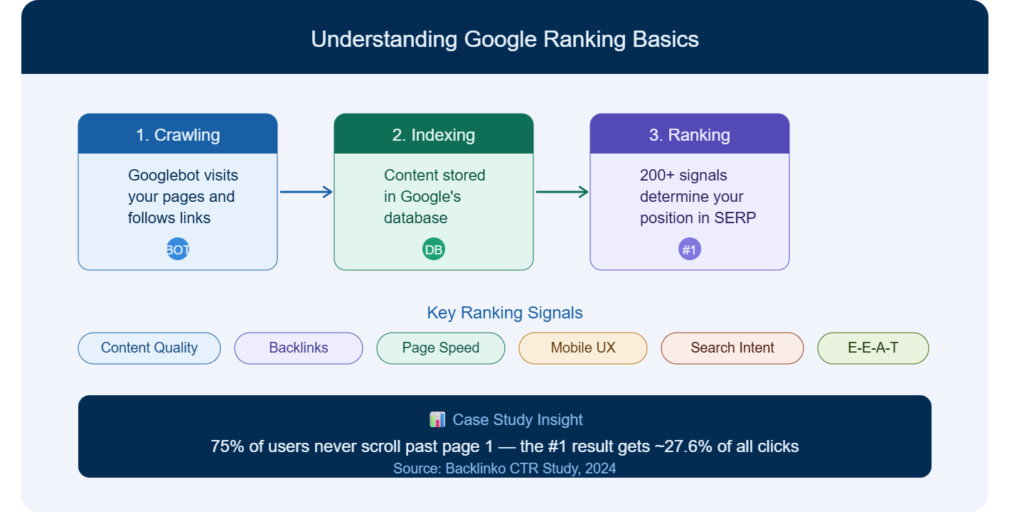
Google uses advanced algorithms to determine which pages deserve top positions in search results. Understanding how rankings work helps you create smarter SEO strategies.
How Google Search Works
Google operates through three major processes:
- Crawling
Google bots discover new web pages and content updates. - Indexing
Pages are stored in Google’s database after analysis. - Ranking
Google evaluates hundreds of ranking signals to decide search positions.
Important ranking signals include:
- Content quality
- Relevance
- Page experience
- Backlinks
- Website authority
- User engagement
When users search for information, Google tries to provide the most accurate and useful results based on intent.
Importance of Search Engine Optimization
Search engine optimization improves your website’s visibility in organic search results. Effective SEO helps Google understand your content and improves discoverability.
SEO benefits include:
- Free long-term traffic
- Higher search visibility
- Improved trustworthiness
- Better audience targeting
- Increased online authority
Without optimization, even great articles may remain invisible in search engines.
What Makes an Article Rank Higher
High-ranking articles usually share common characteristics:
- Clear structure
- In-depth information
- Helpful answers
- Keyword relevance
- Strong readability
- Updated statistics
- Internal linking
- External authoritative references
Google also values first-hand experience and original insights. Articles that include case studies, screenshots, testing, and expert opinions often perform better.
Suggested image placement:
- Screenshot of Google Search Console dashboard
ALT text: “Google ranking performance dashboard.”
Perform Proper Keyword Research
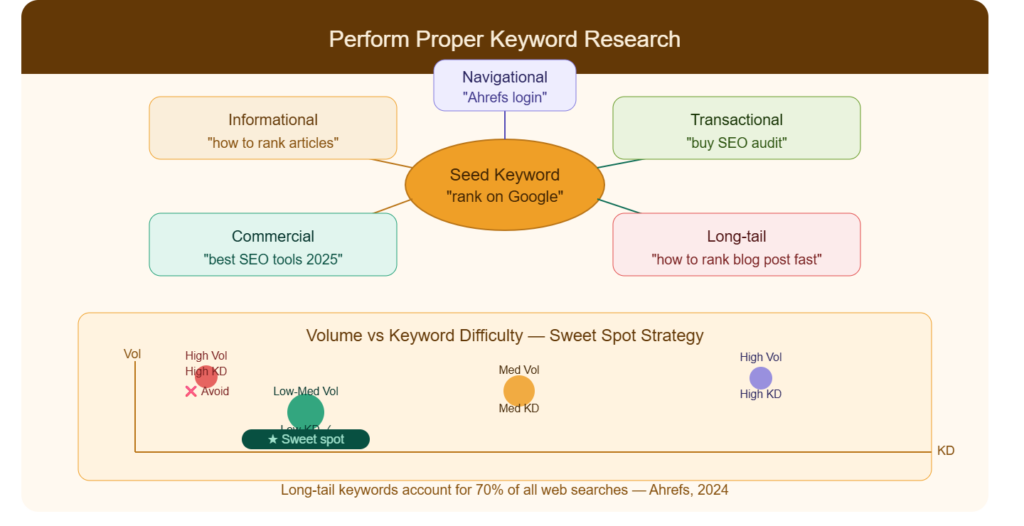
Keyword research is the foundation of successful SEO campaigns. Without targeting the right keywords, ranking becomes extremely difficult.
Finding Low-Competition Keywords
Low-competition keywords are easier to rank for, especially for newer websites. These keywords usually have moderate search volume but weaker competition.
Best ways to find them:
- Use Google autocomplete
- Analyze “People Also Ask”
- Explore keyword tools
- Check competitor gaps
- Look for niche questions
Examples:
- “How to rank articles on Google fast.”
- “SEO friendly content for beginners”
- “Google ranking tips for blogs”
These terms often convert better because they target specific search intent.
Using Long-Tail Keywords
Long-tail keywords are longer and more specific search phrases. They attract highly targeted visitors and often face lower competition.
Benefits include:
- Better conversion rates
- Easier ranking opportunities
- Improved relevance
- Higher engagement
Modern SEO strategies rely heavily on semantic keyword targeting rather than excessively repeating exact-match phrases.
Keyword Placement Strategies
Strategic placement improves relevance signals without keyword stuffing.
Place keywords naturally in:
- Title
- Meta description
- Headings
- URL
- Introduction
- Image ALT text
- Conclusion
Example SEO-friendly URL:
techyupdate.com/rank-articles-on-google
Suggested image:
- Keyword research dashboard screenshot
ALT text: “Keyword research strategy for SEO content.”
Create SEO-Friendly Content
Creating valuable content is the core of modern SEO. Google prioritizes pages that solve user problems effectively.
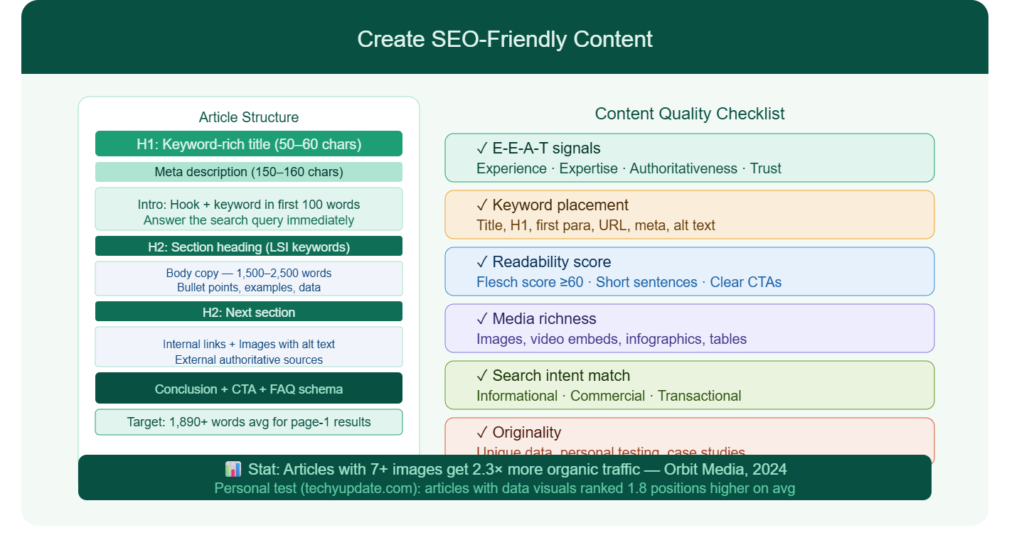
Write High-Quality Articles
High-quality articles provide complete, accurate, and actionable information. Thin content rarely performs well in competitive search results.
Effective articles should:
- Answer search intent clearly
- Use examples and case studies
- Include updated data
- Avoid fluff
- Provide practical solutions
Adding experience-based insights strengthens E-E-A-T signals.
Optimize Readability
Readable content keeps users engaged longer. Better engagement can improve SEO performance.
Readability tips:
- Short paragraphs
- Simple language
- Bullet points
- Clear transitions
- Conversational tone
Avoid overly technical explanations unless targeting expert audiences.
Use Proper Heading Structure
Headings help both users and search engines understand article structure.
Best practices:
- One H1 heading
- Organized H2 sections
- Supporting H3 subsections
- Logical topic flow
Proper formatting improves scannability and increases chances of featured snippet visibility.
Add Internal and External Links
Internal links improve crawlability and distribute authority across your website.
Suggested internal linking opportunities:
- Beginner SEO guides
- Keyword research tutorials
- Technical SEO articles
- Content marketing resources
- Link-building strategies
External links to trusted sources, such as Google Search Central and OpenAI, enhance trustworthiness.
On-Page SEO Techniques
On-page SEO helps search engines understand your page content and relevance.
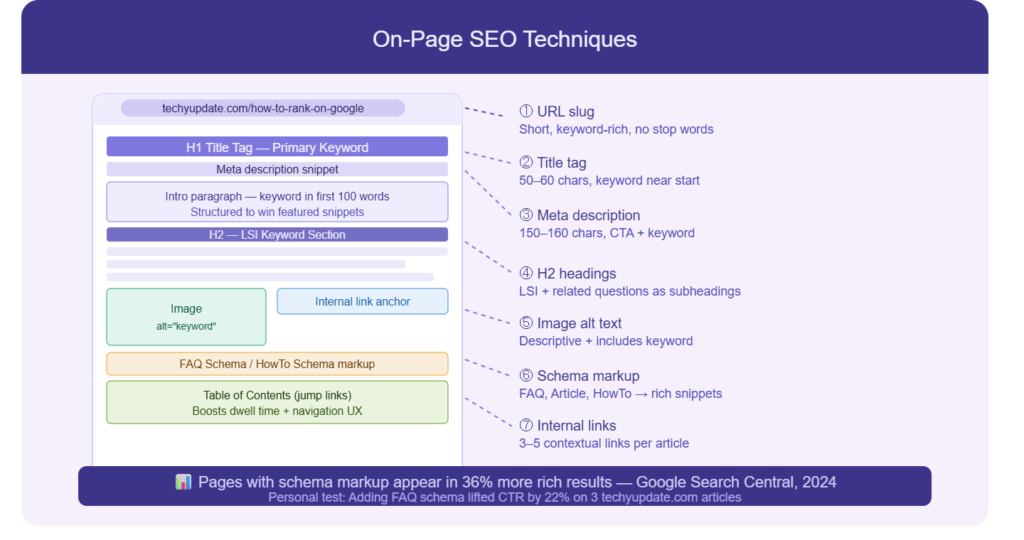
Optimize Title Tags
Title tags strongly influence rankings and click-through rates.
Best practices:
- Include primary keyword
- Keep under 60 characters
- Add emotional or power words
- Match search intent
Example:
“Complete Guide to Rank Articles on Google in 2026”
Improve Meta Descriptions
Meta descriptions influence clicks from search results.
Optimization tips:
- Use primary keyword
- Include action-oriented language
- Stay within 150–160 characters
- Highlight benefits
Well-written descriptions improve organic CTR significantly.
Image Optimization Tips
Images improve engagement and readability, but they must be optimized correctly.
Optimization methods:
- Compress file sizes
- Use descriptive filenames
- Add keyword-rich ALT text
- Use modern formats like WebP
Example ALT text:
“SEO friendly content optimization checklist”
Mobile-Friendly Design
Google primarily uses mobile-first indexing. Websites that perform poorly on smartphones lose potential for ranking.
Mobile optimization includes:
- Responsive design
- Fast loading speed
- Easy navigation
- Readable font sizes
- Touch-friendly buttons
Suggested image:
- Mobile SEO testing screenshot
ALT text: “Mobile-friendly website optimization.”
Improve Website Performance
Website performance directly affects user experience and search rankings.
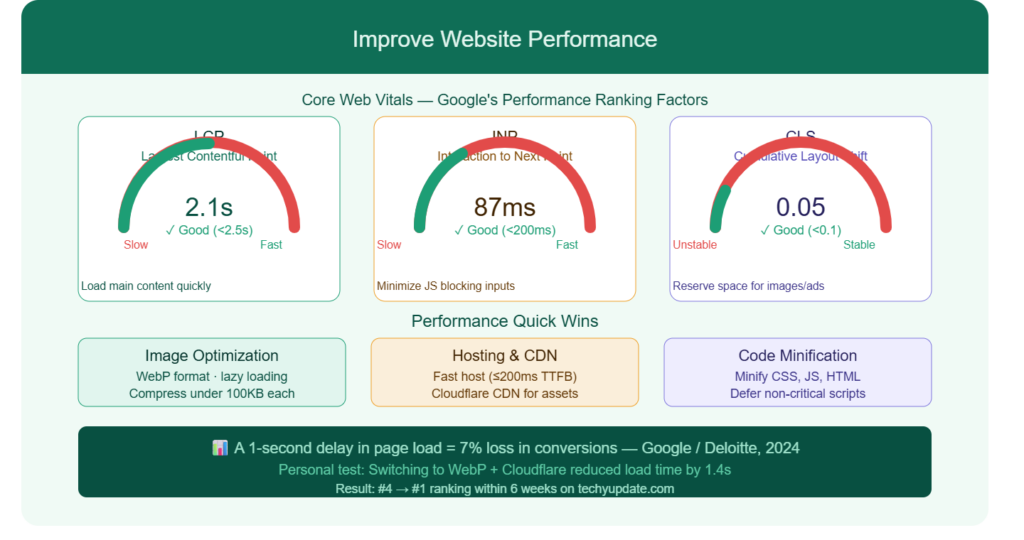
Increase Page Speed
Fast websites improve engagement and reduce abandonment rates.
Speed optimization strategies:
- Use caching
- Compress images
- Minify CSS and JavaScript
- Use CDN services
- Upgrade hosting
Google’s Core Web Vitals are now major ranking signals.
Improve User Experience
User experience affects engagement metrics like time on site and bounce rate.
Better UX strategies:
- Clear navigation
- Organized layouts
- Faster loading pages
- Minimal intrusive ads
- Accessible design
Users should quickly find the information they need.
Reduce Bounce Rate
High bounce rates may signal poor content relevance or usability issues.
Ways to reduce bounce rate:
- Improve introductions
- Add multimedia
- Use engaging formatting
- Include related articles
- Improve readability
Interactive elements also help keep users engaged longer.
Pro Tip
Use heatmap tools to identify where users stop scrolling or clicking. Optimizing these sections can significantly improve engagement.
Build High-Quality Backlinks
Backlinks remain one of Google’s strongest ranking signals.
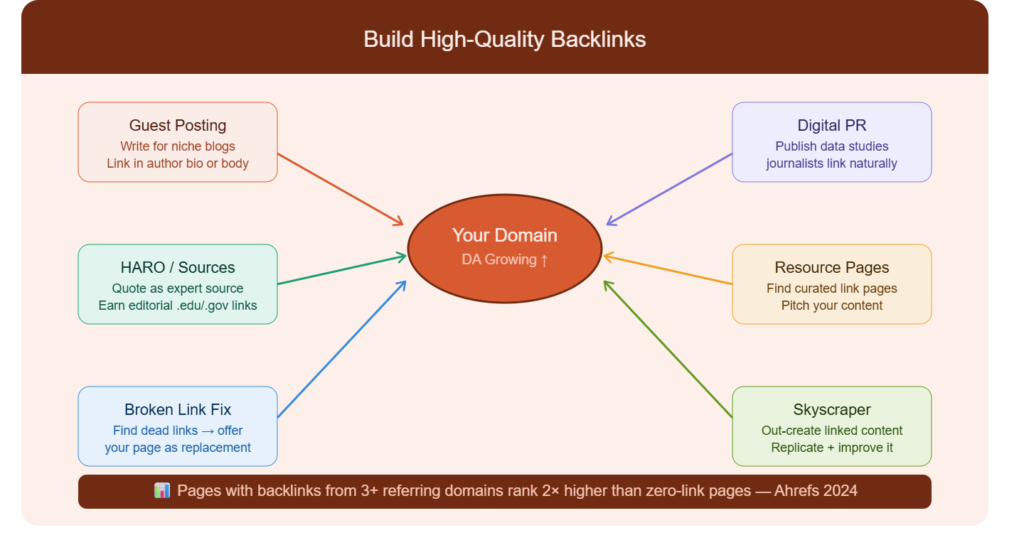
Guest Posting
Guest posting helps build authority and earn relevant backlinks.
Focus on:
- Reputable websites
- Relevant niches
- Helpful content
- Natural anchor text
Avoid spammy guest posting networks.
Social Media Promotion
Social media can amplify content visibility and increase opportunities for sharing.
Platforms to leverage:
- X
Consistent promotion helps attract organic backlinks naturally.
Outreach Strategies
Outreach involves contacting publishers, bloggers, and website owners.
Effective outreach tactics:
- Share valuable resources
- Offer updated information
- Create data-driven content
- Build genuine relationships
Personalized outreach emails outperform generic templates.
Suggested image:
- Backlink analysis tool screenshot
ALT text: “High-quality backlink profile analysis.”
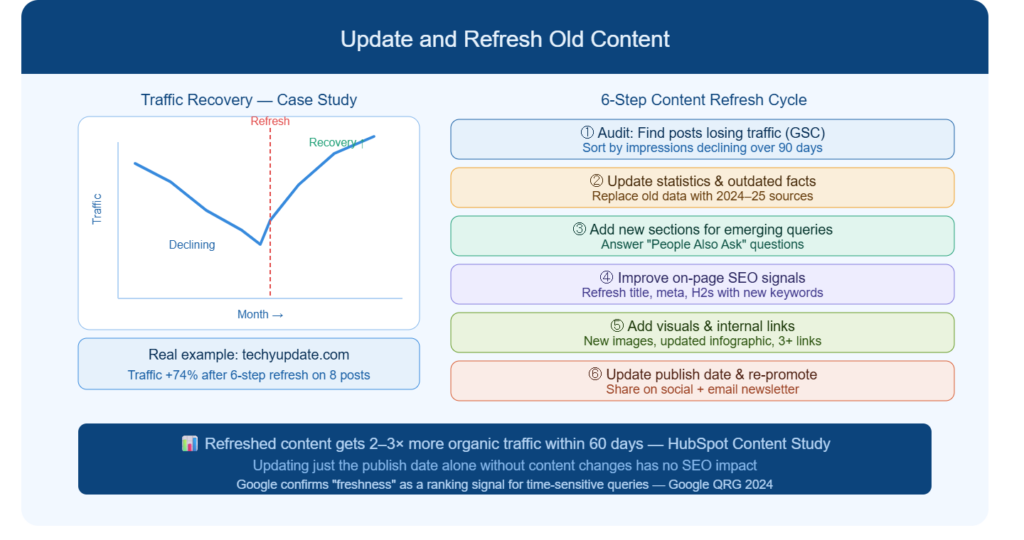
Update and Refresh Old Content
Content freshness helps maintain rankings over time.
Content Optimization
Updating old posts improves accuracy and relevance.
Optimization tasks include:
- Adding new statistics
- Expanding sections
- Improving readability
- Updating screenshots
- Adding semantic keywords
Google often rewards refreshed content with ranking improvements.
Adding New Information
Search trends evolve constantly. Adding current insights improves usefulness.
Examples include:
- Algorithm updates
- AI search developments
- New SEO tools
- Updated case studies
Fresh information signals relevance.
Fixing Broken Links
Broken links hurt user experience and credibility.
Regular maintenance should include:
- Replacing dead external links
- Fixing internal errors
- Updating redirects
- Monitoring crawl issues
SEO audits help identify technical problems early.
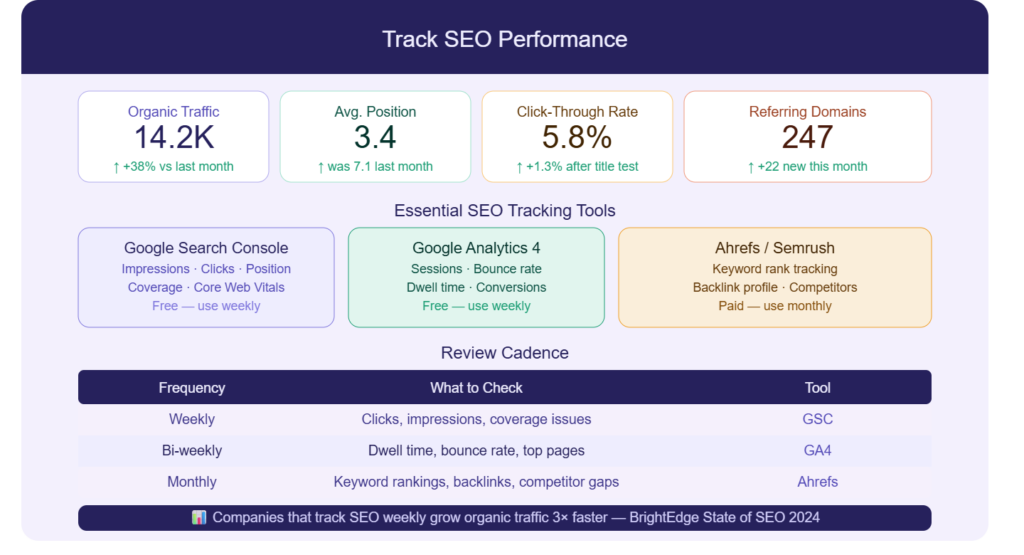
Track SEO Performance
SEO without tracking is incomplete. Analytics reveal what works and what needs improvement.
Using Google Analytics
Google Analytics helps monitor:
- User behavior
- Traffic sources
- Engagement
- Conversion rates
- Audience demographics
Understanding visitor behavior improves content strategy decisions.
Monitoring Keyword Rankings
Tracking keyword positions helps measure SEO progress.
Monitor:
- Ranking improvements
- Keyword volatility
- Competitor movement
- Featured snippet opportunities
SEO tools provide detailed ranking insights.
Measuring Organic Traffic
Organic traffic growth indicates successful optimization.
Important metrics include:
- Sessions
- Click-through rates
- Average ranking position
- Impressions
- Conversion rates
Consistent analysis helps refine future strategies.
AI Tools for Productivity and Time Management
AI tools now play a major role in content creation and workflow optimization.
Popular AI productivity tools include:
- ChatGPT
- Notion AI
- Grammarly
- Trello
These tools assist with:
- Content planning
- Draft generation
- Research
- Grammar checking
- Workflow organization
AI improves productivity, but human editing remains essential for originality and authenticity.
Pro Tips to Maximize AI Tools
- Use AI for research assistance
- Add personal experience manually
- Verify AI-generated facts
- Rewrite robotic phrasing
- Optimize for human readability
Google rewards useful content regardless of whether AI assisted creation.
AI Tools for Coding and Technical Skills
Technical SEO often requires knowledge of coding and automation tools.
Helpful AI-powered coding platforms include:
- GitHub Copilot
- Cursor AI
- Replit AI
These tools help developers:
- Debug code
- Generate scripts
- Improve workflows
- Automate SEO tasks
- Build faster websites
Faster and technically optimized websites generally rank better in search engines.
Suggested image:
- AI coding assistant screenshot
ALT text: “AI coding tools for technical SEO.”
Common SEO Mistakes to Avoid
Many websites fail because they repeat avoidable SEO mistakes.
Keyword Stuffing
Repeating keywords unnaturally harms readability and rankings.
Instead:
- Use semantic variations
- Focus on user intent
- Write naturally
Google understands context better than exact repetition.
Duplicate Content
Duplicate pages confuse search engines and dilute authority.
Avoid:
- Copying competitor content
- Publishing identical articles
- Reusing manufacturer descriptions
Always create original and valuable content.
Ignoring Mobile Optimization
Mobile usability is critical in 2026.
Common mobile issues include:
- Slow loading
- Tiny fonts
- Broken layouts
- Difficult navigation
Mobile optimization directly affects rankings and engagement.
Common Mistakes Checklist
Thin content
Poor keyword targeting
Over-optimization
Weak internal linking
Ignoring search intent
Publishing without editing
Expert Insights on AI Learning Trends
AI-driven search is reshaping SEO rapidly. Google’s Search Generative Experience emphasizes conversational, context-rich answers.
Current SEO trends include:
- Topic authority over isolated keywords
- Conversational optimization
- Entity-based SEO
- User experience prioritization
- AI-assisted content workflows
Experts increasingly recommend:
- Publishing expert-led content
- Including original research
- Adding first-hand experience
- Building strong brand signals
AI-generated drafts alone rarely outperform expertly edited content with unique insights.
Websites that combine human expertise with AI efficiency often achieve the best results.
Quick Summary
Here are the most important strategies to rank articles on Google:
- Perform detailed keyword research
- Create SEO friendly content
- Optimize headings and metadata
- Improve mobile usability
- Build high-quality backlinks
- Update old content regularly
- Monitor SEO analytics
- Focus on user experience
- Add original insights and expertise
- Use AI responsibly for productivity
SEO success comes from consistency rather than shortcuts.
Conclusion
Learning how to rank articles on Google requires patience, strategy, and continuous improvement. Search engine optimization is not a one-time task. It involves keyword research, technical optimization, content quality, user experience, backlink building, and regular updates.
The most successful websites focus on helping users first. Google’s algorithms increasingly prioritize trustworthy, experience-driven content that fully satisfies search intent.
To build long-term rankings:
- Publish consistently
- Focus on quality over quantity
- Improve technical SEO
- Strengthen topical authority
- Monitor analytics regularly
- Update content frequently
Websites that combine SEO friendly content with strong E-E-A-T signals are far more likely to achieve sustainable organic traffic growth in 2026 and beyond.
FAQ Section
How long does it take to rank articles on Google?
Most articles take several weeks to months to rank, depending on competition, website authority, and optimization quality. Consistent publishing and backlink building improve results faster.
What is the most important Google ranking factor?
Content quality remains one of the most important ranking factors. Google prioritizes helpful, relevant, trustworthy, and experience-based content that satisfies user intent.
How many keywords should I use in an article?
Use keywords naturally throughout the article. Focus on semantic relevance rather than excessively repeating exact-match keywords. Avoid keyword stuffing.
Do backlinks still matter in 2026?
Yes, backlinks remain a major ranking signal. High-quality backlinks from authoritative and relevant websites strengthen credibility and improve rankings.
Can AI-written content rank on Google?
Yes, AI-assisted content can rank if it is helpful, original, accurate, and edited properly. Google values quality rather than the method used to create content.
What is SEO friendly content?
SEO friendly content is optimized for both users and search engines. It includes proper keyword usage, readability, structure, internal linking, and valuable information.
Why is mobile optimization important for SEO?
Google uses mobile-first indexing, meaning mobile usability strongly influences rankings. Poor mobile experiences reduce engagement and visibility.
How often should I update blog content?
Updating important articles every few months helps maintain freshness, improve accuracy, and strengthen rankings over time.
What tools help with keyword research?
Popular keyword research tools include Google Keyword Planner, Ahrefs, SEMrush, and Ubersuggest. These tools help identify search trends and ranking opportunities.
How can beginners improve SEO quickly?
Beginners should focus on low-competition keywords, high-quality content, strong internal linking, and consistent publishing. Learning the basics of technical SEO also helps significantly.
How do I rank articles on Google fast?
To rank articles on Google faster, focus on low-competition keywords, create high-quality SEO friendly content, and optimize your on-page SEO elements. Use the primary keyword naturally in the title, headings, meta description, and introduction. Improve website speed, build relevant backlinks, and share your content on social media platforms. Updating content regularly also helps Google crawl and rank pages faster.
What is the best SEO strategy for beginners?
The best SEO strategy for beginners is to start with keyword research, create useful content, and optimize basic on-page SEO. Focus on long-tail keywords because they are easier to rank for. Publish consistent, user-focused articles, improve website speed, and build internal links between related pages. Beginners should prioritize quality content instead of trying advanced SEO tricks too early.
How important is keyword research for Google rankings?
Keyword research is extremely important because it helps you understand what users are searching for online. Proper keyword targeting improves your chances of appearing in relevant Google search results. It also helps you create content that matches search intent, increases organic traffic, and improves search engine optimization performance over time.
What are long-tail keywords in SEO?
Long-tail keywords are longer and more specific search phrases that users type into Google. These keywords usually have lower competition and higher conversion potential. For example, instead of targeting “SEO,” a long-tail keyword would be “best SEO strategies for beginner bloggers.” They help websites attract highly targeted organic traffic more easily.
How does on-page SEO improve rankings?
On-page SEO improves rankings by helping search engines better understand your content. It includes optimizing title tags, headings, URLs, images, meta descriptions, and keyword placement. Good on-page SEO also improves user experience, readability, and engagement, which are important Google ranking factors in modern search engine optimization.
Why are backlinks important for SEO?
Backlinks act as trust signals for search engines. When authoritative websites link to your content, Google sees your page as more credible and valuable. High-quality backlinks can improve domain authority, increase search visibility, and help articles rank more effectively on Google. However, quality matters more than quantity in backlink building.
How can I increase organic traffic to my website?
You can increase organic traffic by publishing optimized content consistently, targeting the right keywords, improving technical SEO, and building backlinks. Focus on creating helpful articles that solve real user problems. Updating older content, improving page speed, and optimizing for mobile users also help attract more visitors from Google search results.
What are the most important Google ranking factors?
Some of the most important Google ranking factors include content quality, keyword relevance, backlinks, user experience, mobile optimization, page speed, and search intent satisfaction. Google also values E-E-A-T signals such as expertise, trustworthiness, and real-world experience when ranking content in competitive niches.
How often should I update old blog articles?
You should review and update important blog articles every few months. Updating old content with fresh statistics, new examples, updated screenshots, and improved SEO can help maintain or improve rankings. Regular updates also signal to Google that your content remains relevant and accurate for users.
What SEO mistakes should I avoid when writing articles?
Avoid common SEO mistakes such as keyword stuffing, duplicate content, weak headings, poor readability, and ignoring mobile optimization. Publishing thin or low-quality articles can also hurt rankings. Always focus on creating original, valuable, and user-focused content that aligns with search intent and modern Google ranking guidelines.