

Blogging in 2026 is no longer just about writing good content; it’s about writing smart content. With millions of blog posts published daily, standing out has become one of the biggest challenges for bloggers. Many struggle with content ideas, SEO optimization, consistency, and time management.
This is exactly where AI Tools for Blogging 2026 come in as a game-changing solution.
These tools are not just assistants; they are powerful systems that help you research, write, optimize, and scale your blog faster than ever before. Whether you’re a beginner trying to grow your first blog or an experienced content creator looking to automate workflows, AI tools can dramatically improve your results.
In this guide, you’ll learn how AI is transforming blogging, which tools actually work, and how to use them strategically for maximum growth.

Why AI Tools Are Essential for Blogging in 2026
The blogging landscape has evolved significantly. Search engines now prioritize user intent, content depth, and experience. Simply writing articles is no longer enough.
AI tools help solve key problems bloggers face:
- Lack of consistent content ideas
- Poor SEO optimization
- Time-consuming writing process
- Low engagement and traffic
Instead of spending hours researching and editing, AI tools streamline the entire process. They analyze trends, suggest keywords, generate outlines, and even optimize your content for search engines.
For example, a blogger running a tech website can use AI to identify trending topics, generate a detailed outline, and write a draft within minutes, something that previously took hours.
How AI Tools Improve Blogging Workflow
AI doesn’t replace creativity; it enhances it.
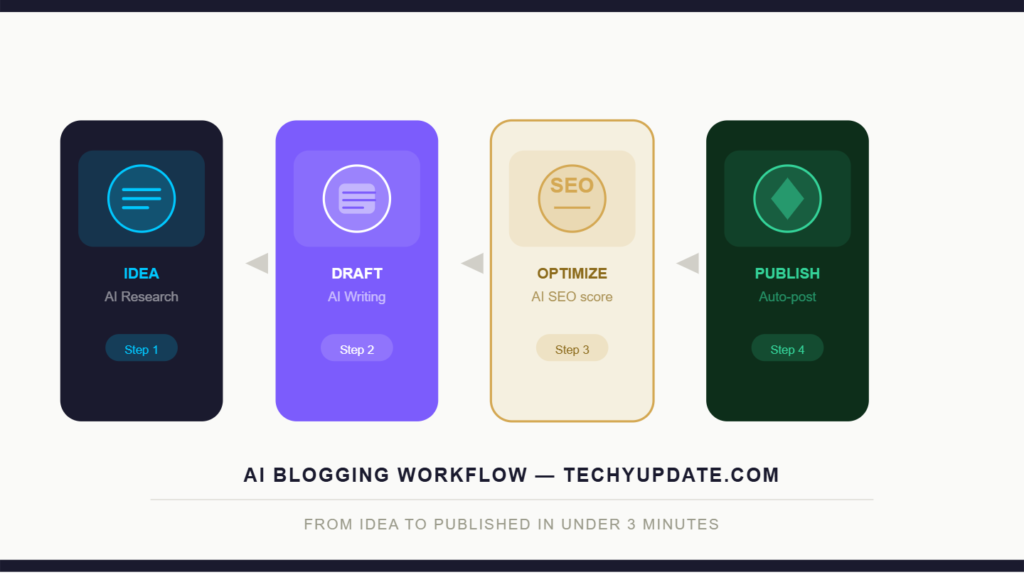
A modern blogging workflow powered by AI typically looks like this:
- Topic research using AI insights
- Keyword clustering and SEO planning
- Content generation and structuring
- Editing and readability improvement
- Optimization for ranking and engagement
This integrated approach ensures that your content is not only well-written but also discoverable.
Best AI Tools for Blogging 2026 (With Real Use Cases)
Let’s explore the most effective categories of AI tools and how they are used in real-world blogging.
1. AI Writing Assistants
AI writing tools help generate high-quality drafts quickly.
Use Case:
A travel blogger struggling with writer’s block uses an AI writing tool to generate a blog outline and first draft. They then personalize it with their experiences.
Benefits:
- Faster content creation
- Improved grammar and clarity
- Structured writing
2. AI SEO Optimization Tools
These tools analyze keywords, competitors, and ranking opportunities.
Use Case:
A niche blogger targeting “fitness tips” uses AI SEO tools to find low-competition keywords and optimize headings, increasing organic traffic.
Key Advantages:
- Keyword suggestions
- Content scoring
- SERP analysis
3. AI Content Research Tools
These tools help discover trending topics and user intent.
Use Case:
A finance blogger identifies trending topics like “AI investing tools” and publishes content before competitors.
4. AI Image & Design Tools
Visual content is crucial for engagement.
Use Case:
A food blogger generates high-quality images with AI rather than hiring photographers.
5. AI Automation Tools
Automation tools help schedule posts, manage workflows, and repurpose content.
Use Case:
A blogger automatically converts blog posts into social media snippets using AI.
Comparison Table: Popular AI Blogging Tools
| Tool Type | Main Function | Best For | Ease of Use | SEO Support |
| AI Writing Tool | Content creation | Bloggers, marketers | Easy | Medium |
| SEO Optimization | Keyword + ranking | SEO-focused bloggers | Medium | High |
| Research Tool | Trend discovery | Content strategists | Easy | Medium |
| Design Tool | Images + visuals | Lifestyle bloggers | Easy | Low |
| Automation Tool | Workflow management | Advanced bloggers | Medium | Medium |
Read More: AI Agents Automating Blog Creation Next-Level Content Power

Advanced Blogging Strategies Using AI
To truly benefit from AI Tools for Blogging 2026, you need more than just basic usage; you need a strategy.
Semantic SEO Optimization
AI tools help you go beyond keywords by understanding search intent.
Instead of targeting only one keyword, AI suggests related terms like:
- AI content writing tools
- blogging automation software
- SEO AI tools
This improves your blog’s topical authority and helps it rank higher.
Content Personalization
Modern AI tools analyze user behavior and suggest content improvements.
For example:
- Adjust tone based on the audience
- Suggest engaging headlines
- Improve readability
Content Repurposing
One blog post can become:
- Social media posts
- Email newsletters
- Video scripts
AI tools automate this process, saving time and increasing reach.
Common Problems Bloggers Face (And AI Solutions)
Many bloggers hesitate to adopt AI due to confusion or misconceptions.
Problem 1: “AI Content Feels Robotic”
Solution:
Use AI for drafts, then add your personal voice and experiences.
Problem 2: “Too Many Tools, Hard to Choose”
Solution:
Start with one writing tool + one SEO tool. Scale gradually.
Problem 3: “Fear of SEO Penalties”
Solution:
Search engines reward quality, not whether AI was used. Focus on value and originality.
Problem 4: “Lack of Strategy”
Solution:
Use AI for planning content clusters and long-term growth.
Pros and Cons of AI Tools for Blogging
Pros
- Faster content creation
- Improved SEO performance
- Better consistency
- Scalable blogging strategy
- Reduced workload
Cons
- Requires human editing
- Over-reliance can reduce creativity
- Some tools are expensive
- Learning curve for beginners
Practical Example: AI Blogging Workflow in Action
Let’s say you want to write about “digital marketing trends.”
1: Use AI to generate topic ideas
2: Find low-competition keywords
3: Create a structured outline
4: Generate a draft
5: Edit and personalize
6: Optimize for SEO
This entire process can be completed in a fraction of the time compared to manual blogging.
Future of Blogging with AI
AI is not just a trend; it’s the future of content creation.
By 2026, blogging will be more data-driven, personalized, and automated. Bloggers who adopt AI early will have a major competitive advantage.
Expect:
- Smarter search algorithms
- AI-powered personalization
- Voice and visual search growth
- Automated content optimization
Conclusion
The rise of AI Tools for blogging in 2026 marks a turning point in the blogging industry. What once required hours of effort can now be done in minutes with better results.
However, the real power of AI lies in how you use it.
If you rely on AI blindly, your content may feel generic. But if you combine AI efficiency with human creativity, you unlock a powerful formula for success.
Start small. Choose the right tools. Focus on delivering value to your audience.
Most importantly, take action.
The bloggers who win in 2026 are not the ones who work harder, but the ones who work smarter.
What are AI tools for blogging?
AI tools for blogging are software that help create, optimize, and manage blog content.
Are AI tools good for SEO?
Yes, they help with keyword research, content optimization, and improving rankings.
Can AI replace human bloggers?
No, AI supports bloggers but cannot replace creativity and personal experience.
Which AI tool is best for beginners?
Start with simple writing and SEO tools that are easy to use.
Is AI-generated content safe for Google?
Yes, as long as it is helpful, original, and user-focused.
How do AI tools improve productivity?
They automate research, writing, and optimization tasks, saving time.
Do AI tools help increase traffic?
Yes, by improving SEO and content quality.
Are AI blogging tools expensive?
Some are free, while advanced tools may require subscriptions.
How often should I use AI tools?
Use them regularly, but always edit content manually.
What is the future of AI in blogging?
AI will make blogging faster, smarter, and more personalized