

Artificial intelligence is no longer a futuristic concept it is actively reshaping how content is created, distributed, and monetized. How to Use AI for YouTube Automation has emerged as one of the most transformative trends in the digital world, allowing creators to build and scale channels without traditional production barriers.
From scriptwriting to video editing and publishing, automation tools are streamlining every aspect of YouTube content creation. But with these opportunities come important considerations that every creator must understand.
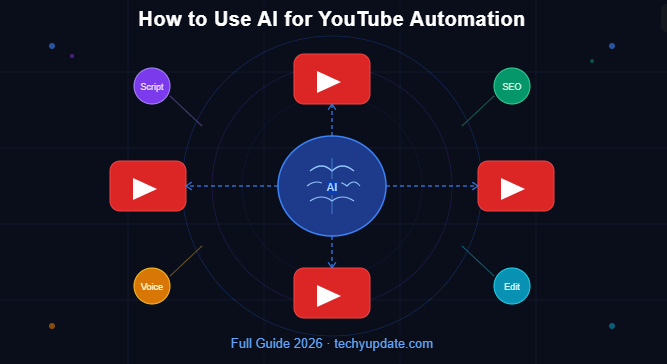
Table of Contents
- Introduction to How to Use AI for YouTube Automation
- What Is YouTube Automation in 2026?
- The Rise of AI in Content Creation
- Why Creators Are Switching to Automated Channels
- Benefits and Risks of Using AI for YouTube
- Conclusion
How to Use AI for YouTube Automation
How to Use AI for YouTube Automation refers to the use of artificial intelligence tools and workflows to manage and scale a YouTube channel with minimal manual effort. In 2026, creators are leveraging AI to handle repetitive and time-consuming tasks such as:
- Video scripting
- Voiceovers
- Editing
- Thumbnail design
- SEO optimization
- Upload scheduling
This shift is enabling individuals and businesses to focus more on strategy while automation handles execution.
What Is YouTube Automation in 2026?
YouTube automation has evolved far beyond outsourcing tasks to freelancers. In 2026, it is a fully integrated system powered by AI tools that can generate complete videos from scratch.
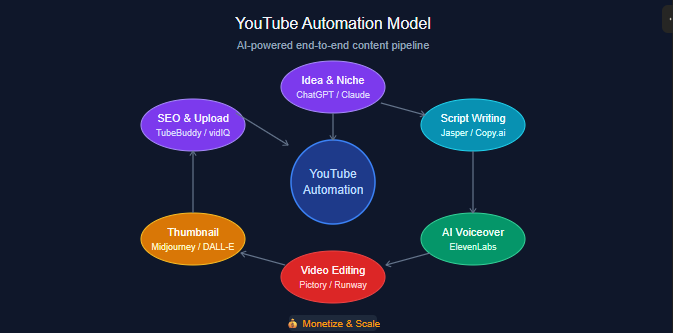
A typical automated workflow looks like this:
- AI generates a script based on trending topics
- Text-to-speech tools create natural voiceovers
- Video editors assemble clips and visuals automatically
- AI designs thumbnails optimized for clicks
- SEO tools optimize titles, tags, and descriptions
This ecosystem allows creators to publish content consistently without appearing on camera or recording their voice.
The Rise of AI in Content Creation
The rapid growth of artificial intelligence has been driven by advancements in machine learning, natural language processing, and generative models.
Today’s AI tools can:
- Write human-like scripts
- Generate realistic voices
- Create engaging visuals
- Analyze audience behavior
Platforms like
are leading this transformation by offering accessible How-to-Use AI features for creators.
Why AI Adoption Is Accelerating
Several factors are driving the adoption of How to Use AI for content creation:
- Increasing competition on YouTube
- Demand for consistent uploads
- Monetization opportunities
- Lower production costs
Creators who once needed a full team can now operate solo with the help of AI tools.
Why Creators Are Switching to Automated Channels
The shift toward How to Use AI for YouTube Automation is not just a trend, it’s a strategic move.
1. Scalability
Automation allows creators to manage multiple channels simultaneously without increasing workload.
2. Time Efficiency
Tasks that once took hours can now be completed in minutes using AI.
3. Cost Reduction
Hiring editors, voice artists, and designers can be expensive. AI tools significantly reduce these costs.
4. Passive Income Potential
Automated channels can generate revenue through ads, affiliate marketing, and sponsorships with minimal ongoing effort.
5. Data-Driven Decisions
AI tools analyze performance metrics and suggest improvements, helping creators optimize their content strategy.
Benefits and Risks of Using AI for YouTube
While How to Use AI for YouTube Automation offers significant advantages, it also comes with potential downsides that creators must consider.
Benefits
1. Faster Content Production
AI speeds up every stage of video creation, enabling daily uploads.
2. Consistency
Automation ensures regular publishing, which is crucial for algorithm growth.
3. Accessibility
Even beginners with no technical skills can start a YouTube channel.
4. Enhanced Creativity
AI tools can generate ideas and formats that creators might not have considered.
Risks
1. Content Quality Issues
Over-reliance on AI may result in generic or low-quality content if not reviewed properly.
2. Platform Policies
YouTube continues to update its policies regarding AI-generated content. Violations can lead to demonetization.
3. Lack of Personal Branding
Automated channels often lack a human connection, which can affect audience loyalty.
4. Ethical Concerns
Using AI-generated voices or content without transparency can raise ethical questions.
Understanding the YouTube Automation Model
How to Use AI for YouTube Automation continues to reshape how creators approach content production, especially through scalable, system-driven channel models. To succeed in this space, it’s essential to understand how automation works, which channels perform best, and how monetization fits into the overall strategy.
What Is a Faceless YouTube Channel?
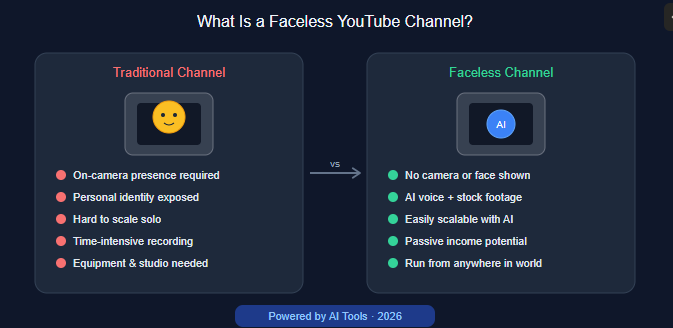
A faceless YouTube channel is a content channel in which the creator does not appear on camera or use their personal identity. Instead, videos are created using voiceovers, stock footage, animations, or AI-generated visuals.
This model has gained massive popularity because it removes many traditional barriers to entry, such as:
- Camera confidence
- Recording equipment
- Personal branding pressure
With How to Use AI for YouTube Automation, creators can produce high-quality faceless videos using tools for:
- Script generation
- AI voiceovers
- Stock video integration
- Automated editing
Examples of faceless content include:
- Motivational videos
- Educational explainers
- Top 10 countdowns
- Finance and tech breakdowns
This approach allows creators to stay anonymous while still building profitable channels.
Different Types of Automated Channels (Niche Examples)
Choosing the right niche is critical for success in How to Use AI for YouTube Automation. Some niches perform significantly better due to high demand, monetization potential, and scalability.
1. Finance and Investment Channels
These channels focus on topics like saving money, investing, and passive income strategies. They typically attract high CPM (cost per thousand views), making them highly profitable.
2. Tech and AI Channels
Content covering AI tools, software tutorials, and tech trends is rapidly growing in 2026. These channels benefit from a tech-savvy audience and strong affiliate opportunities.
3. Health and Wellness Channels
Topics such as fitness, mental health, and nutrition are evergreen and consistently attract viewers. However, accuracy and credibility are essential in this niche.
4. Motivational and Self-Improvement Channels
These channels use storytelling, quotes, and speeches to inspire audiences. They often rely on stock footage and powerful voice-overs.
5. Facts and Mystery Channels
“Did you know?” style videos, unexplained mysteries, and historical facts are highly engaging and shareable.
6. Kids and Animation Channels
Animated content for children can generate massive views, though it requires careful compliance with platform policies.
Each of these niches can be effectively scaled using How to Use AI for YouTube Automation, especially when paired with consistent publishing and SEO optimization.
How AI Fits Into the Automation Workflow
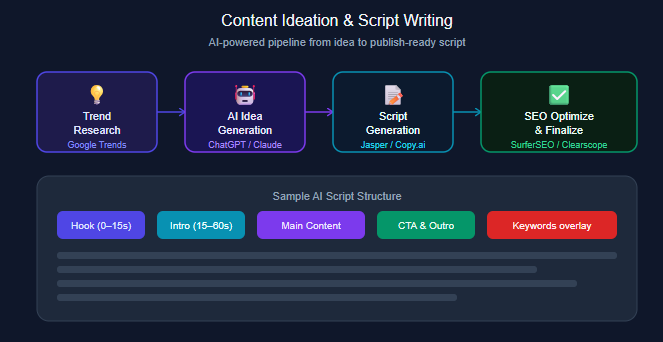
Artificial intelligence is the backbone of modern YouTube automation. It enables creators to build a streamlined workflow that minimizes manual effort while maximizing output.
Step-by-Step AI Workflow
1. Topic Research
AI tools analyze trends, keywords, and audience interest to suggest video ideas.
2. Script Writing
Natural language AI generates engaging, structured scripts in minutes.
3. Voice Generation
Text-to-speech tools produce realistic voice-overs in multiple tones and languages.
4. Video Creation
AI-assisted editors automatically combine stock footage, animations, and transitions.
5. Thumbnail Design
AI tools create eye-catching thumbnails optimized for click-through rates.
6. SEO Optimization
Automation tools generate titles, tags, and descriptions based on keyword data.
7. Publishing & Scheduling
Content is uploaded and scheduled using automated systems.
Popular Tools in the Workflow
- ChatGPT for scripting
- Canva for thumbnails
- Descript for editing
- Pictory for video generation
These tools integrate seamlessly into a How to Use AI for YouTube Automation system, allowing creators to scale content production efficiently.
Monetization Potential of Automated Channels
One of the biggest reasons creators adopt How to Use AI for YouTube Automation is its strong earning potential. When executed correctly, automated channels can generate multiple income streams.
1. YouTube Ad Revenue
Once a channel meets monetization requirements (1,000 subscribers and 4,000 watch hours), ads become a primary income source.
2. Affiliate Marketing
Creators can promote products or services and earn commissions for every sale generated through their links.
3. Sponsorships
Brands collaborate with channels to promote their offerings, especially in high-value niches like finance and tech.
4. Digital Products
Selling eBooks, courses, or templates can generate additional revenue.
5. Channel Flipping
Some creators build automated channels and sell them for profit once they start generating consistent income.
Realistic Expectations
While the potential is high, success with How to Use AI for YouTube Automation requires:
- Consistency
- Quality control
- Strategic niche selection
- Ongoing optimization
It is not a “get rich quick” model but a scalable business approach that rewards persistence and smart execution.
Choosing a Profitable YouTube Niche
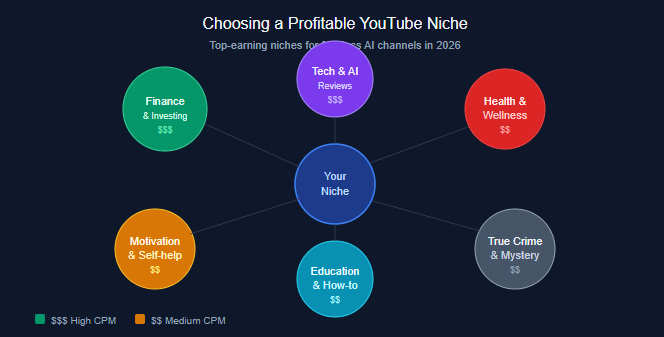
Selecting the right niche is the foundation of success in How to Use AI for YouTube Automation. Even with the most advanced tools, a poorly chosen niche can limit growth and earnings. On the other hand, a well-researched niche can generate consistent traffic, higher ad revenue, and long-term scalability.
High-CPM Niches for 2026
In How to Use AI for YouTube Automation, CPM (Cost Per Mille) determines how much advertisers are willing to pay per 1,000 views. High-CPM niches are more profitable because they attract premium advertisers.
Top High-CPM Niches in 2026
1. Finance and Investing
Topics such as personal finance, cryptocurrency, stock market strategies, and passive income dominate the high-CPM rankings. Advertisers in this niche pay more because of the high value of their customers.
2. Technology and AI
With rapid innovation, tech-related content especially AI tools, software tutorials, and digital trends—continues to attract high-paying ads.
3. Business and Entrepreneurship
Content focused on startups, online businesses, freelancing, and marketing strategies appeals to a professional audience.
4. Health and Fitness
Fitness programs, diet plans, and mental wellness content are evergreen and monetizable, though accuracy is critical.
5. Digital Marketing and SEO
Businesses constantly seek marketing knowledge, making this niche both profitable and scalable.
Why High-CPM Niches Work
- Strong advertiser demand
- High-value audience
- Better monetization opportunities
- Multiple income streams beyond ads
When combined with How to Use AI for YouTube Automation, these niches can scale quickly with consistent uploads.
Evergreen vs Trending Niches
Understanding the difference between evergreen and trending niches is essential for long-term success.
Evergreen Niches
Evergreen content remains relevant over time and consistently attracts views.
Examples:
- Personal finance
- Health and fitness
- Education
- Self-improvement
Benefits:
- Long-term traffic
- Stable income
- Lower content churn
Trending Niches
Trending niches focus on current events, viral topics, or fast-growing industries.
Examples:
- AI tools
- Viral news
- Tech updates
- Pop culture
Benefits:
- Quick traffic spikes
- High engagement
- Opportunity for rapid growth
Best Strategy: Hybrid Approach
The most effective strategy in How to Use AI for YouTube Automation is combining both:
- Use evergreen content for stability
- Use trending topics for growth spikes
This balance ensures both short-term visibility and long-term sustainability.
How AI Helps with Niche Research
Artificial intelligence has revolutionized how creators identify profitable niches. Instead of guesswork, AI provides data-driven insights.
Key Ways AI Assists
1. Keyword Analysis
AI tools identify high-volume, low-competition keywords.
2. Trend Prediction
Machine learning models analyze patterns to forecast upcoming trends.
3. Competitor Analysis
AI evaluates successful channels to uncover content gaps.
4. Content Ideas Generation
AI can instantly generate hundreds of niche-specific video ideas.
Popular AI Tools for Research
- https://trends.google.com (Google Trends)
- https://ahrefs.com (SEO analysis)
- https://www.semrush.com (keyword research)
These tools help creators make smarter decisions when building a How to Use AI for YouTube Automation strategy.
Validating Your Niche for Long-Term Growth
Before committing to a niche, validation is critical. Many creators fail because they skip this step.
Step-by-Step Niche Validation
1. Search Demand
Check if people are actively searching for your topic using keyword tools.
2. Competition Analysis
Analyze top channels in your niche. Look at:
- Views per video
- Upload frequency
- Content style
3. Monetization Potential
Ensure the niche supports multiple revenue streams:
- Ads
- Affiliate marketing
- Sponsorships
4. Content Scalability
Ask yourself: Can you create 50–100 videos in this niche?
5. Audience Engagement
Look for niches with active comments, shares, and community interaction.
Red Flags to Avoid
- Extremely saturated niches with no differentiation
- Low advertiser demand
- Limited content ideas
- Policy-sensitive topics
Keyword Research Using AI
In How to Use AI for YouTube Automation, keyword research is the engine behind visibility. Without proper SEO, even high-quality videos can remain undiscovered. AI tools have transformed this process by making keyword discovery faster, smarter, and more data-driven.
Importance of SEO for YouTube Automation
Search Engine Optimization (SEO) is essential for ranking videos on YouTube and in Google Search results.
Why SEO Matters
- Helps videos rank higher in search results
- Increases organic traffic without paid ads
- Improves click-through rate (CTR)
- Boosts long-term visibility
For How to Use AI for YouTube Automation, SEO ensures that automated content actually reaches the right audience. Without it, automation loses its value.
AI Tools for Keyword Discovery
AI tools simplify keyword research by analyzing massive datasets and identifying opportunities that humans might miss.
Top AI Tools for Keyword Research
- Google Trends – Discover trending topics in real time
- Ahrefs – Analyze keywords, backlinks, and competitors
- SEMrush – Find keyword gaps and search intent
- VidIQ – Optimize YouTube-specific keywords
- TubeBuddy – Keyword scoring and tag suggestions
These tools integrate perfectly into a How to Use AI for YouTube Automation workflow, allowing creators to scale content with precision.
Finding Low-Competition, High-Volume Keywords
The real secret to growth is targeting keywords with high search volume and low competition.
How to Find Them
1. Long-Tail Keywords
Focus on specific phrases like:
- “Best AI tools for beginners 2026”
- “How to automate YouTube videos step by step.”
2. Keyword Difficulty Analysis
Use tools like Ahrefs to check how hard it is to rank.
3. Search Intent Matching
Ensure your content matches what users are actually looking for.
4. Competitor Gaps
Find keywords your competitors are not targeting.
Pro Tip
In How to Use AI for YouTube Automation, it’s better to rank for multiple small keywords than compete for one highly competitive keyword.
READ MORE: AI Image Generator – Free Online
Optimizing Titles and Descriptions with AI
AI can generate SEO-optimized titles and descriptions that improve visibility and engagement.
Key Optimization Strategies
1. Include Focus Keyword Early
Always place How to Use AI for YouTube Automation at the beginning of your title.
2. Use Power Words
Words like “Ultimate,” “Proven,” or “Secret” increase clicks.
3. Add Numbers
Titles with numbers perform better (e.g., “7 Ways to Grow Faster”).
4. Write Engaging Descriptions
AI can create keyword-rich descriptions that include:
- Main keyword
- Related keywords
- Call-to-action
Example Optimized Title
“10 Proven Ways to Use AI for YouTube Automation Strategies for Fast Growth”
Content Ideation and Script Writing
Content is still king even in automation. AI helps generate ideas and scripts, but strategy and structure determine success.
Generating Video Ideas with AI
Coming up with fresh ideas consistently can be challenging. AI solves this by generating endless content ideas based on trends and audience behavior.
Methods for Idea Generation
- Analyze trending topics using Google Trends
- Use AI prompts for niche-specific ideas
- Study competitor channels
- Explore audience comments and questions
Example Ideas
- “Top AI tools changing YouTube in 2026”
- “How to build a faceless YouTube channel.”
- “Passive income with YouTube automation”
Writing High-Retention Scripts Automatically
AI can generate scripts quickly, but high retention requires more than just text.
Elements of a High-Retention Script
- Strong hook in the first 5 seconds
- Clear structure
- Short, engaging sentences
- Curiosity-driven storytelling
AI tools can produce drafts, but human editing ensures quality and originality in YouTube Automation.
Structuring Scripts for Maximum Engagement
A well-structured script keeps viewers watching longer, which improves rankings.
Proven Script Structure
- Hook – Grab attention immediately
- Intro – Explain what viewers will learn
- Main Content – Deliver value in sections
- Pattern Interrupts – Add variety (questions, facts, visuals)
- Conclusion – Summarize and include CTA
Engagement Tips
- Use storytelling techniques
- Add emotional triggers
- Keep pacing fast and dynamic
Avoiding Repetitive or Robotic Content
One of the biggest risks in How to Use AI for YouTube Automation is producing content that feels robotic or repetitive.
How to Fix This
1. Edit AI Output
Always refine scripts to add personality and flow.
2. Use Natural Language
Avoid overly formal or generic phrases.
3. Add Unique Insights
Include opinions, examples, or case studies.
4. Vary Sentence Structure
Mix short and long sentences for better readability.
AI Voiceovers and Narration
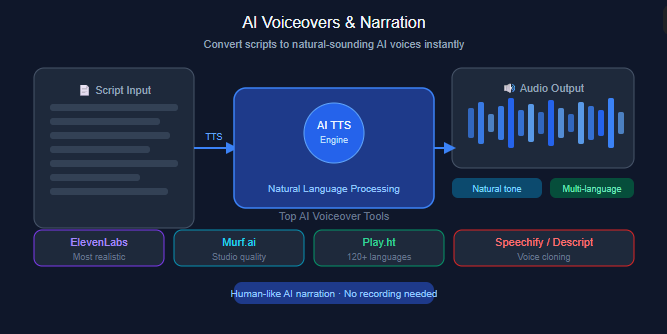
In How to Use AI for YouTube Automation, voiceovers play a crucial role in delivering content effectively. A compelling voice can significantly increase watch time, engagement, and overall viewer retention.
Best AI Voice Generators in 2026
AI voice technology has advanced to the point where synthetic voices sound nearly identical to human narration.
Top AI Voice Tools
- ElevenLabs – Ultra-realistic voice synthesis with emotional tone control
- Murf.ai – Professional voiceovers for content creators
- Play.ht – Wide range of voices and languages
- Descript – Voice cloning and editing in one platform
These tools are essential for scaling. How to Use AI for YouTube Automation without recording your own voice.
Choosing the Right Voice for Your Channel
The voice you choose should match your niche and audience.
Key Considerations
- Tone – Professional, casual, energetic, or calm
- Audience – Age group and preferences
- Content Type – Educational, storytelling, or motivational
For example:
- Finance channels → authoritative and վստահ voice
- Kids content → energetic and friendly tone
- Tech videos → clear and neutral delivery
Consistency in voice builds brand identity in How to Use AI for YouTube Automation.
Human vs AI Voice: Pros and Cons
AI Voice Pros
- Fast and scalable
- Cost-effective
- Available in multiple languages
AI Voice Cons
- May lack emotional depth
- Can sound repetitive if not customized
Human Voice Pros
- Authentic and expressive
- Stronger emotional connection
Human Voice Cons
- Time-consuming
- Expensive for scaling
Best Approach
Many creators combine both—using AI for efficiency and human editing for realism.
Tips for Natural-Sounding Narration
To avoid robotic الصوت, follow these strategies:
- Add pauses and punctuation in scripts
- Adjust pitch and speed
- Use emotion settings in tools like ElevenLabs
- Break long sentences into shorter phrases
- Always preview and refine output
A natural voiceover improves retention and strengthens your How to Use AI for YouTube Automation channel.
Video Creation and Editing with AI
AI has revolutionized video production, allowing creators to produce high-quality videos without advanced editing skills.
AI Video Generators and Editors
Popular Tools
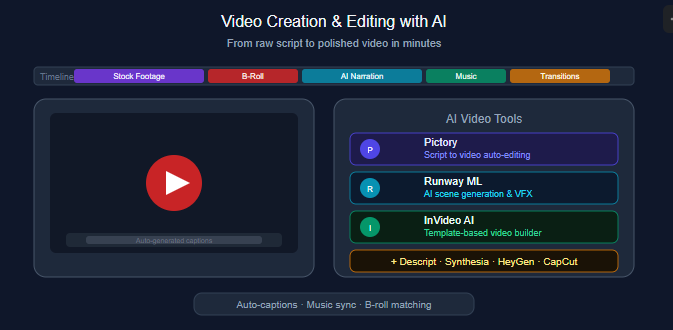
- Pictory – Converts scripts into videos
- Runway ML – Advanced AI editing features
- Descript – Edit videos like a document
- InVideo – Templates and automation tools
These platforms simplify using AI for YouTube Automation workflows.
Automating Video Assembly (Images, Clips, Transitions)
AI tools automatically:
- Match visuals to script context
- Add stock footage and images
- Insert transitions and effects
This eliminates the need for manual editing while maintaining professional quality.
Adding Subtitles and Visual Effects Automatically
Subtitles are essential for accessibility and engagement.
Benefits of AI Subtitles
- Improve watch time
- Increase accessibility
- Boost SEO
Tools like Descript and Pictory can generate captions instantly.
Maintaining Video Quality and Consistency
Consistency is key in How to Use AI for YouTube Automation.
Best Practices
- Use the same fonts and colors
- Maintain consistent intro/outro style
- Keep video length aligned with audience expectations
- Regularly review AI-generated content
Thumbnail Creation Using AI
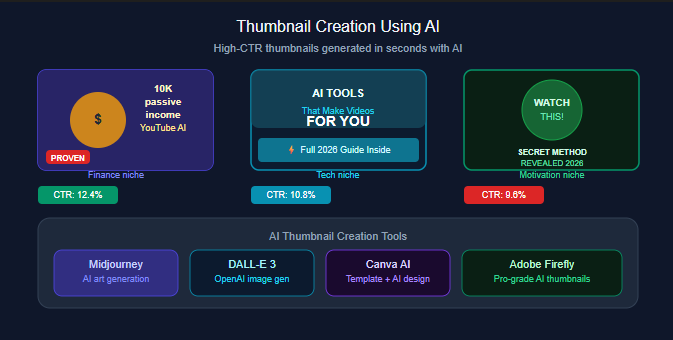
Thumbnails are one of the most important factors influencing click-through rate (CTR).
Importance of Thumbnails for CTR
A compelling thumbnail can:
- Increase clicks
- Improve ranking
- Attract attention in crowded feeds
Even the best content can fail without a strong thumbnail.
AI Tools for Thumbnail Design
Recommended Tools
- Canva – Easy-to-use AI design features
- Adobe Express – Professional templates
- Fotor – How to Use AI for enhancements
These tools help automate design in How to Use AI for YouTube Automation.
Elements of a High-Converting Thumbnail
- Bold, readable text
- High contrast colors
- Clear focal point
- Emotional triggers (surprise, curiosity)
- Minimal clutter
A/B Testing Thumbnails with AI
AI allows creators to test multiple thumbnails and choose the best-performing one.
How It Works
- Generate multiple variations
- Track CTR performance
- Automatically select the winner
This data-driven approach improves results over time.
Uploading and Scheduling Videos
Automation doesn’t stop at creation, it extends to publishing and scheduling.
Automating Uploads with Tools and APIs
Creators can use automation tools and APIs to upload videos without manual intervention.
Platforms like YouTube Studio allow integration with scheduling tools.
Best Times to Post Using AI Analytics
AI analyzes audience behavior to determine optimal posting times.
Factors Considered
- Viewer activity
- Time zones
- Engagement patterns
Posting at the right time increases visibility and engagement.
Creating Consistent Upload Schedules
Consistency builds trust with both viewers and the algorithm.
Recommended Schedule
- 2–3 videos per week (minimum)
- Same days and times
- Long-term content calendar
Bulk Upload Strategies
Bulk uploading is a powerful feature in How to Use AI for YouTube Automation.
Benefits
- Saves time
- Ensures consistency
- Allows strategic planning
Creators can prepare weeks of content in advance and schedule everything automatically.
YouTube SEO Optimization
In How to Use AI for YouTube Automation, SEO is what turns content into traffic. Without proper optimization, even the best videos can fail to reach their audience.
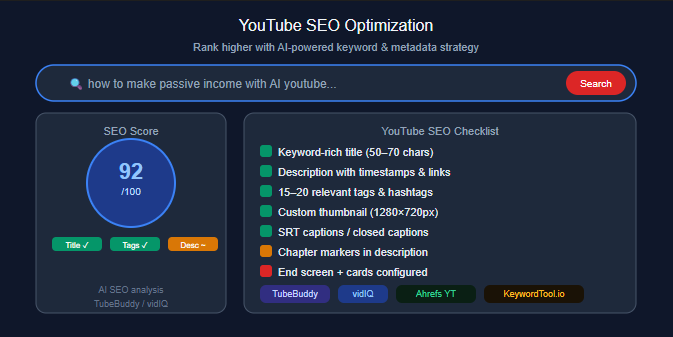
AI for Title Optimization
AI tools can generate highly clickable, keyword-rich titles that improve rankings and visibility.
Best Practices
- Place How to Use AI for YouTube Automation at the beginning
- Use numbers and power words
- Keep titles clear and curiosity-driven
- Analyze competitors using VidIQ
AI ensures your titles are both optimized and engaging.
Writing SEO-Friendly Descriptions
Descriptions help YouTube understand your content and improve search rankings.
Key Elements
- Include the focus keyword naturally
- Add related keywords and phrases
- Use timestamps for better navigation
- Include links and calls-to-action
AI tools can generate structured descriptions quickly, making How to Use AI for YouTube Automation more efficient.
Tag Generation Using AI
Tags help categorize your content and improve discoverability.
How AI Helps
- Generates relevant tags automatically
- Suggests long-tail keywords
- Identifies trending search terms
Tools like TubeBuddy simplify tag optimization.
Improving Click-Through Rate (CTR)
CTR is a critical ranking factor.
Ways to Improve CTR
- Use compelling thumbnails
- Write curiosity-driven titles
- Match thumbnail with title promise
- Test variations using AI tools
Higher CTR leads to better rankings and more views in How to Use AI for YouTube Automation.
Audience Engagement and Retention
Engagement signals tell YouTube that your content is valuable.
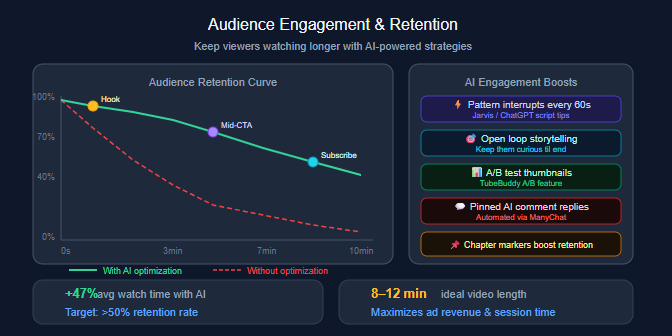
How AI Analyzes Viewer Behavior
AI tools track:
- Watch time
- Drop-off points
- Click patterns
Platforms like YouTube Analytics provide deep insights to refine your strategy.
Increasing Watch Time with Smart Editing
Watch time is a key ranking factor.
Strategies
- Start with a strong hook
- Use fast pacing and transitions
- Add pattern interrupts (visuals, text, sound effects)
- Keep content concise and engaging
AI editing tools help optimize retention in How to Use AI for YouTube Automation.
Automating Comments and Replies
Engaging with viewers builds trust and boosts algorithm performance.
Automation Options
- Auto-replies for common questions
- AI-generated responses
- Comment moderation filters
Adding a human touch is still important.
Building a Loyal Audience Without Showing Your Face
Faceless channels can still build strong communities.
How to Do It
- Maintain a consistent voice and style
- Provide real value in every video
- Use storytelling techniques
- Encourage interaction (likes, comments, subscriptions)
Consistency is key in How to Use AI for YouTube Automation.
Monetization Strategies
Monetization is the ultimate goal for most automated channels.

YouTube Partner Program Requirements
To monetize via ads, channels must meet:
- 1,000 subscribers
- 4,000 watch hours (or equivalent Shorts views)
Apply through YouTube Studio.
Affiliate Marketing with Automated Channels
Promote products and earn commissions.
Benefits
- Passive income
- No product creation required
- Scalable across multiple videos
Sponsored Content and Brand Deals
Brands pay creators to promote products or services.
Tips
- Choose relevant brands
- Maintain audience trust
- Disclose sponsorships properly
Selling Digital Products or Services
Examples include:
- eBooks
- Online courses
- Templates
This creates additional income streams beyond ads, as shown in How to Use AI for YouTube Automation.
Scaling Your YouTube Automation Business
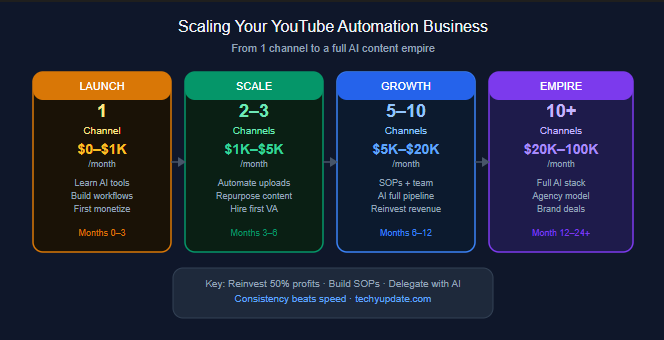
Scaling is where automation truly shines.
Creating Multiple Channels with AI
AI allows creators to manage several channels simultaneously.
Benefits
- Diversified income
- Reduced risk
- Faster growth
Outsourcing vs Fully Automated Workflows
Outsourcing
- Human creativity
- Higher quality
- More expensive
Automation
- Faster production
- Lower cost
- Scalable
Most successful creators use a hybrid approach.
Managing Content at Scale
To scale effectively:
- Use content calendars
- Batch produce videos
- Automate repetitive tasks
Tools like Notion help organize workflows.
Using Analytics to Improve Performance
Data-driven decisions are essential.
Key Metrics
- Watch time
- CTR
- Audience retention
- Revenue per video
AI insights help refine your How to Use AI for YouTube Automation strategy.
Tools and Software for YouTube Automation
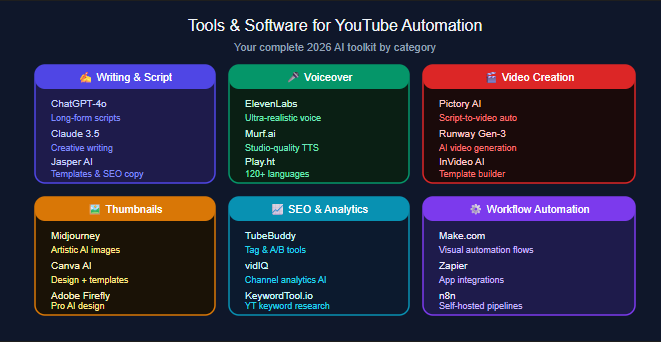
Having the right tools is critical.
Script Writing Tools
- ChatGPT – Content generation and scripting
Voice Generation Tools
- ElevenLabs
- Murf.ai
Video Editing Tools
- Pictory
- InVideo
SEO and Analytics Tools
- VidIQ
- TubeBuddy
These tools power the entire How to Use AI for YouTube Automation ecosystem.
Legal and Ethical Considerations
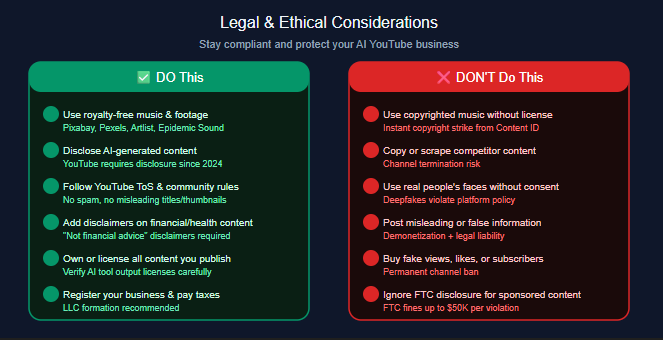
Automation must be used responsibly.
Copyright Issues with AI Content
Using copyrighted material without permission can lead to strikes or channel removal.
Best Practice
- Use royalty-free assets
- Verify licenses
- Avoid reused content
YouTube Policies on Automated Content
YouTube requires:
- Original content
- Value addition
- Compliance with monetization policies
Avoiding Plagiarism and Duplicate Content
Always ensure your content is:
- Unique
- Original
- Properly edited
AI should assist, not copy.
Ethical Use of AI in Content Creation
Transparency and honesty build trust.
Guidelines
- Avoid misleading content
- Disclose AI usage when necessary
- Focus on delivering real value
Common Mistakes to Avoid
Avoiding mistakes is just as important as following best practices.
Over-Automation Without Quality Control
Relying entirely on AI can reduce content quality.
Solution
Always review and refine output.
Choosing the Wrong Niche
A poor niche limits growth and earnings.
Solution
Conduct proper research before starting.
Ignoring Audience Engagement
Lack of interaction can hurt performance.
Solution
Encourage comments and respond actively.
Poor SEO Optimization
Without SEO, content remains invisible.
Solution
Use AI tools and consistently follow best practices.
Case Studies of Successful AI YouTube Channels
Studying real-world examples is one of the fastest ways to understand what works in How to Use AI for YouTube Automation. Many faceless channels have grown rapidly by combining smart strategy with automation tools.
Examples of Faceless Channels That Succeeded
1. Educational Explainer Channels
Channels that simplify complex topics—such as science, finance, or history—have seen massive success using animation and AI voiceovers.
2. Motivation & Self-Improvement Channels
These channels use powerful storytelling, background music, and AI narration to create viral content.
3. Tech & AI News Channels
Focused on updates, tools, and tutorials, these channels thrive due to constant demand for new information.
4. Facts and “Top 10” Channels
Highly engaging and easy to scale, these channels perform well with automated scripts and visuals.
Common Traits of Successful Channels
- Consistent uploads
- Clear niche focus
- Strong thumbnails and titles
- Optimized SEO strategy
Lessons Learned from Top Creators
Successful creators in How to Use AI for YouTube Automation follow a few key principles:
1. Consistency Beats Perfection
Uploading regularly is more important than waiting for perfect content.
2. Data-Driven Decisions
Creators rely on analytics to refine their strategy using tools like YouTube Analytics.
3. Focus on Retention
High watch time leads to better rankings and growth.
4. Adapt Quickly
Trends change fast, and successful creators pivot when needed.
Strategies That Worked in 2026
1. Short + Long Content Strategy
Combining Shorts with long-form videos boosts reach and engagement.
2. AI-Assisted Content Creation
Using tools like ChatGPT for scripts and Pictory for editing.
3. Niche Authority Building
Focusing deeply on one niche rather than covering everything.
4. Thumbnail Optimization
Using AI tools to continuously test and improve thumbnails.
Mistakes That Led to Failure
Even with How to Use AI for YouTube Automation, many channels fail due to avoidable mistakes.
Common Failures
- Publishing low-quality, repetitive content
- Ignoring SEO optimization
- Choosing oversaturated niches
- Not analyzing performance data
- Over-automating without human review
Future of AI in YouTube Automation
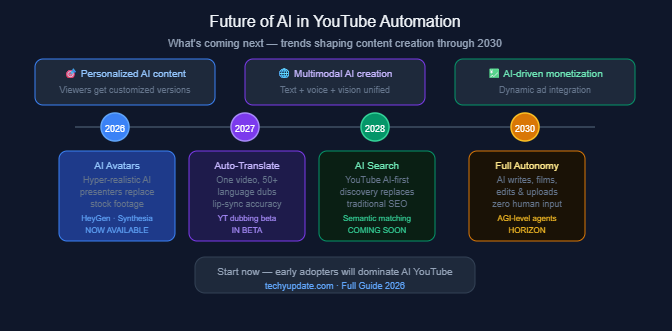
The future of How to Use AI for YouTube Automation is evolving rapidly, with new technologies reshaping content creation and distribution.
Emerging Trends in AI Content Creation
- Hyper-realistic AI voices and avatars
- Fully automated video production pipelines
- Personalized content generation
- AI-generated animations and visuals
B. Role of Machine Learning in Personalization
Machine learning enables platforms like YouTube to:
- Recommend highly relevant content
- Predict viewer preferences
- Increase engagement through personalization
This makes it crucial for creators to produce targeted, high-quality videos.
AI and YouTube Algorithm Evolution
The algorithm is becoming smarter at detecting:
- Audience retention
- Engagement quality
- Content originality
AI-generated content must provide real value to succeed.
Predictions for 2027 and Beyond
- More automation tools with minimal human input
- Increased competition in faceless channels
- Greater emphasis on originality and authenticity
- Integration of AI avatars and virtual influencers
Creators who adapt early will dominate the next wave of How to Use AI for YouTube Automation.
Step-by-Step Workflow for Beginners
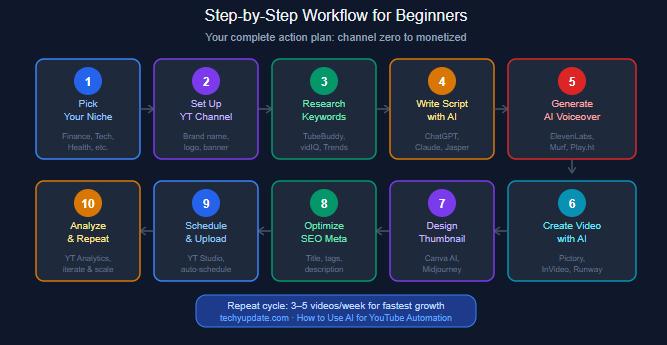
Starting with How to Use AI for YouTube Automation may seem complex, but breaking it down into steps makes it manageable.
Setting Up Your First Automated Channel
- Choose a niche
- Create a YouTube channel
- Design branding (logo, banner)
- Set up tools for automation
Creating Your First AI-Generated Video
- Generate a script using ChatGPT
- Create a voiceover using ElevenLabs
- Assemble a video using Pictory
- Add subtitles and effects
Publishing and Optimizing the Video
- Write SEO-friendly title and description
- Add tags using tools like TubeBuddy
- Upload and schedule content
Tracking Performance Metrics
Monitor key metrics using YouTube Analytics:
- Views
- Watch time
- CTR
- Audience retention
Use this data to improve future videos.
Advanced Automation Techniques
Once you understand the basics, you can scale using advanced strategies in How to Use AI for YouTube Automation.
Fully Automated Content Pipelines
A complete pipeline includes:
- Automated topic research
- Script generation
- Voiceover creation
- Video editing
- Upload scheduling
This allows creators to produce content at scale with minimal effort.
Integrating Multiple AI Tools
Combining tools improves efficiency:
- Script → ChatGPT
- Voice → ElevenLabs
- Video → Pictory
- SEO → VidIQ
Integration creates a seamless workflow.
Using AI for Real-Time Content Updates
AI can track trends and update content strategies in real time.
Examples
- Creating videos based on breaking news
- Updating titles and thumbnails
- Adjusting SEO strategies dynamically
Automating Channel Growth Strategies
Growth can also be automated:
- Scheduling uploads
- Optimizing SEO
- Responding to comments
- Testing thumbnails
However, human oversight is still necessary for quality and authenticity.
Frequently Asked Questions (FAQs)
Here are the most common questions about how to use AI for YouTube Automation, especially for beginners looking to start in 2026.
Is YouTube automation legal in 2026?
Yes, How to Use AI for YouTube Automation is completely legal as long as you follow YouTube’s policies. The key requirement is that your content must be original, valuable, and not misleading. Simply automating content without adding value can lead to demonetization.
Can AI-generated content be monetized?
Yes, AI-generated content can be monetized if it meets YouTube’s monetization guidelines. This includes:
- Original content
- Clear value for viewers
- No spam or reused material
Many successful channels using How to Use AI for YouTube Automation are already earning through ads, affiliates, and sponsorships.
How much does it cost to start YouTube automation?
The cost can vary depending on tools and scale.
Estimated Costs
- Free tools: $0
- Basic setup: $20–$100/month
- Advanced tools: $100–$300/month
You can start small and scale as your How to Use AI for YouTube Automation channel grows.
Do I need technical skills to use AI tools?
No, most modern AI tools are beginner-friendly and require little to no technical knowledge. Platforms like Canva and Pictory offer simple interfaces designed for non-experts.
How long does it take to grow an automated channel?
Growth depends on consistency, niche, and strategy.
Typical Timeline
- 1–3 months: Initial traction
- 3–6 months: Monetization potential
- 6–12 months: Scalable income
With How to Use AI for YouTube Automation, faster growth is possible if you consistently upload optimized content.
What are the best niches for beginners?
Beginner-friendly niches include:
- Motivation and self-improvement
- Tech and AI tools
- Facts and educational content
- Personal finance (with proper research)
These niches are easy to scale using How to Use AI for YouTube Automation.
Can YouTube detect AI-generated content?
Yes, YouTube can detect patterns in low-quality or spammy content. However, it does not penalize AI content itself, only content that lacks originality or value.
Is AI better than hiring freelancers?
It depends on your goals.
AI Advantages
- Faster
- Cost-effective
- Scalable
Freelancer Advantages
- Creativity
- Human touch
- Higher customization
The best approach in How to Use AI for YouTube Automation is often a hybrid model.
How do I avoid copyright issues?
To stay safe:
- Use royalty-free images and videos
- Avoid copying scripts or content
- Verify licenses before using assets
- Add original value to all content
Following these steps ensures that your “How to Use AI for YouTube Automation” channel remains compliant.
What is the best AI tool for beginners?
There is no single “best” tool, but a simple stack includes:
- ChatGPT for scripting
- Canva for thumbnails
- Pictory for video creation
This combination is ideal for starting with How to Use AI for YouTube Automation.
Conclusion
How to Use AI for YouTube Automation is revolutionizing the way content is created and consumed in 2026. It offers unmatched efficiency, scalability, and accessibility for creators looking to grow their presence on YouTube.
However, success with automation requires balance. Creators must combine AI efficiency with human creativity to ensure content remains valuable, engaging, and authentic.
Those who adapt to this evolving landscape early will gain a significant competitive advantage in the digital ecosystem.
Understanding the YouTube automation model is essential before diving in. From faceless channels to AI-driven workflows and monetization strategies, How to Use AI for YouTube Automation offers a powerful way to build a digital income stream in 2026.
Choosing the right niche is the most important step in building a successful How to Use AI for YouTube Automation channel. High-CPM niches provide better revenue opportunities, while a mix of evergreen and trending content ensures long-term growth.
AI is a powerful assistant, but not a replacement for creativity. The most successful creators use AI to enhance their workflow while maintaining a human touch.
Keyword research and content creation are the backbone of How to Use AI for YouTube Automation. By leveraging AI tools for SEO, idea generation, and scriptwriting, creators can produce high-performing content at scale.
From voiceovers to thumbnails and scheduling, every step of content creation can now be optimized using How to Use AI for YouTube Automation. The key is to combine automation with quality control to ensure your content remains engaging, consistent, and valuable.
Mastering how to use AI for YouTube Automation requires more than just tools; it demands strategy, consistency, and continuous improvement. By optimizing SEO, engaging your audience, and scaling smartly, you can build a sustainable and profitable YouTube business in 2026.
From case studies to advanced automation techniques, How to Use AI for YouTube Automation offers endless opportunities for creators in 2026 and beyond. The key to success lies in balancing automation with creativity, data analysis, and consistent improvement.
Recap of Key Points
How to Use AI for YouTube Automation has transformed content creation in 2026. From keyword research and scripting to video production and monetization, AI tools now handle almost every stage of the process.
Key takeaways include:
- Choosing the right niche is critical
- SEO drives visibility and growth
- Consistency matters more than perfection
- AI enhances efficiency but requires human oversight
Importance of Strategy Over Tools
While tools like VidIQ and TubeBuddy are powerful, they are only as effective as the strategy behind them.
Success in How to Use AI for YouTube Automation depends on:
- Smart niche selection
- Content quality
- Audience engagement
- Continuous optimization
Tools assist, but strategy wins.
Encouragement to Start and Experiment
Many aspiring creators hesitate to start because they feel overwhelmed. The reality is that How to Use AI for YouTube Automation lowers the barrier to entry more than ever before.
Start with:
- One niche
- One workflow
- One video at a time
Experiment, learn from data, and improve consistently.
AI and Content Creation in 2026
AI is not replacing creators, it is empowering them. The future of content lies in combining automation with creativity, strategy, and authenticity.
Creators who embrace How to Use AI for YouTube Automation today will be better positioned to scale, adapt, and succeed in the rapidly evolving digital landscape.