

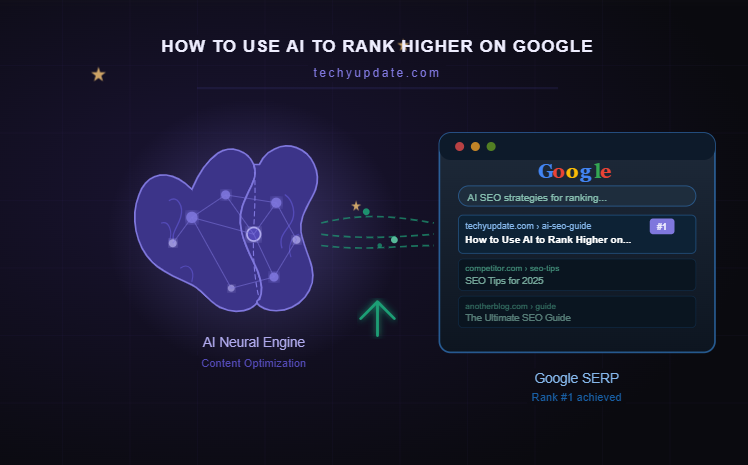
Understanding how to use AI to rank higher on Google today: radar polygon visualization is no longer optional for website owners who want consistent traffic growth in 2026. Search engines have evolved into intelligent systems that analyze user intent, content depth, engagement signals, and semantic relevance with extreme precision.
Many websites struggle because they still rely on outdated SEO methods like keyword repetition and basic backlink building. While these strategies once worked, they are no longer enough to compete in modern search results. Google’s AI-driven ranking systems now prioritize content quality, user satisfaction, and topical authority over traditional signals.
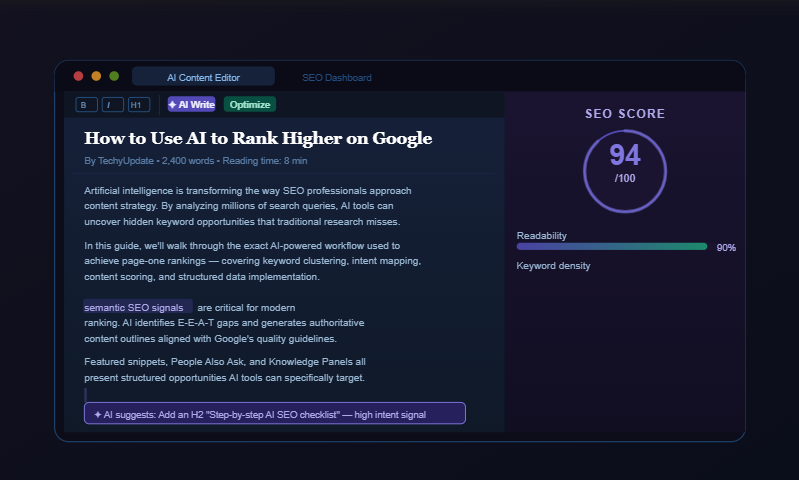
This shift creates both a challenge and an opportunity. The challenge is adapting to complex AI algorithms. The opportunity is that smart creators can now outperform competitors by using AI tools strategically.
Radar polygon visualization adds another powerful layer to this process. It allows you to visually analyze SEO performance across multiple ranking factors, helping you understand exactly where improvements are needed.
In this guide, you will learn how to use AI effectively for SEO, how radar visualization works, and how to combine both to achieve higher rankings on Google in 2026.
Understanding How to Use AI to Rank Higher on Google Today
The concept of How to Use AI to Rank Higher on Google Today revolves around using artificial intelligence tools to optimize content for search engines. Instead of manually guessing what works, AI analyzes large amounts of data and provides actionable insights.
AI systems evaluate:
- Search intent and user behavior
- Content structure and readability
- Semantic relevance of topics
- Engagement metrics like time on page
This means SEO is no longer just about keywords. It is about creating meaningful, helpful, and well-structured content that satisfies user needs.
AI tools also help identify gaps in content strategy. They show what topics are missing, what competitors are doing, and how you can improve your rankings efficiently.
What Is Radar Polygon Visualization in SEO?
Radar polygon visualization is a data visualization technique that displays multiple SEO metrics in a single chart. Each axis represents a ranking factor, and the combined scores form a polygon shape.
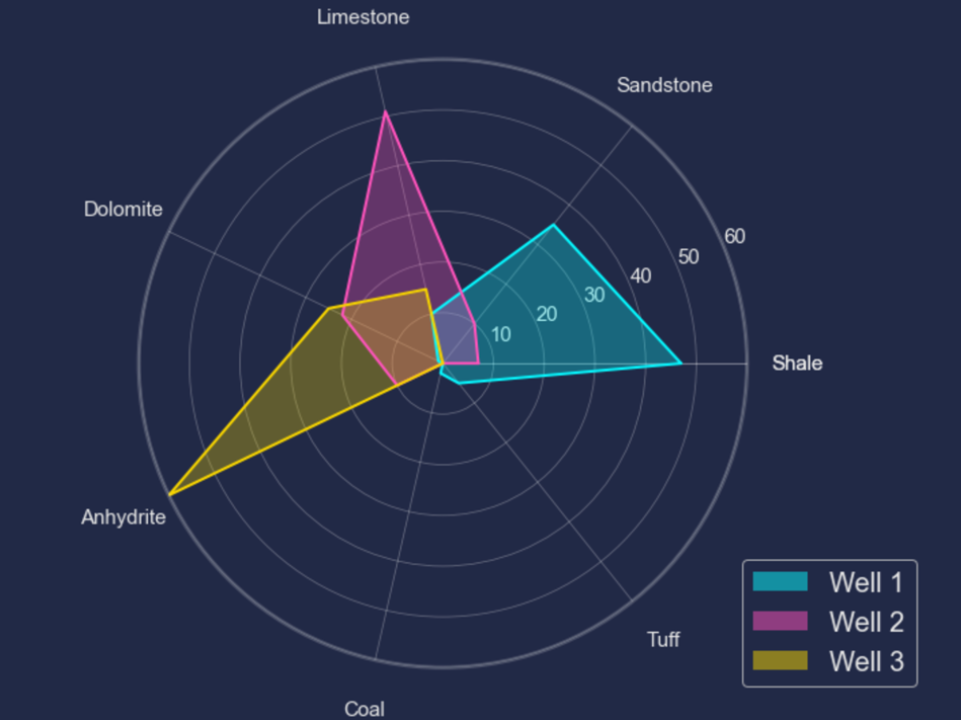
This method simplifies SEO analysis by turning complex data into a clear visual format.
Common metrics include:
- Keyword optimization
- Content quality
- Backlink authority
- Page speed performance
- User engagement
A balanced SEO strategy produces a strong, symmetrical polygon. Weak areas appear as dips in the shape, making optimization decisions easier and faster.
How AI and Radar Visualization Work Together
AI and radar visualization complement each other perfectly in modern SEO workflows. AI processes data, while radar charts display insights visually.
The workflow includes:
- AI collects website performance data
- Algorithms evaluate ranking factors
- Scores are assigned to each metric
- Radar visualization maps the results
This combination helps marketers understand performance at a glance instead of analyzing raw data.
For example, if AI detects low engagement but strong keyword optimization, the radar visualization clearly highlights the imbalance.
Real-World Use Cases of AI SEO Optimization
AI-driven SEO is already widely used across industries.
Content publishers use AI to:
- Identify trending topics
- Generate optimized articles
- Improve search rankings quickly
E-commerce businesses use AI to:
- Optimize product descriptions
- Increase visibility in search results
- Improve conversion rates
Digital agencies rely on AI dashboards and radar charts to present client reports in a simple, visual format.
In each case, AI reduces manual work while improving decision-making accuracy.
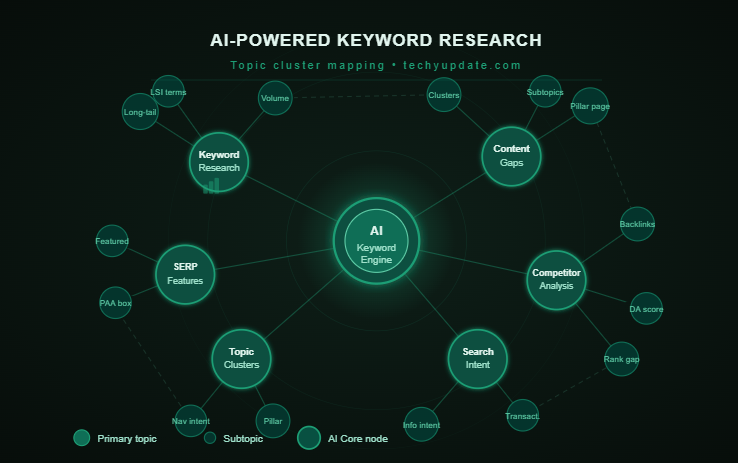
Tools and Methods Explanation
Modern SEO relies on a combination of AI-powered tools and analytical systems.
AI Content Optimization Tools
These tools analyze your content and suggest improvements based on SEO best practices.
They help with:
- Keyword integration
- Content structure
- Readability improvement
Radar Visualization Tools
These tools convert SEO data into radar charts. They help identify strengths and weaknesses in your content strategy.
SEO Automation Systems
Automation platforms connect research, writing, and publishing processes into a unified workflow.
They allow:
- Continuous optimization
- Automated reporting
- Performance tracking
Practical Example
A blog post is analyzed using AI tools. The system produces a radar chart showing:
- Content quality: high
- Keywords: moderate
- Engagement: low
- Backlinks: weak
Based on this, improvements are made in engagement strategies and link-building efforts. Rankings improve as the polygon becomes more balanced.
Comparison Table: AI SEO vs Traditional SEO
| Feature | AI-Based SEO Strategy | Traditional SEO |
|---|---|---|
| Analysis Method | AI-driven | Manual |
| Speed of Optimization | Fast | Slow |
| Keyword Strategy | Intent-based | Keyword-focused |
| Data Visualization | Radar charts | None |
| Adaptability | High | Low |
| Accuracy | Advanced | Moderate |
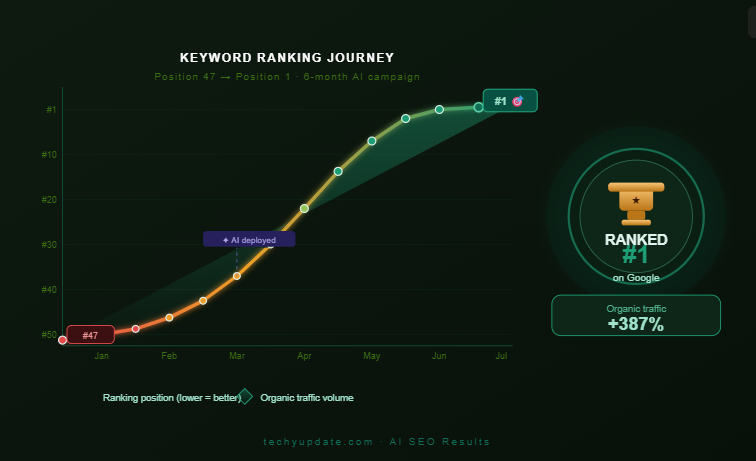
This comparison highlights why AI-driven SEO is now essential.
Benefits of Using AI for SEO Ranking
AI offers several advantages for improving search performance.
- Faster optimization process
- Better understanding of user intent
- Improved content accuracy
- Real-time performance analysis
- Scalable SEO strategies
AI also reduces guesswork, allowing creators to focus on strategy rather than manual analysis.
Common Problems and Practical Solutions
Despite its advantages, AI SEO comes with challenges.
One common issue is over-reliance on automation. Many users publish AI-generated content without editing, leading to low-quality output.
Another issue is ignoring user intent. Even well-optimized content will fail if it does not solve real problems.
Solutions include:
- Combining AI insights with human editing
- Focusing on audience needs
- Regularly updating content
Advanced Insights: How Google AI Evaluates Content
Google uses advanced machine learning models to evaluate content quality. These systems do not just scan keywords; they understand meaning, context, and intent.
They analyze:
- Topical authority
- Content depth
- User satisfaction signals
This is why long-form, structured, and informative content performs better in rankings.
Radar visualization indirectly tracks these signals by showing performance gaps.
SEO Strategy for 2026
To succeed in 2026, SEO strategies must evolve beyond traditional methods.
Key focus areas include:
- Topic clusters instead of isolated keywords
- High-quality long-form content
- User engagement optimization
- Technical SEO improvements
AI tools assist in executing these strategies efficiently by analyzing data and suggesting improvements.
Practical Example of AI SEO in Action
A website targeting “AI tools for marketing” uses AI SEO software.
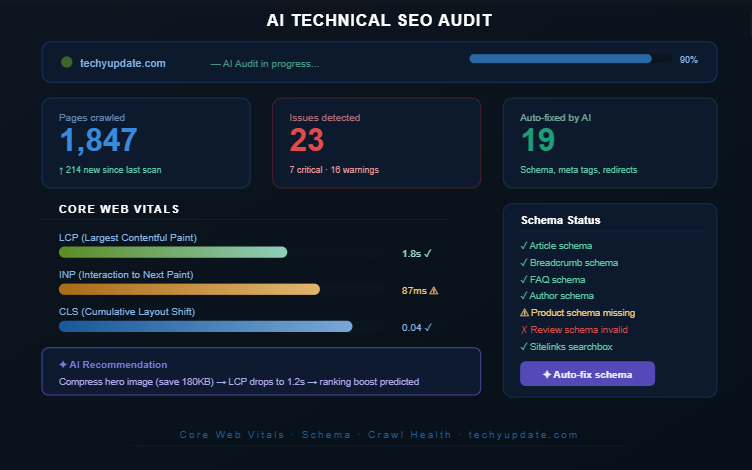
The system:
- Identifies keyword opportunities
- Creates optimized content outlines
- Produces radar charts showing weak engagement
After improving readability and adding examples, engagement increases, and rankings improve significantly.
Read more: AI Agents Automating Blog Creation
Pros and Cons of AI SEO Ranking Systems
Pros
- High efficiency
- Data-driven insights
- Improved ranking accuracy
- Scalable workflows
- Better visualization of performance
Cons
- Requires a learning curve
- Needs human oversight
- Possible over-automation risks
- Initial setup complexity
The Future of AI SEO and Visualization
The future of SEO is fully AI-driven. Search engines will become more predictive, understanding user intent before queries are even fully formed.
Future developments include:
- Real-time SEO optimization
- Predictive ranking models
- Personalized search results
- Advanced visual analytics systems
Radar polygon visualization will play a major role in simplifying complex SEO data for marketers.
Conclusion
Learning how to use AI to Rank Higher on Google Today is essential for anyone serious about digital growth in 2026. AI has fundamentally changed how search engines evaluate content, making traditional SEO methods less effective on their own.
By integrating AI tools into your workflow, you can analyze data, understand user intent, and optimize content with precision. When combined with radar polygon visualization, this process becomes even more powerful, allowing you to clearly see your SEO performance strengths and weaknesses.
However, success does not come from automation alone. The best results come from combining AI efficiency with human creativity. AI provides insights, but humans provide meaning, context, and emotional connection.
To succeed in modern SEO, you must:
- Focus on value-driven content
- Use AI tools for strategic decisions
- Continuously monitor performance
- Adapt to algorithm changes
The future belongs to creators who embrace AI not as a replacement, but as a powerful assistant. Start applying these strategies today, and you will build a stronger, more visible, and more successful online presence.