

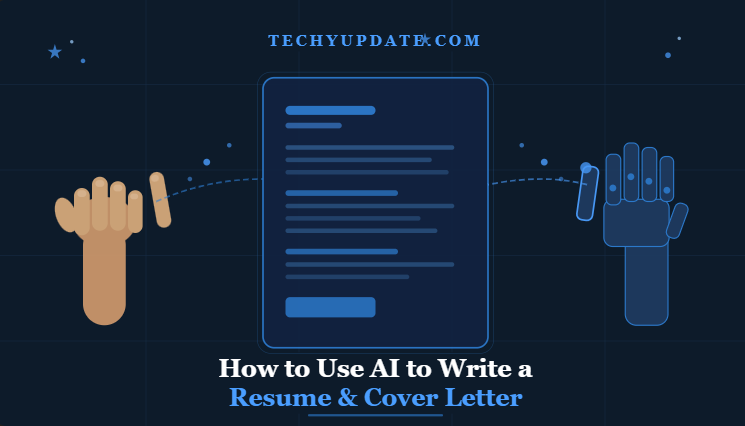
Using AI to write a resume and cover letter can dramatically simplify your job application process while improving the quality and relevance of your application. Instead of staring at a blank page, you can leverage AI tools to generate structured, professional, and keyword-optimized documents tailored to specific roles. The key is to use AI as a smart assistant rather than relying on it blindly.
Start by gathering your core information: work experience, skills, achievements, education, and certifications. The more detailed your input, the better the AI output will be. Then, paste a job description into an AI tool and ask it to extract important keywords and required skills. This step is crucial because most companies use Applicant Tracking Systems (ATS) to filter resumes before a human ever sees them.
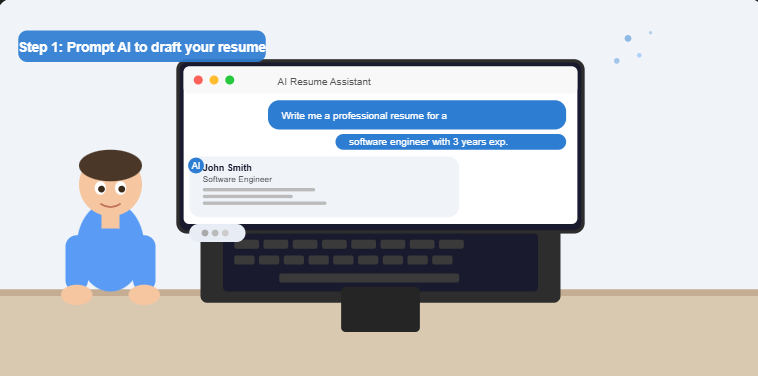
Next, prompt the AI to create or improve your resume. Instead of vague instructions, be specific. For example, ask it to “rewrite my experience using action verbs and measurable results” or “optimize this resume for a marketing role using ATS keywords.” The AI will transform basic job duties into impactful achievements, making your resume more compelling.
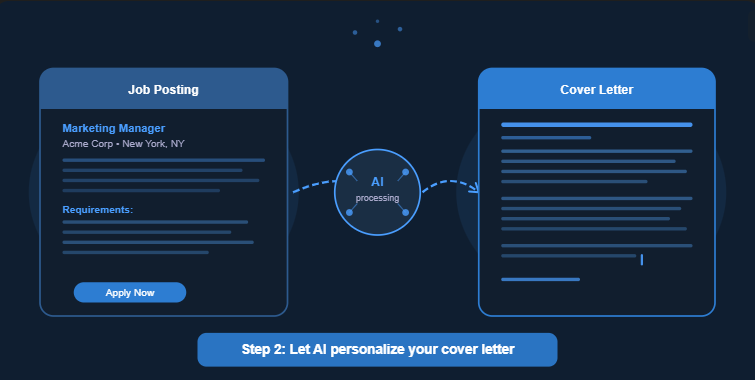
For cover letters, AI can quickly generate a strong first draft. Provide details about the company, role, and why you’re interested. Then refine the output by adding a personal touch, mentioning the company’s mission, highlighting specific projects, and explaining why you’re a great fit. This step ensures your letter feels authentic rather than generic.
- Finally, review and edit everything carefully. Check for accuracy, tone, and personalization.
- AI can enhance grammar, structure, and clarity, but it doesn’t fully understand your unique story.
- Adding your voice is what makes your application stand out.
- When used correctly, AI saves time, boosts confidence, and increases your chances of landing interviews.
- It turns a stressful task into a streamlined, strategic process that helps you present your best professional self.
Read More: How to Start a Business Without Money for Students
How to automate workflows using AI
Automation is no longer optional; it’s a survival. In 2026, job applications are not just competitive; they’re algorithm-driven ecosystems where speed, personalization, and optimization define success. Think of AI as your personal career assistant working 24/7, drafting, editing, analyzing, and optimizing every document before it even reaches a recruiter. With over 50% of employees already using AI tools in their daily workflows, automation has moved from an advantage to a baseline expectation.
When you automate workflows using AI, you’re essentially building a pipeline. First, AI collects job descriptions and extracts keywords. Then it aligns your resume content with those keywords while maintaining readability. Next, it generates a tailored cover letter based on the company tone, role requirements, and your experience. Finally, it evaluates your application through ATS simulations to ensure it passes automated screening filters.
Here’s where it gets interesting: this isn’t just about saving time. It’s about multiplying output. Instead of applying to 5 jobs manually, you can apply to 50 with optimized, personalized documents. But automation doesn’t mean mindless repetition. The smartest candidates use AI as a collaborator, not a replacement. They refine outputs, inject personality, and ensure authenticity.
Semantic SEO Workflow Automation Benefits:
- Faster job application cycles
- ATS keyword alignment in seconds
- Personalized cover letters at scale
- Reduced human error
- Higher interview conversion rates
This is not about replacing effort, it’s about amplifying it.
AI resume writing fundamentals
AI resume writing sounds futuristic, but at its core, it’s simply structured pattern recognition combined with natural language generation. AI tools analyze thousands of job descriptions, resumes, and hiring trends to generate optimized content tailored to specific roles. In fact, 45% of job seekers already use AI for resume writing, and that number continues to grow rapidly.
But here’s the catch: AI doesn’t understand your career the way you do. It predicts what to write based on data patterns. That means it can generate powerful bullet points, but it may exaggerate, generalize, or flatten your unique story if left unchecked.
The benefits are undeniable. AI can:
- Rewrite weak bullet points into measurable achievements
- Suggest industry-specific keywords
- Improve grammar and tone instantly
- Format resumes for ATS compatibility
Yet, limitations exist. According to research, 49% of hiring managers reject resumes they suspect are AI-generated. That’s not because AI is bad; it’s because poorly used AI creates generic, identical resumes.
So the golden rule is simple:
Use AI for structure, not identity.
Think of AI as a GPS. It shows the fastest route, but you still decide where to go.
Step-by-step AI resume creation process
Creating a resume with AI is not a one-click magic trick; it’s a guided workflow. The better your inputs, the stronger your outputs. Let’s break it down into actionable steps.
Input data collection
Before touching any AI tool, gather your raw data:
- Work experience
- Skills
- Achievements with metrics
- Certifications
- Target job descriptions
This step matters because AI cannot invent credible achievements; it can only refine what you provide.
AI prompt engineering for resumes
This is where most people fail. They give vague instructions like “write my resume,” and then wonder why the result feels generic. Instead, use structured prompts.
Example prompts
- “Rewrite my experience using quantified achievements and action verbs for a marketing role.”
- “Optimize my resume for ATS using keywords from this job description.”
- “Make my resume sound more results-driven and concise.”
When you guide AI properly, it transforms from a random generator into a precision tool.
Output refinement
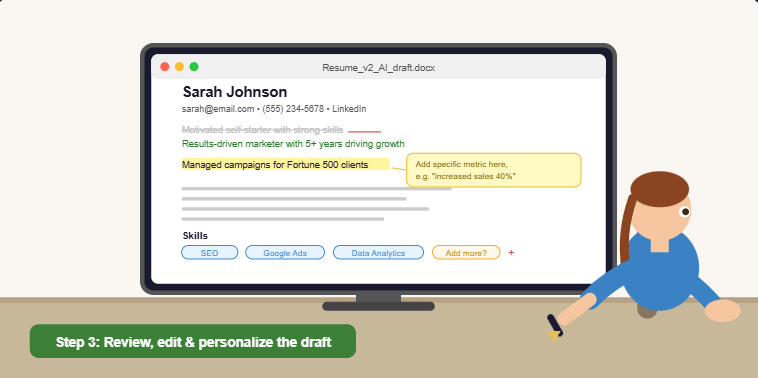
Never copy-paste blindly. Edit for:
- Personal voice
- Accuracy
- Specific achievements
Remember, recruiters spend only 6–7 seconds reviewing a resume initially. Every word must earn its place.
AI cover letter generation strategy
Cover letters are where AI shines and fails at once. Why? Because they require both structure and emotion. AI can generate polished paragraphs instantly, but it often lacks genuine enthusiasm or personalization.
The key is layering.
Start with AI-generated content, then personalize it by:
- Mentioning the company’s mission
- Referencing specific projects or values
- Adding your motivation in your own words
A strong AI-assisted cover letter should feel like a conversation, not a template. Imagine talking directly to the hiring manager. What would you say? Then refine the AI output to match that tone.
Avoid generic phrases like:
- “I am excited to apply.”
- “I believe I am a great fit.”
Instead, replace them with:
- Specific achievements
- Real motivations
- Unique insights
This hybrid approach ensures your application stands out instead of blending into the AI-generated crowd.
Using AI
Here’s the harsh reality: 75% of resumes are rejected before a human even sees them. That’s the power of Applicant Tracking Systems.
AI helps you beat this system by:
- Extracting keywords from job descriptions
- Matching skills with role requirements
- Structuring resumes for machine readability
Keyword extraction automation
Paste a job description into an AI tool and ask it to:
- Identify required skills
- Highlight missing keywords
- Suggest improvements
Resume scoring tools
AI platforms now simulate ATS scoring. They evaluate:
- Keyword density
- Formatting
- Relevance
This gives you a competitive edge because you’re optimizing for both machines and humans.
Use cases
AI is not one-size-fits-all it adapts to your career stage.
Fresh graduates
No experience? No problem. AI helps transform:
- Academic projects → professional achievements
- Internships → measurable impact
Career switchers
Switching industries is tough, but AI bridges the gap by:
- Translating transferable skills
- Aligning past experience with new roles
This adaptability makes AI a powerful career accelerator.
Common mistakes using AI
AI is powerful, but misuse can destroy your chances.
Over-automation risks
Submitting fully AI-generated resumes leads to:
- Generic language
- Lack of authenticity
- Recruiter rejection
AI detection issues
Employers are getting smarter. Many can identify AI-written content within seconds. Research shows that 33.5% of hiring managers detect AI-generated resumes within 20 seconds.
The solution? Personalization.
Best AI tools comparison
| Tool Type | Function | Best For | Limitation |
| Resume Builders | Structured templates | Beginners | Generic outputs |
| Writing Assistants | Content improvement | Professionals | Requires editing |
| ATS Checkers | Keyword optimization | Job seekers | Limited creativity |
Troubleshooting AI resumes
Fixing low ATS scores
- Add missing keywords
- Simplify formatting
- Remove graphics
Improving authenticity
- Add real metrics
- Use a personal tone
- Avoid buzzwords
Future of AI in job applications
AI is not replacing resumes; it’s transforming them. With 71% of job seekers now seeing AI as helpful for resume optimization, adoption is accelerating rapidly.
Future trends include:
- AI-powered job matching
- Skill-based hiring
- Real-time resume optimization
The game is changing, and those who adapt will win.
Conclusion
AI is not your replacement; it’s your amplifier. When used correctly, it transforms job applications from guesswork into strategy. The key lies in balance: automation + personalization. Treat AI as a collaborator, refine its outputs, and inject your authentic story. That’s how you stand out in a world where everyone is using the same tools.
Call to action: Start using AI today, but use it smartly. Customize, refine, and own your narrative.
FAQs
1. Can AI completely write my resume?
Yes, but fully AI-written resumes often lack personalization and may be rejected.
2. Is it safe to use AI for cover letters?
Yes, if you edit and personalize the output.
3. Do recruiters detect AI resumes?
Yes, many people can quickly identify generic AI-generated content.
4. How do I optimize my resume for ATS?
Use AI tools to extract keywords and align your resume accordingly.
5. What is the best AI tool for resumes?
It depends on builders for beginners, writing tools for professionals.
6. Can AI help with career changes?
Yes, it effectively translates transferable skills.
7. How many jobs should I apply to using AI?
As many as possible—but ensure each application is tailored.
8. Does AI improve interview chances?
Yes, when used for optimization and personalization.
9. What mistakes should I avoid?
Over-reliance on AI and lack of editing.
10. Is AI resume writing the future?
Yes, but human input remains essential.