

If you’ve spent any time researching multi-agent AI systems this year, you’ve probably run into the same wall of names over and over: CrewAI, AutoGen, Paperclip, n8n. Every one of them claims to be the easiest way to get AI agents working together. None of them explains, clearly, how they’re actually different or which one fits the thing you’re trying to build.
This guide fixes that. We’re comparing Paperclip, CrewAI, AutoGen, and n8n side by side, covering architecture, setup time, cost, production readiness, and the specific situations where each tool genuinely wins. By the end, you’ll know exactly which framework to open first.
Table of Contents
What Are AI Agent Frameworks and Why the Comparison Matters
An AI agent framework is software that provides the building blocks for creating autonomous, tool-using AI systems, rather than requiring you to write all the orchestration logic (memory, retries, tool calls, multi-step reasoning, agent-to-agent communication) from scratch. Frameworks differ mainly in one thing: how they coordinate multiple agents working on the same goal.
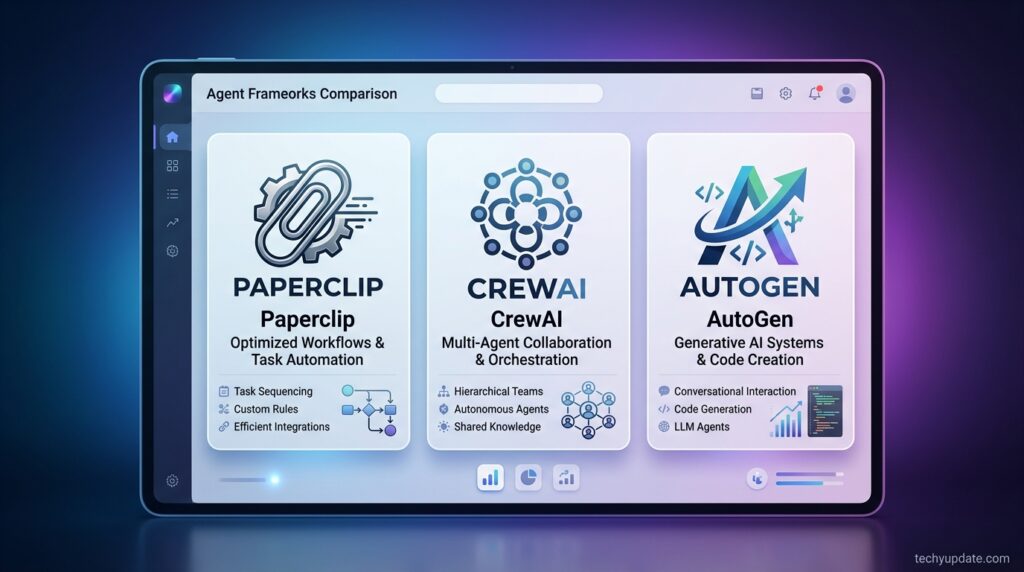
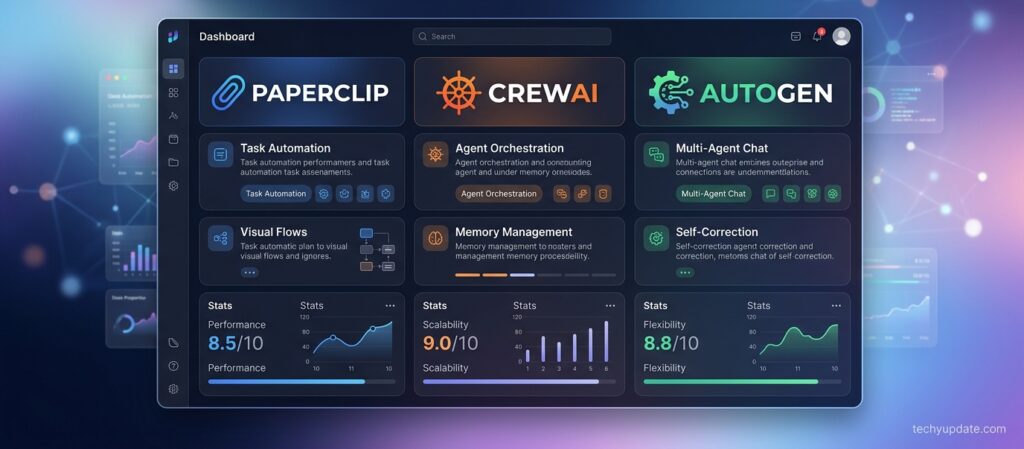
That single design decision coordination model explains almost every practical difference you’ll notice between these four tools. CrewAI coordinates through predefined roles. AutoGen coordinates through open-ended conversation. Paperclip coordinates through an organizational structure with a CEO agent, budgets, and reporting lines. n8n coordinates through a visual, node-based workflow where an “AI Agent” is just one smart step among many.
Choosing the wrong coordination model for your problem is the single most common reason multi-agent projects stall. A task that needs strict, repeatable steps (research → draft → edit) doesn’t need the flexibility of open conversation. A task that needs agents to challenge and refine each other’s thinking doesn’t fit neatly into rigid roles. Getting this match right up front saves weeks of rework later.
Quick Answer: Which Should You Choose?
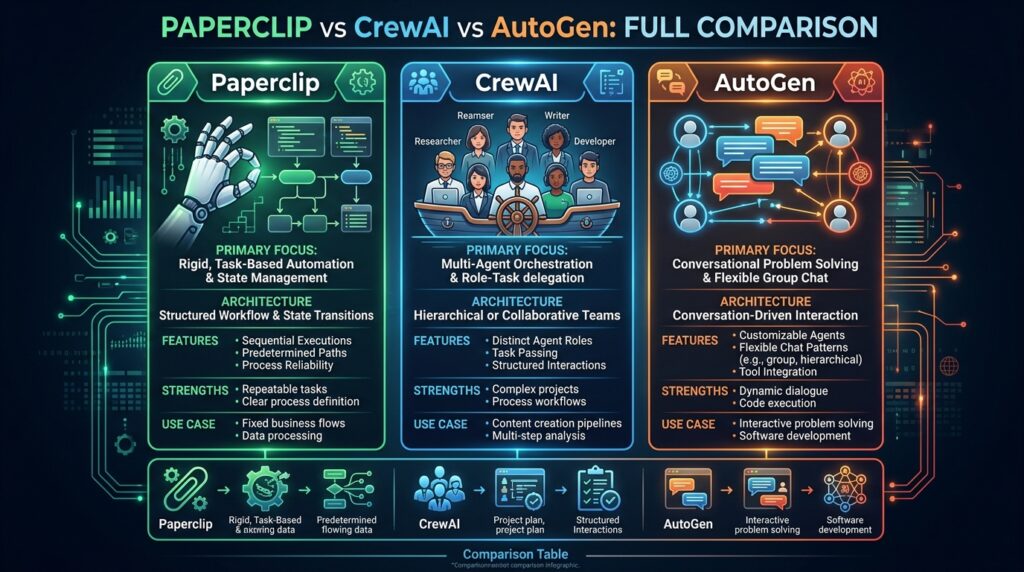
- Choose CrewAI if you want the fastest path to a working multi-agent prototype and your workflow naturally splits into specialist roles (researcher, writer, editor).
- Choose AutoGen (or its community fork, AG2) if your agents need to write and execute code, debate multiple perspectives, or you’re building inside the Microsoft/Azure ecosystem.
- Choose Paperclip if you want to run a small “company” of agents with an org chart, budgets, and a dashboard — rather than write orchestration code yourself.
- Choose n8n if you’re not primarily a developer, need hundreds of pre-built integrations, and want AI decision-making inside a broader business automation workflow.
None of these choices is permanent. Many teams prototype in CrewAI, harden the logic in a more explicit system, and use Paperclip or n8n as the operational layer on top. Treat this as a starting point, not a lifetime commitment.
What Is CrewAI?
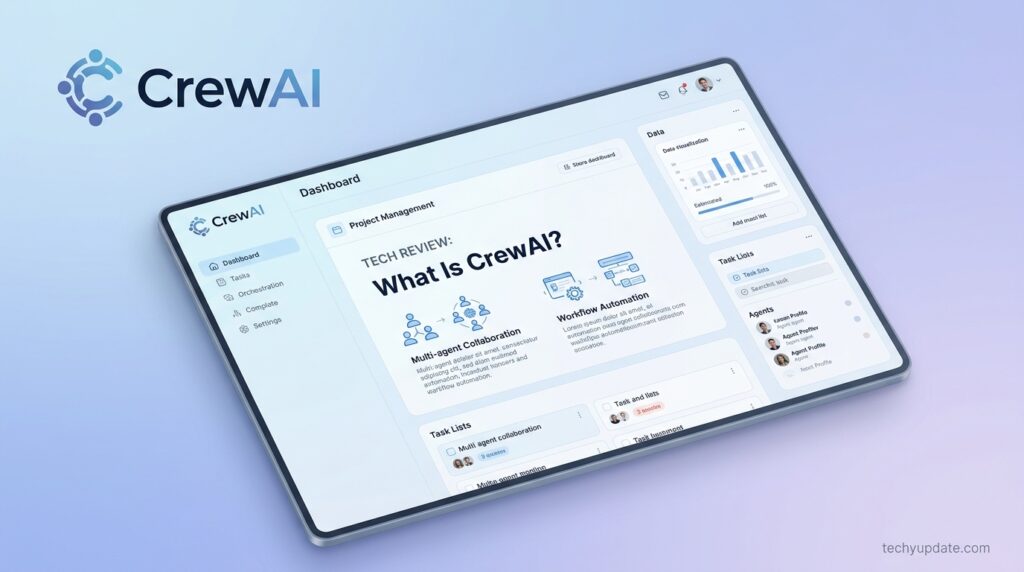
CrewAI is a Python framework built specifically for role-based multi-agent collaboration. It was designed independently of LangChain, which keeps its core lightweight. The mental model is simple: think of your agents as employees, each with a job title and a defined scope of work.
How CrewAI Works (Agent, Task, Crew)
CrewAI’s core objects are Agent, Task, and Crew. An agent has a role, a goal, and a backstory, a short description that shapes how the underlying LLM interprets its behavior. Tasks have a description, an expected output, and an assigned agent. A Crew ties everything together and executes tasks either sequentially or through a hierarchical process where a manager agent delegates work.
A typical setup looks like this conceptually: a researcher agent gathers information, a writer agent drafts content based on that research, and an editor agent reviews and polishes the final output, each doing its job and then handing off to the next.
CrewAI Strengths
- The fastest learning curve of the code-first frameworks, a working crew in a few hours, is realistic for most developers.
- Predictable, structured workflows that are easy to read and explain to non-engineers.
- Efficient token usage for sequential tasks, since agents aren’t chatting back and forth unnecessarily.
- Strong growth trajectory. CrewAI has grown from a few thousand GitHub stars to well over 30,000 in about two years, one of the fastest-growing frameworks in this category.
- CrewAI Enterprise adds managed infrastructure and support contracts for teams that outgrow the open-source package.
CrewAI Weaknesses
- Less flexible than conversation-based or graph-based frameworks when the task doesn’t map cleanly to fixed roles.
- Error handling is adequate for simple retry-and-rerun scenarios but weaker for workflows that need graceful partial-failure recovery.
- Teams doing serious production work often outgrow CrewAI within a few months and migrate to something with more explicit state control.
What Is AutoGen (and AG2)?
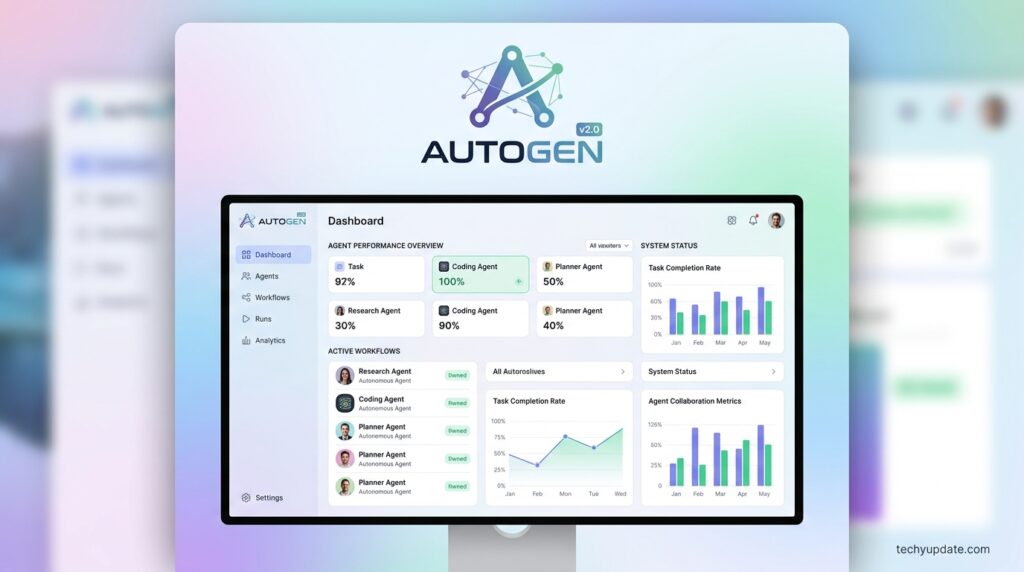
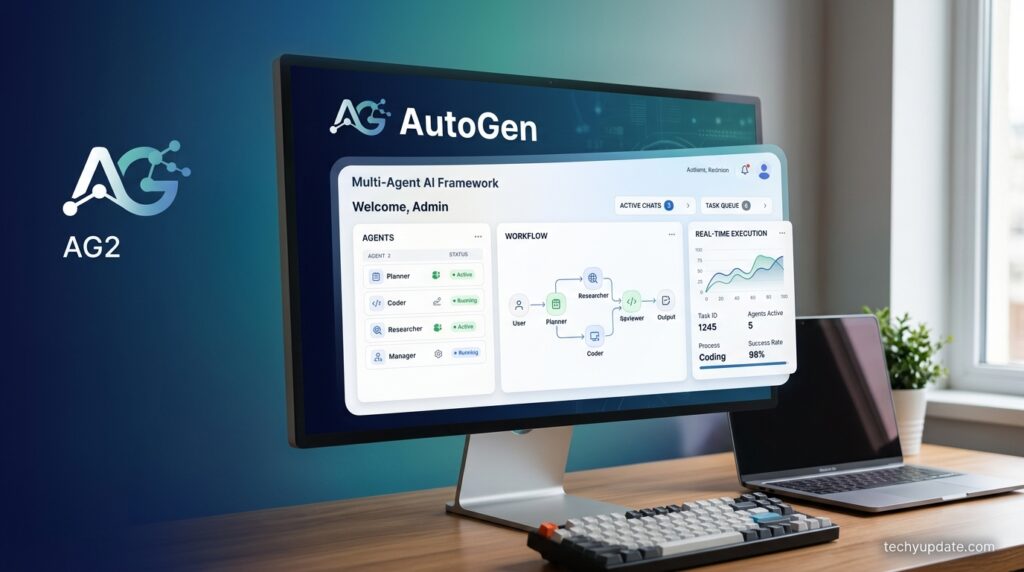
AutoGen is Microsoft’s multi-agent framework, and it takes a fundamentally different approach: agents collaborate through conversation rather than fixed roles. Instead of a manager assigning tasks down a hierarchy, AutoGen agents exchange messages in a shared context, debate, and iterate toward an answer.
How AutoGen Works (Conversational Model)
The core abstraction in AutoGen is the conversation itself. Agents talk to each other in a group chat pattern, and coordination emerges from that dialogue rather than being scripted in advance. This is a natural fit for tasks that benefit from multiple perspectives, code generation with a review loop, research synthesis, or any scenario where agents should challenge each other’s conclusions rather than simply pass work down a line.
Newer versions restructured this into a layered Core-plus-AgentChat model, giving developers lower-level control at the cost of a steeper setup process.
The AutoGen → AG2 → Microsoft Agent Framework Story
This is the part of the AutoGen story that most comparison articles skip, and it matters for anyone making a long-term bet on the framework. Microsoft shifted focus toward a rewritten AutoGen (v0.4+), and separately signaled that AutoGen and Semantic Kernel are converging into a successor line called the Microsoft Agent Framework. In response, the community forked the earlier, proven codebase into AG2, which continues independent, community-led development.
Practically, this means teams adopting “AutoGen” today are also making a roadmap decision: stay on the Microsoft-directed rewrite, adopt AG2’s community fork, or wait for the Microsoft Agent Framework to reach general availability. For Azure-centric organizations, betting on Microsoft’s direction is usually reasonable. For cloud-agnostic teams, that migration uncertainty deserves real weight in the decision.
AutoGen Strengths and Weaknesses
Strengths:
- Best-in-class native code execution among the frameworks in this comparison.
- Natural fit for iterative reasoning, debate, and multi-perspective tasks.
- Strong enterprise credibility and deep Azure/OpenAI integration.
- The large GitHub community and the original AutoGen repo have one of the highest star counts of any agent framework.
Weaknesses:
- Medium-to-steep learning curve compared to CrewAI.
- Higher token overhead, since conversational back-and-forth naturally consumes more context than a structured pipeline.
- Roadmap uncertainty from the AutoGen/AG2/Microsoft Agent Framework transition.
- Fewer large-scale production case studies than more mature orchestration frameworks. Most of AutoGen’s strongest track record is in research and experimentation rather than serving production traffic at scale.
What Is Paperclip AI?
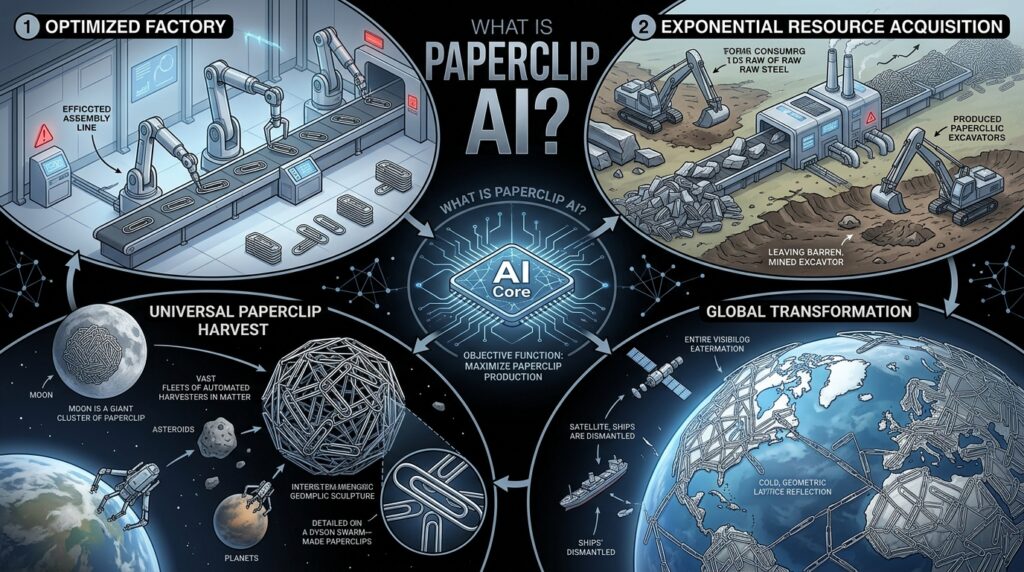
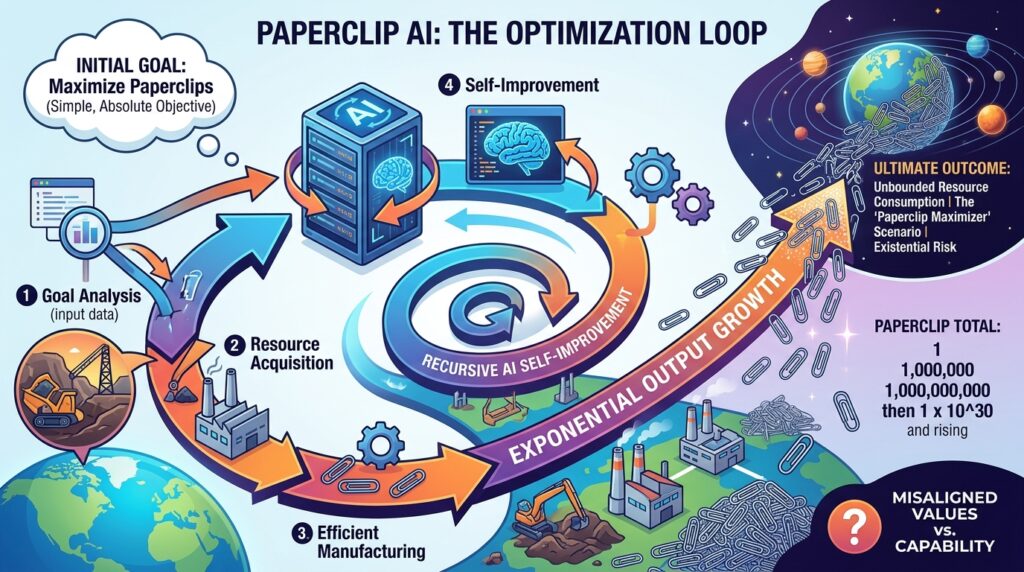
Paperclip takes a different approach entirely. It isn’t really competing to be “a better agent framework.” It’s a control-plane layer that sits above agent frameworks and agent runtimes, organizing them as a company organizes its employees.
The Org-Chart Model
Paperclip’s founding insight is straightforward: humans have already solved multi-agent coordination, and the solution is called an organization. Instead of writing Python to define agent-to-agent communication, you define a company goal, hire a CEO agent, and let that CEO draft a hiring plan and delegate work to specialists, “employees,” engineers, marketers, QA, and so on.
Under the hood, Paperclip is a Node.js server with a React dashboard, backed by an embedded Postgres database (no Docker or external database setup required). It doesn’t replace agent runtimes like Claude Code, Codex, Cursor, or Gemini; it wraps them. Any agent runtime that can receive a “heartbeat” can be hired into a Paperclip company.
Heartbeat Scheduling and Governance
Agents in Paperclip don’t run continuously by default. They wake up on a configurable schedule, hourly, every four hours, or once a day, check their inbox, pick up assigned work, execute it, and go back to sleep. This heartbeat model directly solves the “runaway agent” problem: an agent can’t silently burn through your API budget indefinitely because it operates only during its scheduled window (or when explicitly triggered by an event, such as a task assignment or an @-mention).
Paperclip also bakes in governance that most code-first frameworks leave for you to build yourself: per-agent budget controls, activity and cost auditing, approvals, and company-level data isolation. It’s the only framework in this comparison with built-in per-agent budget tracking out of the box.
Paperclip Strengths and Weaknesses
Strengths:
- The company metaphor (CEO delegates, engineers execute, QA reviews) is more intuitive for non-engineers than most framework primitives.
- The built-in dashboard provides visible, real-time oversight of what every agent is doing, something CrewAI and AutoGen leave entirely to third-party observability tools.
- Zero external dependencies to get started with embedded Postgres means no Docker Compose or Supabase setup.
- Provider-agnostic: works with Claude Code, Codex, OpenCode, Cursor, and anything available through OpenRouter.
- Explosive early adoption, it crossed 38,000 GitHub stars within about a month of launch.
Weaknesses:
- Younger project with thinner documentation and community resources than CrewAI or AutoGen.
- Designed primarily for single-machine, local workflows; distributed, multi-machine production deployment isn’t a primary use case yet.
- Still requires real engineering knowledge to deploy and configure its infrastructure; it’s not a point-and-click SaaS product.
- Independent reviewers running real “zero-human company” tests have found genuinely useful outputs (brainstorms, email drafts) alongside clearly unreliable ones (hallucinated marketing stats, broken websites). It’s a strong glimpse of where agent orchestration is heading, not yet a hands-off business builder.
Read more: n8n Review 2026
Where Does n8n Fit In? (CrewAI vs AutoGen vs n8n)
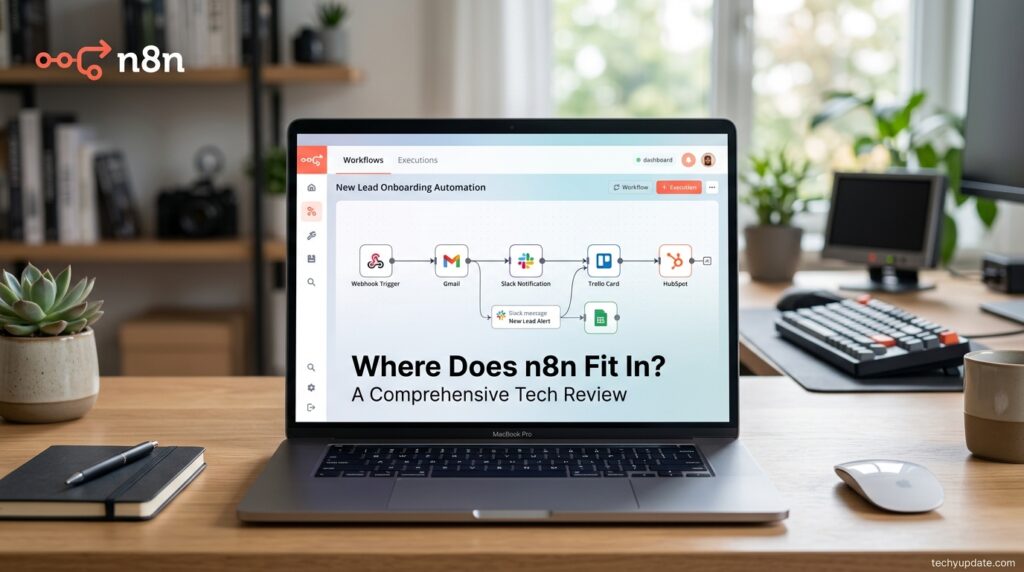
n8n approaches the problem from the opposite direction of the other three tools. It’s not primarily an agent framework, it’s a mature, general-purpose workflow automation platform (self-hostable, with roots dating back to 2019) that added AI agent capabilities as a node type within its existing visual builder.
Visual Workflow vs Code-First Frameworks
In n8n, the workflow is the primary object, not the agent. A typical n8n flow might trigger on a new row in a Google Sheet, pass that data to an AI Agent node that reasons about it and decides what to do, and then route the output to a downstream node that sends a Slack message, updates a CRM, or triggers another automation. The AI Agent node is a smart, self-contained step embedded in a much larger, non-AI automation pipeline.
Compare that to CrewAI or AutoGen, where you write Python to define every agent, task, and interaction from scratch, including all the plumbing for connecting to external services.
Read more: Paperclip.ing Review
When n8n Wins
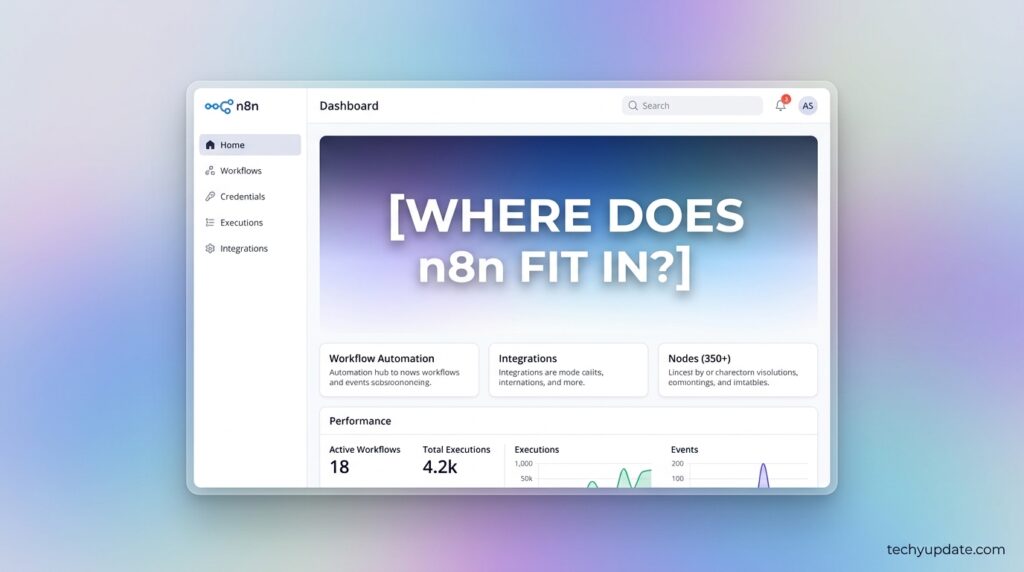
n8n’s biggest advantage is breadth of integration and debuggability. With hundreds of pre-built connectors (Slack, Gmail, Salesforce, Notion, databases, and more), you can wire an AI decision point into an existing business process without writing custom API client code. When something breaks, you can see exactly which node failed, rather than tracing an opaque chain of agent-to-agent messages through logs.
The trade-off is coordination sophistication. n8n is excellent at “add intelligence to one step of a larger automation.” It’s a weaker fit for scenarios where several agents need to genuinely collaborate, debate, or delegate to each other the way CrewAI or AutoGen agents can.
Paperclip vs CrewAI vs AutoGen: Full Comparison Table
| Factor | Paperclip | CrewAI | AutoGen (AG2) |
|---|---|---|---|
| Coordination model | Org chart (CEO → employees) | Role-based crew | Conversational group chat |
| Interface | Dashboard + UI | Python code | Python code |
| Learning curve | Low-medium (config, not code) | Low | Medium |
| Code execution | Delegated to wrapped agent runtimes | Basic | Best-in-class |
| Persistence | Embedded Postgres, automatic | Manual/custom | Manual/custom |
| Cost/budget controls | Built-in, per-agent | External tooling required | External tooling required |
| Best for | Operators running agent “companies” | Developers prototyping fast | Complex, iterative, code-heavy tasks |
| Maturity | Very new (2026 launch) | Established, fast-growing | Established, mid-transition (AG2 fork) |
| Backing | Open-source community | Funded startup | Microsoft |
CrewAI vs AutoGen vs n8n: Full Comparison Table
| Factor | CrewAI | AutoGen (AG2) | n8n |
|---|---|---|---|
| Approach type | Code-first framework | Code-first framework | Visual, no/low-code |
| Primary object | Agent/Task/Crew | Conversational agents | Workflow/node |
| Integrations | Requires custom tool code | Requires custom tool code | 400+ pre-built connectors |
| Debuggability | Moderate (agent handoff can be opaque) | Lower (group chat threads are hard to trace) | High (node-by-node execution logs) |
| Ideal user | Python developer | Python developer, research/engineering teams | Ops teams, non-developers |
| Self-hosting | Yes | Yes | Yes |
| Token efficiency | Moderate | Lowest (conversation overhead) | Depends on workflow design |
Architecture Deep Dive: Roles vs Conversations vs Org Charts vs Workflows
It helps to boil each framework down to one sentence:
- CrewAI thinks in roles, tasks, and delegation; your agents are employees with job titles.
- AutoGen thinks in conversations, agents talk, debate, and reach consensus through dialogue.
- Paperclip thinks that in organizations, agents are hired into a company with a mission, budget, and reporting line.
- n8n thinks of workflows as an agent that is one intelligent node inside a larger, mostly deterministic pipeline.
None of these models is objectively “better.” The right one depends on whether your problem looks like a pipeline (CrewAI), a debate (AutoGen), a small business (Paperclip), or an existing business process that just needs a smarter decision point (n8n).
Setup and Learning Curve Compared
How to get a first working example running in each tool:
- CrewAI: Install the Python package, define two or three agents with roles and goals, define tasks, and call
crew.kickoff(). A working demo can be built within a few hours for anyone comfortable with Python. - AutoGen/AG2: Install the package, configure your LLM connection, define conversational agents and their system messages, and set up the group chat or two-agent conversation pattern. Expect a steeper ramp than CrewAI, especially if you’re using the newer Core/AgentChat layered model.
- Paperclip: Clone the repo, run the dev server (no Docker needed thanks to embedded Postgres), define your company goal in the dashboard, and create your first agent — typically a CEO agent that then drafts a hiring plan for the rest of the team.
- n8n: Spin up n8n (cloud or self-hosted), drag in a trigger node, add an AI Agent node, connect it to your LLM provider, and wire the output to a downstream action node. No local Python environment required.
CrewAI and n8n both get you to “something working” the fastest, but for very different audiences: CrewAI for developers who want code, n8n for anyone comfortable with a visual builder.
Token Cost and Efficiency Compared
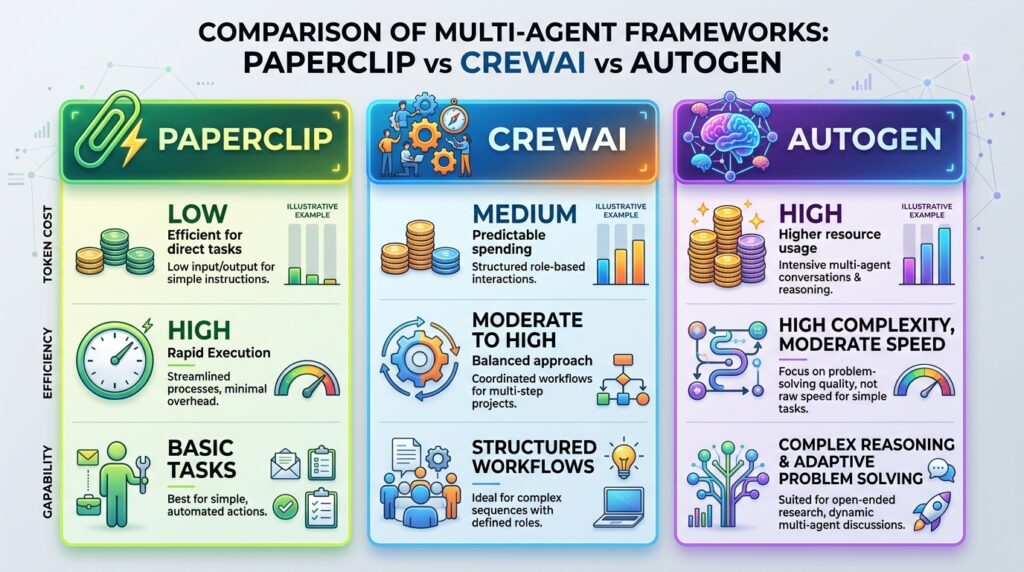
Token cost tracks directly with the coordination model. CrewAI’s structured, sequential task-passing tends to be the most token-efficient among code-first frameworks because agents aren’t generating unnecessary back-and-forth. AutoGen’s conversational model is the most expensive by design, negotiation and debate between agents inherently produce more tokens, and that overhead grows with the number of conversational turns.
Paperclip sidesteps runaway costs structurally: agents operate only during scheduled heartbeat windows (rather than running continuously), and built-in per-agent budget tracking makes cost overruns easier to catch early. n8n’s cost profile depends entirely on how the workflow is designed, and an AI Agent node used sparingly within a mostly deterministic pipeline will usually be cheaper than a fully agentic system, simply because fewer steps involve LLM calls.
Practical takeaway: if operational cost predictability is your top constraint, look closely at Paperclip’s budget controls or n8n’s mostly-deterministic workflow design before committing to a purely conversational AutoGen setup.
Production Readiness and Error Recovery
This is where the frameworks most clearly separate. CrewAI is fine for workflows where a failed task can simply be rerun; its error handling is adequate for that, but it falls short when partial failures need graceful, targeted recovery.
AutoGen (AG2) is still maturing on the production front; there are fewer large-scale, real-world case studies than in research and experimental use, and reviewers generally recommend exercising more caution before betting mission-critical systems on it until it reaches a stable, broadly proven release.
Paperclip’s task-queue design agents work on one discrete task at a time, rather than an open-ended conversation, which creates natural checkpoints where a human reviewer can intervene before a mistake compounds, which is a meaningful production advantage over free-flowing group chats.
n8n benefits from its long production history as a general automation tool: when a node fails, it fails in a specific, visible, debuggable way, with retry logic and fallback branches available directly in the visual editor.
If your workload touches customer data, financial operations, or anything where a failed agent action needs to be explained and reversed, plan for extra guardrails regardless of which framework you choose. None of these four tools makes that problem disappear on its own.
Real-World Use Cases
- Content and marketing pipelines: A researcher agent gathers sources, a writer agent drafts, and an editor agent polishes. This is CrewAI’s sweet spot: sequential, role-based, and predictable.
- Automated code review: Multiple agents debate a pull request from different angles (security, performance, readability) before producing a consolidated recommendation. This fits AutoGen’s conversational, multi-perspective model well.
- Running a lean, mostly-automated side project: Define a company goal, hire a CEO agent, and let it delegate marketing, drafting, and research tasks to specialist agents you can monitor from a dashboard. This is exactly the scenario Paperclip is built for, with the caveat that outputs still need human review before anything ships.
- Connecting AI decisions to existing business tools: A new lead lands in a CRM; an AI Agent node decides how to categorize and route it; and the workflow automatically updates Slack and the CRM. This is squarely n8n territory.
Pros and Cons Summary
CrewAI
- Fastest prototyping, gentle learning curve, efficient sequential token use
- Weaker partial-failure recovery, less flexible for non-role-shaped problems
AutoGen (AG2)
- Best code execution, strongest for debate/iteration, deep Microsoft/Azure integration
- Highest token overhead, roadmap uncertainty from the AG2 fork, and fewer production case studies
Paperclip
- Built-in governance and budget control, intuitive org-chart model, no external database setup
- Young project, thinner docs, single-machine scope, still needs human review of output
n8n
- Hundreds of integrations, highly debuggable, no-code accessible, mature production history
- Weaker for deep multi-agent collaboration; the agent is one node, not the whole system
Which One Should You Choose?
Ask yourself four questions in order:
- Do you want to write code or configure a dashboard? Code → CrewAI or AutoGen. Dashboard → Paperclip or n8n.
- Does your task split into fixed roles, or does it need open-ended debate? Fixed roles → CrewAI. Debate/iteration/code execution → AutoGen.
- Do you want to run an autonomous “company,” or add intelligence to an existing business process? Autonomous company → Paperclip. Existing process → n8n.
- How much do you care about built-in cost governance versus raw flexibility? Governance-first → Paperclip. Flexibility-first → AutoGen or CrewAI with custom tooling.
Most teams don’t marry one tool for life. A common, sensible pattern in 2026 is to prototype the agent logic in CrewAI, use AutoGen where a task genuinely requires conversational back-and-forth or code execution, and use Paperclip or n8n as the operational layer that schedules, monitors, and governs everything once it’s stable.
Featured Summary
Definition: An AI agent framework is a software infrastructure that enables multiple autonomous AI agents to plan, use tools, and coordinate to achieve a goal, without developers having to write all the orchestration logic from scratch.
List — 4 Ways to Coordinate AI Agents:
- Role-based delegation (CrewAI)
- Open-ended conversation (AutoGen/AG2)
- Organizational hierarchy with governance (Paperclip)
- Visual workflow with an embedded agent node (n8n)
Table — At a Glance:
| Tool | Best For |
|---|---|
| CrewAI | Fast, role-based prototypes |
| AutoGen/AG2 | Code execution and multi-perspective reasoning |
| Paperclip | Governed, dashboard-run agent “companies” |
| n8n | Adding AI decisions to existing business workflows |
How-To — Pick a Framework in 4 Steps:
- Decide code vs. no-code.
- Match your task shape to a coordination model.
- Check your cost-governance needs.
- Prototype small before committing to production infrastructure.
Frequently Asked Questions
What is the main difference between CrewAI and AutoGen?
CrewAI coordinates agents through predefined roles and sequential tasks, while AutoGen coordinates them through open-ended conversation. CrewAI suits structured pipelines; AutoGen suits iterative, debate-style reasoning and code execution.
Is CrewAI easier to learn than AutoGen?
Yes. Most developers can build a working CrewAI prototype in a few hours, while AutoGen’s conversational and layered Core/AgentChat model typically takes longer to configure and tune correctly.
What is Paperclip AI used for?
Paperclip organizes AI agents into a virtual company with roles, budgets, and a dashboard. It’s used to run semi-autonomous workflows such as content production, research, and support triage, with built-in oversight.
Is Paperclip a replacement for CrewAI or AutoGen?
No. Paperclip is an orchestration layer that can wrap agent runtimes; it doesn’t replace the underlying agent logic provided by frameworks like CrewAI or AutoGen.
Can I use n8n instead of CrewAI or AutoGen?
Yes, if your use case is adding AI decision-making to an existing business workflow. For deep multi-agent collaboration, CrewAI or AutoGen offer more coordination sophistication.
What is AG2, and how is it related to AutoGen?
AG2 is a community-led fork of AutoGen’s earlier, proven codebase, created after Microsoft shifted AutoGen toward a rewritten architecture and a broader Microsoft Agent Framework roadmap.
Which framework uses the most tokens?
AutoGen typically uses the most tokens because its conversational, back-and-forth coordination naturally generates more messages than CrewAI’s structured task-passing or n8n’s mostly deterministic workflows.
Is CrewAI good for production use?
CrewAI works well in production for workflows where failed tasks can simply be rerun. For complex partial-failure recovery, teams often pair it with more explicit state-management tooling.
Does Paperclip require coding skills?
Yes, to a degree. Paperclip is an open-source infrastructure you deploy and configure, not a point-and-click SaaS product, though its dashboard reduces the amount of orchestration code you need to write.
Which tool has built-in budget controls?
Paperclip is the only framework in this comparison that has built-in per-agent budget tracking. CrewAI and AutoGen require external monitoring or a custom implementation to control costs.
Is n8n good for non-developers?
Yes. n8n’s visual, drag-and-drop builder and hundreds of pre-built integrations make it the most accessible option for business and operations teams without engineering resources.
What is the safest choice for handling sensitive business data?
All four can be self-hosted, which helps with data control, but production-grade governance (audit trails, approvals, access control) is currently strongest in Paperclip and mature n8n deployments.
Can I combine CrewAI, AutoGen, Paperclip, and n8n?
Yes. A common pattern is to prototype agent logic in CrewAI or AutoGen, then use Paperclip or n8n as the scheduling, monitoring, and governance layer on top.
Which framework is growing fastest?
CrewAI and Paperclip have both shown rapid GitHub star growth recently, with Paperclip in particular gaining tens of thousands of stars within its first month of launch.
Conclusion
There’s no universal winner among Paperclip, CrewAI, AutoGen, and n8n each one optimizes for a different problem shape. CrewAI gets you a working, role-based prototype the fastest. AutoGen (via AG2) gives you the deepest conversational and code-execution power, with the caveat of ongoing roadmap change. Paperclip brings governance and an intuitive org-chart model to agents that would otherwise run unsupervised. And n8n lets non-developers plug AI decision-making straight into the business tools they already use.
Start by matching your task’s shape pipeline, debate, company, or workflow to the framework built for it, prototype a small version, and add coordination complexity only once you’ve proven the simple version doesn’t cut it.