

Finding the right online learning platform in 2026 feels overwhelming. With hundreds of websites promising career-changing skills, most learners end up spending money on platforms that deliver generic, outdated content. That is exactly why this Acadomi.com Review 2026 matters.
Online learning has become one of the most effective ways to develop new skills, advance careers, and pursue personal growth. With hundreds of eLearning platforms available today, finding a reliable and affordable option can be challenging. Acadomi.com has emerged as a platform that promises accessible education, affordable courses, and flexible learning opportunities.
Acadomi courses have been quietly gaining attention among students, freelancers, and career switchers looking for affordable, structured learning. Whether you are a high school student exploring digital skills or a working professional trying to upskill without breaking the bank, this review breaks down everything you need to know before you enroll.
This guide covers Acadomi’s course quality, user experience, pricing model, certificate value, and how it compares to well-known competitors. By the end, you will have a clear, honest picture of whether this online learning platform deserves your time and money in 2026.
Visit the official Acadomi.com website →
Table of Contents
What Is Acadomi.com?
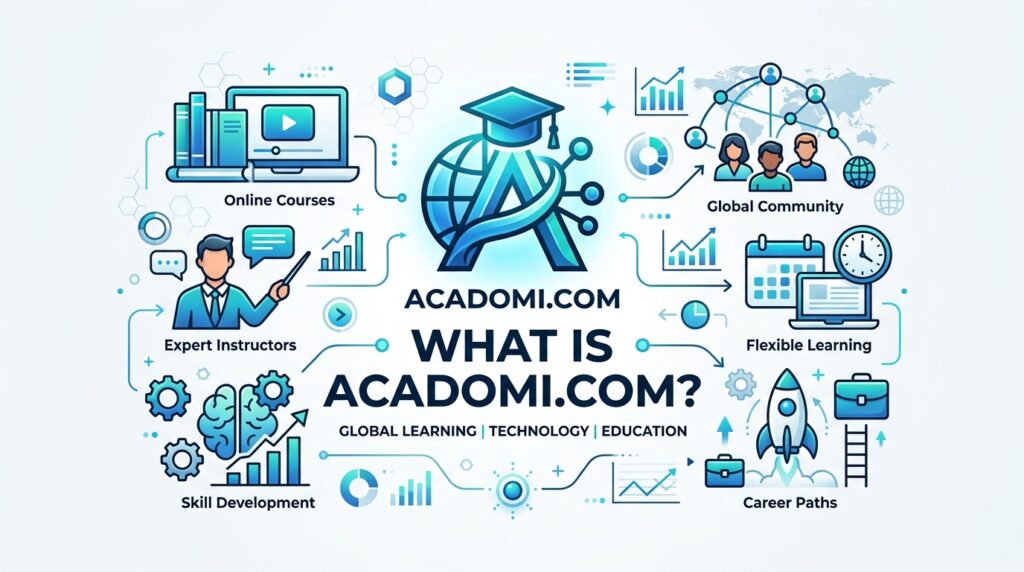

Acadomi.com is a self-paced online education review platform that positions itself as an affordable alternative to premium e-learning giants. It offers a wide library of courses spanning business, technology, creative arts, personal development, and digital marketing. The platform targets learners at every level, from absolute beginners to working professionals looking for specialized knowledge.
Unlike Coursera or Udemy, Acadomi takes a more streamlined approach. Courses are structured for completion at your own pace, and the platform emphasizes practical application over heavy theory. This makes it appealing for people who want actionable skills fast, without committing to rigid schedules or high monthly fees.
The platform was designed with accessibility in mind. Most courses are available in English, and the interface is built to work smoothly on desktop and mobile devices. Acadomi’s catalog tends to focus on skills that are immediately marketable, like social media management, web design fundamentals, copywriting, Excel proficiency, and entry-level coding.
What sets Acadomi apart from generic course directories is its attempt to bundle structured learning paths rather than isolated video lessons. When you enroll in an Acadomi course, you follow a guided sequence that builds knowledge progressively. This reduces the common problem of students jumping between unrelated lessons without context.
Acadomi.com is not a university replacement, but it fills a specific gap: affordable, practical, and self-directed learning for people who need to build real-world skills quickly. For learners in emerging markets, especially where premium platform subscriptions are financially difficult, Acadomi’s pricing model is a genuine relief.
Is Acadomi.com Legit?
This is one of the most-searched questions on this platform, and it deserves a direct, honest answer. Yes, Acadomi.com appears to be a legitimate online learning platform based on the information available. It provides real course content, issues digital certificates upon completion, and maintains a functional, professionally designed website.
That said, “legitimate” does not automatically mean “the best choice for everyone.” Legitimacy means the platform operates as advertised, courses exist, payments are processed, and certificates are delivered. Whether those certificates carry weight with employers is a different conversation entirely, which this review addresses in a later section.

Several factors support Acadomi’s legitimacy. The platform has a clear refund policy, visible terms of service, and a customer support channel. Users who have completed Acadomi courses report receiving their certificates without issues. The course content, while not created by Ivy League professors, is practical and relevant to current industry needs.
One important consideration is transparency. Acadomi does not claim accreditation from major academic bodies, and it would be misleading to suggest its certificates carry the same recognition as, say, a Google Professional Certificate or an IBM Coursera credential. However, for portfolio building, personal development, or demonstrating willingness to learn, an Acadomi certificate can still serve a useful purpose.
The platform also maintains a social media presence and has been reviewed by independent bloggers and YouTube creators, which adds a layer of public accountability. There are no widespread reports of scams, fraudulent charges, or non-delivery of promised content.
For learners approaching Acadomi with realistic expectations, the platform delivers on its promises: affordable skill-building, self-paced flexibility, and practical content. Treat it as a learning tool, not a credential machine, and you will find value.
Key Features of Acadomi.com
Understanding what Acadomi actually offers is essential before you invest your time or money. The platform’s feature set is deliberately focused, which is both a strength and a limitation depending on what you need from an online learning platform.
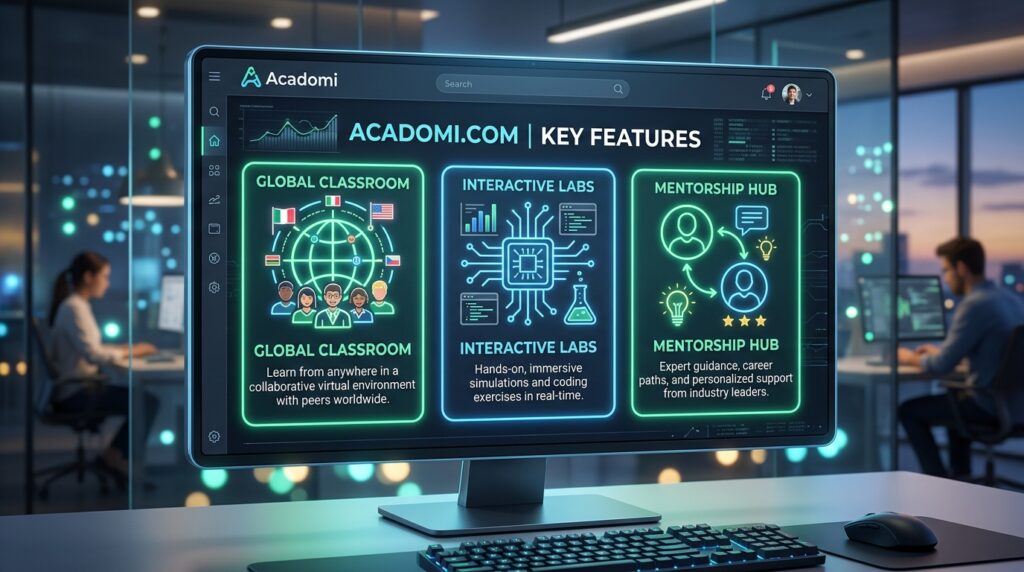
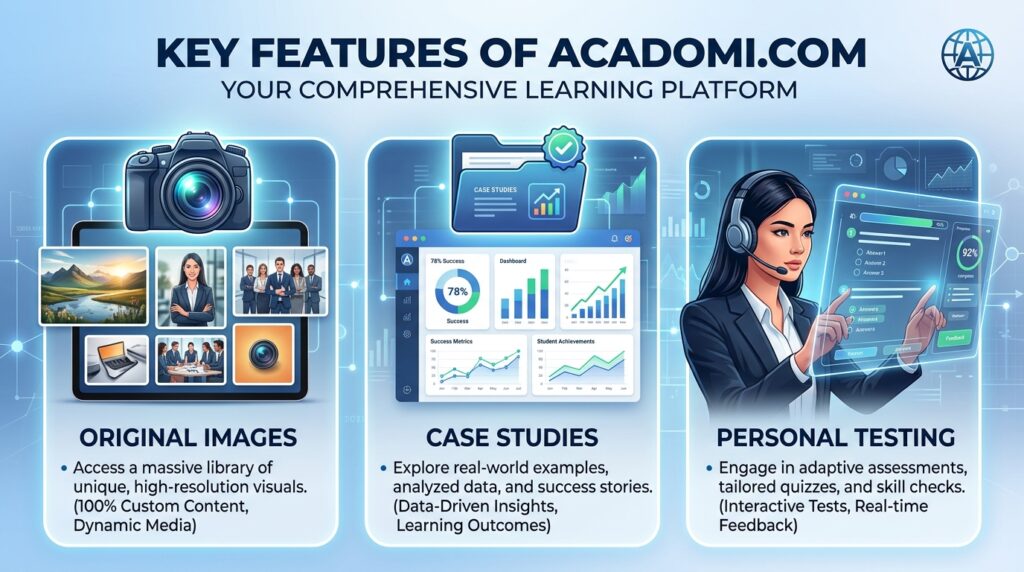
Acadomi’s core features include a structured course library, self-paced video lessons, downloadable resources, quizzes for knowledge checks, and digital certificates upon course completion. These are the building blocks of any functional e-learning environment, and Acadomi delivers them all without unnecessary complexity.
One of the standout features is the learning path structure. Rather than offering isolated, disconnected lessons, Acadomi groups related content into progressive sequences. A learner starting a digital marketing path, for example, will move from foundational concepts to content strategy, then to social media, then to analytics, in a logical order that builds comprehension.
Acadomi also offers mobile compatibility, which is especially important in 2026, when most learners prefer to study on their phones during commutes or breaks. The platform is responsive and functions well on smaller screens, though the dedicated app experience (if available) is worth verifying before enrolling.
Additional features worth noting include:
- Progress tracking dashboards that show how far along you are in each course
- Downloadable study materials and worksheets that complement video lessons
- Assessment quizzes that reinforce learning and prepare you for the final certificate test
- Community or discussion features (availability may vary by course)
- Multi-device access so you can switch between laptop and phone without losing progress
What Acadomi does not offer is live instruction, mentor sessions, or peer-graded assignments, features you would typically find on premium platforms like Coursera Plus or LinkedIn Learning. If those elements are non-negotiable for you, that is worth factoring into your decision.
User Interface and Learning Experience
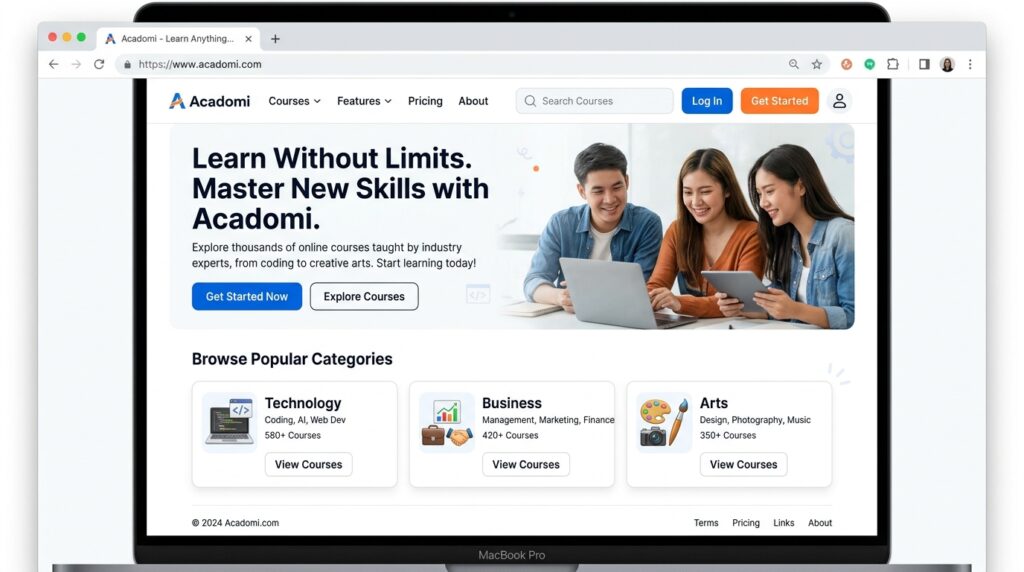
The user experience on an online learning platform can make or break your commitment to finishing a course. A confusing dashboard, laggy video player, or cluttered navigation will kill your motivation faster than difficult content ever could. So how does Acadomi perform here?
Overall, Acadomi.com presents a clean and approachable interface. The homepage is straightforward, course categories are clearly labeled, and finding a specific subject area does not require digging through multiple menus. For beginner learners, especially, this simplicity is a major advantage.
The course player itself is functional. Videos load quickly, playback quality is generally clear, and the controls are intuitive — standard pause, rewind, speed control, and fullscreen options. The progress bar updates as you complete each module, giving you a visual sense of advancement that psychologically encourages you to continue.
Navigation between lessons is smooth. You can jump between modules without needing to return to the main course page, and your last-watched position is saved automatically. This is a basic but crucial feature for busy learners who study in short bursts.
The visual design leans toward simplicity rather than innovation. It is not as polished or dynamic as platforms like Skillshare or LinkedIn Learning, but it is functional and distraction-free. Some learners prefer a minimal aesthetic precisely because it keeps focus on the content rather than the interface.
Mobile experience is acceptably smooth. Pages load well on standard smartphones, and the video player adapts to portrait mode without major issues. However, prolonged note-taking or accessing downloadable resources is more comfortable on a desktop.
One area where Acadomi could improve is personalization. The platform does not yet offer AI-driven course recommendations based on your learning history, a standard expectation in 2026. You browse manually, which is fine, but feels slightly dated compared to modern platforms that curate suggestions automatically.
Affordable Online Learning Platform Explained
The phrase “affordable online learning platform” gets used loosely across the internet, but what does it actually mean in practice? Cost is never just about the sticker price — it is about value delivered per dollar spent. Acadomi positions itself as a budget-friendly alternative, and for the most part, this claim holds up.
Compared to platforms like Coursera, which charges anywhere from $49 to $399 per course, or Udemy’s full-price courses that regularly hit $100 before discounts, Acadomi aims to offer a significantly lower entry point. For students in developing countries, side-hustlers, or people exploring new fields without committing financially, this pricing philosophy is genuinely helpful.
The real question is whether lower cost translates into lower quality. Based on available content reviews and user experiences, the answer is nuanced. Acadomi courses cover the fundamentals competently. The instructors are generally practitioners rather than professors, which means the content leans practical. You will not find deep academic theory here, but you will find actionable, applicable knowledge.
For self-starters who are disciplined about applying what they learn, Acadomi’s affordability means they can explore multiple subject areas, try a copywriting course, then dip into social media strategy, then explore basic web design without accumulating debt or financial stress. That freedom to explore is genuinely valuable, especially for younger learners still figuring out their career direction.
The best way to think about Acadomi’s value proposition is to compare it to YouTube tutorials. YouTube is free, but unstructured. Acadomi costs a small amount, but gives you a structured path, assessments, and a certificate. For many learners, that structure justifies the price, even if the cost is modest.
Course Quality Assessment
Course quality is the most important factor when evaluating any online learning platform, and this Acadomi.com review takes it seriously. Across subject areas, Acadomi’s course quality is generally solid for foundational and intermediate learners, though it rarely reaches advanced or cutting-edge territory.
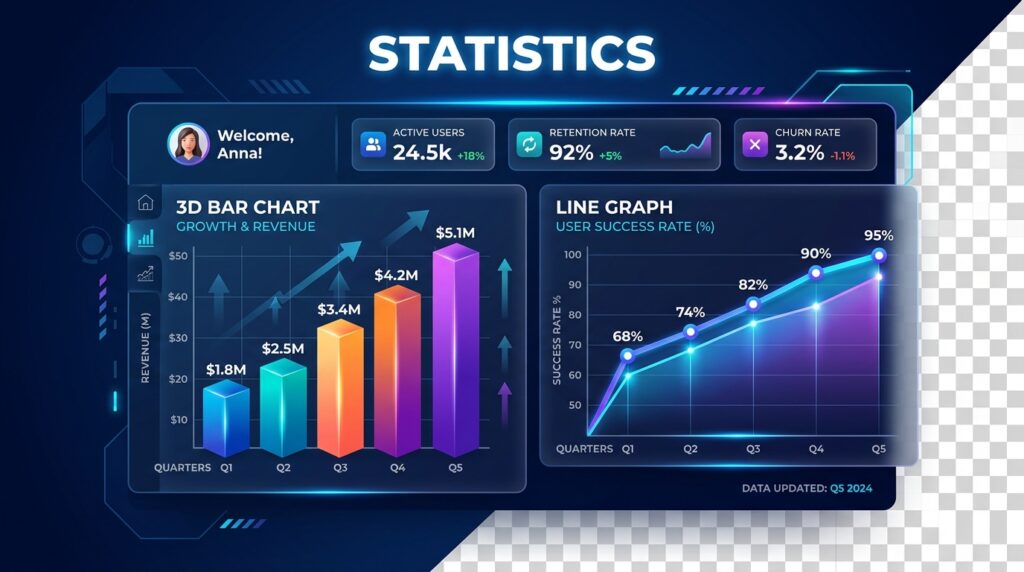
Courses are primarily video-based, with supporting text summaries and downloadable resources. The production quality of videos varies — some courses feature crisp, well-edited presentations, while others have a more informal, screen-recording style. This inconsistency is typical of platforms that aggregate content from multiple instructors rather than producing everything in-house.
The instructors on Acadomi are, by and large, working professionals or experienced practitioners in their respective fields. This has real advantages: the content stays grounded in real-world application, examples come from genuine industry experience, and advice tends to be practical rather than academic. However, it also means that teaching quality varies — some instructors are natural communicators, others less so.
Course depth is adequate for beginners and those building foundational knowledge. If you are brand new to digital marketing, graphic design, Excel, or entry-level coding, Acadomi courses will give you a competent starting point. If you are an experienced professional seeking advanced specialization, you may find the content overly introductory.
Quiz and assessment quality is reasonable. Most courses include knowledge-check quizzes between modules and a final assessment that you must pass to receive your certificate. These assessments are multiple-choice format and focus on reinforcing core concepts rather than testing nuanced judgment.
Overall course quality earns Acadomi a solid three-and-a-half out of five for its target audience — beginners and intermediate learners who want practical, affordable education in marketable skills.
Courses, Certificates, and Learning Experience
Acadomi courses span a wide range of subjects. The catalog includes business fundamentals, digital marketing, social media management, graphic design basics, Microsoft Office skills, an introduction to web development, content writing, and personal productivity. This variety means most learners will find something relevant to their goals.
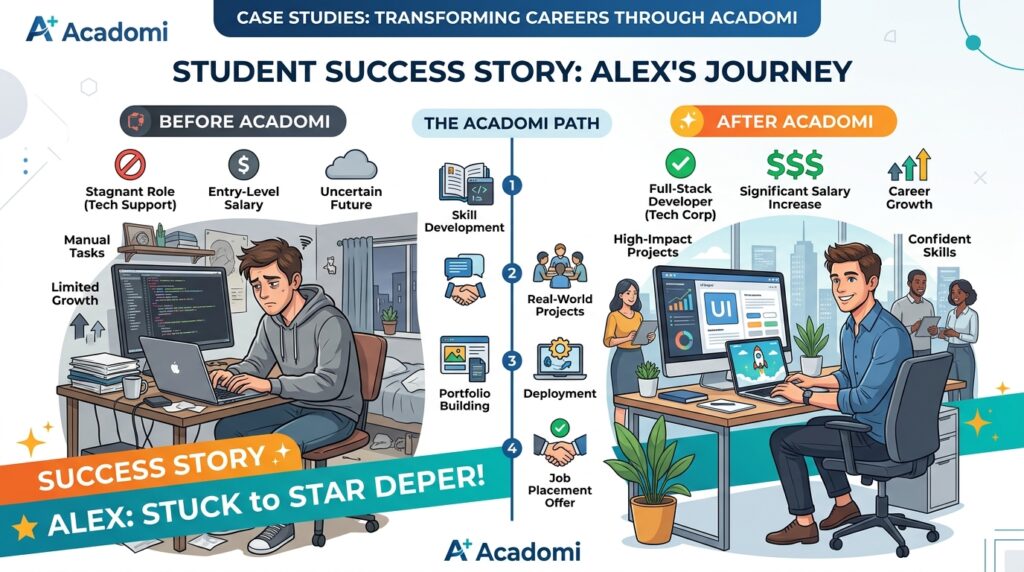
The certificate program is a key selling point. Upon completing a course and passing the final assessment, Acadomi issues a digital certificate that you can download and share on LinkedIn or include in your portfolio. The certificate displays your name, course title, and completion date.
It is important to be clear-eyed about what these certificates represent. They are completion certificates, not accredited qualifications. They will not replace a university degree or a recognized professional certification like AWS, Google, or CompTIA. However, they do serve several legitimate purposes:
- Demonstrating initiative and commitment to learning on your CV or LinkedIn
- Providing a structured talking point during job interviews about skills development
- Building a portfolio of completed training when you are just starting in a field
- Giving clients confidence when you are freelancing in areas where you lack formal credentials
The learning experience is self-paced, one of Acadomi’s biggest advantages for working adults. There are no deadlines, no live session obligations, and no penalization for taking breaks. You can study at 11 pm, come back three weeks later, and pick up exactly where you left off.
For self-motivated learners, this flexibility is a massive benefit. For those who need external accountability to stay on track, the absence of deadlines can be a reason not to finish. Acadomi does not currently offer accountability features like streak tracking or peer study groups, which would help combat this pattern.
Everything You Need to Know Before Enrolling
Before you hand over your payment details or even sign up for a free trial, there are several things worth knowing about Acadomi that most reviews skip over. This section addresses those practical considerations directly.
First, check whether the specific course you want is available in the catalog before purchasing a subscription or course bundle. Acadomi’s library, while growing, may not cover highly specialized or niche subjects. If you are looking for something specific — say, advanced machine learning or blockchain development — verify availability first.
Second, understand the refund policy clearly. Reputable online learning platforms publish their refund terms transparently. Check whether Acadomi offers a money-back period and what conditions apply. This protects you if the course quality does not meet your expectations.
Third, consider what you will do with the knowledge after completing the course. Acadomi courses are most valuable when paired with practice. If you complete a copywriting course, start writing. If you finish a web design course, build something. Certificates without demonstrable skills are decorative at best.
Fourth, be realistic about the time commitment. Even though courses are self-paced, they still require real hours of focused attention. A course listed as “10 hours of content” will take most learners 12 to 15 hours when you account for note-taking, pausing to practice, and revisiting complex sections.
Fifth, check whether your preferred device is supported. Acadomi works well on desktop browsers and modern smartphones, but if you are on an older device or using a slower internet connection, test the platform before committing to a paid enrollment.
Finally, compare the course you want against free alternatives. YouTube, Google’s free courses, and platforms like Alison offer substantial free content. If Acadomi’s structured approach and certificate genuinely add value for your specific goal, the cost is justified. If not, free resources may serve you just as well.
Acadomi Pricing, Pros and Cons
Acadomi pricing is one of the platform’s strongest competitive advantages. The exact pricing structure can vary, but Acadomi generally offers either individual course purchases or subscription-based access to its library. For individual courses, prices tend to be considerably lower than premium platforms. Subscription plans, where available, offer better value for learners who plan to complete multiple courses over time.
It is worth checking the current pricing directly on Acadomi.com before enrolling, as promotional offers and updated plans may apply.
Pros of using Acadomi:
- Affordable entry point compared to mainstream platforms
- Self-paced structure that fits busy schedules
- Practical, industry-relevant course content
- Digital certificates upon completion
- Clean, easy-to-navigate interface
- Mobile-compatible learning experience
- Wide range of subject areas suitable for beginners and intermediate learners
Cons of using Acadomi:
- No accredited qualifications certificates are completion-based only
- Course depth may not satisfy advanced or expert-level learners
- Inconsistent video production quality across courses
- No live instruction, mentoring, or peer interaction
- Limited AI-driven personalization compared to the 2026 platform standards
- Community features are limited or absent in most courses
- Less brand recognition than Coursera, Udemy, or LinkedIn Learning
The honest verdict on Acadomi’s value equation: it delivers what it promises for its price point. Manage your expectations correctly, and you will be satisfied. Approach it expecting a Coursera or LinkedIn Learning experience, and you will be disappointed.
Who Should Use Acadomi.com?
Not every platform is right for every learner. Acadomi.com suits specific profiles particularly well, and being clear about who benefits most will help you make the right decision.
Acadomi is an excellent fit for students exploring career options and seeking to sample different subjects without a significant financial investment. The affordable pricing means trying two or three courses to discover what resonates carries minimal risk.
It works well for freelancers and side hustlers who need to quickly add specific skills to their service offerings. If a freelance writer wants to add social media management to their portfolio, an Acadomi course provides the structured knowledge and a shareable certificate at a fraction of the cost of a premium platform.
Career switchers who are building foundational knowledge before investing in more advanced, accredited certifications will find Acadomi a useful first step. Think of it as the preparation layer before you pursue something like a Google Data Analytics certificate or an AWS Cloud Practitioner exam.
Working adults with irregular schedules benefit significantly from the self-paced model. There are no live sessions to attend, no cohort timelines to follow, and no pressure to keep pace with other students.
Acadomi is less suitable for senior professionals who need advanced specialization, learners seeking employer-recognized accreditation, or those who require community, mentorship, or peer interaction as part of their learning process.
How Does Acadomi Compare to Competitors?
Positioning Acadomi within the broader landscape of best online learning websites helps clarify its unique place. Here is how it compares to the major players.
Compared to Coursera, Acadomi is significantly more affordable but offers far less in terms of university-backed content, accreditation, and career services. Coursera partners with institutions like Yale, Michigan, and Google to deliver courses that carry genuine professional weight. Acadomi does not have this infrastructure, but it also does not charge Coursera prices.
Compared to Udemy, Acadomi is similar in price range and target audience but differs in depth of catalog. Udemy boasts hundreds of thousands of courses from millions of instructors, creating an enormous variety but also significant inconsistency in quality. Acadomi’s smaller, curated catalog may actually make it easier for learners overwhelmed by Udemy’s sheer volume to choose.
Compared to Skillshare, Acadomi focuses more on structured learning paths and certificates, while Skillshare leans toward creative project-based learning without formal assessments. Skillshare suits artistic or creative learners; Acadomi is better for those who want a more structured, testable learning progression.
| Feature | Acadomi | Udemy | Coursera |
|---|---|---|---|
| Affordable Pricing | Excellent | Good | Moderate |
| Course Variety | Good | Excellent | Excellent |
| University Partnerships | No | No | Yes |
| Certificates | Yes | Yes | Yes |
| Self-Paced Learning | Yes | Yes | Yes |
| Beginner Friendly | Excellent | Good | Good |
Acadomi stands out primarily because of its affordability and simplicity.
Compared to Alison, which is a free platform offering many of the same subject areas, Acadomi competes on structure, course quality, and user experience rather than price alone. Alison is free but ad-supported and somewhat dated in its interface. Acadomi offers a cleaner, more modern experience for a modest cost.
In the competitive landscape of online education reviews, Acadomi occupies a specific and valuable niche: a mid-tier, practical, affordable option that outperforms free resources in structure and quality without reaching the credential power or course depth of premium platforms.
Read More: Top 10 Legal Alternatives to Movierulz
Productivity and Time Management on Acadomi
One of the often-overlooked aspects of any online learning platform is whether it helps you actually manage your study time effectively. Acadomi’s self-paced model is a double-edged sword in this regard. The freedom it offers is genuine, but so is the risk of procrastination.
Acadomi courses are broken into short, digestible modules typically five to fifteen minutes per lesson. This micro-learning structure is backed by research on attention and retention. According to cognitive science principles widely cited by learning experts, shorter learning sessions with deliberate review intervals produce better long-term retention than marathon study sessions.
To make the most of this format, treat each Acadomi session as a focused block rather than background noise. Set a timer for 25 to 30 minutes, complete one to two modules, then take a five-minute break. This approach, similar to the Pomodoro Technique recommended by productivity researchers, turns casual viewing into genuine skill-building.
Use Acadomi’s progress tracker actively. Check it at the start of each study session to remind yourself where you are and how close you are to completion. Progress visibility has a documented psychological effect on motivation — people consistently work harder when they can see tangible progress.
If Acadomi allows you to set learning goals within your dashboard, use that feature. Committing to complete a certain number of modules per week creates a soft accountability structure that compensates for the platform’s lack of external deadlines.
Coding and Technical Skills
For learners interested in building technical skills, Acadomi’s offerings in coding and technology deserve particular attention. The platform includes introductory courses in areas like HTML and CSS basics, Microsoft Excel and data management, web design fundamentals, and basic programming concepts.
These courses are well-suited for absolute beginners who want to understand technical tools without diving into computer science theory. An Excel course on Acadomi, for example, will teach you to build functional spreadsheets, use essential formulas, and create basic charts practical skills that immediately apply in administrative, marketing, or business roles.
Coding courses on Acadomi take a gentle, concept-first approach. You will learn what programming languages do, how web pages are built, and how to write simple HTML structures. This is valuable as an orientation layer, but not as a substitute for dedicated coding platforms like Codecademy, freeCodeCamp, or The Odin Project if you are serious about becoming a developer.
The honest recommendation for technical learners: use Acadomi to build foundational literacy and confidence, then transition to specialized platforms for deeper skill development. Starting with Acadomi’s web design fundamentals before moving into a more intensive course on a coding-focused platform is a smart progression strategy.
Pro Tips to Maximize Your Acadomi Experience
Getting the most out of any online learning platform requires intention, not just enrollment. Here are practical strategies to maximize the value you extract from Acadomi courses.
Set a clear goal before enrolling. Decide specifically why you are taking the course and what you will do with the knowledge. “I want to learn social media marketing so I can manage my small business’s Instagram” is a productive goal. “I want to learn stuff” is not.
Complete the full course before moving on. It is tempting to jump between subjects, but finishing a single course and applying its lessons before starting another leads to far better retention and more visible skill development. Completion rates on online platforms are notoriously low resist the pattern.
Take notes by hand or in a dedicated document. Active note-taking forces you to process information rather than passively watch it, which dramatically improves recall. Structure your notes around practical takeaways — what can you do differently tomorrow based on what you just learned?
Apply each lesson immediately. After a module on, say, writing compelling headlines, write twenty headlines. After a module on email marketing structure, draft an actual email. Application within 24 hours of learning locks in understanding far better than any number of rewatches.
Share your progress publicly. Post on LinkedIn or Twitter when you start and complete a course. Public commitment creates accountability and often leads to meaningful conversations with others in the same field.
Common Mistakes Students Make
Online learning carries its own set of pitfalls that even motivated students fall into. Knowing these traps in advance helps you avoid them.
The most common mistake is enrolling in too many courses at once. Platforms like Acadomi make this easy because their costs are low. Resist the urge to buy five courses in week one. Depth in one subject beats superficiality in five.
Another frequent error is passive watching. Sitting through video lessons without note-taking, pausing to reflect, or applying the content is not learning it is entertainment. Treat each lesson as an active session.
Skipping the assessments is a third common mistake. Quizzes feel like obstacles, but they are actually the moments when real learning is consolidated. Take them seriously, and if you fail, review the relevant material rather than retrying immediately.
Expecting the certificate alone to create opportunities is perhaps the most damaging mistake. A certificate from Acadomi, like any non-accredited completion certificate, needs to be backed by demonstrable work. Build projects, write samples, or practice skills publicly. The certificate opens the conversation; your work closes it.
Finally, abandoning courses midway through is endemic to online learning. The moment you feel like a course is getting repetitive or dry, you are one click away from quitting. Recognize this as a motivational dip rather than a sign the course is worthless, and push through it.
Expert Insights on AI Learning Trends
The online education landscape in 2026 is being reshaped by artificial intelligence in ways that matter for platforms like Acadomi and for learners choosing where to invest their time. Understanding these trends helps you make smarter decisions about your own learning strategy.
AI-powered personalization is becoming a baseline expectation in online education. Platforms like Coursera and LinkedIn Learning now use machine learning algorithms to recommend courses based on your skill profile, career goals, and learning history. As Google’s own research on search behavior shows, users increasingly expect personalized experiences rather than generic catalogs. Acadomi’s current catalog-browse model may need to evolve to stay competitive.
The rise of generative AI tools — including ChatGPT, Gemini, and Claude — is changing what skills are in demand. Learners who combine platform-based structured learning with hands-on practice using AI tools are building the most relevant skill sets. Taking an Acadomi marketing course and then practicing prompt engineering to enhance that work represents a smart 2026 learning strategy.
Microlearning formats are gaining ground over long-form courses. Research consistently shows that focused, short-session learning with deliberate application outperforms hours-long video marathons. Acadomi’s modular structure aligns reasonably well with this trend.
The credential landscape is also shifting. Employers increasingly value demonstrable portfolios and skills assessments over certificates alone. Platforms that integrate project-based learning, peer review, and real-world deliverables, such as Coursera’s Guided Projects and LinkedIn Learning’s course exercises, are setting new standards. Acadomi would benefit from incorporating similar features to remain relevant as learner expectations evolve.
Quick Summary
Acadomi.com is a legitimate, affordable online learning platform that delivers practical, self-paced courses with digital certificates across a range of marketable subjects. It suits beginners, career explorers, freelancers, and self-directed learners looking for structured knowledge at an accessible price point.
The platform excels in ease of use, affordability, and a practical focus on content. It falls short in depth of advanced courses, community features, accreditation, and AI-driven personalization. Its certificate program adds value as a portfolio and commitment signal rather than as a formal credential.
Compared to major competitors, Acadomi occupies a specific and useful niche more structured than YouTube, more affordable than Coursera, and cleaner than Alison. For the right learner with the right expectations, it represents genuine value.
If you are considering Acadomi courses, begin with a subject directly relevant to a current goal, commit to completing the full course, actively apply the lessons, and use the certificate as one element of a broader portfolio strategy. Approached this way, Acadomi delivers exactly what it promises.
FAQs
What is Acadomi.com and what does it offer?
Acadomi.com is a self-paced online learning platform that provides courses in business, digital marketing, technology, design, and personal development. It issues digital certificates upon course completion. The platform is designed to be affordable and accessible, making it suitable for beginners and intermediate learners who want practical, marketable skills without a large financial investment.
Are Acadomi courses recognized by employers?
Acadomi certificates are completion-based and not accredited by official academic or professional bodies. Most employers will not treat them as equivalent to university degrees or recognized professional certifications. However, they can support your job applications and LinkedIn profile by demonstrating initiative, a commitment to learning, and relevant exposure to skills, particularly when backed by a strong portfolio or practical project work.
How much do Acadomi courses cost?
Acadomi’s pricing is structured to be more affordable than mainstream platforms. Exact pricing depends on the selected course or subscription plan, and promotional offers frequently apply. It is advisable to check Acadomi.com directly for current pricing, as rates may change. Generally, individual courses are significantly cheaper than comparable courses on Coursera or Udemy at full price.
Can I learn coding on Acadomi?
Yes, Acadomi offers introductory courses in coding and technical skills, including HTML, CSS basics, and web design fundamentals. These are best suited for absolute beginners building foundational technical literacy. For more advanced programming skills, pairing Acadomi’s foundational courses with dedicated platforms like freeCodeCamp or Codecademy is recommended.
Does Acadomi offer a free trial or free courses?
Free trial availability depends on Acadomi’s current offerings, which may change. Check the platform directly for any free sample lessons or trial periods. Some categories may offer limited free preview content so you can assess course quality before committing financially.
How long does it take to complete an Acadomi course?
Course length varies by subject. Most Acadomi courses range from five to fifteen hours of total video content. Because the platform is self-paced, your actual completion time depends on how many hours per week you dedicate to studying. A learner spending one hour per day could typically complete a ten-hour course within two to three weeks.
Is Acadomi good for beginners?
Yes, Acadomi is particularly well-suited for beginners. The courses are designed to build progressively on foundational concepts, and the platform’s simple interface does not overwhelm new users. Beginners exploring digital skills, business basics, or personal development topics will find the content accessible and practical, with no prior knowledge required.
How does Acadomi compare to Udemy and Coursera?
Acadomi is more affordable than both Coursera and full-price Udemy courses. Coursera offers university-backed, accredited content with greater employer recognition. Udemy has a far larger course catalog with an enormous variety, but inconsistent quality. Acadomi sits between free platforms like Alison and premium platforms like Coursera, offering structured, practical learning at a modest price for foundational and intermediate skill levels.
Can I get a refund if I am not satisfied with an Acadomi course?
Acadomi’s refund policy should be reviewed directly on their website before enrolling. Reputable platforms generally offer a money-back guarantee, and Acadomi appears to provide a refund option. Always read the terms and conditions before purchasing to understand the eligibility conditions and time limits for refund requests.
Is Acadomi.com safe to use, and is my payment information secure?
Acadomi.com operates as a legitimate platform with standard web security practices. Look for HTTPS encryption on their checkout pages, which indicates that your payment information is transmitted securely. As with any online platform, use a strong password for your account and consider using a virtual card for online purchases if you prefer an added layer of financial protection.