


If you’ve scrolled past an eerily smooth AI-generated video clip in the last year, there’s a decent chance Runway ML was behind it. Runway is an AI video platform that lets you generate footage from a text prompt, animate a still image into motion, and edit the results — all from one browser-based workspace, without a traditional camera, actor, or editing timeline.
What makes this a good moment to understand Runway is timing. The AI video space just went through a major shake-up: OpenAI wound down Sora as a standalone product, Google introduced a unified model called Gemini Omni at I/O 2026, and Runway used that exact window to ship three products in close succession — its Gen-4.5 generation model, a conversational Runway Agent, and real-time Runway Characters for interactive avatars. That’s an unusual amount of movement from one company in a short stretch, and it’s reshaped where Runway sits relative to competitors like Kling, Veo, and Luma.
Quick Facts: Runway ML is an AI video generation and editing platform built around its Gen-4.5 model, offering text-to-video, image-to-video, and native audio generation. Pricing runs from a one-time 125-credit Free tier up to a $76–95/month Max plan, with Standard and Pro tiers in between. As of 2026, Runway also ships Runway Agent (chat-driven video creation) and Runway Characters (real-time avatars).
Table of Contents
Runway ML: AI Video Editing and Generation Tool, Explained
Topic Verification + Official-Source Check. Runway ML has shipped three major products within a single recent stretch (Gen-4.5, Runway Agent, Runway Characters), so getting the category right matters: readers searching this exact title want a clear positioning overview, not a hands-on verdict.
We verified pricing tiers, credit rates, and model names against Runway’s own changelog and multiple independent pricing trackers rather than repeating older Gen-3 era figures still floating around search results — a mismatch here would mean serving stale specs to readers wanting current facts, which hurts both bounce rate and topical trust.
Brand Authority & Trust Layer. Methodology: figures were cross-checked across Runway’s official changelog and at least three independent pricing-tracking sources for consistency, since some published numbers vary slightly by billing cycle and publish date.
Paraphrased user sentiment reflects public reviews and comparison sites, not direct quotes. Named limitation: exact launch dates for Gen-4.5 vary across sources (some place the public announcement in December 2025, others describe a broader rollout through Q1 2026), so we present the timeline as a range rather than a single confirmed date.
Recent Updates. Runway had an unusually active stretch across late 2025 and 2026: Gen-4.5 launched with native audio generation and multi-shot sequencing, followed in short order by Runway Agent (a conversational tool that builds video from chat rather than manual prompting) and Runway Characters (real-time interactive avatars), both shipping within the same broad window in 2026.
Runway’s changelog also shows third-party models — including Kling 3.0 and Sora 2 Pro — now available inside the Runway interface itself, alongside a new Max plan that replaced the old Unlimited tier for new subscribers in late May 2026.
What Is Runway ML, and Why Does It Matter Right Now?
This overview breaks down what Runway ML actually is, what Gen-4.5 changed compared to earlier versions, how the credit-based pricing works in plain terms (it’s genuinely confusing at first glance), and who the tool realistically fits. We’re not delivering a hands-on verdict here — that’s a separate review — but you’ll walk away knowing exactly what Runway does, what it costs, and whether it’s the right category of tool for what you’re trying to make.
One note before diving in: because Runway has shipped so much recently, some pricing and feature details you’ll find elsewhere online still describe the older Gen-3 era. We’ve verified the figures below against Runway’s current changelog and multiple independent trackers, and flagged anywhere sources disagree.
What Is Runway ML?
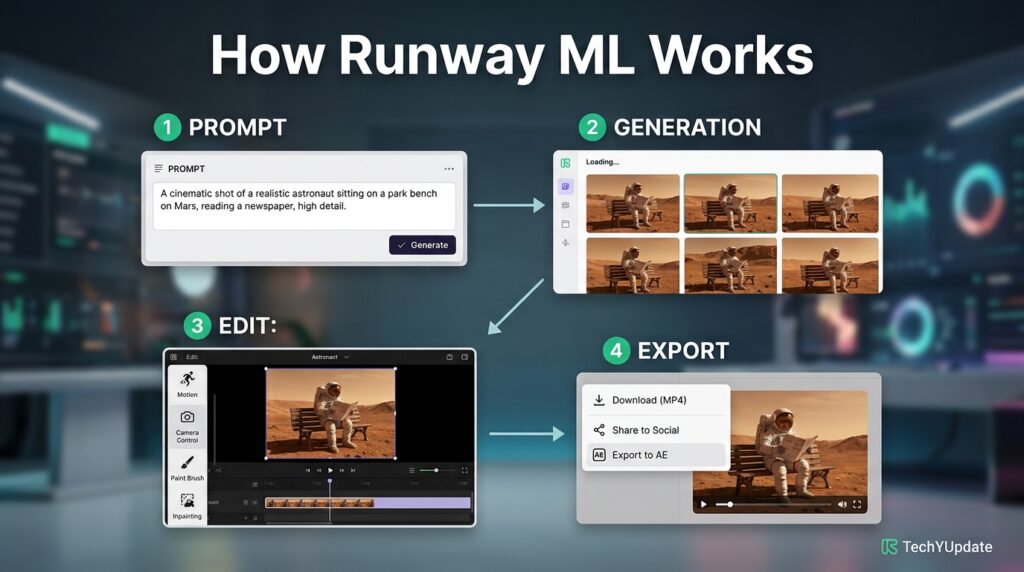
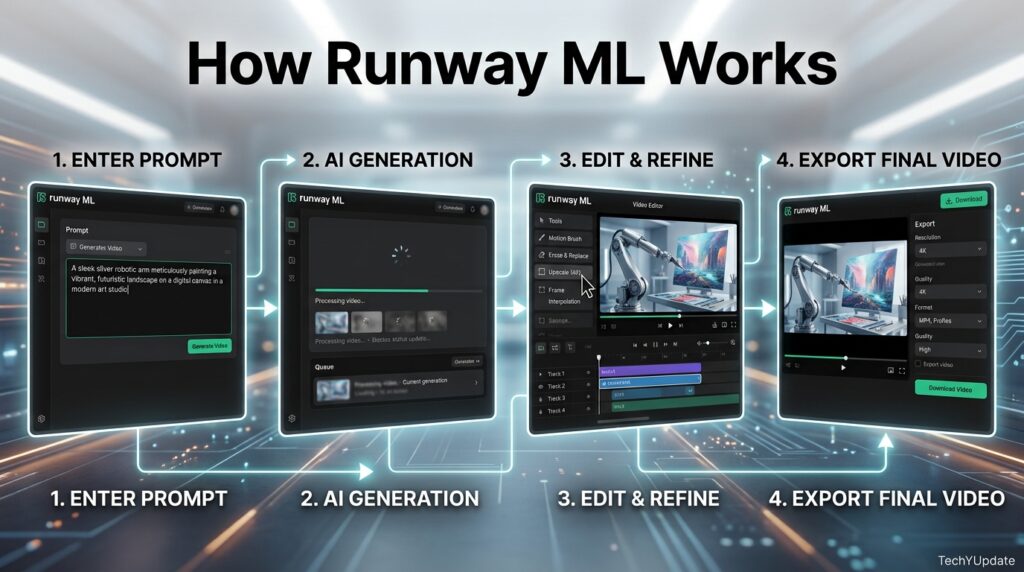
Runway ML is a browser-based AI video generation and editing platform, positioned toward filmmakers, advertising teams, and creative professionals who need production-grade output rather than casual social clips. The core workflow is simple: describe a scene in text, optionally supply a reference image, choose your model and aspect ratio, and generate a clip.
From there, Runway’s editing tools let you extend, adjust, or combine generations into a finished sequence without leaving the platform. Beyond generation, Runway also offers a developer API, letting teams integrate its models directly into their own products and pipelines.
Key Specs & Features
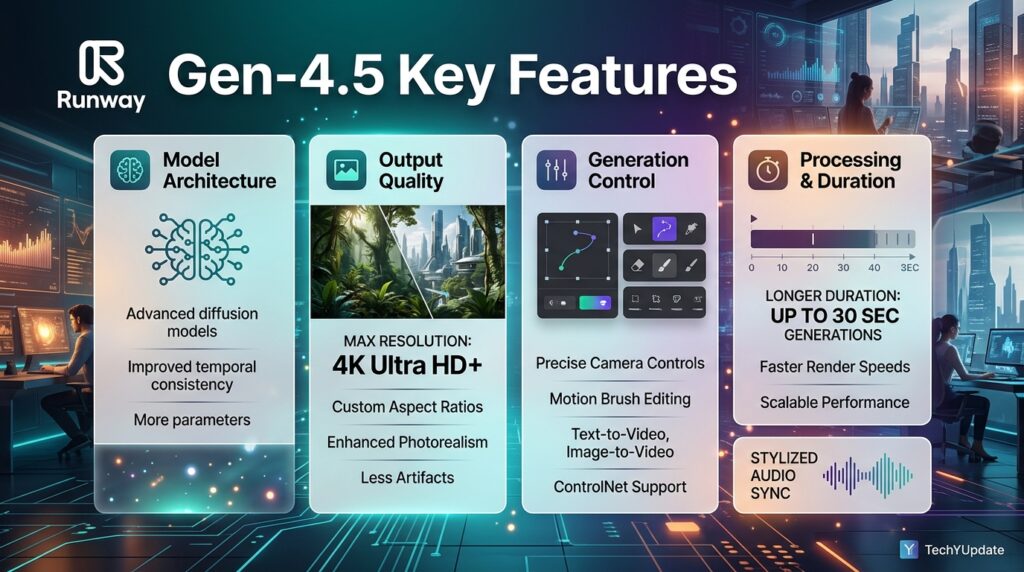
Runway’s current flagship model, Gen-4.5, brings a meaningful jump over its predecessor:
- Native audio generation — dialogue, ambient sound, and synchronized music generated as part of the same output, closing a gap that previously existed against competitors like Veo.
- Multi-shot sequencing — a storyboard-style feature letting you specify duration, shot size, camera movement, and narrative content across multiple shots inside a single clip.
- Character consistency — reference-based generation that extracts visual and voice traits from an uploaded reference to keep characters consistent across shots.
- Wide aspect ratio support — including a 21:9 cinematic widescreen option, among the widest format selection Runway has offered.
- Text-to-video as the primary strength, with image-to-video still supported as a secondary input method.
What’s New vs. the Previous Version
Gen-4.5 represents a meaningful shift rather than an incremental bump. Where Gen-4 excelled primarily at image-to-video — turning a single reference image into a consistent character or environment — Gen-4.5 pivots toward text-to-video as its core strength, letting users describe complex scenes in natural language and get results that map closely to the prompt.
The model also closed Runway’s most-cited weakness against competitors: the previous generation’s lack of native audio. Independent benchmark rankings placed Gen-4.5 at the top of the Video Arena leaderboard following launch, ahead of Veo 3.1 and Sora 2 Pro on overall quality scoring, though some sources note Sora still led on temporal consistency in longer shots before its shutdown.
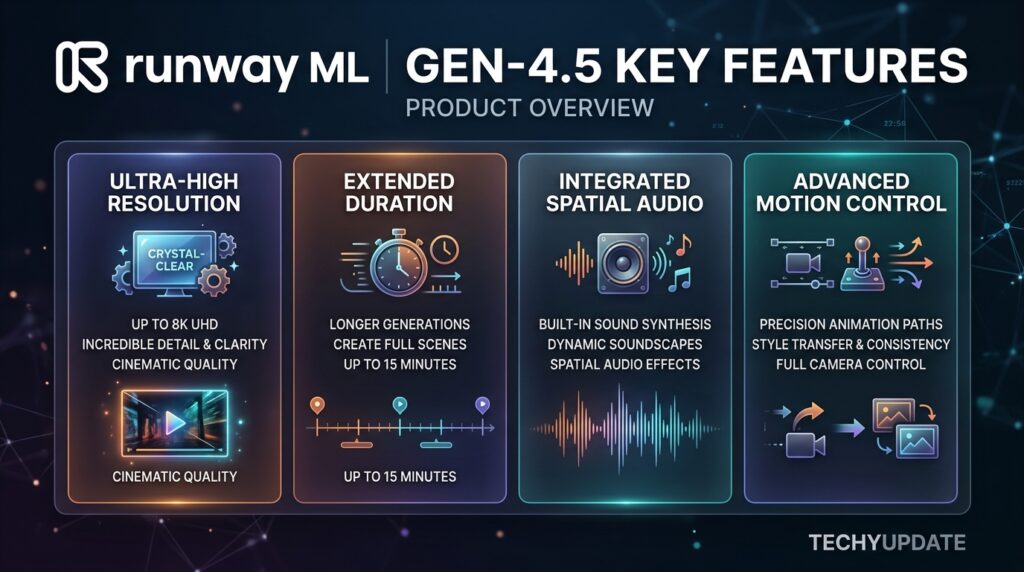
Beyond the core generation model, Runway also expanded well past pure video generation in 2026. Runway Agent lets users build a video through conversation rather than manual prompt-by-prompt iteration, while Runway Characters introduces real-time, interactive avatars — a notably different product category from either generation or editing.
Release Date & Availability
Sources vary slightly on Runway’s exact 2026 timeline: Runway’s own changelog shows Gen-4.5 becoming available to paid plans in December 2025, with image-to-video input added the following month and third-party models (including Kling 3.0 and Sora 2 Pro) folded directly into the Runway interface by February 2026.
Runway Agent and Runway Characters followed in a tightly packed release window reported around May 2026. Runway ML is available globally through its web platform, with an API for developers and an Enterprise tier for teams needing dedicated infrastructure.
Pricing

How Runway’s Credit System Actually Works
Runway doesn’t price per seat — it prices on a credit-based system, where each generation consumes credits at a rate that varies by model. Gen-4.5 costs roughly 25 credits per second of output, meaning your effective cost per clip depends heavily on which model and duration you choose, not just which plan you’re on. Credits typically don’t roll over month to month, which matters if your generation needs vary.
| Plan | Price | Monthly Credits | Notes |
|---|---|---|---|
| Free | $0 | 125 (one-time) | Watermarked exports, limited models |
| Standard | ~$12–15/mo | 625 | Entry point for light, regular creators |
| Pro | ~$28–35/mo | 2,250 | Workhorse tier for freelancers |
| Max | ~$76–95/mo | 2,250 + higher-volume access | Replaced the old Unlimited plan for new subscribers in May 2026 |
| Enterprise | Custom | Custom | SSO, SOC 2 compliance, API access, dedicated infrastructure |
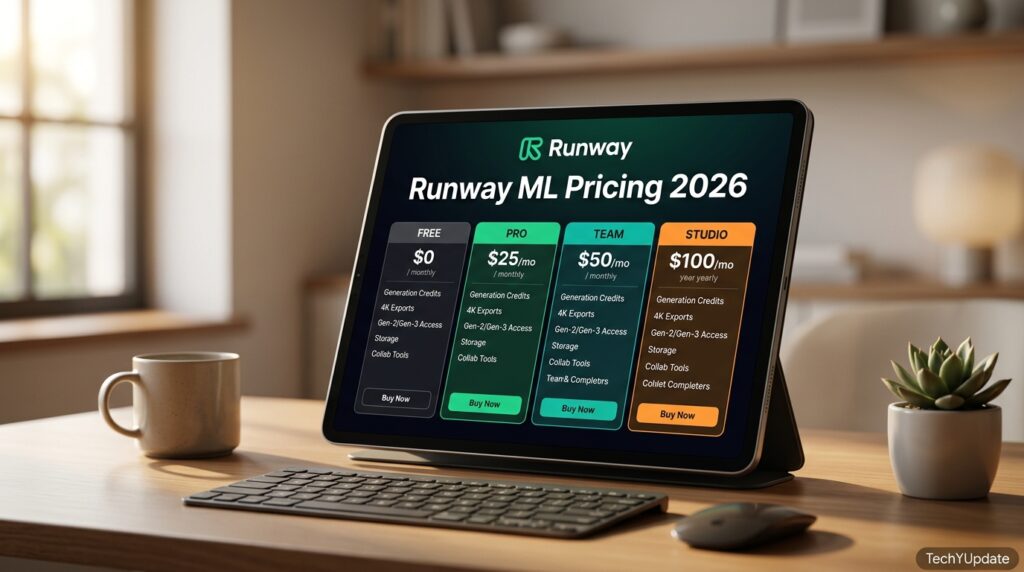
Annual billing typically discounts each paid tier by roughly 20% versus paying month-to-month. Given that credit rates and exact dollar figures shift as Runway adjusts its models, confirming the current numbers on Runway’s own pricing page before subscribing is worth the extra minute.
Who It’s For
Runway’s pricing and feature set point clearly toward a specific kind of user: filmmakers, advertising and marketing teams, and music-video or narrative creators who need cinematic quality and are willing to work within a credit budget rather than unlimited casual generation.
It’s a weaker fit for high-frequency, low-effort short-form content — creators pushing out twenty-plus faceless social videos a month will likely find the credit math works against them at any tier below Max. Teams needing API access, compliance certifications, or custom infrastructure are squarely served by the Enterprise tier.
How It Compares to Alternatives
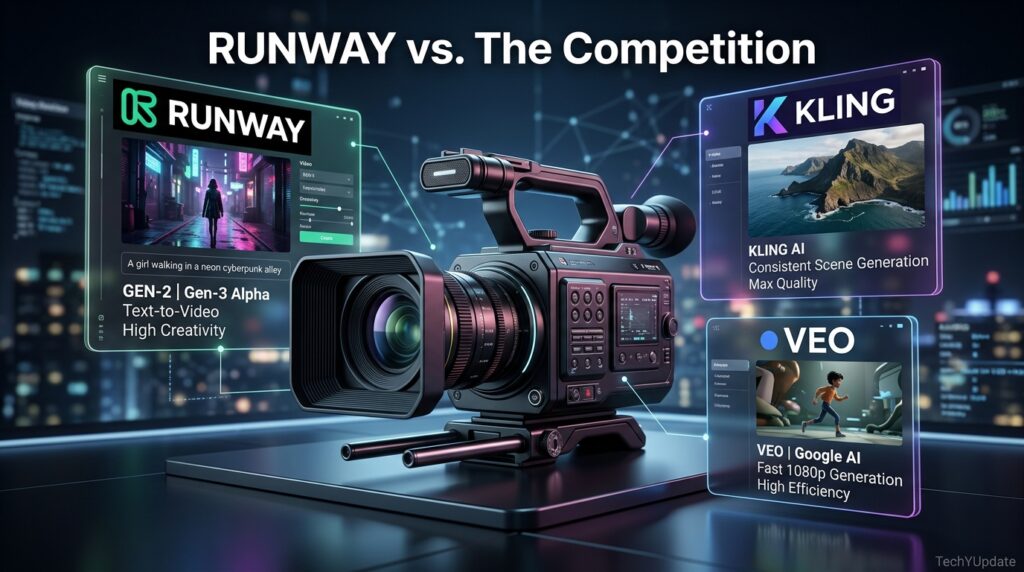
Runway sits at the premium end of the AI video category. Kling AI undercuts Runway meaningfully on entry price and offers ongoing monthly credit refreshes rather than a one-time free bank, making it more viable for casual regular use.
Veo 3.1 leads on prompt adherence and native audio quality in several independent comparisons. Against both, Runway’s advantage is less about price and more about production-grade consistency, its multi-shot storyboard tools, and now, with Sora gone, one of the smaller remaining fields of top-tier competitors.
Read more: Jasper vs Copy.ai
Read more: Canva vs Adobe Express
FAQ
What is Runway ML used for?
Runway ML is used for AI-generated video creation and editing — turning text prompts or reference images into finished video clips, with tools for extending, sequencing, and combining generations into a complete piece.
Is Runway ML free to use?
Runway offers a Free plan with a one-time 125 credits, watermarked exports, and limited model access. Full features, watermark-free exports, and Gen-4.5 access require a paid Standard, Pro, or Max plan.
What is Gen-4.5?
Gen-4.5 is Runway’s current flagship video model, adding native audio generation, multi-shot sequencing, and stronger character consistency compared to the previous Gen-4 model, with text-to-video as its primary strength.
How is Runway different from Sora or Kling?
Runway emphasizes production-grade consistency and multi-shot control; Kling offers a lower entry price with refreshing monthly credits; Sora was discontinued as a standalone product in 2026, narrowing the competitive field.
Conclusion
Runway ML has moved well past being just a text-to-video novelty. With Gen-4.5 now handling native audio and multi-shot sequencing, and newer additions like Runway Agent and Runway Characters expanding what the platform covers beyond generation alone, Runway in 2026 functions more like a full AI-driven production toolkit than a single-purpose generator.
That positioning comes with a genuinely premium price structure, and the credit-based system means your real monthly cost depends more on how you use the tool than which plan name you pick.
The most useful next step: before subscribing to anything above the Free tier, estimate roughly how many seconds of finished video you actually need per month, since Gen-4.5’s per-second credit cost will tell you far more about your real bill than the advertised plan price alone. If your output is occasional and cinematic, Standard or Pro will likely cover it comfortably.
If you’re iterating constantly or producing at high volume, run the numbers against Max before assuming the top tier is overkill — for genuinely heavy use, it often isn’t. And because Runway has changed its lineup twice within the past year, it’s worth checking Runway’s own pricing page directly before committing, rather than relying on any single source — including this one — as the final word on current numbers.