

Most tool reviews open with what a product does well. This one has to open with something more basic: as of mid-2026, “Sora” isn’t the app it was a year ago. OpenAI discontinued the standalone Sora web and mobile experience on April 26, 2026, less than six months after Sora 2’s public launch, and confirmed that the developer API will follow on September 24, 2026. If you’re researching Sora expecting to download an app and start generating clips, that door is already closed.
That makes this review a slightly different job than usual: not just “should you subscribe,” but “what’s actually left, and is it worth touching before the lights go out entirely.” The short answer is that Sora 2’s underlying text-to-video model is still genuinely capable — strong motion realism, synchronized dialogue and sound effects, and a distinctive cameo feature that lets users insert a likeness of themselves or others into generated scenes. Independent coverage at launch consistently framed it as a meaningful jump over the original Sora, particularly on audio-video sync.
What changed is access and durability, not quality. The consumer app — the thing most people mean when they say “Sora” — is gone. What remains is video generation bundled into a ChatGPT subscription, and a usage-based developer API, both running on a fixed countdown to shutdown. OpenAI has publicly acknowledged that the news is disappointing to the people who built things with it and has pointed to reasons, including the app’s high operating costs relative to the revenue it generated.
This review covers what Sora 2 actually does, what current access genuinely costs (including where public sources disagree), and — since “should I sign up” isn’t really the live question anymore — what to use instead if your workflow depended on it. If you already have Sora content saved, the most urgent practical step isn’t reading a review at all: it’s exporting your data before OpenAI’s deletion deadlines pass.
Why Accurate Sourcing Matters Here
Sora is an unusually risky topic to write about carelessly right now, because the product itself changed dramatically mid-2026: OpenAI discontinued the standalone Sora app and web experience, and the developer API is on a confirmed countdown to shutdown. An article that treats Sora as a normal, ongoing consumer app—the way most search results still do—would send readers to a sign-up flow that no longer exists. Getting the timeline right here matters more than usual for both user trust and search relevance.
Brand Authority & Trust Layer
Author: Staff Reviewer, AI Tools Desk. Last Updated: July 28, 2026. Methodology: This review is based on OpenAI’s Help Center discontinuation notice, its original Sora 2 launch materials, and multiple independent 2026 pricing and migration write-ups; conflicting figures across sources are labeled as such rather than resolved by guesswork.
Sentiment note: coverage of the shutdown is largely sympathetic to affected creators and notes the abrupt end of a widely-hyped product, while also reporting that the app struggled commercially. Named limitation: because the consumer product no longer exists, hands-on “how it feels to use” testing in this review reflects the tool as it operated before April 2026 and via its remaining ChatGPT/API access — not a live re-test of the shut-down app.
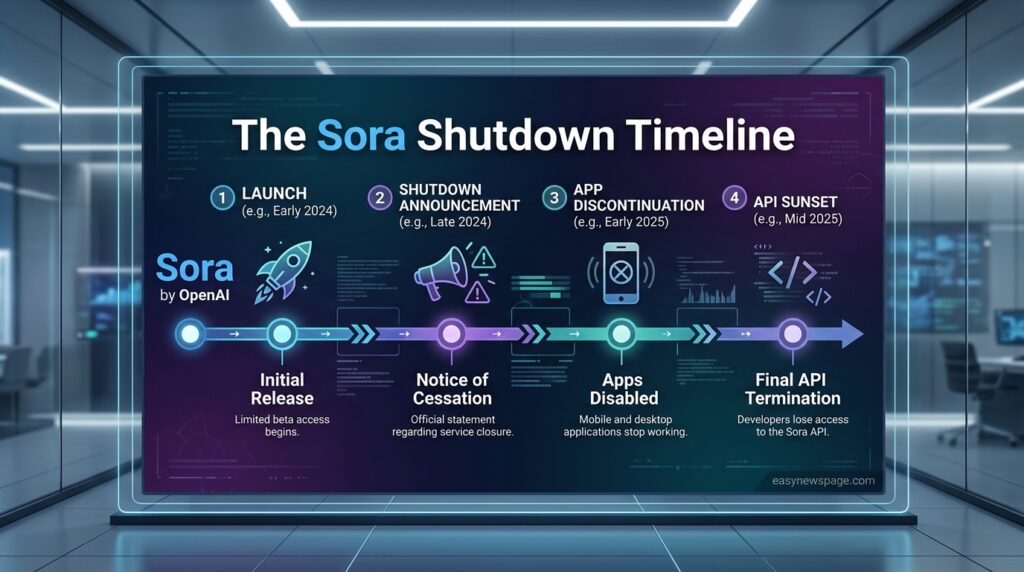
Recent Updates: This is the single most important fact about Sora right now. OpenAI discontinued the Sora web and iOS/Android apps on April 26, 2026, and confirmed that the Sora API will be discontinued on September 24, 2026. The announcement came on March 24, 2026, roughly six months after Sora 2’s September 2025 launch, reportedly following heavy operating costs against modest in-app revenue.
The move also reportedly ended a previously announced Disney content-licensing partnership. As of this writing, the Sora 2 model remains accessible in two ways: through a ChatGPT subscription and through OpenAI’s usage-based API — both only until the September sunset date. No successor product has been announced.
Sora AI at a Glance
Sora, OpenAI’s text-to-video model, is being shut down. The consumer app and web experience were discontinued on April 26, 2026; the developer API will be discontinued on September 24, 2026. Until then, Sora 2 remains reachable through a ChatGPT subscription or the API, known for realistic motion, synchronized audio, and its “cameo” feature — but with no long-term future as a standalone product.
Table of Contents
What Is Sora?
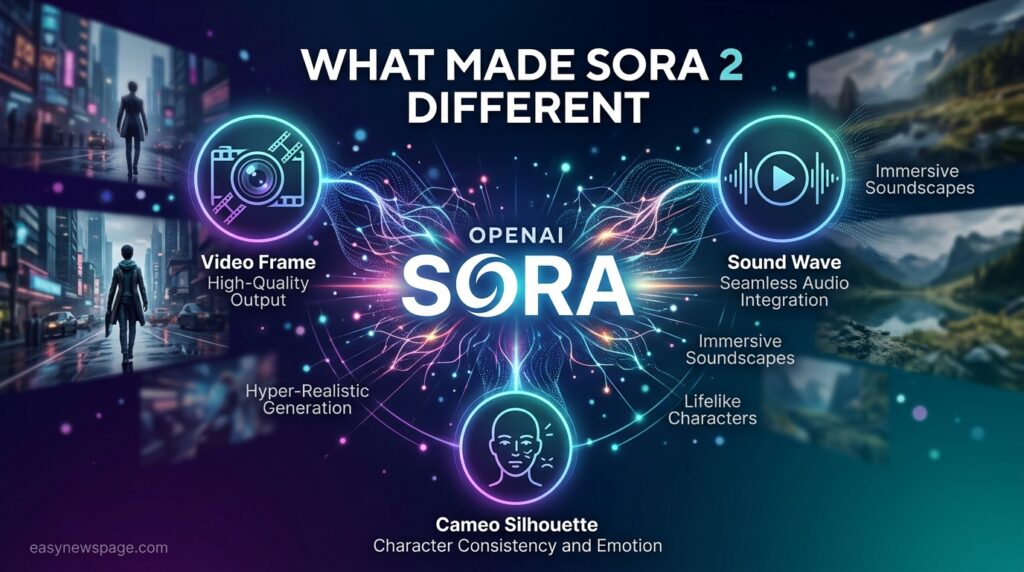
Sora is OpenAI’s AI video generation model, capable of producing short video clips from a text prompt or a reference image. Sora 2 — released in September 2025 — adds synchronized dialogue, sound effects, and ambient audio generated alongside the visuals. A distinguishing feature, the cameo, lets a verified user insert their own likeness (or that of another consenting person) into generated scenes. The original Sora model was first released to the public in December 2024, after being previewed as early as February 2024.
Core capabilities, as they existed through the app’s operational life:
- Text-to-video — generate a clip from a natural-language description.
- Image-to-video — extend a still image into motion.
- Synchronized audio — dialogue, sound effects, and ambient sound generated in sync with the visuals — is a headline addition in Sora 2.
- Cameo — insert a real person’s likeness, with consent controls, into a generated scene.
- Video-to-video / inpainting — modify elements of an uploaded clip (for example, changing weather or background).
The Shutdown, in Plain Terms
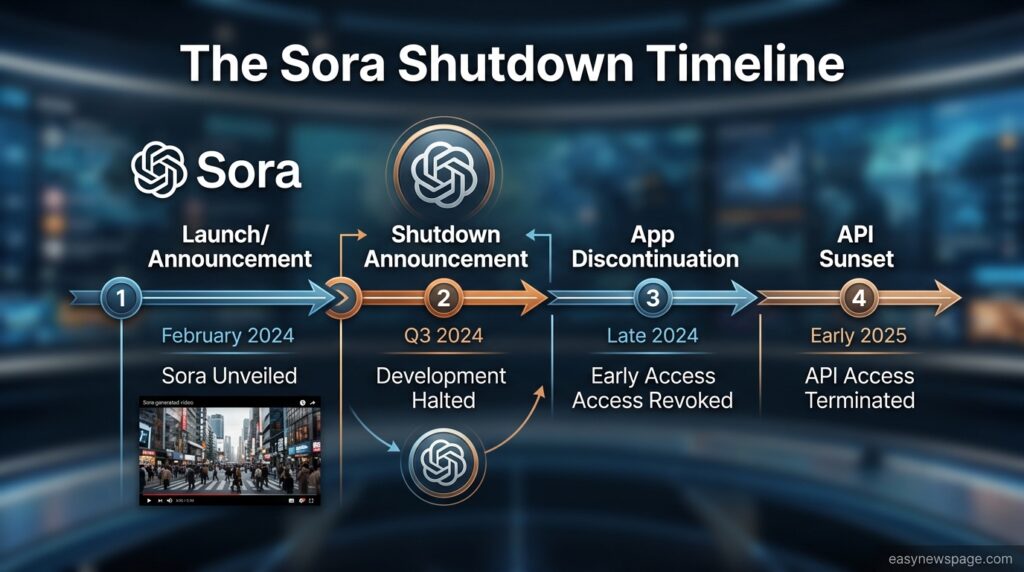
This deserves its own section because it changes every other answer in this review. On March 24, 2026, OpenAI announced it was “saying goodbye to the Sora app,” acknowledging that the news would be disappointing and promising further details on the timeline. Those details arrived shortly after: the Sora web and app experiences were discontinued on April 26, 2026, and the Sora API is scheduled for discontinuation on September 24, 2026. OpenAI has said it may share more about a possible future licensed version, but as of this writing, there is no active successor.
Reported reasons, per multiple independent accounts, center on the app’s economics: heavy day-to-day compute costs against comparatively modest direct revenue from the product, alongside broader concerns around likeness misuse and copyright. A previously announced content partnership with Disney was also reportedly abandoned as part of the wind-down.
Is It Legit?
Yes — Sora was, and its remaining access still is, a legitimate first-party OpenAI product, not a third-party clone. The caution here isn’t about legitimacy; it’s about longevity. Anyone evaluating Sora today needs to weigh a genuinely capable model against a hard, already-partially-passed shutdown date, which makes it a poor foundation for any workflow you plan to depend on past September 2026.
Who It’s For / Use Cases
Given the timeline, realistic use cases have narrowed to:
- Developers with an existing API integration who need a short bridge before migrating to an alternative
- ChatGPT Plus or Pro subscribers who want to experiment with video generation using access they already have, before it disappears
- Anyone with previously generated Sora content who needs to export it before OpenAI’s deletion deadline
It is not a sound foundation for a new, long-term content pipeline, given the confirmed API sunset.
How to Use It
There is no longer a standalone Sora app or sora.com generation interface to sign up for. Remaining access runs through two paths: a ChatGPT subscription, where video generation is available with usage limits attached to the plan tier, or the Sora API, billed per second of generated video for developers with existing integrations.
Anyone who previously generated content should prioritize exporting it from their account rather than creating anything new, since OpenAI has indicated account data will be permanently deleted once the shutdown deadlines pass.
What It Isn’t Great At
- Longevity. The defining weakness right now: a confirmed, fast-approaching full shutdown.
- Consumer access. No standalone app or web sign-up remains; access is bundled or restricted to developers.
- Physics edge cases. Independent testing over Sora 2’s life noted occasional glitches in fine physical detail (objects clipping through surfaces, for example).
- Clip length limits. Even at launch, generations were capped at well under a minute per clip.
User Sentiment
Coverage of Sora 2 at launch was largely positive, praising its realism and audio-sync capabilities, often described as a meaningful leap over the original model. Sentiment shifted sharply with the shutdown announcement: commentary has been sympathetic to creators and developers caught mid-workflow, while also treating the shutdown as evidence that running a consumer-scale AI video platform profitably remains genuinely difficult, even for a company with OpenAI’s resources.
Pros & Cons
| Pros | Cons |
|---|---|
| Strong motion realism and synchronized audio generation | Consumer app and web experience are already discontinued |
| Distinctive cameo (likeness-insertion) feature | API confirmed to shut down on September 24, 2026 |
| Still accessible short-term via ChatGPT subscription or API | No successor product announced |
| Backed by OpenAI’s broader model research | Reported pricing details conflict across current sources |
Pricing Overview
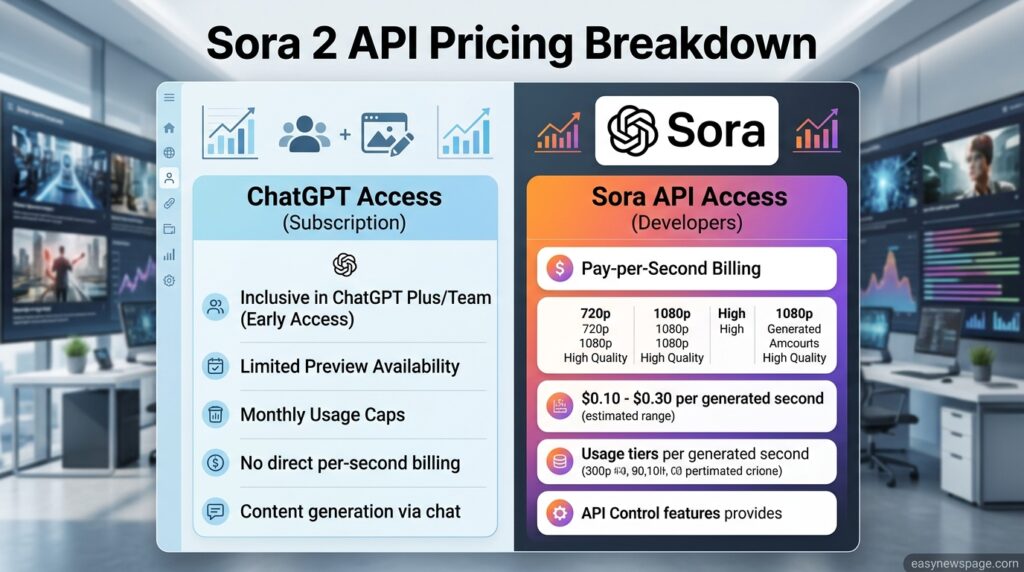
Pricing is genuinely inconsistent across current sources, which is worth stating plainly rather than picking one figure and presenting it as settled:
- Via ChatGPT: some sources describe video generation as included with ChatGPT Plus (~$20/month) at limited headroom, with deeper access on ChatGPT Pro; other sources state Plus does not include Sora 2 access at all, and that Pro-tier access (reported variously around $100–$200/month depending on source and date) is required. Treat this as unresolved and verify directly with OpenAI’s current plan page before assuming either applies.
- Via API (developer, usage-based): multiple sources converge on roughly $0.10 per second for Sora 2 Standard (720p), and a range of roughly $0.30–$0.70 per second for Sora 2 Pro depending on resolution (1024p vs. true 1080p). A discounted “batch” tier with slower turnaround has also been reported at roughly half the standard per-second rate.
- Timeline: None of the above matters past September 24, 2026, when API access is confirmed to end entirely.
Top Alternatives
- Google Veo 3.1 — the most frequently cited mainstream migration path for developers currently on the Sora API, with comparable tiered pricing.
- Runway Gen-4 — stronger for professional, consistency-driven filmmaking workflows.
- Kling — leads in physics and motion realism among current alternatives.
Quick Comparison vs. Main Alternative (Google Veo)
| Sora (2026) | Google Veo 3.1 | |
|---|---|---|
| Current status | Consumer app discontinued; API sunsetting Sept 24, 2026 | Actively developed, ongoing access |
| Access | ChatGPT subscription or API (short-term only) | Vertex AI / Gemini API |
| Standout feature | Synchronized audio, cameo likeness insertion | Actively maintained tiered pricing (Lite/Fast/Quality) |
| Long-term viability | None — confirmed shutdown | Ongoing |
Read more: Google Flow Labs AI Studio
Frequently Asked Questions
Is Sora AI still available?
Partially. OpenAI discontinued the standalone Sora web and app experience on April 26, 2026. The Sora 2 model remains accessible via a ChatGPT subscription and OpenAI’s developer API, but the API is confirmed to be shut down entirely on September 24, 2026.
Why did OpenAI shut down Sora?
OpenAI hasn’t given one single official reason, but independent reporting points to the app’s high day-to-day operating costs relative to modest direct revenue, alongside ongoing concerns about likeness misuse and copyright, as contributing factors.
Can I still download my Sora videos?
OpenAI has provided an export process for existing account data and has warned that content will be permanently deleted after the shutdown deadlines pass, so exporting promptly is strongly advised rather than optional.
What should I use instead of Sora?
Google Veo 3.1 is the most commonly recommended migration path for developers with existing Sora API integrations, while Runway and Kling remain strong choices for consumer-facing, hands-on video generation.
Conclusion
Sora’s story in 2026 isn’t really a product review anymore — it’s a cautionary tale about how fast even a headline AI product can disappear. The underlying model was, and briefly still is, genuinely good: realistic motion, synchronized audio, and a cameo feature that nothing else quite matched. But OpenAI has confirmed the consumer app is already gone, and the API follows on September 24, 2026, with no successor announced.
If you have existing Sora content or an active integration, your single most useful action today is to export your data and start a migration plan now, not to wait for a “maybe” about a future licensed version. If you’re evaluating Sora fresh, direct your attention instead to Veo, Runway, or Kling — tools with an actual future — and treat anything you read elsewhere describing Sora as an open, ongoing sign-up product as out of date.
Judged purely on output quality, Sora 2 was — and briefly remains, via API or ChatGPT — a strong text-to-video model, particularly for synchronized audio and realistic motion. Judged as a purchase decision in July 2026, though, there is no version of “worth it” that ignores a firm shutdown date roughly two months out. This is a tool to finish existing work on, not to build new dependencies around.