

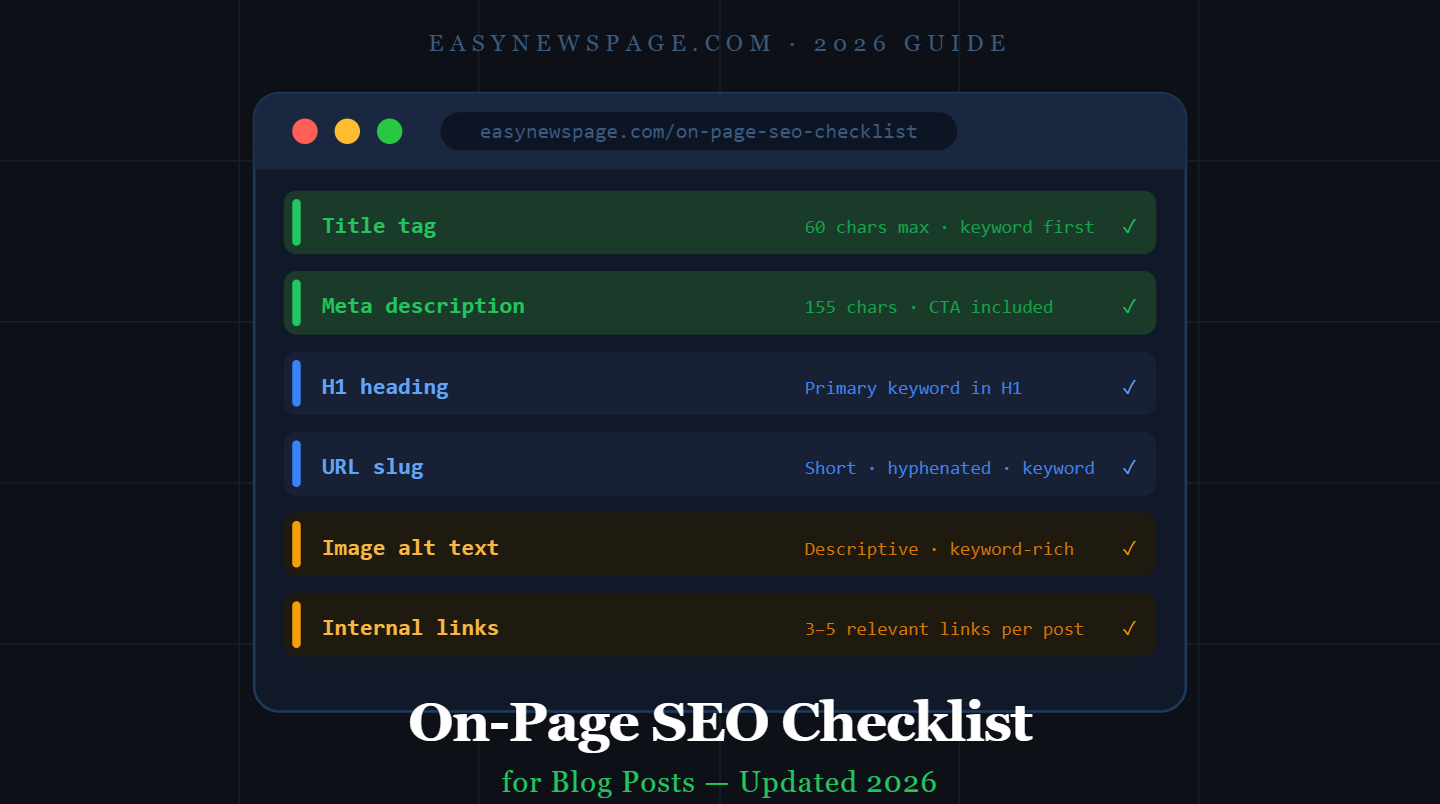
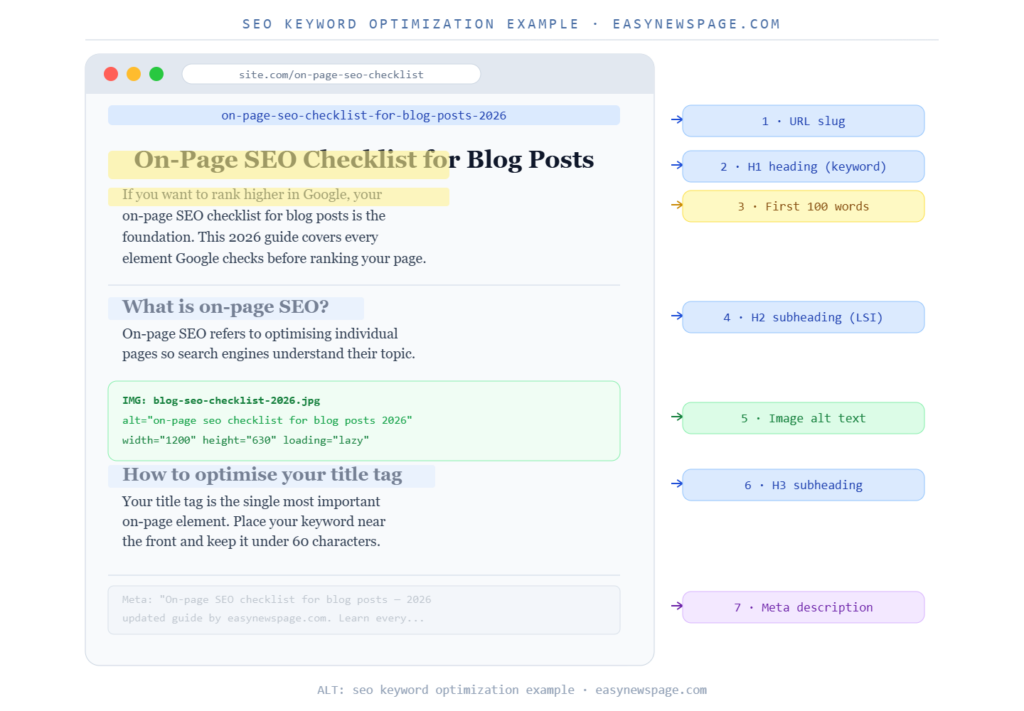
If you want your blog posts to rank in 2026, understanding the On-Page SEO Checklist for Blog Posts (2026 Updated Guide) is essential. Search engines have become smarter, and users expect more value, clarity, and relevance from content. That means simply inserting keywords is no longer enough. You need structure, strategy, and user-focused optimization.
The On-Page SEO Checklist for Blog Posts helps you align your content with what search engines and readers are actually looking for. It covers everything from titles and headings to internal links and user experience. When applied correctly, it improves visibility, boosts traffic, and increases engagement.
In today’s AI-driven search environment, Google evaluates content based on experience, expertise, authority, and trust. This means your blog must not only be optimized but also credible and useful. This guide will walk you through a complete, practical checklist that ensures your blog posts are ready to rank in 2026 and beyond.
Clickable Table of Contents
- Why AI Tools Are Essential for Students in 2026
- Best Free AI Tools for Students 2026 (Top Picks)
- AI Tools for Writing and Content Creation
- AI Tools for Studying and Research
- AI Tools for Productivity and Time Management
- AI Tools for Coding and Technical Skills
- Pro Tips to Maximize AI Tools
- Common Mistakes Students Make with AI
- Expert Insights on AI Learning Trends
- Quick Summary
Why AI Tools Are Essential for Students in 2026
Even when discussing the On-Page SEO Checklist for Blog Posts (2026 Updated Guide), AI tools play a major role. Students today are expected to create high-quality content faster than ever, and AI helps bridge that gap. It assists in keyword research, content structuring, and optimization, making SEO more accessible.
AI tools help analyze search intent, suggest headings, and even improve readability. For beginners, this means you don’t need years of experience to produce optimized content. You can create blog posts that follow a strong On-Page SEO Checklist for Blog Posts with ease.
Another advantage is consistency. AI helps maintain tone, structure, and keyword usage across multiple articles. This is important for building authority and trust. When your content consistently follows SEO best practices, search engines begin to recognize your website as a reliable source.
Students can also use AI to identify gaps in their content. For example, if a blog post lacks depth or misses important subtopics, AI tools can highlight those areas. This ensures your article is comprehensive and aligned with user expectations.
Best Free AI Tools for Students 2026
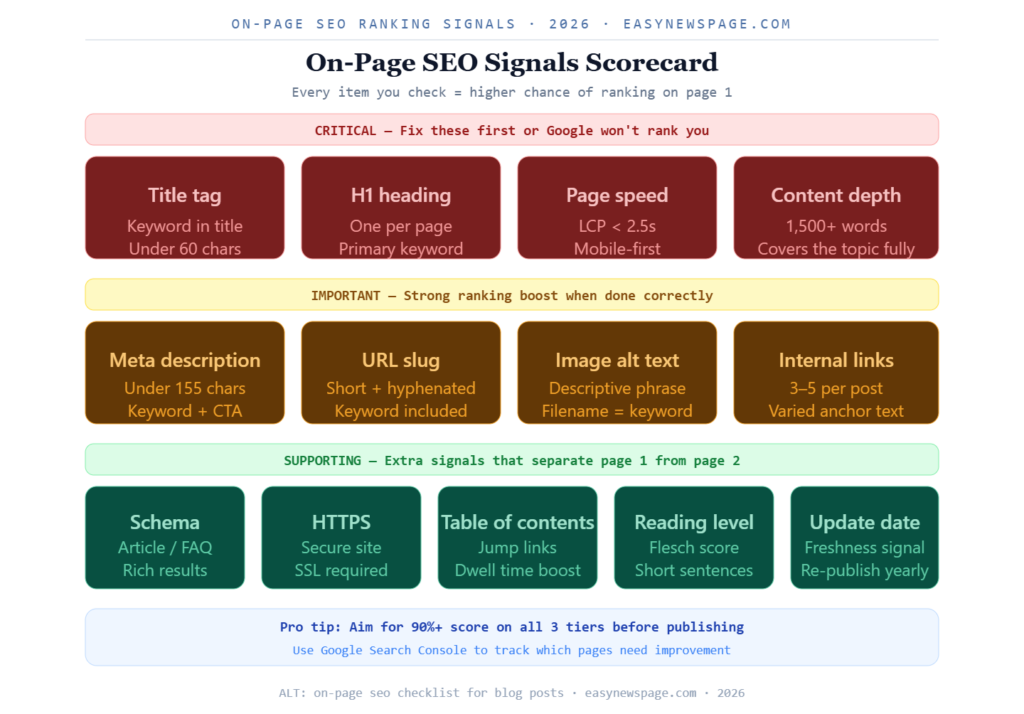
Choosing the right tools is a key part of implementing the On-Page SEO Checklist for Blog Posts (2026 Updated Guide). Free AI tools have become powerful enough to handle most SEO tasks.
Here is a simple comparison:
| Tool Type | Purpose | Benefit |
| Writing Tools | Content creation | Faster drafting |
| SEO Tools | Keyword analysis | Better targeting |
| Design Tools | Visual content | Improved engagement |
| Research Tools | Data insights | Stronger content |
These tools help you optimize titles, meta descriptions, and headings. They also ensure your keyword placement aligns with SEO standards. Using them effectively lets you follow the On-Page SEO Checklist for Blog Posts without missing any important steps.
The key is to combine tools. For example, use one tool for keyword research and another for content writing. This layered approach improves accuracy and efficiency.
AI Tools for Writing and Content Creation
Content is the foundation of any On-Page SEO Checklist for Blog Posts (2026 Updated Guide). Without high-quality writing, even the best optimization techniques won’t work.
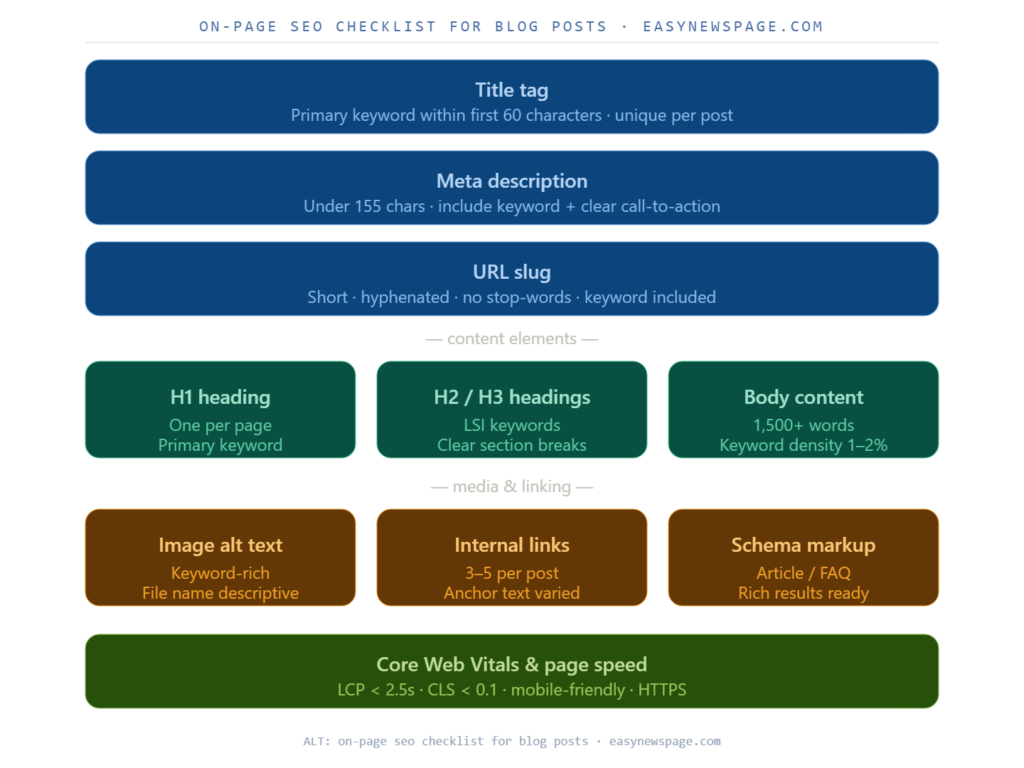
AI writing tools help generate ideas, create outlines, and draft content. However, the real value comes from editing and refining. Always review AI-generated content to ensure it matches your tone and provides real value.
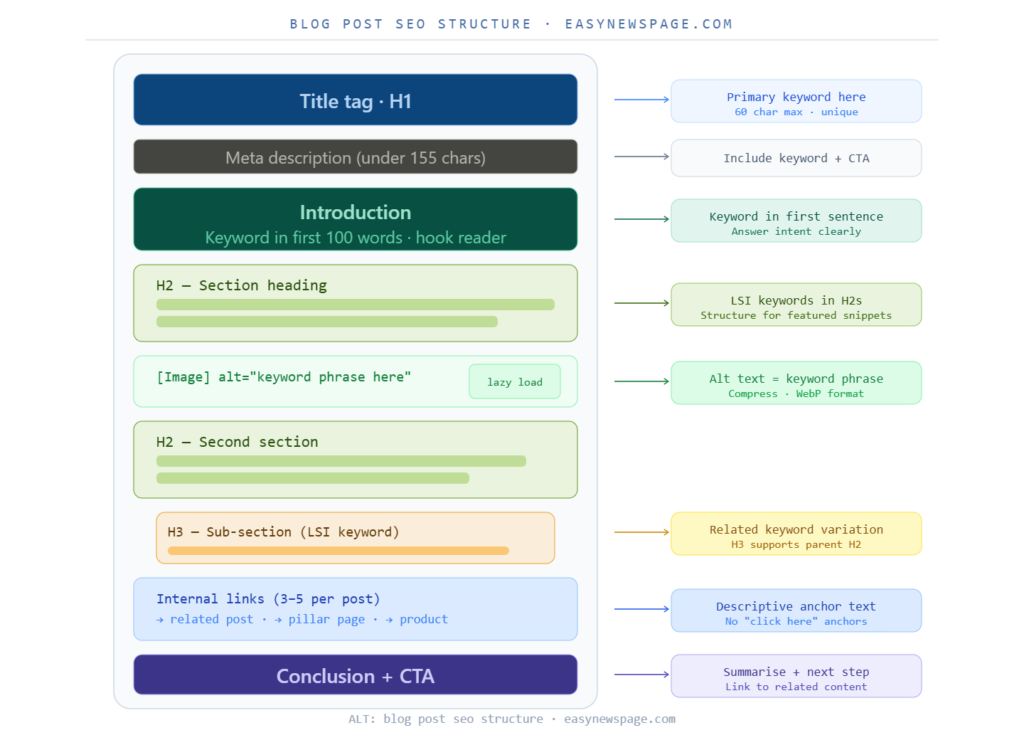
A well-optimized blog post includes:
- Clear headings and subheadings
- Proper keyword placement
- Engaging and informative paragraphs
When you combine these elements, your content becomes both user-friendly and search-engine-friendly. This is the core of the On-Page SEO Checklist for Blog Posts.
AI Tools for Studying and Research
Research is a critical part of the On-Page SEO Checklist for Blog Posts (2026 Updated Guide). Accurate and relevant information builds trust and authority.
AI tools can summarize articles, analyze data, and provide insights quickly. This helps you create well-informed content without spending hours on research.
Students can use AI to:
- Gather reliable data
- Understand complex topics
- Identify trending keywords
This ensures your blog posts are not only optimized but also valuable to readers.
AI Tools for Productivity and Time Management
Time management plays a big role in implementing the On-Page SEO Checklist for Blog Posts. AI tools help you stay organized and efficient.
They can schedule tasks, track progress, and automate repetitive work. This allows you to focus on content quality and strategy.
For example, you can plan multiple blog posts in advance and ensure each one follows the checklist. This consistency improves your overall SEO performance.
AI Tools for Coding and Technical Skills
Technical SEO is another important part of the On-Page SEO Checklist for Blog Posts (2026 Updated Guide). AI tools can help with coding, site speed optimization, and structured data.
Students can use these tools to:
- Improve page loading speed
- Fix technical errors
- Optimize mobile performance
These factors directly impact rankings and user experience.
Pro Tips to Maximize AI Tools
Pro Tips:
- Always review and edit AI content
- Focus on user intent, not just keywords
- Use internal linking strategically
- Keep content updated regularly
Applying these tips ensures your On-Page SEO Checklist for Blog Posts is effective and future-proof.
Common Mistakes Students Make with AI
Many students misuse AI when following the On-Page SEO Checklist for Blog Posts (2026 Updated Guide).
Common mistakes include:
- Overusing keywords
- Ignoring content quality
- Relying entirely on AI without editing
Avoiding these mistakes improves your chances of ranking higher.
Expert Insights on AI Learning Trends
Experts emphasize that SEO is becoming more user-focused. The On-Page SEO Checklist for Blog Posts now includes elements like readability, engagement, and authority.
AI is helping bridge the gap, but human input remains essential. Combining both leads to better results.
Quick Summary
The On-Page SEO Checklist for Blog Posts (2026 Updated Guide) is a complete framework for optimizing your content. It covers writing, research, technical SEO, and user experience.
By consistently applying this checklist, you can improve rankings, increase traffic, and build authority.
Conclusion
Mastering the On-Page SEO Checklist for Blog Posts (2026 Updated Guide) is one of the most important steps for anyone looking to succeed in blogging in 2026. The digital landscape is more competitive than ever, and search engines are constantly evolving to deliver better results to users. This means your content must go beyond basic optimization and truly deliver value.
The key takeaway is that SEO is no longer just about search engines—it is about people. When you focus on creating helpful, engaging, and well-structured content, you naturally align with SEO best practices. The checklist acts as your roadmap, ensuring that every important element is covered, from keyword placement to technical optimization.
Consistency is what separates successful blogs from those that struggle to gain visibility. Applying the checklist to every post helps build authority over time. Search engines begin to recognize your site as a reliable source, which leads to better rankings and more traffic.
At the same time, adaptability is crucial. SEO trends will continue to change, especially with the rise of AI and voice search. Staying up to date and refining your strategy will keep you ahead of the competition.
Ultimately, the On-Page SEO Checklist for Blog Posts (2026 Updated Guide) is not just a tool, it is a strategy for long-term success. By following it carefully and focusing on user value, you can create blog posts that not only rank but also engage and convert your audience effectively.
FAQs
1. What is an On-Page SEO Checklist for Blog Posts?
An On-Page SEO Checklist for Blog Posts is a set of guidelines for optimizing individual blog posts for search engines. It includes elements like keywords, headings, meta tags, internal links, and content quality.
2. Why is On-Page SEO important in 2026?
On-page SEO is important because search engines now focus on user experience and content quality. Proper optimization helps your content rank higher and reach the right audience.
3. How often should I update my SEO checklist?
You should review and update your checklist regularly, especially when search engine algorithms change. Staying up to date ensures your content remains competitive.
4. Can beginners use an On-Page SEO Checklist?
Yes, beginners can easily follow a checklist. It simplifies the process and ensures no important step is missed.
5. Does AI replace SEO knowledge?
No, AI supports SEO but does not replace it. Understanding SEO basics is still important for creating effective content.