


In the competitive world of blogging and digital publishing, keyword research remains the foundation of successful search engine optimization. Every high-ranking blog post begins with discovering the right keywords that audiences actively search for on Google and other search engines. Without proper keyword research, even the most informative content struggles to gain visibility, traffic, and engagement.
For beginners, investing in expensive SEO software may not be practical. This is where a free keyword research tool becomes essential. Free tools allow bloggers to identify profitable keywords, understand audience intent, analyze competition, and build content strategies without spending large amounts of money.

Modern blogging success depends heavily on targeting keywords that align with user search behavior. By using keyword tools effectively, we can create optimized articles that rank higher, attract targeted visitors, and generate sustainable organic traffic over time.
Finding the right keywords is the foundation of every successful blog. Whether you are a beginner, student, content creator, or digital marketer, using a free keyword research tool can help you discover topics people are actively searching for online. In 2026, keyword research is no longer limited to traditional SEO methods. AI-powered search engines, semantic SEO, voice search, and Google’s Search Generative Experience (SGE) have changed the way content ranks.
A reliable free keyword research tool helps bloggers identify trending topics, uncover long-tail keywords, analyze competition, and create content that matches user intent. Modern bloggers also rely on free SEO tools to optimize articles, improve rankings, and attract targeted visitors.
This comprehensive guide from Easynewspage.com explains how keyword research works, the best AI-driven SEO tools available today, and practical strategies for creating high-ranking blog posts. You will also learn how to use keyword planner tools, blogging keyword ideas, and keyword suggestion platforms effectively.
Why Free Tools Are Useful for Beginners
New bloggers frequently operate with limited budgets. Free SEO tools provide essential data without requiring costly subscriptions.
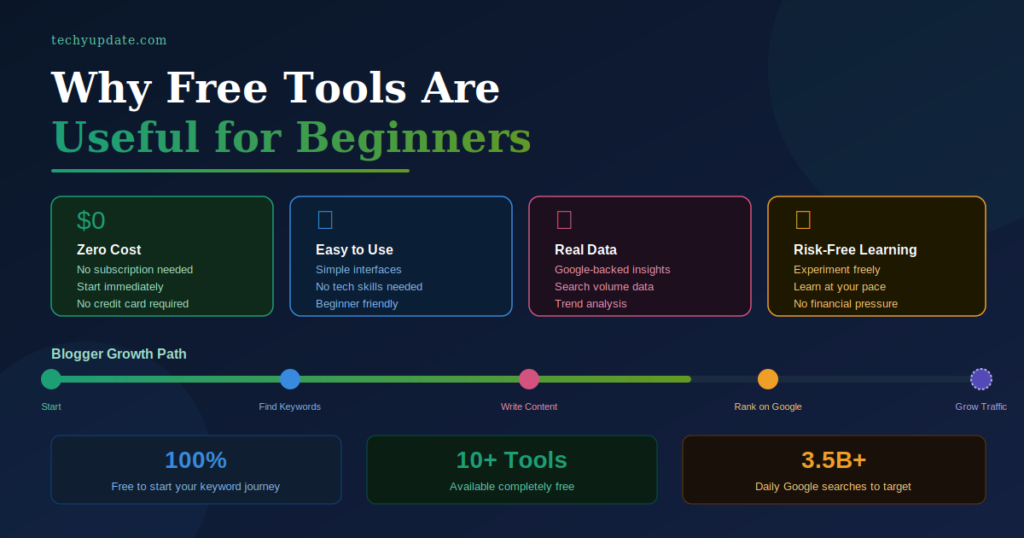
Cost-Effective SEO Research
Premium SEO platforms can cost hundreds of dollars monthly. Free tools allow beginners to:
- Learn keyword research fundamentals
- Test SEO strategies
- Build content plans
- Analyze trends
- Grow websites organically
This accessibility helps new bloggers compete effectively without large financial investments.
Easy Learning Curve
Many free keyword tools are designed with beginner-friendly dashboards and simple navigation.
Beginner Advantages
- Simple keyword suggestions
- Basic search volume metrics
- Easy competitor analysis
- Quick topic discovery
This simplicity helps users focus on content creation rather than on the complexities of technical SEO.
Access to Real Search Data
Free tools often pull data directly from search engines.
Important Metrics Available
- Monthly search volume
- Keyword difficulty
- Competition level
- CPC estimates
- Trend analysis
These insights guide smarter content decisions and improve ranking potential.
Why AI Tools Are Essential for Keyword Research
Artificial intelligence has transformed digital marketing and blogging. Traditional keyword research methods focused only on search volume and competition, but modern SEO now relies heavily on user intent, semantic search, and contextual relevance. This is where AI-powered keyword analysis becomes extremely useful.
A smart free keyword research tool powered by AI can quickly analyze search trends, identify related phrases, and predict content opportunities before competitors notice them. Bloggers no longer need to spend hours manually searching for terms because AI tools automate the process.
AI-based SEO systems can also:
- Analyze search intent
- Discover semantic keywords
- Generate topic clusters
- Suggest long-tail keywords
- Identify voice search phrases
- Predict ranking opportunities
For example, if a blogger searches for “healthy study habits,” AI tools may suggest related queries such as “best study techniques for students” or “study productivity tips.” These keyword variations improve content depth and increase visibility.
Another advantage is content personalization. AI-driven keyword research platforms help creators produce highly relevant articles tailored to specific audiences. This increases user engagement and improves search engine rankings.
Pro Tip
Use AI-powered keyword grouping to organize related terms into clusters. Google increasingly rewards topical authority over isolated keyword use.
Best Free AI Tool (Top Picks)
Many bloggers struggle to choose the right SEO platform because there are hundreds of options available online. The best tools combine keyword analysis, content suggestions, and competitive insights without requiring expensive subscriptions.
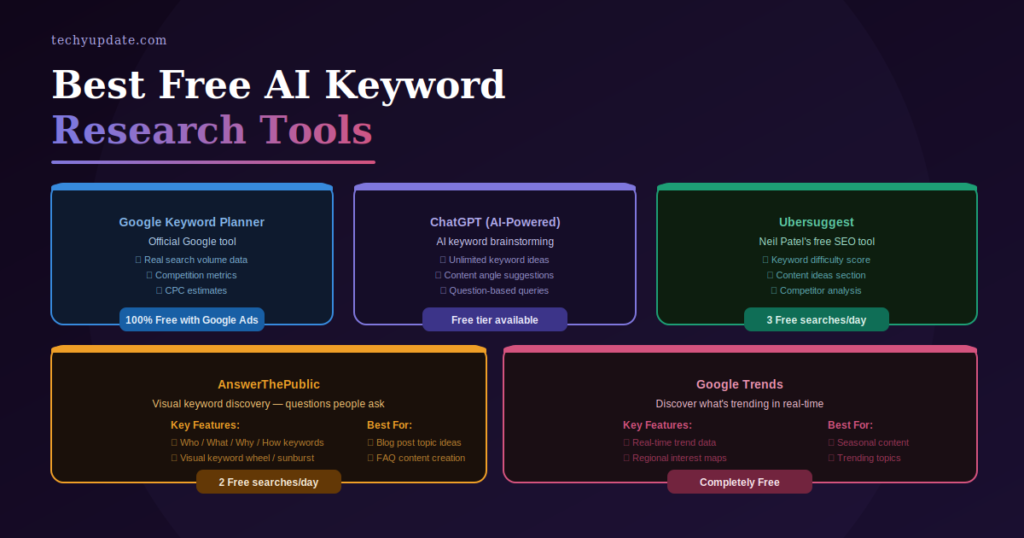
Some of the top free AI-powered SEO tools in 2026 include:
Google Keyword Planner
Google Keyword Planner remains one of the most trusted tools for keyword discovery. It provides search volume estimates, competition levels, and keyword trends directly from Google’s database.
ChatGPT
AI writing assistants can generate blog topic ideas, semantic keyword lists, and content outlines. Bloggers often use ChatGPT to brainstorm article structures and identify related search terms.
Ubersuggest
This platform offers keyword suggestions, SEO difficulty scores, backlink data, and content recommendations for beginner bloggers.
AnswerThePublic
This tool visualizes real user questions and voice-search phrases. It is ideal for featured snippet optimization.
Google Trends
Google Trends helps bloggers identify rising topics and seasonal search patterns.
When selecting a free keyword research tool, focus on platforms that combine keyword data with AI-generated insights. This improves content relevance and helps bloggers target evolving search behavior.
Free Keyword Research Tool
A free keyword research tool allows bloggers to discover search terms without investing in expensive software. These platforms are especially useful for students, small businesses, and beginner content creators.
The primary purpose of a keyword research tool is to help users understand what people search for online. By targeting those terms, bloggers can increase organic traffic and improve visibility.
The best free keyword research tool should provide:
- Keyword suggestions
- Monthly search volume
- Competition analysis
- CPC estimates
- Long-tail keyword ideas
- Search trend data
For example, a travel blogger researching “budget travel” may discover related terms like:
- Cheap travel destinations
- Affordable travel hacks
- Budget travel tips for students
- Low-cost travel planning
These related phrases create opportunities for multiple blog posts.
Modern SEO also focuses on semantic relevance. Search engines now understand context, so bloggers should include variations naturally throughout their content.
A good strategy involves combining primary keywords with secondary and LSI keywords. This helps improve rankings while maintaining readability.
Pro Tip
Always prioritize user intent over keyword volume. A lower-volume keyword with strong intent often converts better than a broad competitive phrase.
Keyword Research Tool
A keyword research tool is one of the most valuable resources for bloggers aiming to rank on Google. These platforms reveal what audiences search for and how competitive certain phrases are.
Keyword research tools typically work by collecting data from search engines. They analyze:
- Search frequency
- Related phrases
- Search trends
- User intent
- Competition level
- Cost-per-click metrics
Understanding this information allows bloggers to create highly targeted content.
For example, a student running a technology blog might use a keyword research tool to discover terms such as:
- Best AI apps for students
- Free coding tools
- AI productivity platforms
- Beginner programming tutorials
Instead of writing random content, the blogger creates articles aligned with real searches.
Many modern keyword tools also include AI-generated content ideas. These suggestions help creators build topic clusters and improve topical authority.
Another important feature is SERP analysis. By studying top-ranking pages, bloggers can identify content gaps and opportunities.
Actionable Advice
Before writing an article, analyze the top 10 Google results. Study headings, content structure, and search intent to improve your own article.
Free SEO tools
Free SEO tools help bloggers optimize websites without spending large amounts of money. These platforms support keyword analysis, technical SEO, backlink monitoring, and content optimization.
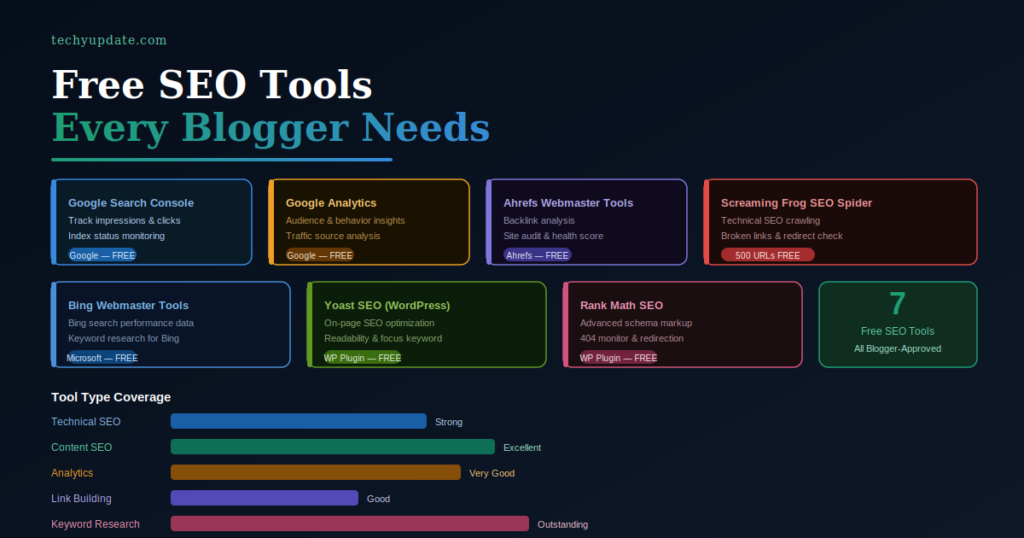
Popular free SEO tools include:
- Google Search Console
- Google Analytics
- Ahrefs Webmaster Tools
- Screaming Frog SEO Spider
- Bing Webmaster Tools
- Yoast SEO
- Rank Math
Each tool serves a different purpose. For example, Google Search Console tracks keyword rankings and indexing issues, while Google Analytics monitors user behavior.
Bloggers can combine multiple free SEO tools to create a complete optimization strategy.
Technical SEO is equally important. Fast-loading websites, mobile responsiveness, and structured data significantly influence rankings in 2026.
Free SEO tools also help identify:
- Broken links
- Duplicate content
- Slow pages
- Crawl errors
- Missing metadata
Another major trend is AI-driven optimization. Many free SEO platforms now recommend improvements to titles, semantic keywords, and readability.
Pro Tip
Use structured data markup to improve your chances of appearing in featured snippets and AI-generated search results.
Bloggers Keyword Research
Bloggers’ keyword research involves identifying topics that attract readers while matching search intent. Successful blogging depends heavily on understanding what audiences want.
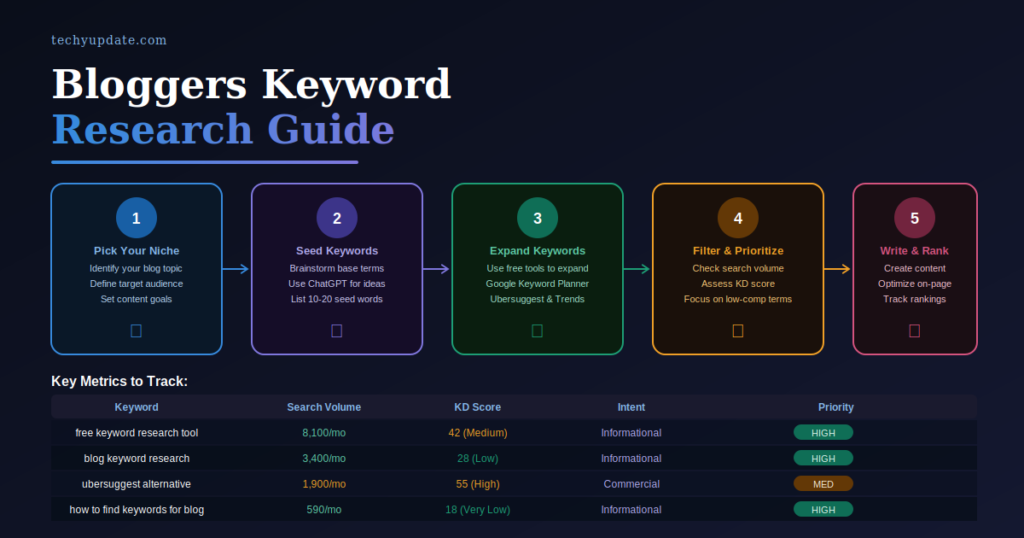
Many beginner bloggers focus only on high-volume keywords, but experienced marketers prioritize relevance and intent.
A strong blogger’s keyword research strategy includes:
- Finding low-competition keywords
- Understanding audience problems
- Creating topic clusters
- Optimizing for voice search
- Using semantic SEO
For example, a fitness blogger may target:
- Home workouts for students
- Beginner yoga routines
- Weight loss meal plans
- Morning exercise motivation
These specific topics attract highly targeted visitors.
Another important strategy is competitor analysis. Bloggers can examine successful websites to identify ranking keywords and content opportunities.
AI-powered tools simplify this process by automatically generating related keywords and search variations.
Actionable Advice
Create content calendars around keyword clusters instead of isolated articles. This improves topical authority and internal linking opportunities.
Importance of Keyword Research for Bloggers
Keyword research is more than simply finding popular search phrases. It is the process of understanding what readers want, how they search online, and which topics offer the highest ranking opportunities.
Driving Targeted Organic Traffic
Bloggers rely on search engines for consistent traffic. When articles target the right keywords, search engines can easily match content to user queries.
Benefits of Targeted Keywords
- Increased search visibility
- Higher click-through rates
- Better user engagement
- Improved conversion potential
- Long-term organic traffic growth
Targeted traffic is far more valuable than random visitors because users already show interest in specific topics.
Understanding Search Intent
Search intent determines why users search for particular terms online.
Main Types of Search Intent
- Informational
- Navigational
- Commercial
- Transactional
A quality keyword strategy ensures that content satisfies user intent while improving SEO performance.
For example:
- “How to start a blog” reflects informational intent
- “Best SEO tools pricing” reflects commercial intent
Matching content with intent increases rankings and user satisfaction.
Finding Low-Competition Opportunities
One of the greatest advantages of keyword research is discovering underserved topics.
Instead of targeting extremely competitive phrases like:
- “SEO”
- “Blogging”
- “Digital marketing”
bloggers can target:
- “best free keyword research tool for bloggers”
- “How to find low competition keywords.”
- “free SEO keyword tools for beginners”
These long-tail keywords often rank faster and attract highly targeted audiences.
How Keyword Research Improves SEO Rankings
Search engines prioritize content that best satisfies users’ search queries. Keyword research helps align content with those expectations.
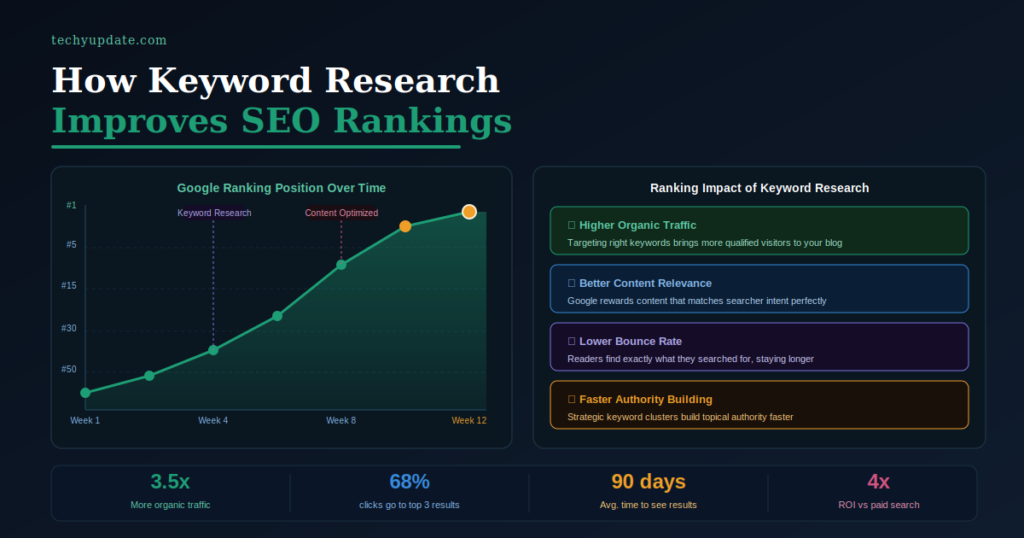
Optimized Content Structure
Keywords influence:
- Headlines
- Subheadings
- Meta descriptions
- URLs
- Internal linking
- Image alt text
Proper optimization improves crawlability and relevance signals.
Enhanced Topical Authority
When bloggers consistently target related keyword clusters, search engines recognize expertise within a niche.
Examples of Topic Clusters
- Blogging tips
- SEO tutorials
- Affiliate marketing
- WordPress optimization
- Content marketing
Building topical authority improves domain trust and ranking stability.
Improved User Experience
Keyword research reveals exactly what readers expect from content.
This helps create:
- More useful articles
- Better readability
- Accurate answers
- Higher engagement metrics
Search engines reward pages that efficiently satisfy user intent.
What Is a Free Keyword Research Tool?
A free keyword research tool is an SEO platform that helps identify keywords people search for online without requiring payment.
These tools collect and organize search data to help bloggers create optimized content strategies.
Core Functions of Keyword Research Tools
Keyword tools perform several essential SEO tasks.
Primary Features
- Keyword generation
- Search volume analysis
- Competition measurement
- Trend tracking
- Search intent evaluation
- SERP analysis
These features simplify content planning and SEO optimization.
How Bloggers Use Keyword Tools
Successful bloggers integrate keyword research into every stage of content creation.
Common Uses
- Discovering article topics
- Finding long-tail keywords
- Optimizing existing posts
- Analyzing competitors
- Planning editorial calendars
Keyword tools provide the roadmap for scalable organic growth.
Difference Between Free and Paid Keyword Tools
Both free and premium keyword tools offer valuable insights, but there are important differences.
| Feature | Free Tools | Paid Tools |
| Basic Keyword Data | Yes | Yes |
| Search Volume | Limited | Advanced |
| Competitor Analysis | Basic | Detailed |
| SERP Tracking | Limited | Full Access |
| Backlink Analysis | Rare | Extensive |
| Keyword Database Size | Smaller | Massive |
| AI SEO Features | Limited | Advanced |
Free tools work exceptionally well for beginners, while paid tools provide advanced scaling capabilities for experienced marketers.
READ MORE: Best AI Tools for Article Writing Free
Best Free Keyword Research Tools for Bloggers
Several excellent tools help bloggers perform effective SEO research at no cost.
Google Keyword Planner
Google Keyword Planner remains one of the most trusted SEO resources.
Major Advantages
- Direct Google data
- Accurate search volume
- CPC insights
- Geographic targeting
It is especially useful for identifying commercial and informational keywords.
Google Trends
Google Trends tracks keyword popularity over time.
Useful Features
- Seasonal trend analysis
- Regional interest tracking
- Rising search queries
- Topic comparison
This tool helps bloggers identify trending opportunities before competitors.
Ubersuggest
Ubersuggest combines simplicity with powerful keyword insights.
Key Benefits
- Keyword suggestions
- SEO difficulty scoring
- Competitor analysis
- Content ideas
It is ideal for beginner bloggers seeking straightforward SEO guidance.
AnswerThePublic
AnswerThePublic visualizes real user questions from search engines.
Best Uses
- FAQ content
- Blog topic generation
- Voice search optimization
- Long-tail keyword discovery
This tool helps create highly relevant user-focused content.
Keyword Surfer
Keyword Surfer integrates directly into Google search results.
Main Features
- Search volume display
- Related keyword suggestions
- Estimated traffic insights
Its browser extension makes keyword research fast and convenient.
How to Find Long-Tail Keywords Using Free Tools
Long-tail keywords are longer and more specific search phrases with lower competition.
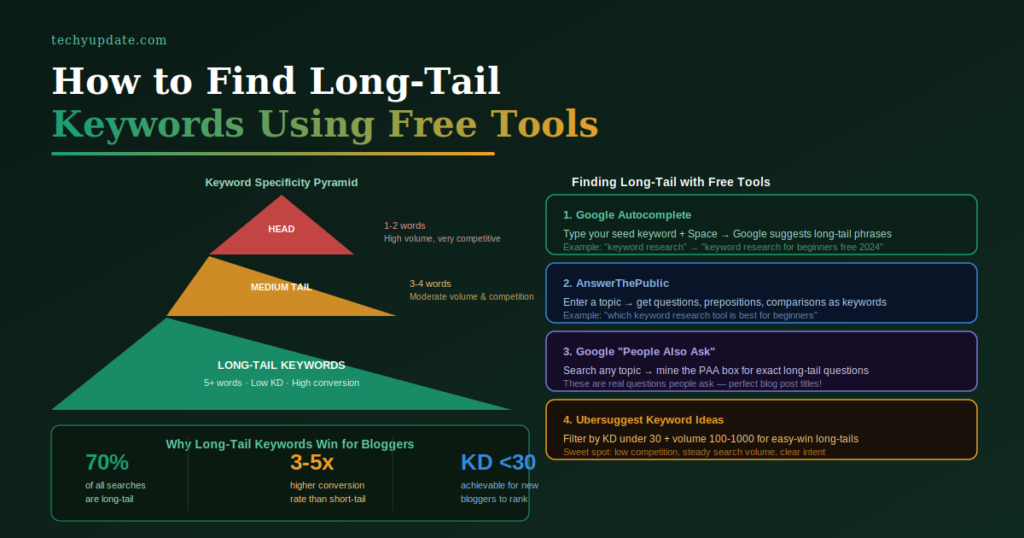
Why Long-Tail Keywords Matter
Long-tail keywords:
- Rank faster
- Convert better
- Attract targeted audiences
- Improve engagement rates
For smaller blogs, they provide the most realistic SEO opportunities.
Methods to Discover Long-Tail Keywords
Use Google Autocomplete
Typing search queries into Google reveals real user searches.
Analyze Related Searches
Google’s related searches section provides valuable keyword variations.
Explore Question-Based Searches
Question keywords often generate excellent blog traffic.
Examples:
- How does keyword research work?
- What is the best free keyword research tool?
- Which SEO tool is best for bloggers?
Common Keyword Research Mistakes Bloggers Should Avoid
Even experienced bloggers make SEO mistakes that limit rankings.
Targeting Only High-Competition Keywords
Competing directly against large websites often leads to poor ranking performance.
A balanced strategy should include:
- Low competition keywords
- Medium competition opportunities
- Long-tail variations
Ignoring Search Intent
Content that fails to satisfy user expectations struggles to rank.
Always ensure:
- Titles match intent
- Content answers questions
- Information is comprehensive
Keyword Stuffing
Overusing keywords harms readability and SEO performance.
Modern search engines prioritize:
- Natural writing
- Contextual relevance
- User experience
Advanced SEO Strategies Using Free Keyword Tools
Free tools can support surprisingly advanced SEO workflows.
Build Topic Clusters
Grouping related articles improves authority and internal linking.
Example Cluster
Main Topic:
- Keyword Research
Supporting Articles:
- Long-tail keyword strategies
- SEO tools for bloggers
- Free keyword suggestion methods
- Google Trends tutorials
Update Existing Content
Keyword tools help identify:
- New keyword opportunities
- Missing subtopics
- Ranking improvements
Refreshing old content often significantly boosts traffic.
Monitor Search Trends
Search behavior changes constantly.
Tracking trends helps:
- Publish timely content
- Capture emerging traffic
- Stay ahead of competitors
Benefits of Using Free Keyword Research Tools for Bloggers
Keyword research is the backbone of successful blogging and search engine optimization. Every blog post that ranks well on Google starts with identifying the right keywords that people actively search for online. For beginner bloggers, investing in expensive SEO software may not always be possible. Fortunately, modern free keyword research tools provide powerful insights that help bloggers compete effectively without spending large amounts of money.
Using free keyword research tools allows bloggers to uncover profitable opportunities, create highly targeted content, and improve search engine visibility. These tools simplify SEO research while helping websites grow organically over time.
Find Low-Competition Keywords
One of the biggest advantages of using free keyword research tools is the ability to discover low-competition keywords. High-competition keywords are often dominated by large websites with strong domain authority, making it difficult for new bloggers to rank.
Free SEO tools help identify less competitive search terms that still receive consistent traffic.
Why Low-Competition Keywords Matter
Low-competition keywords offer several important benefits:
- Faster ranking opportunities
- Easier SEO optimization
- Higher visibility for new blogs
- Better chances of reaching page one on Google
- Increased targeted traffic
For example, instead of targeting a highly competitive keyword like:
- “SEO tools”
bloggers can target more specific phrases such as:
- “Best free keyword research tool for bloggers”
- “Free SEO tools for beginner bloggers”
- “How to find low competition keywords.”
These long-tail keywords attract users with clear intent and often convert better because the audience is searching for highly specific information.
How Free Tools Identify Keyword Difficulty
Most keyword tools analyze:
- Search competition
- Domain authority of ranking websites
- Backlink strength
- Search volume
- SERP competition
This data helps bloggers choose realistic keywords that improve ranking potential.
Discover Trending Blog Topics
Another major advantage of free keyword research tools is the ability to discover trending topics before competitors dominate them.
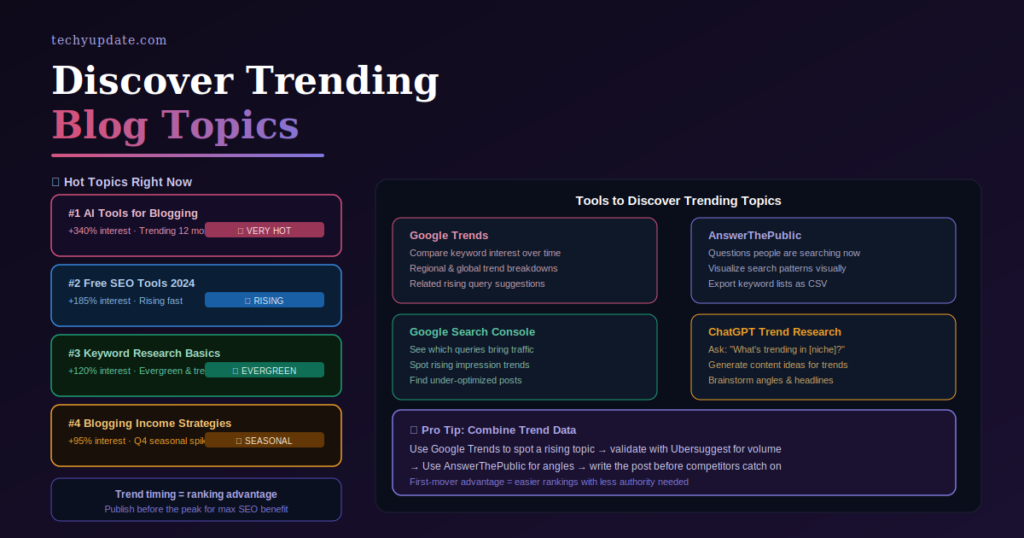
Why Trending Topics Matter
Trending topics attract:
- Higher traffic spikes
- Increased social shares
- More backlinks
- Better audience engagement
Publishing content around trending keywords helps bloggers stay relevant and capitalize on current search behavior.
Using Keyword Tools for Trend Discovery
Free keyword tools reveal:
- Rising search queries
- Seasonal trends
- Emerging industry topics
- Popular search phrases
This information allows bloggers to create timely, valuable content.
Examples of Trending Blog Topics
- AI writing tools
- Remote work productivity
- Blogging automation
- Voice search SEO
- Social media monetization
Trend analysis helps websites remain competitive in rapidly evolving niches.
Seasonal Keyword Opportunities
Many search queries fluctuate throughout the year. Keyword research tools help identify seasonal traffic patterns.
Examples
- “Black Friday blogging deals”
- “Christmas marketing ideas”
- “Summer travel blogging tips”
Understanding seasonal search behavior enables bloggers to publish content at the optimal time for maximum visibility.
Improve Organic Traffic
Organic traffic is one of the most valuable sources of website visitors because it provides consistent long-term growth without paid advertising costs.
How Keyword Research Increases Organic Traffic
Keyword tools help bloggers:
- Target relevant search terms
- Match search intent
- Optimize content structure
- Improve on-page SEO
This increases the likelihood of appearing in Google search results.
Targeting Search Intent
Search intent refers to the reason behind a user’s search query.
Main Types of Search Intent
- Informational
- Navigational
- Commercial
- Transactional
Free keyword tools help bloggers understand which keywords align with user expectations.
For example:
- “How to start a blog” reflects informational intent
- “Best blogging platform pricing” reflects commercial intent
Matching content to search intent improves engagement and rankings.
Building Long-Term SEO Authority
Consistently targeting related keywords helps websites establish topical authority.
Benefits of Topical Authority
- Improved search trust
- Better keyword rankings
- Increased internal linking strength
- Higher domain relevance
Over time, this creates sustainable traffic growth across multiple blog posts.
Save Money for Beginner Bloggers
Budget limitations are common for new bloggers. Free keyword research tools eliminate the need for expensive software subscriptions during the early stages of website growth.
Affordable SEO Learning
Free tools allow beginners to:
- Learn SEO fundamentals
- Practice keyword research
- Understand search behavior
- Build optimization skills
This creates valuable experience without financial risk.
Reduce Startup Costs
Launching a blog already involves expenses such as:
- Domain registration
- Web hosting
- Themes and plugins
- Content creation
Free SEO tools help reduce overall startup costs while still providing essential optimization features.
Compete Without Premium Software
Although paid SEO platforms offer advanced functionality, many successful bloggers start entirely with free tools.
By combining:
- Consistent content publishing
- Smart keyword targeting
- Basic SEO optimization
New blogs can generate meaningful traffic without large investments.
Best Free Keyword Research Tools for Bloggers
Several powerful free tools help bloggers improve SEO and discover profitable keyword opportunities.
Google Keyword Planner
Google Keyword Planner remains one of the most trusted keyword research tools available today.
Features and Benefits
This tool provides direct data from Google’s advertising platform, making it highly reliable.
Main Features
- Search volume estimates
- Competition analysis
- Keyword forecasting
- Geographic targeting
- CPC insights
Google Keyword Planner is especially useful for finding:
- Blog content ideas
- Commercial keywords
- Niche opportunities
How to Use It for Blog SEO
Bloggers can use Google Keyword Planner to:
- Enter a seed keyword
- Analyze related keyword suggestions
- Review search volume data
- Identify low-competition terms
- Create optimized blog content
For example, entering:
- “blogging tips”
may generate:
- “blogging tips for beginners”
- “SEO blogging strategies”
- “How to grow a blog fast.”
These keyword ideas help build targeted content plans.
Google Trends
Google Trends is one of the best tools for identifying search popularity and trending topics.
Finding Trending Topics
Google Trends reveals:
- Rising search terms
- Trending niches
- Regional interest
- Search momentum
This helps bloggers create timely articles that align with current audience interests.
Seasonal Keyword Analysis
Search trends often change throughout the year.
Examples of Seasonal Searches
- “Fitness tips” rise in January
- “Travel blogs” increase during the summer
- “Gift guides” peak before holidays
Analyzing seasonal behavior helps bloggers publish content strategically for maximum traffic.
Ubersuggest
Ubersuggest is a beginner-friendly SEO tool that provides useful keyword insights and optimization recommendations.
Keyword Suggestions
Ubersuggest generates:
- Long-tail keyword ideas
- Content suggestions
- Related search phrases
- Topic recommendations
This helps bloggers quickly discover profitable content opportunities.
SEO Difficulty Analysis
One of Ubersuggest’s strongest features is its keyword difficulty scoring.
It Evaluates
- Competition levels
- Domain strength
- Ranking potential
- SEO complexity
This allows bloggers to prioritize keywords with realistic ranking opportunities.
Ahrefs Free Keyword Generator
Ahrefs offers a free keyword generator that provides valuable SEO insights.
Long-Tail Keyword Ideas
This tool specializes in generating:
- Question-based keywords
- Phrase match suggestions
- Long-tail search terms
Long-tail keywords often produce higher conversion rates because they target specific user intent.
Search Volume Insights
Ahrefs also provides:
- Monthly search estimates
- Keyword difficulty scores
- Click metrics
- SERP overview data
These insights help bloggers choose keywords with strong traffic potential.
AnswerThePublic
AnswerThePublic focuses on uncovering real user questions from search engines.
Question-Based Keyword Research
This tool organizes keywords into:
- Questions
- Comparisons
- Prepositions
- Alphabetical suggestions
Examples include:
- “What is keyword research?”
- “How do bloggers find keywords?”
- “Which SEO tools are free?”
These searches are ideal for blog posts and FAQ sections.
Content Idea Generation
AnswerThePublic is extremely valuable for generating:
- Blog post ideas
- FAQ content
- Tutorial topics
- Voice search optimization strategies
This helps bloggers create highly engaging and search-focused content.
Keyword Surfer
Keyword Surfer is a Chrome extension that displays keyword data directly within Google search results.
Chrome Extension Features
Keyword Surfer offers:
- Instant keyword volume
- Related keyword suggestions
- Search overlap insights
- Traffic estimates
This makes SEO research faster and more convenient.
Real-Time Keyword Volume
Unlike many traditional tools, Keyword Surfer provides real-time keyword insights while browsing search results.
Advantages
- Faster research workflow
- Immediate keyword evaluation
- Improved content planning
- Better SEO decision-making
For bloggers who want a quick SEO analysis without switching platforms, Keyword Surfer is highly effective.
How Bloggers Can Use Keyword Research Effectively
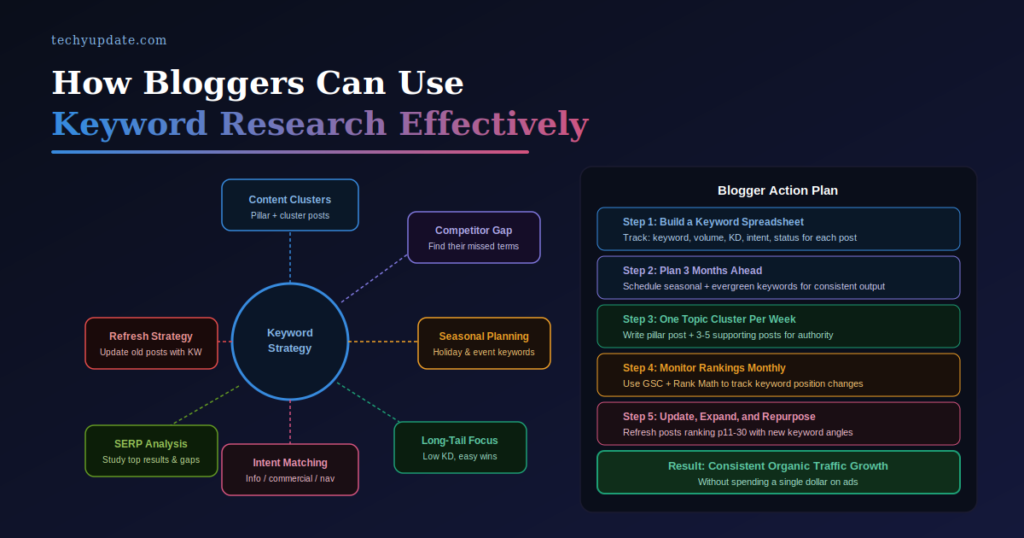
Successful blogging depends heavily on strategic keyword research. Even the highest-quality content may fail to rank if it targets the wrong keywords or ignores user intent. Effective keyword research helps bloggers understand what audiences search for, how competitive certain topics are, and which phrases offer the best opportunities for organic traffic growth.
Modern search engines prioritize relevance, user experience, and content quality. By using keyword research correctly, bloggers can improve search rankings, attract targeted visitors, and build long-term authority in their niche.
Choosing the Right Keywords
Selecting the right keywords is one of the most important parts of an SEO strategy. Bloggers should focus on keywords that balance search volume, competition level, and audience relevance.
Understand Audience Needs
Before selecting keywords, bloggers should identify:
- What readers want to learn
- Which problems do audiences face
- What search phrases users type into Google
- Which topics are most relevant to the niche
Keyword research tools help uncover these insights by analyzing search data.
Focus on Relevant Search Terms
Choosing highly relevant keywords improves:
- Search visibility
- User engagement
- Click-through rates
- Conversion potential
For example, a blogging website should target keywords such as:
- “Best blogging platforms”
- “SEO tips for bloggers”
- “How to increase blog traffic.”
instead of unrelated high-volume terms that do not match audience interests.
Balance Search Volume and Competition
High-volume keywords often have strong competition, making rankings difficult for smaller blogs.
A balanced strategy includes:
- Medium competition keywords
- Long-tail phrases
- Niche-specific search terms
This creates better opportunities for faster ranking improvements.
Using Long-Tail Keywords
Long-tail keywords are longer and more specific search phrases that target precise user intent.
Why Long-Tail Keywords Matter
Long-tail keywords provide several SEO advantages:
- Lower competition
- Higher conversion rates
- More targeted visitors
- Better ranking opportunities
Instead of targeting:
- “SEO tools”
bloggers can target:
- “Best free SEO tools for beginner bloggers”
This approach attracts audiences actively searching for detailed information.
Improving Search Intent Matching
Long-tail keywords often align more closely with user expectations.
Examples
- “Free keyword research tool SEO blog posts”
- “Keyword research for WordPress blogs”
- “Free keyword research tools for affiliate marketing”
- “keyword research tool free Google”
These phrases indicate stronger intent and improve engagement metrics.
Building Topic Authority
Targeting multiple related long-tail keywords helps establish authority within a niche.
Example Topic Cluster
Main Topic:
- Blog SEO
Supporting Long-Tail Keywords:
- SEO writing tips for bloggers
- Best keyword strategy for blogs
- How to optimize blog content
- Internal linking for SEO blogs
Topic clusters improve both rankings and user experience.
Optimizing Blog Posts for SEO
Keyword research only becomes valuable when applied correctly within content.
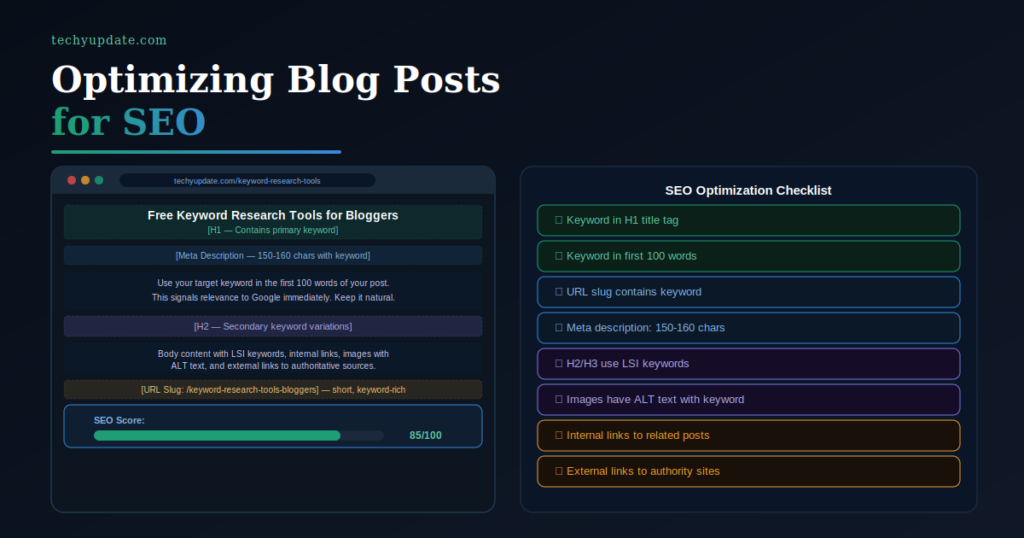
Optimize Headlines and Titles
The main keyword should appear naturally in:
- Blog titles
- Headings
- URLs
- Meta titles
Strong headlines improve:
- Click-through rates
- Search relevance
- Reader engagement
Example:
- “Best Free Keyword Research Tools for Bloggers”
This title clearly communicates topic relevance to both readers and search engines.
Use Keywords in Key SEO Areas
Strategically place keywords in:
- Introduction paragraphs
- Subheadings
- Image alt text
- Meta descriptions
- Internal links
This helps search engines understand content context.
Create Comprehensive Content
Search engines prioritize content that fully answers user queries.
High-quality SEO articles should include:
- Detailed explanations
- Clear formatting
- FAQ sections
- Examples
- Supporting keywords
Comprehensive content improves:
- Dwell time
- User satisfaction
- Ranking potential
Avoiding Keyword Stuffing
Keyword stuffing is the excessive repetition of keywords within content.
Why Keyword Stuffing Hurts SEO
Overusing keywords creates:
- Poor readability
- Lower user engagement
- Spam signals
- Reduced ranking potential
Modern search engines prioritize natural language rather than forced optimization.
Use Keywords Naturally
Keywords should flow smoothly within sentences.
Poor Example
“Best keyword research tool, keyword research tool, free keyword research for bloggers.”
Better Example
“Using the best keyword research tool helps bloggers discover valuable SEO opportunities and improve rankings.”
Natural writing improves both readability and search engine performance.
Focus on Semantic SEO
Instead of repeating identical phrases, bloggers should use:
- Synonyms
- Related terms
- Contextual keywords
- Topic variations
Examples include:
- SEO tools
- Keyword analysis
- Search optimization
- Organic traffic strategies
Semantic relevance strengthens content quality.
Tips for Better Blog SEO
SEO success depends on more than keyword placement alone. Strong optimization combines technical SEO, user-focused writing, and content structure.
Write User-Focused Content
The best-performing blog posts prioritize readers before search engines.
Provide Valuable Information
Content should:
- Solve problems
- Answer questions
- Offer actionable insights
- Improve reader understanding
Search engines reward pages that effectively satisfy user intent.
Improve Readability
Readable content increases engagement and reduces bounce rates.
Best Practices
- Use short paragraphs
- Add bullet points
- Include headings
- Break up large text blocks
Well-structured articles are easier to scan and understand.
Use Keywords Naturally
Natural keyword integration improves both SEO and readability.
Avoid Forced Optimization
Search engines now recognize context and semantic relationships.
Instead of repeating:
- “best SEO tools”
use variations such as:
- keyword research platforms
- blogging SEO software
- free optimization tools
This creates more natural and engaging content.
Prioritize User Experience
SEO content should be conversational and informative, not robotic.
Google increasingly evaluates:
- Content usefulness
- Reader engagement
- Search satisfaction
- Information quality
Natural writing supports all these ranking factors.
Add Headings and Meta Descriptions
Headings improve both SEO structure and user navigation.
Benefits of Proper Headings
Headings help:
- Organize information
- Improve readability
- Highlight keywords
- Enhance crawlability
Using H1, H2, and H3 tags correctly strengthens SEO structure.
Optimize Meta Descriptions
Meta descriptions influence click-through rates from search results.
A strong meta description should:
- Include target keywords
- Summarize the article’s value
- Encourage clicks
- Remain concise
Example:
“Discover the best free keyword research tools for bloggers to improve SEO rankings, find low-competition keywords, and grow organic traffic.”
Improve Internal Linking
Internal links connect related content across a website.
Benefits of Internal Linking
Internal links help:
- Distribute page authority
- Improve website navigation
- Increase session duration
- Support search engine crawling
For example, a blog post about keyword research can link to:
- SEO writing tutorials
- Blogging guides
- Traffic generation strategies
This strengthens the website’s topical relevance.
Create Content Clusters
Linking related articles builds topic authority.
Example
Main Article:
- Keyword Research Guide
Supporting Articles:
- Long-tail keyword strategies
- On-page SEO techniques
- Blogging SEO mistakes
- Google Trends tutorials
Topic clusters improve SEO performance significantly.
Common Mistakes Bloggers Make
Many bloggers struggle with SEO because of avoidable keyword research errors.
Ignoring Search Intent
Search intent is one of the most important ranking factors.
Why Search Intent Matters
If users search for:
- Tutorials
But find:
- Product pages
are left quickly, increasing bounce rates.
Content should always align with user expectations.
Understand User Goals
Search intent often falls into categories such as:
- Informational
- Commercial
- Navigational
- Transactional
Matching intent improves rankings and engagement.
Targeting High-Competition Keywords
Many beginners immediately target highly competitive keywords.
Why This Is a Problem
Large websites dominate broad keywords through:
- Strong authority
- Large backlink profiles
- Extensive content libraries
Smaller blogs should initially focus on:
- Niche topics
- Long-tail keywords
- Lower competition searches
This creates realistic ranking opportunities.
Not Updating Old Content
SEO is not a one-time process.
Benefits of Updating Content
Refreshing older articles can:
- Improve rankings
- Increase relevance
- Add updated keywords
- Enhance accuracy
Google often rewards regularly updated content.
Content Refresh Strategies
Update:
- Statistics
- Internal links
- Keywords
- Headings
- Meta descriptions
This keeps articles competitive over time.
Using Irrelevant Keywords
Targeting unrelated keywords may increase impressions but reduce engagement quality.
Focus on Relevance
Relevant keywords attract:
- Interested readers
- Better engagement
- Higher conversions
- Lower bounce rates
SEO success depends on accurately matching audience interests.
Frequently Asked Questions (FAQs)
What Is the Best Free Keyword Research Tool for Bloggers?
The best free keyword research tool for bloggers depends on individual SEO goals and content strategies. However, Google Keyword Planner is widely considered one of the most reliable tools because it provides accurate search data directly from Google.
Other highly effective free keyword research tools include:
- Google Trends
- Ubersuggest
- Ahrefs Free Keyword Generator
- AnswerThePublic
- Keyword Surfer
Each platform offers unique features that help bloggers discover keyword opportunities, analyze competition, and improve search engine rankings.
How Do Bloggers Find SEO Keywords for Free?
Bloggers can find SEO keywords for free using several methods and tools.
Popular Free Keyword Research Methods
- Using Google Keyword Planner
- Exploring Google autocomplete suggestions
- Checking related searches on Google
- Using Google Trends for trending topics
- Researching competitor websites
- Using AnswerThePublic for question-based searches
These methods help bloggers identify:
- High-traffic keywords
- Low-competition phrases
- Long-tail keyword opportunities
- Trending blog topics
Combining multiple tools often produces the best SEO results.
Is Google Keyword Planner Free to Use?
Yes, Google Keyword Planner is free to use with a Google Ads account.
Although designed primarily for advertisers, bloggers can use it for:
- Keyword discovery
- Search volume analysis
- Competition research
- SEO content planning
The platform provides valuable keyword insights without requiring paid subscriptions, making it ideal for beginners.
What Are Long-Tail Keywords in Blogging?
Long-tail keywords are highly specific search phrases that usually contain three or more words.
Examples of Long-Tail Keywords
- Best free keyword research tool for bloggers
- How to improve blog SEO rankings
- Beginner SEO tips for WordPress blogs
These keywords typically:
- Have lower competition
- Attract targeted traffic
- Convert better
- Rank faster for smaller websites
Long-tail keywords are especially important for new bloggers competing in crowded niches.
Which Keyword Tool Is Best for Beginners?
For beginners, the easiest and most effective keyword research tools include:
- Ubersuggest
- Google Keyword Planner
- Keyword Surfer
- Google Trends
These tools offer:
- Simple dashboards
- User-friendly interfaces
- Basic SEO insights
- Easy keyword suggestions
Beginner bloggers can quickly learn SEO fundamentals while building effective content strategies.
How Can Keyword Research Improve Blog Traffic?
Keyword research improves blog traffic by helping bloggers target phrases that users actively search for online.
Benefits of Proper Keyword Research
- Better Google rankings
- Increased organic visibility
- Higher click-through rates
- Improved user engagement
- More targeted visitors
When content aligns with search intent and relevant keywords, search engines are more likely to rank it higher in search results.
Consistent keyword optimization can generate sustainable long-term traffic growth.
What Is the Difference Between Free and Paid Keyword Tools?
Free and paid keyword research tools differ mainly in data depth, advanced features, and scalability.
| Feature | Free Keyword Tools | Paid Keyword Tools |
| Basic Keyword Suggestions | Yes | Yes |
| Search Volume Data | Limited | Advanced |
| Competitor Analysis | Basic | Detailed |
| SERP Tracking | Limited | Comprehensive |
| Backlink Analysis | Rare | Extensive |
| Keyword Databases | Smaller | Much Larger |
| AI SEO Features | Limited | Advanced |
Free tools are excellent for beginners, while paid tools are better suited for agencies, businesses, and advanced SEO professionals.
Can I Use Google Trends for Blog SEO?
Yes, Google Trends is highly valuable for blog SEO.
It helps bloggers:
- Discover trending topics
- Identify seasonal search patterns
- Compare keyword popularity
- Monitor search interest over time
Benefits of Google Trends
- Real-time trend analysis
- Content timing optimization
- Topic popularity insights
- Regional keyword research
Using Google Trends strategically allows bloggers to publish content before topics become highly competitive.
How Often Should Bloggers Do Keyword Research?
Keyword research should be an ongoing process rather than a one-time task.
Recommended Frequency
- Before publishing every new article
- During content updates
- When targeting new niches
- During seasonal trend changes
- After major Google algorithm updates
Search behavior constantly changes, so regular keyword research helps bloggers stay competitive and relevant.
What Are the Best SEO Practices for Keyword Optimization?
Effective keyword optimization requires balancing SEO strategy with user experience.
Best SEO Practices
- Use keywords naturally within content
- Include keywords in headings and titles
- Optimize meta descriptions
- Focus on user intent
- Use internal linking
- Create high-quality, informative content
- Avoid keyword stuffing
- Target long-tail keywords
- Update old content regularly
- Improve page readability
Search engines prioritize content that delivers value, relevance, and strong user engagement.
Final Thoughts on Keyword Research for Bloggers
Keyword research remains one of the most powerful strategies for improving blog visibility and search engine rankings. By using free keyword research tools effectively, bloggers can discover profitable keywords, understand audience intent, and create optimized content that attracts targeted traffic.
Tools such as:
- Google Keyword Planner
- Google Trends
- Ubersuggest
- Ahrefs Free Keyword Generator
- AnswerThePublic
- Keyword Surfer
provide valuable SEO insights without requiring expensive subscriptions.

Conclusion
A powerful free keyword research tool can transform blogging performance by helping identify profitable keywords, understand audience intent, and improve search engine rankings. Beginners no longer need expensive SEO software to build successful content strategies. With the right combination of keyword research, long-tail targeting, and SEO optimization, bloggers can compete effectively in highly competitive niches.
By consistently using free keyword research tools, creating user-focused content, and optimizing for search intent, websites can achieve sustainable organic growth, stronger visibility, and higher search rankings over time.
Keyword research remains one of the most important foundations of successful blogging and SEO. By choosing the right keywords, using long-tail phrases, optimizing blog posts, and avoiding keyword stuffing, bloggers can significantly improve search rankings and organic traffic.
Free keyword research tools such as:
- Google Keyword Planner
- Google Trends
- Ubersuggest
- Ahrefs Free Keyword Generator
- AnswerThePublic
- Keyword Surfer
provide valuable insights for beginners without requiring expensive subscriptions.
The most effective SEO strategy combines:
- User-focused content
- Natural keyword usage
- Strong internal linking
- Search intent optimization
- Regular content updates
Bloggers who consistently apply these SEO practices can build stronger authority, attract targeted audiences, and achieve sustainable long-term growth in search engine rankings.
Free keyword research tools provide beginner bloggers with powerful SEO capabilities without requiring expensive software subscriptions. These tools help identify low-competition keywords, discover trending blog topics, improve organic traffic, and build long-term search engine visibility.
Platforms like Google Keyword Planner, Google Trends, Ubersuggest, Ahrefs Free Keyword Generator, AnswerThePublic, and Keyword Surfer offer valuable insights that support smarter content strategies and stronger rankings.
By consistently using free keyword research tools and focusing on user intent, bloggers can create optimized content that attracts targeted traffic, improves authority, and achieves sustainable SEO growth over time.