


Every founder has heard the same frustrating advice at some point: “Just use ChatGPT.” And sure, you try it. You type your question. You get a response that’s vaguely helpful, generically written, and completely devoid of the hard-won startup wisdom that separates good advice from great advice. The problem isn’t the AI. The problem is the prompt.
Garry Tan, president and CEO of Y Combinator, one of the world’s most influential startup accelerators, seems to understand this better than most. His project, Gstack, is built on a simple but powerful premise: if you give a large language model the right prompts, you can access a level of founder-specific insight that rivals having a seasoned YC partner in your corner.
In this review, we’ve tested Gstack extensively across multiple startup scenarios. We’ll give you an honest breakdown of what it does well, where it falls short, who it’s genuinely built for, and whether it’s worth your time and money.
Table of Contents
What Is Gstack AI?
Gstack AI is a curated prompt library and AI productivity platform designed specifically for startup founders, product leaders, and entrepreneurs. Rather than offering a generic collection of prompts, Gstack presents structured, battle-tested prompt frameworks, which the platform calls “stack prompts,” informed by Y Combinator’s philosophy of company building.
The core idea is that the quality of your AI output is a direct function of the quality of your input. A founder who asks ChatGPT, “How do I find product-market fit?” gets a textbook answer. A founder who uses a well-engineered Gstack prompt that provides the right context, forces the AI to reason through trade-offs, and structures the output in an actionable format gets something that actually moves the needle.
Read more: Best Free AI App Builders
The Idea Behind Gstack
Gstack emerged from a recognition that most people use AI at roughly 20% of its potential. Not because they’re unintelligent, but because they haven’t invested time in learning how to communicate effectively with language models.
Prompt engineering is genuinely a skill. It requires understanding how models interpret context, how to constrain outputs to be useful rather than generic, how to chain prompts together for complex tasks, and how to frame questions so the AI reasons through problems rather than pattern-matching to common answers.
Most founders don’t have time to develop this skill from scratch. Gstack packages that expertise and applies it specifically to the challenges founders face every day.
Who Is Garry Tan and Why Does It Matter?


Garry Tan is not a peripheral figure in the startup world. He became president of Y Combinator in 2022, having previously been a partner there. Before YC, he co-founded Posterous (acquired by Twitter) and Initialized Capital, one of Silicon Valley’s most active early-stage VC firms.
Tan has backed or mentored thousands of founders across companies like Coinbase, Instacart, Reddit, and DoorDash. His perspective on what founders actually struggle with — and what decisions actually matter — is built on two decades of seeing companies succeed and fail up close.
When Garry Tan builds an AI prompt library, it’s not a theoretical exercise. The prompts reflect the frameworks, mental models, and diagnostic questions that have driven real outcomes at real companies. That pedigree is a meaningful part of Gstack’s value proposition.
What Are “Stack Prompts” and How Do They Work?
Before evaluating Gstack specifically, it’s worth understanding what makes a “stack prompt” different from a standard prompt, because this distinction lies at the heart of what Gstack delivers.
Stack Prompt vs Standard Prompt
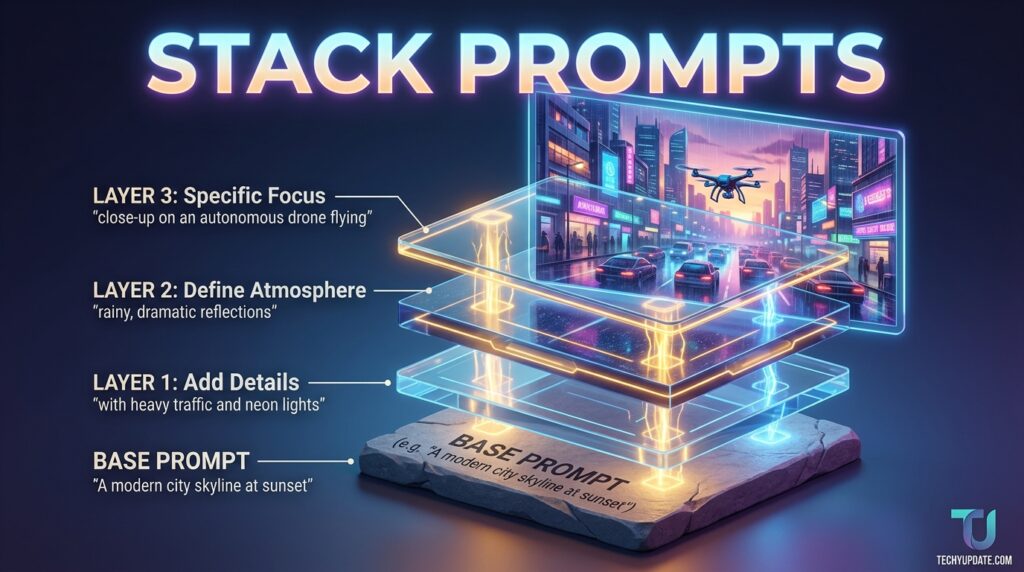
A standard prompt is a single instruction you give an AI. “Write me a competitive analysis of my SaaS product.” The AI does its best with whatever context it has, which is typically very little. The output is broad, generic, and hard to act on.
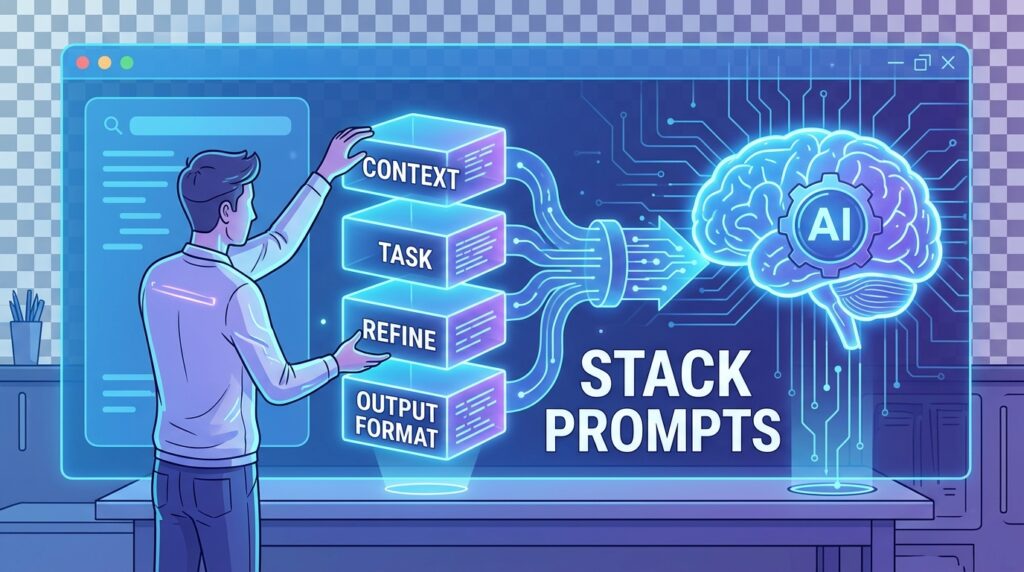
A stack prompt is a multi-layered instruction set that:
- Establishes a clear role for the AI (“You are a product strategist who has worked with early-stage B2B SaaS companies…”)
- Provides context about your specific situation
- Defines the reasoning framework that the AI should apply
- Specifies the output format so the result is immediately usable
- Often includes constraint layers that force the AI to consider edge cases, failure modes, or counter-arguments
The difference in output quality is dramatic. The stack prompt doesn’t just get you a better answer, it gets you a different category of answer, one that’s structured, reasoned, and contextualized to your actual situation.
How Prompt Stacking Improves AI Output
Here’s a concrete example. Consider a founder evaluating whether to pivot their product.
Standard prompt: “Should I pivot my startup?”
Gstack-style stack prompt (simplified): “You are a YC-trained startup advisor with deep experience in B2B SaaS.
A founder is considering a pivot after 8 months of building. Their current metrics are: [X MRR, Y user count, Z retention]. Their original hypothesis was [A].
They’re now seeing signals that [B] might be a stronger use case. Walk through the following analysis:
(1) Evaluate the evidence for and against a pivot using the PMF signal framework.
(2) Identify what the founder would be giving up versus gaining.
(3) Suggest the minimum experiment to validate the new direction before committing.
(4) Flag the 3 most common mistakes founders make when evaluating a pivot. Output this as a structured decision brief.”
You can immediately see how the stack prompt constrains and guides the AI’s reasoning in ways that produce a decision brief rather than a blog post.
What’s Inside Gstack? A Full Feature Breakdown

Gstack is organized around founder workflows rather than topic categories. The platform groups are prompted by the decisions and challenges that arise at different stages of company building.
Prompt Categories Available
Based on our testing, Gstack includes prompts across these core areas:
Company Strategy & Direction
- Pivot evaluation frameworks
- Market sizing and opportunity analysis
- Competitive moat assessment
- Business model stress tests
Product Development
- User story generation with PMF lens
- Feature prioritization frameworks
- Customer discovery interview templates
- Product-market fit diagnostic prompts
Hiring & Team Building
- Founder-fit assessment for early hires
- Interview question generators by role
- Culture and values alignment prompts
- Equity and compensation decision frameworks
Fundraising & Investor Relations
- Pitch narrative structure prompts
- Investor objection simulation
- Due diligence preparation frameworks
- Term sheet analysis prompts
Growth & Marketing
- ICP (Ideal Customer Profile) definition prompts
- Go-to-market strategy frameworks
- Content strategy generators for B2B
- Customer retention analysis prompts
Operations & Execution
- OKR and goal-setting frameworks
- Weekly review and prioritization prompts
- Decision logging templates
- Post-mortem analysis frameworks
How Prompts Are Structured
Each Gstack prompt follows a consistent architecture. You get a role assignment, a reasoning framework, a context-gathering section where you fill in your specifics, and a defined output format. This consistency means you develop an intuition for how to use the prompts quickly. The first few feel like work, but by prompt ten, you’re moving fast.
The prompts also include what Gstack calls “calibration questions,” brief prompts that help you identify which version of a prompt is most appropriate for your current stage. An early-stage, pre-revenue founder has different needs than a Series A company scaling revenue operations, and the calibration layer ensures the AI reasons about your actual situation.
AI Models Gstack Works With
Gstack prompts are designed to work with any capable large language model. In practice, the platform is optimized for:
- ChatGPT (GPT-4o) — the primary recommended model for most prompts
- Claude (Anthropic) — particularly strong for longer analysis and reasoning tasks
- Gemini Pro — viable for most prompts with minor adjustment
The prompts are model-agnostic by design, though Gstack’s documentation notes that more capable models (GPT-4o, Claude 3.5 Sonnet+) produce noticeably better outputs than smaller models like GPT-3.5.
Gstack AI Prompts Real-World Testing
We didn’t just read about Gstack. We used it. Across four weeks, we ran Gstack prompts against equivalent generic prompts on the same AI models to compare output quality. Here’s what we found.

Testing Gstack for Startup Strategy
We gave both a generic prompt and a Gstack stack prompt the same startup scenario: a two-person team building a B2B HR tool with 40 users, $1,200 MRR, and declining activation rates.
The generic prompt (“Give me strategic advice for this startup”) produced a five-paragraph response that covered broad topics: improving the product, talking to users, and considering pricing.
The Gstack prompt produced a structured 600-word decision brief that: diagnosed the activation problem as a likely onboarding issue rather than a product gap, suggested a specific experiment (a white-glove onboarding call for the next 10 signups), identified two early signals that would indicate whether the diagnosis was correct, and flagged the risk of mistaking a distribution problem for a product problem.
The difference wasn’t marginal. The Gstack output was the kind of answer a YC partner would give in an office hours session. The generic output was the kind of answer Google’s first page of results would give.
Testing Gstack for Hiring and Team Building
We tested Gstack’s hiring prompts for a seed-stage fintech company looking to make its first product hire. The prompt asked us to input the company stage, the product’s current state, and the founder’s background.
The output was a detailed hiring rubric that prioritized specific attributes (comfort with ambiguity, prior experience shipping in regulated industries, and the ability to define metrics from scratch) over generic qualities. It also generated five interview questions calibrated to surface those specific attributes, as well as a red-flag list of signals that a candidate who looks good on paper might not thrive in an early-stage environment.
This is the kind of structured thinking that experienced founders develop over the years. Gstack packages it into a 10-minute exercise.
Testing Gstack for Product Development
Gstack’s product prompts are particularly strong for customer discovery. The interview template prompts generate conversation guides that follow a Jobs-to-be-Done-inspired framework, asking about behaviors and motivations rather than opinions, which is exactly what good user research demands.
We also tested the feature prioritization prompt, which uses an ICE-style (Impact, Confidence, Effort) scoring framework enhanced with a “strategic alignment” modifier. The output forced us to articulate why certain features actually matter for PMF versus which ones are just interesting to build a distinction that’s easy to blur when you’re in the weeds.
Testing Gstack for Investor Pitch Prep
This category showed Gstack at its most impressive. The pitch narrative prompts don’t just help you structure slides. They simulate investor questioning. One prompt generates a list of the 10 most likely investor objections to your specific pitch, given your metrics, market, and team composition, and then helps you craft responses to each.
We ran this on a hypothetical climate tech startup and received surprisingly specific objections: questions about regulatory risk in the specific geography, questions about the founder’s distribution advantage relative to incumbents, and questions about why this particular technical approach wins over alternatives. These aren’t generic VC questions. They’re the kind of questions that only arise from actually thinking through the specific business.
Gstack Pricing Free Plan vs Paid
What the Free Plan Includes
Gstack offers a free tier that includes access to a limited selection of prompts, typically 15–20 across core categories. This is enough to evaluate whether the platform’s approach works for you without any financial commitment.
The free prompts tend to cover foundational use cases: a basic competitive analysis framework, an ICP definition prompt, and one or two product strategy prompts.
What You Get on Paid Plans
| Plan | Price | Prompts Included | AI Model Support | Updates | Best For |
|---|---|---|---|---|---|
| Free | $0/month | ~20 prompts | All models | None | Testing |
| Starter | ~$19/month | 100+ prompts | All models | Monthly | Solo founders |
| Pro | ~$49/month | Full library | All models | Weekly | Startup teams |
| Team | ~$99/month | Full library + sharing | All models | Weekly | Multi-founder teams |
Note: Pricing is approximate and subject to change. Verify current plans on Gstack’s official website.
Is Gstack Worth the Price?
Here’s the honest math. A single one-hour session with a startup advisor or YC alum typically costs $200–$500 through platforms like MentorCruise or Clarity. If Gstack’s prompts deliver even a fraction of that advisory value on a recurring basis, the $49/month Pro plan is an obvious ROI-positive decision.
The more relevant question isn’t whether it’s worth it in absolute terms, it clearly is, given what individual advisory sessions cost. The question is whether you’ll actually use it. A tool you don’t build into your workflow delivers zero value. Gstack is most valuable to founders who have a habit of structured reflection — weekly reviews, pre-meeting preparation, systematic decision logging.
Gstack Pros and Cons
Pros:
- Prompts are genuinely founder-specific, not generic productivity templates
- YC-informed frameworks bring real startup credibility to the outputs
- Works with any major LLM (ChatGPT, Claude, Gemini)
- Structured prompt architecture teaches you prompt engineering over time
- Covers the full startup lifecycle, not just one area
- Customer discovery and hiring prompts are especially strong
- Pitch preparation prompts are uniquely valuable and hard to find elsewhere
Cons:
- The value is fully dependent on the quality of the context you provide
- Non-YC founders may find some frameworks feel overly Silicon Valley-centric
- 100 AI request-style limits don’t apply here, but prompt depth can feel overwhelming
- The free plan is too limited to form a complete judgment of the product
- Some prompt categories overlap with each other, creating mild redundancy
- Requires comfort with AI tools. True beginners may find the learning curve steep
- No team collaboration features on lower tiers
Gstack vs Alternatives Head-to-Head
Gstack vs PromptBase
PromptBase is a marketplace where individuals sell their own AI prompts. It’s crowdsourced and varied, with prompts across everything from marketing copy to coding to creative writing.
| Feature | Gstack | PromptBase |
|---|---|---|
| Focus | Startup/founder specific | General marketplace |
| Curation | Expert-curated (YC philosophy) | Community-created, variable quality |
| Pricing | Subscription | Pay-per-prompt |
| Updates | Regular (Pro/Team plans) | Varies by creator |
| Best For | Founders with recurring needs | One-off specific use cases |
| Learning Curve | Moderate | Low |
| Prompt Quality | High and consistent | Variable |
For founders who need ongoing, domain-specific AI guidance, Gstack wins handily. For someone who needs a single, specific prompt for a marketing campaign, PromptBase’s marketplace model makes more sense.
Gstack vs FlowGPT
FlowGPT is a community platform for sharing and discovering AI prompts, with a strong focus on creative and consumer use cases. It’s largely free and community-driven.
For startup founders, FlowGPT lacks the structured, YC-informed frameworks that make Gstack valuable. The quality of founder-focused prompts on FlowGPT is inconsistent. Gstack is the better choice if your primary use case is company building.
Gstack vs Building Your Own Prompt Library
This is the most common question serious founders ask: Why pay for prompts when I can build my own?
The honest answer: you absolutely can build your own. The founders who get the most out of Gstack actually do both: they use Gstack as a foundation and then customize prompts for their specific context and model behavior preferences.
But building a high-quality prompt library from scratch takes significant time investment. Months of iteration, hundreds of failed prompt runs, and a deep familiarity with how LLMs respond to different instruction formats. Gstack compresses that learning curve dramatically.
Think of it the way you’d think of any expert template or framework. You could design your own OKR system from scratch, or you could start with a proven framework and adapt it. Most founders who respect their time choose the latter.
Who Should Use Gstack AI Prompts?
Solo Founders
Solo founders are the single biggest beneficiary of a tool like Gstack. Without co-founders to pressure-test ideas, challenge assumptions, or bring complementary perspectives, solo founders are at constant risk of building in an echo chamber.
Gstack’s structured prompts effectively simulate an external thought partner. The investor objection prompts, the pivot evaluation frameworks, and the hiring rubrics all force a solo founder to think through dimensions of a decision they might otherwise skip.
Early-Stage Startup Teams
For teams of 2–5 at the seed stage, Gstack functions best as a shared tool for weekly strategic reviews. Running the weekly prioritization prompt as a team exercise before Monday planning sessions produces structured conversations that replace meandering status meetings with focused decision-making.
Product Managers
PMs at startups who need to move fast without much external input will find the product development prompts especially valuable. The customer discovery templates and feature prioritization frameworks align well with modern product management practices.
Growth and Marketing Leaders
The ICP definition prompts and go-to-market strategy frameworks in Gstack are strong enough that growth-focused team members will get real value, even if they’re not using the full library. The customer retention analysis prompts in particular surface questions that generic AI prompts consistently miss.
How to Get the Most Out of Gstack Expert Tips
Getting full value from Gstack requires more than loading a prompt and pressing enter. Here’s how to use it well:
Invest in the context section. Every Gstack prompt has a section where you provide your specific situation. Don’t rush this. The more precise and honest you are about your current metrics, team, market, and challenges, the more useful the output will be. Garbage in, garbage out applies here.
Run the same prompt across two models. Run a GStack prompt on GPT-4o, then run it on Claude. Compare the outputs. Different models have different reasoning strengths, and some Gstack prompts produce noticeably better results on Claude for analysis-heavy tasks, while ChatGPT tends to be stronger for structured output generation.
Customize after the first run. Treat Gstack outputs as first drafts, not final answers. After the AI responds, follow up with refinement prompts: “Push back on point three” or “What would a skeptical investor say about this analysis?” This prompt chaining dramatically improves the final output.
Create a prompt journal. Keep a running document of your most-used GStack prompts, the context you provided, and the most useful outputs. Over time, this becomes an organizational knowledge base a record of your company’s strategic reasoning at each stage.
Use the hiring prompts before every interview. This one habit alone is worth the subscription price. Running the role-specific interview question prompt the night before a candidate interview consistently surfaces better questions than founders generate on their own.
Don’t skip the calibration questions. Some prompts include brief questions to identify which version best fits your stage. Take these seriously: a Series A company running a pre-seed-calibrated prompt will get advice that doesn’t fit their reality.
Limitations and Honest Criticisms of Gstack
Gstack is a strong product, but a fair review must acknowledge its genuine limitations.
It’s not a substitute for actual user research. The customer discovery prompts are excellent for generating interview frameworks, but they cannot replace real conversations with real customers. Founders who use Gstack as a replacement for primary research rather than as a complement to it will make worse, not better, decisions.
The YC lens isn’t universal. Y Combinator’s framework for building high-growth, venture-backed, scalable technology products is not the right framework for every type of business. A bootstrapped SaaS company, a services business, or a non-profit will find that some Gstack prompts make assumptions that don’t apply to their situation. These founders can still extract value, but they’ll need to do more prompt customization.
Quality is context-dependent. The gap between a GStack prompt with rich, specific context and one with sparse, generic context is enormous. Founders who aren’t willing to invest time in providing good context will consistently be disappointed by the outputs.
Prompt quality varies by category. The strategy and hiring prompts are noticeably stronger than some of the operations and growth prompts. This is likely a reflection of where Garry Tan and the team’s expertise is deepest. The fundraising prompts are excellent; the content marketing prompts are merely good.
It doesn’t replace judgment. This sounds obvious, but it’s worth saying explicitly. Gstack helps you think more rigorously, but it doesn’t make decisions for you. Founders who treat their outputs as prescriptions rather than inputs will apply the right frameworks to the wrong situations.
Final Verdict: Is Gstack Worth It?
After four weeks of testing, the answer is yes with qualifications.
Gstack is the best prompt library we’ve encountered, specifically designed for startup founders. The YC-informed frameworks are genuinely valuable, the prompts are well-structured and consistently produce better outputs than generic alternatives, and the coverage across the startup lifecycle is comprehensive.
For founders who use AI daily and are willing to invest in providing rich context, Gstack is an easy recommendation. The $49/month Pro plan, annualized, costs less than a single advisory session with a senior startup mentor, and Gstack is available at 2 am when you’re wrestling with a hiring decision or investor pitch.
The free plan is worth signing up for immediately, just to test the approach. If two or three of the free prompts genuinely sharpen your thinking, the paid plan is an obvious next step.
The bottom line: Gstack isn’t magic. It’s structured access to battle-tested startup thinking, packaged in a format that AI models can act on. If that sounds useful to you and for most founders, it’s worth every dollar.
| Rating Category | Score |
|---|---|
| Prompt Quality | 9/10 |
| Ease of Use | 7/10 |
| Value for Money | 8/10 |
| AI Model Compatibility | 9/10 |
| Coverage & Breadth | 8/10 |
| Free Plan Generosity | 6/10 |
| Overall | 8.2/10 |
FEATURED
Definition (for “What is Gstack AI?”)
Gstack AI is a curated prompt library for startup founders built on Y Combinator’s frameworks and co-created by Garry Tan, YC’s president. It provides structured “stack prompts” that help founders use AI more effectively for strategy, hiring, product, and fundraising decisions.
List (for “What types of prompts does Gstack include?”)
Gstack AI prompt categories:
- Company strategy and pivot evaluation
- Product development and PMF analysis
- Hiring and team-building frameworks
- Fundraising and investor pitch preparation
- Growth and go-to-market strategy
- Operations, goal-setting, and execution
Table Snippet (for “Gstack pricing”)
| Plan | Price | Prompts | Best For |
|---|---|---|---|
| Free | $0/month | ~20 | Testing |
| Starter | ~$19/month | 100+ | Solo founders |
| Pro | ~$49/month | Full library | Startup teams |
| Team | ~$99/month | Full + sharing | Multi-founder teams |
Comparison Snippet (for “Gstack vs PromptBase”)
Gstack is a startup-specific, expert-curated prompt subscription best for founders with recurring AI workflow needs. PromptBase is a general marketplace of community-created prompts sold individually. Gstack offers consistent quality and YC-informed frameworks; PromptBase offers breadth and lower per-use cost.
How-To Snippet (for “How to use Gstack AI prompts”)
How to use Gstack AI prompts effectively:
- Select a prompt that matches your current challenge
- Complete the calibration questions for your stage
- Fill in the context section with specific, honest details
- Run the prompt on GPT-4 or Claude
- Follow up with refinement prompts to deepen the output
- Document the most valuable outputs in a prompt journal
- Repeat weekly as part of your strategic review process
FREQUENTLY ASKED QUESTIONS
What is Gstack AI, and who created it?
Gstack AI is a curated prompt library for startup founders. It was built with Y Combinator’s frameworks and is associated with Garry Tan, YC’s president, to help founders use AI more strategically.
Are Garry Tan’s YC prompts actually useful for founders?
Yes, particularly for startup strategy, hiring, and investor pitch preparation. The prompts apply YC’s proven mental models to AI interactions, producing more actionable outputs than generic prompts.
Is Gstack AI free to use?
Gstack offers a free plan with approximately 20 foundational prompts. Paid plans start around $19/month for solo founders and $49/month for teams with access to the full prompt library.
What AI models work with GStack prompts?
Gstack prompts are model-agnostic and work with ChatGPT (GPT-4o), Claude, and Gemini. The platform recommends GPT-4 or Claude for the best results on complex strategic prompts.
Do I need to be a Y Combinator company to benefit from Gstack?
No. Gstack’s frameworks are useful for any founder building a scalable product. Non-YC founders benefit most from the strategy, hiring, and fundraising prompt categories.
How is Gstack different from PromptBase?
Gstack is a curated, subscription-based prompt library focused on startups. PromptBase is a community marketplace with prompts across all topics, sold individually. Gstack offers more consistent quality for founder-specific use cases.
Can Gstack AI prompts replace a startup advisor?
Not fully. Gstack enhances AI-assisted thinking but doesn’t replace human mentorship, network access, or real accountability. Think of it as a structured complement to advisors, not a replacement.
How often are GStack prompts updated?
Paid plans receive prompt updates monthly (Starter) or weekly (Pro and Team). The free plan does not include regular updates. Check the current plan details on Gstack’s website.
Can beginners use GStack AI prompts?
Gstack works best for founders with some familiarity with AI tools. True beginners may struggle to provide the contextual depth needed for strong outputs. A basic understanding of ChatGPT or Claude helps significantly.
What is a “stack prompt” in the context of Gstack?
A stack prompt is a multi-layered AI instruction that includes a role assignment, reasoning framework, context inputs, and output format specification. It produces more structured, expert-level outputs than standard single-line prompts.
Does GStack work with Claude as well as ChatGPT?
Yes. Gstack prompts are designed to be model-agnostic. Claude often performs better than ChatGPT for longer analysis tasks, while ChatGPT handles structured output generation well.
Is Gstack AI worth the money for solo founders?
For solo founders who use AI daily, yes. The $19–49/month cost is far below the cost of a single advisor session and provides structured, founder-specific guidance accessible at any time.
What are the best Gstack prompts for fundraising?
Gstack’s investor objection simulation prompts, pitch narrative structure guides, and due diligence preparation frameworks are particularly strong and hard to replicate with generic AI prompts.
Can Gstack help with product-market fit?
Yes. Gstack includes customer discovery interview templates, PMF diagnostic prompts, and activation analysis frameworks that are specifically designed to help founders identify and measure product-market fit signals.
CONCLUSION
Gstack AI sits at an interesting intersection: it’s a product about how to use other products, which requires it to deliver enough standalone value to justify adding another tool to your workflow. After four weeks of rigorous testing, we’re confident it clears that bar — particularly for founders who are already active AI users but want to move from “getting generic answers” to “getting strategic insights.”
The YC provenance matters. Not because YC is the only way to build a successful company, but because the frameworks that Garry Tan and his team have distilled into these prompts represent decades of watching what actually works and what doesn’t. That institutional knowledge, packaged into well-structured AI prompts, is genuinely hard to replicate on your own.
Start with the free plan. Put two or three prompts to real use. If they sharpen your thinking, and they likely will, the paid plan is an easy decision.