


Starting a blog without proper niche research is one of the biggest mistakes beginners make. Many aspiring bloggers jump into writing content without understanding whether their topic has real demand, manageable competition, or long-term monetization potential. The result? Months of effort with little traffic or income.
The good news is that successful blogging starts with smart planning. Effective niche research blogging helps you identify profitable opportunities, understand your audience, and build a content strategy that aligns with search intent and market demand. Whether you are a student, a beginner blogger, or someone looking to launch a niche website, learning how to perform niche keyword research can dramatically improve your chances of success.
In this guide, you’ll discover step-by-step methods for finding profitable blog niches, selecting the right tools, analyzing low-competition opportunities, and building a scalable content strategy. By the end, you’ll have a practical roadmap for choosing a blog niche that can grow into a sustainable online asset.

Table of Contents
Why Choosing the Right Blog Niche Matters
Niche research blogging is the foundation of every successful blog. Without choosing the right niche, even excellent content can struggle to attract readers or generate income.
A blog niche defines your audience, your content direction, and your monetization opportunities. Smart blog niche selection helps you focus your efforts on topics that people actively search for and that advertisers or affiliate programs support.
Benefits of niche research blogging include:
- Better keyword targeting
- Easier ranking in search engines
- Clear audience positioning
- Improved content consistency
- Higher affiliate marketing potential
For example, instead of starting a broad “technology blog,” narrowing to “AI tools for students” gives you a more focused, less competitive entry point.
Google increasingly rewards topical authority. That means deep coverage of a niche can outperform general blogging. This makes niche keyword research essential before publishing your first article.
Students and beginners often overlook this stage, but experienced bloggers spend significant time validating niche demand before launching a website.
Niche Research Blogging: Your Complete Guide to Finding the Perfect Blog Topic
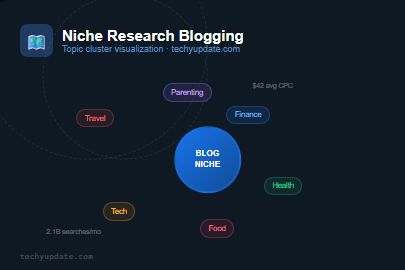
Niche Research Blogging
Niche research blogging involves identifying topics with search demand, audience interest, and monetization potential.
A practical process includes:
Identify your interests and expertise
Start with what you know or enjoy:
- Coding
- Productivity
- AI tools
- Finance
- Health
- Education
Passion helps with consistency, but profitability matters too.
Validate demand
Use tools like:
- Google Trends
- Google Keyword Planner
- Ahrefs
- SEMrush
- Ubersuggest
Check monthly search volume and keyword competition.
Analyze competitors
Study successful niche blogs:
- Content depth
- Monetization methods
- Keyword strategy
- User engagement
This gives insight into market opportunities and gaps.
Effective blogging niche research combines data with personal alignment. The ideal niche sits at the intersection of passion, expertise, demand, and profitability.
What Is Niche Research Blogging?
Niche Research Blogging is the process of identifying a focused topic area for your blog by studying audience demand, competition, and profitability. Instead of writing about everything, bloggers choose a specific niche such as personal finance, fitness, parenting, or tech to attract a targeted audience.
Think of niche research as laying the foundation for your blogging success. Without proper research, your blog may struggle to gain readers, rank in search engines, or earn revenue.
Successful niche research helps answer three essential questions:
- What topics are people actively searching for?
- Can I create valuable content in this area?
- Can this niche generate income over time?
When these three factors align, you’ve found a strong niche.
Selecting the right niche can make or break your blogging journey. Many beginners jump into blogging without research and quickly lose motivation because traffic and income don’t come easily.
A well-researched niche gives you:
Clear Audience Direction
You know exactly who you’re writing for and what problems you solve.
Better SEO Opportunities
Search engines favor topic-focused websites. Specialized blogs often rank faster than general blogs.
Higher Monetization Potential
Focused readers convert better into buyers, subscribers, and loyal followers.
Long-Term Motivation
Writing about a topic you enjoy makes consistency much easier.
Core Elements of a Profitable Blogging Niche
Passion vs Profitability
One of the biggest debates in blogging is whether passion or profit matters more. The truth? You need both.
Ask yourself:
- Do I enjoy learning about this topic?
- Can I consistently write about it?
- Are people spending money in this niche?
For example, loving gardening is great, but if there’s no audience or monetization path, growth may be difficult.
Audience Demand Analysis
Demand determines whether readers exist.
Ways to measure demand include:
- Searching topics on Google Trends
- Checking keyword search volumes
- Exploring Reddit communities
- Reading Quora questions
- Monitoring social media discussions
Popular niches often solve urgent problems, such as:
- Losing weight
- Saving money
- Learning skills
- Improving relationships
- Growing businesses
Competition Assessment
Competition is not bad, it proves a niche is profitable.
The key is finding manageable competition.
Evaluate:
- Domain authority of top blogs
- Quality of competing articles
- Keyword difficulty
- Gaps in competitor content
If large websites dominate every keyword, consider narrowing your niche.
Example:
Instead of Fitness Blogging, try:
- Fitness for busy moms
- Home workouts for seniors
- Keto fitness coaching
How to Brainstorm a Research Topic
Choosing the right research topic is often the most challenging part of starting a research project. If you’re wondering how to brainstorm a research topic, you’re not alone. Many students and researchers struggle to move from a broad subject area to a focused, meaningful question. The good news is that brainstorming can make this process easier, more creative, and even enjoyable.
In this guide, you’ll learn practical methods to generate research ideas, narrow your focus, and select a topic that is both interesting and academically valuable.
Why Brainstorming a Research Topic Matters
Before diving into research, brainstorming helps you:
- Discover areas you genuinely care about
- Identify gaps in existing knowledge
- Avoid choosing topics that are too broad or too narrow
- Improve motivation throughout the research process
- Develop stronger research questions
A well-chosen topic lays the foundation for a successful research paper or project.
1: Start with Your Interests
The easiest way to brainstorm a research topic is to begin with subjects you already enjoy.
Ask yourself:
- What topics do I find exciting?
- Which class discussions caught my attention?
- Are there current issues I care about?
- What problems would I like to solve?
Example
If you enjoy technology, your broad interest might be:
- Artificial intelligence
- Social media effects
- Cybersecurity
- Digital education tools
Starting with personal interest keeps you motivated during long research phases.
2: Explore Broad Subject Areas
If you don’t have a specific interest yet, list general academic fields.
| Field | Possible Topic Ideas |
|---|---|
| Psychology | Mental health, memory, motivation |
| Education | Online learning, student performance |
| Business | Consumer behavior, entrepreneurship |
| Environment | Climate change, renewable energy |
| Health | Nutrition, exercise, public health |
| Technology | AI ethics, cybersecurity |
This helps you identify possible research directions.
3: Use Mind Mapping
Mind mapping is one of the best ways to brainstorm a research topic visually.
How to Do It
- Write a broad topic in the center.
- Draw branches with related ideas.
- Add smaller branches for subtopics.
- Circle the ideas that interest you most.
Example: Climate Change
- Climate change
- Renewable energy
- Carbon emissions
- Ocean pollution
- Government policies
- Consumer behavior
Soon, one branch may stand out as your ideal topic.
4: Read Current Research and News
Research ideas often come from existing discussions.
Helpful sources include:
- Google Scholar (https://scholar.google.com)
- Academic journals
- University databases
- News websites
- Government reports
Look for:
- Frequently debated issues
- Research gaps
- Contradictory findings
- Emerging trends
Reading recent publications can spark fresh ideas.
5: Ask Questions About Everyday Problems
Many excellent research topics begin with simple curiosity.
Try asking:
- Why does this happen?
- How can this be improved?
- What causes this problem?
- Who is affected most?
- What solutions already exist?
Examples
- Why do students procrastinate?
- How does social media affect sleep quality?
- Why are electric cars becoming more popular?
- How does remote work affect productivity?
Questions naturally lead to research topics.
6: Use Brainstorming Techniques
Free Writing
Set a timer for 10 minutes and write everything related to a general topic without stopping.
Listing
Create long lists of ideas without judging them.
Question Storming
Instead of generating answers, generate as many questions as possible.
SCAMPER Method
Ask:
- Substitute
- Combine
- Adapt
- Modify
- Put to another use
- Eliminate
- Reverse
These methods can unlock unexpected research directions.
7: Narrow Down Your Topic
A broad topic must become specific.
Too Broad
“Social media”
Better
“Impact of social media on teenage self-esteem”
Even Better
“Effects of Instagram use on self-esteem among high school students aged 15–18.”
Specific topics are easier to research and analyze.
8: Evaluate Topic Feasibility
Before choosing a final topic, ask:
Can I Find Enough Sources?
A good topic needs enough credible material.
Is It Too Broad or Too Narrow?
Balance is essential.
Is It Relevant?
Choose something timely and meaningful.
Can I Complete It in Time?
Avoid overly complex subjects if deadlines are tight.
9: Discuss Ideas with Others
Talking can spark better ideas.
Ask:
- Professors
- Classmates
- Librarians
- Academic advisors
- Research mentors
Fresh perspectives often reveal opportunities you missed.
10: Turn Your Topic into a Research Question
A strong research topic often begins as a clear question.
Examples
Topic: Remote learning
Research question: How does remote learning affect student engagement in university courses?
Topic: Climate policy
Research question: How effective are carbon taxes in reducing emissions?
Research questions give direction and purpose.
Read More: How to Do Keyword Research for Articles (Step-by-Step 2026)
Common Mistakes When Brainstorming a Research Topic
Avoid these common problems:
- Choosing a topic just because it seems easy
- Picking something too broad
- Ignoring personal interest
- Not checking source availability
- Selecting controversial topics without balance
- Waiting too long to start brainstorming
Helpful Tools for Brainstorming Research Ideas
Digital Tools
- Google Scholar
- Zotero
- Notion
- Miro
- MindMeister
Traditional Tools
- Sticky notes
- Whiteboards
- Research journals
- Index cards
Sometimes, simple pen-and-paper brainstorming works best.
Personal Skills and Expertise
Your background often reveals hidden niche opportunities.
Ask:
- What do people ask me for help with?
- What hobbies do I enjoy?
- What challenges have I overcome?
Examples:
- Teacher → Education blog
- Accountant → Finance blog
- Traveler → Travel hacks blog
- Parent → Parenting advice blog
Market Trends and Emerging Topics
Trend spotting can help you enter niches early.
Use:
- Google Trends – https://trends.google.com
- Exploding Topics
- Industry newsletters
- YouTube trend reports
Emerging niches can grow rapidly before becoming crowded.
Examples:
- AI tools
- Remote work productivity
- Sustainable living
- Creator economy
Keyword Discovery Techniques
Keyword research is central to Niche Research Blogging.
Look for:
- Search volume above 500 monthly
- Low to medium keyword difficulty
- Buyer intent keywords
Examples:
- “Best budget travel gear”
- “How to start meal prepping.”
- “Beginner home investing guide”
Popular tools:
- Ahrefs
- SEMrush
- Ubersuggest
- Keyword Planner
Tools for Effective Niche Research Blogging
| Tool | Purpose |
|---|---|
| Google Trends | Demand tracking |
| Ahrefs | SEO competitor analysis |
| SEMrush | Keyword research |
| Ubersuggest | Affordable keyword insights |
| AnswerThePublic | Audience questions |
| BuzzSumo | Popular content discovery |
Using multiple tools gives a clearer picture of niche potential.
Evaluating Niche Profitability
Affiliate Opportunities
Can you promote products and earn commissions?
Look for affiliate programs in:
- Amazon Associates
- ShareASale
- Impact
- CJ Affiliate
Profitable niches often have many affiliate offers.
Ad Revenue Potential
Some niches earn better ad rates.
High CPM niches include:
- Finance
- Insurance
- Technology
- Business
- Health
Higher advertiser demand means more income per visitor.
Digital Product Possibilities
Can you create your own products?
Examples:
- Courses
- Templates
- Ebooks
- Coaching
- Membership communities
Owning products often yields the highest profits for bloggers.
Common Mistakes to Avoid
Avoid these niche research errors:
Choosing a Niche Only for Money
Without genuine interest, burnout happens quickly.
Ignoring Competition
Too much competition can significantly slow growth.
Selecting Broad Niches
Broad topics make SEO harder.
Skipping Audience Validation
Never assume people want your content verify demand first.
Build a Content Strategy for Startup Niche Research Blogging
Creating a successful startup-focused research blog requires more than just publishing articles. To build a Content Strategy for Startup Niche Research Blogging, you need a structured plan that aligns audience intent, keyword opportunities, content authority, and business goals.
For startups, blogging can become a powerful growth engine, driving organic traffic, generating leads, establishing thought leadership, and improving brand trust. But without a clear strategy, even high-quality content can fail to gain traction.
This guide provides a complete framework to help you build a scalable, effective content strategy for startup-niche research blogging.
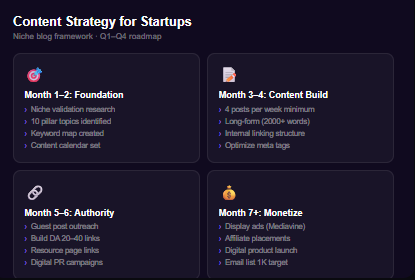
Building a Content Strategy Around Your Niche
Once your niche is selected:
Create Topic Clusters
Build articles around related themes.
Example for the finance niche:
- Budgeting
- Saving
- Investing
- Debt payoff
Plan SEO-Friendly Content
Target:
- Informational keywords
- Transactional keywords
- Comparison keywords
Publish Consistently
Consistency builds authority and trust.
Suggested schedule:
- 1–2 quality posts weekly
Blogging Niche Research
Blogging niche research goes beyond brainstorming ideas. It requires data-backed decision-making.
A strong framework includes:
Audience analysis
Ask:
- Who will read this?
- What problems do they face?
- What solutions can I provide?
For example, college students may search for “best AI study tools” or “time management apps.”
Search intent mapping
Understand whether users want:
- Information
- Product recommendations
- Tutorials
- Comparisons
Matching search intent improves rankings.
Monetization potential
Evaluate:
- Affiliate programs
- Display ad revenue
- Sponsored opportunities
- Digital product possibilities
A niche like “coding tutorials” may monetize through courses and software affiliates.
Blogging niche research should always balance passion with business opportunity.
Why Startup Niche Research Blogging Matters
For startups, content marketing can outperform paid advertising over time. A niche research blog helps you:
- Build authority in your market
- Attract qualified organic traffic
- Educate potential customers
- Improve investor credibility
- Generate inbound leads
- Create long-term digital assets
Unlike broad blogging, niche research blogging targets highly specific audiences and solves focused problems.
1. Define Your Startup Blog Goals
Before writing a single article, identify your purpose.
Common Startup Blogging Goals
- Increase organic traffic
- Generate email subscribers
- Build brand awareness
- Educate customers
- Improve SEO rankings
- Support product-led growth
- Drive demo signups
SMART Goal Example
“Grow organic traffic by 30% in six months through startup niche research blogging.”
Clear goals shape every content decision.
2. Identify Your Startup Niche
Choosing a precise niche creates focus.
Examples of Startup Blog Niches
| Industry | Niche Angle |
|---|---|
| SaaS | AI tools for remote teams |
| FinTech | Budgeting apps for freelancers |
| HealthTech | Telemedicine innovation |
| EdTech | Personalized learning software |
| GreenTech | Sustainable startup solutions |
How to Validate Your Niche
Ask:
- Is there audience demand?
- Are people searching for this topic?
- Can we offer unique insights?
- Is competition manageable?
The narrower your niche, the easier it is to build authority.
3. Conduct Audience Research
Your readers determine your content strategy.
Create Audience Personas
Define:
- Job titles
- Pain points
- Goals
- Preferred content formats
- Search behavior
- Industry challenges
Research Methods
Use:
- Reddit communities
- LinkedIn discussions
- Customer interviews
- Product reviews
- Survey responses
- Quora questions
Understand what keeps your audience awake at night.
4. Perform Competitor Content Analysis
Study what others are doing well.
Analyze Competitors for
- Top-performing articles
- Keyword rankings
- Content gaps
- Backlink profiles
- Content structure
- Publishing frequency
Helpful Tools
- Ahrefs
- SEMrush
- Ubersuggest
- BuzzSumo
Competitor research helps you find opportunities they missed.
5. Build a Keyword Research Framework
Keyword research is the backbone of startup niche blogging.
Keyword Categories to Target
Informational Keywords
Examples:
- What is startup valuation?
- How to build an MVP
Problem-Aware Keywords
Examples:
- Why startups fail
- Customer acquisition challenges
Solution-Aware Keywords
Examples:
- Best CRM for startups
- Growth hacking tools
Commercial Intent Keywords
Examples:
- Startup analytics software
- Email automation platforms
Balance traffic potential with user intent.
6. Develop Core Content Pillars
Content pillars organize your authority-building strategy.
Example Startup Blog Pillars
Startup Growth
- Scaling strategies
- Marketing experiments
- Customer acquisition
Funding and Finance
- Venture capital
- Bootstrapping
- Financial modeling
Operations
- Team management
- Productivity tools
- Hiring strategies
Technology Trends
- AI adoption
- SaaS innovation
- Automation
Aim for 4–6 strong pillars.
7. Create Topic Clusters
Cluster content improves SEO and internal linking.
Example Cluster
Pillar: Startup Fundraising
Supporting Articles:
- How seed funding works
- Angel investors vs venture capital
- Startup valuation methods
- Pitch deck mistakes
- Cap table basics
Google rewards topic depth and structure.
8. Design an Editorial Calendar
Consistency beats intensity.
Monthly Publishing Example
| Week | Content Type |
|---|---|
| Week 1 | Pillar article |
| Week 2 | Supporting cluster post |
| Week 3 | Data-driven research article |
| Week 4 | Expert interview |
Editorial Calendar Tools
- Notion
- Trello
- Airtable
- Google Sheets
Plan content at least 1 month in advance.
9. Optimize for SEO and Search Intent
Publishing isn’t enough optimization matters.
SEO Essentials
- Keyword in title
- Meta descriptions
- Header hierarchy
- Internal linking
- Image optimization
- Fast loading speed
- Mobile-friendly design
Match Search Intent
Understand whether readers want:
- Information
- Comparisons
- Tutorials
- Product recommendations
Intent alignment boosts rankings.
10. Build Topical Authority
Google rewards expertise.
How to Build Authority
- Publish comprehensive guides
- Share proprietary research
- Use expert quotes
- Include case studies
- Update content regularly
- Earn backlinks
Authority is built through consistency and depth.
11. Create a Distribution Strategy
Content promotion is essential.
Distribution Channels
Owned Channels
- Email newsletters
- Website homepage
- Product dashboard
Earned Channels
- Guest posting
- Podcast appearances
- Community mentions
Social Channels
- X (Twitter)
- Startup communities
Create once, distribute many times.
12. Measure Content Performance
Track what works.
Important Metrics
- Organic traffic
- Keyword rankings
- Bounce rate
- Time on page
- Backlinks
- Email signups
- Conversion rate
Analytics Tools
- Google Analytics
- Google Search Console
- Hotjar
Data should guide your future content decisions.
Common Startup Blogging Mistakes to Avoid
Avoid these pitfalls:
- Writing without strategy
- Ignoring keyword intent
- Publishing inconsistently
- Targeting overly broad topics
- Neglecting promotion
- Failing to update old content
Most Profitable Blog Niches
Some niches consistently perform better due to demand and monetization.
Top profitable blog niches include:
Personal finance
Topics:
- Budgeting
- Investing
- Credit cards
- Student savings
High ad revenue and affiliate commissions.
Health and wellness
Popular areas:
- Mental health
- Fitness plans
- Nutrition
Strong evergreen demand.
Technology and AI
Growing rapidly:
- AI tools
- Coding tutorials
- Software reviews
Ideal for techyupdate.com.
Productivity and education
Students actively search for:
- Study techniques
- Time management
- Note-taking tools
Digital marketing
Topics like SEO, blogging, and affiliate marketing remain highly profitable.
Choosing profitable blog niches increases long-term income potential while supporting sustainable growth.
Niche Keyword Research Tool

The right niche keyword research tool can save countless hours.
Popular tools include:
Google Keyword Planner
Free and reliable for search volume data.
Best for:
- Beginner keyword research
- Basic competition insights
Ahrefs
Premium but powerful.
Features:
- Keyword difficulty
- SERP analysis
- Competitor tracking
SEMrush
Excellent for niche discovery and content gaps.
Ubersuggest
Affordable and beginner-friendly.
AnswerThePublic
Great for voice search and conversational keyword ideas.
Recommended workflow:
- Start with Google Trends
- Validate using Google Keyword Planner
- Analyze competitors in Ahrefs
Using multiple tools provides better keyword analysis.
Niche Keyword Research Tool: Find Profitable Low-Competition Keywords
Finding the right keywords is the foundation of successful SEO and niche blogging. A reliable Niche Keyword Research Tool helps you uncover hidden keyword opportunities, identify user intent, and target low-competition phrases that can drive consistent organic traffic.
Whether you’re building a startup blog, affiliate website, SaaS content hub, or authority site, keyword research tools help you make smarter content decisions.
This guide explores the best niche keyword research tools, how to use them effectively, and how to choose the right one for your goals.
Why a Niche Keyword Research Tool Matters
Keyword research helps you discover what people are searching for online.
Benefits include:
- Finding low-competition keyword opportunities
- Understanding audience intent
- Improving SEO rankings
- Planning blog content
- Discovering profitable niches
- Tracking keyword trends
Without keyword research, content creation becomes guesswork.
Key Features of a Good Niche Keyword Research Tool
A quality tool should provide:
1. Search Volume Data
Shows how many people search a keyword monthly.
2. Keyword Difficulty Score
Estimates ranking competition.
3. Related Keyword Suggestions
Helps expand content ideas.
4. SERP Analysis
Shows top-ranking pages.
5. Search Intent Insights
Identifies whether users want:
- Information
- Products
- Comparisons
- Services
6. Competitor Keyword Tracking
Reveals what competitors rank for.
Free vs Paid Keyword Research Tools
| Free Tools | Paid Tools |
|---|---|
| Basic data | Advanced analytics |
| Limited searches | Unlimited keyword access |
| Good for beginners | Best for scaling |
| Minimal competitor insights | Full SEO intelligence |
Beginners can start free, then upgrade as traffic grows.
Top 10 Best Niche Keyword Research Tools
1. Ahrefs Keywords Explorer
Best for: Advanced SEO professionals
Features
- Massive keyword database
- Keyword difficulty analysis
- SERP overview
- Traffic potential scoring
- Competitor keyword gap analysis
Pros
- Extremely accurate
- Excellent backlink integration
Cons
- Expensive for beginners
Website: https://ahrefs.com
2. SEMrush Keyword Magic Tool
Best for: All-in-one digital marketing
Features
- Millions of keyword suggestions
- Intent filtering
- Competitor tracking
- Topic research tools
Pros
- Comprehensive dashboard
Cons
- Higher learning curve
Website: https://semrush.com
3. Google Keyword Planner
Best for: Free foundational research
Features
- Search volume estimates
- Trend analysis
- CPC data
Pros
- Free
- Direct Google data
Cons
- Limited SEO insights
Website: https://ads.google.com
4. Ubersuggest
Best for: Budget-conscious bloggers
Features
- Keyword suggestions
- SEO difficulty
- Competitor analysis
Pros
- Affordable
- Beginner-friendly
Cons
- Smaller database
Website: https://neilpatel.com/ubersuggest
5. KWFinder
Best for: Finding low-competition keywords
Features
- Easy interface
- Long-tail keyword suggestions
- SERP difficulty analysis
Pros
- Great for niche sites
Cons
- Limited daily searches
Website: https://kwfinder.com
6. AnswerThePublic
Best for: Content ideation
Features
- Question-based keyword maps
- Search intent insights
Pros
- Excellent brainstorming tool
Cons
- Not ideal for full SEO analysis
Website: https://answerthepublic.com
7. LowFruits
Best for: Low-competition niche targeting
Features
- Weak competitor analysis
- SERP opportunity scoring
Pros
- Excellent for new websites
Cons
- Smaller ecosystem
Website: https://lowfruits.io
8. Keyword Surfer
Best for: Quick browser-based research
Features
- Chrome extension
- Search volume overlays
Pros
- Free and fast
Cons
- Limited detail
Website: https://keywordtool.io/surfer
9. Moz Keyword Explorer
Best for: SEO beginners
Features
- Keyword suggestions
- Opportunity scoring
Pros
- Easy reports
Cons
- Limited free plan
Website: https://moz.com
10. Mangools Suite
Best for: Affordable SEO toolkit
Features
- Keyword finder
- SERP checker
- Rank tracking
Pros
- User-friendly
Cons
- Less advanced than Ahrefs
Website: https://mangools.com
How to Use a Niche Keyword Research Tool Effectively
1: Start with Seed Keywords
Example:
- startup funding
- SaaS marketing
- remote team tools
2: Find Long-Tail Variations
Example:
Instead of:
- startup funding
Try:
- startup funding for first-time founders
Long-tail keywords are easier to rank for.
3: Analyze Keyword Difficulty
Target keywords with:
- Moderate search volume
- Low competition
- Clear intent
4: Check Search Intent
Ask:
What does the searcher want?
- Learn?
- Compare?
- Buy?
5: Build Topic Clusters
Example:
Main Keyword: startup marketing
Supporting keywords:
- startup SEO strategy
- growth hacking tactics
- startup content marketing
Recommended Keyword Research Workflow
| Task | Tool Suggestion |
|---|---|
| Brainstorm ideas | AnswerThePublic |
| Validate search volume | Google Keyword Planner |
| Analyze competition | Ahrefs |
| Find easy keywords | LowFruits |
| Track rankings | SEMrush |
Using multiple tools gives better results.
Blogging Niche Ideas
If you’re stuck, here are trending blogging niche ideas for 2026:
- AI tools for students
- Remote work productivity
- Coding for beginners
- Cybersecurity awareness
- Personal branding
- Digital freelancing
- Tech tutorials
- SaaS reviews
- Study automation
- Smart gadgets
Choose niches where you can provide authentic expertise.
For students, combining interests can work well:
Example:
“AI productivity tools for coding students”
This micro-niche can reduce competition while attracting targeted readers.
Blog Niche Selection Website Guide
A structured guide to selecting a blog niche helps avoid wasted effort.
Steps:
1: Define your audience
Who are you helping?
Example:
- Students
- Freelancers
- Beginners
2: Evaluate competition
Search target keywords in Google.
Look for:
- Weak websites ranking
- Outdated articles
- Content gaps
3: Assess monetization
Can this niche earn through:
- Ads
- Affiliate marketing
- Courses
4: Build content clusters
Create topic groups for topical authority.
Example:
AI blogging niche:
- AI writing tools
- AI SEO tools
- AI study assistants
This improves internal linking and SEO strength.
Keyword Analysis Tools Free
Free keyword tools can support early-stage niche research blogging.

Top options:
- Google Trends
- Google Search Console
- Keyword Surfer
- Ubersuggest free version
- AlsoAsked
- AnswerThePublic
Benefits:
- Low cost
- Quick insights
- Trend monitoring
Students and beginners should start with a free version before investing in premium software.
Low Competition Niches Generator
Finding profitable niches with low competition is one of the fastest ways to grow a blog, YouTube channel, or startup website. A Low Competition Niches Generator is not just a tool, it’s a system for discovering underserved markets where demand exists, but competition is weak.
Instead of guessing, you use data-driven signals like search volume, keyword difficulty, audience intent, and content gaps to identify winning niches.

A low competition niche generator helps discover underserved opportunities.
Ways to generate ideas:
- Reddit communities
- Quora questions
- Google autocomplete
- AI brainstorming tools
- Keyword gap analysis
Prompt AI tools:
“Generate low competition niches in AI education for students.”
This often reveals unique ideas for blogging niches.
What Is a Low Competition Niches Generator?
A Low Competition Niches Generator is a method (or tool-based system) used to discover niche topics that:
- Have search demand
- Have low SEO competition
- Contain long-tail keywords
- Are underserved by content creators
- Have monetization potential
Instead of targeting saturated markets like “fitness” or “finance,” you narrow down into micro-niches like:
- Home workouts for office workers
- Budget meal prep for students
- AI tools for freelance designers
Why Low Competition Niches Matter
Low competition niches help you:
- Rank faster on Google
- Get organic traffic sooner
- Spend less on ads
- Build authority quickly
- Reduce marketing effort
- Increase conversion rates
They are ideal for:
- Bloggers
- Affiliate marketers
- Startup founders
- Content creators
How a Low Competition Niches Generator Works
It follows a simple flow:
- Start with a broad niche
- Break into sub-niches
- Extract long-tail keywords
- Filter by low difficulty
- Identify content gaps
- Validate monetization potential
This turns broad ideas into precise, rankable opportunities.
Generate Low Competition Niches
1. Google Autocomplete Mining
Type a keyword and observe suggestions.
Example:
- “budget travel for…”
- “budget travel for students”
- “budget travel for solo travelers”
These are real user searches.
2. Reddit Community Gap Analysis
Look for:
- Repeated unanswered questions
- Complaints about missing information
- Emerging discussions
Subreddits like:
- r/Entrepreneur
- r/PersonalFinance
- r/SmallBusiness
3. YouTube Content Gaps
Search niche topics and filter by:
- Low-view-count videos
- Outdated content
- Missing tutorials
4. Amazon Reviews Mining
Check product reviews to find:
- Pain points
- Feature requests
- Complaints
These become niche content ideas.
5. Keyword Tool Filtering
Use tools like:
- Ahrefs
- Ubersuggest
- LowFruits
Filter:
- Keyword difficulty < 20
- Medium search volume
- High intent
6. Competitor Weak Spot Analysis
Find websites that:
- Rank poorly optimized content
- Miss long-tail keywords
- Lack depth
7. Forum Question Mining
Forums like:
- Quora
- StackExchange
- Niche forums
Look for repeated beginner questions.
8. Trend + Declining Competition Strategy
Use:
- Google Trends
- Exploding Topics
Find rising but still underutilized niches.
9. AI-Assisted Brainstorming
AI tools can expand:
- Seed keywords
- Sub-niches
- Content angles
10. Long-Tail Expansion Strategy
Example:
“fitness” →
- fitness for beginners at home
- fitness routine for busy parents
- fitness after 40 for women
Low Competition Niche Ideas
Health & Wellness Niches
- Mental health tips for remote workers
- Low-impact workouts for seniors
- Sleep improvement for students
- Nutrition plans for office workers
Finance Niches
- Budgeting for freelancers
- Saving money on a low income
- Crypto basics for beginners
- Personal finance for students
Tech Niches
- AI tools for small businesses
- Productivity apps for students
- Cybersecurity for beginners
- No-code tools for startups
Lifestyle Niches
- Minimalist living for beginners
- Productivity systems for ADHD
- Sustainable living on a budget
- Digital detox for professionals
Business Niches
- Side hustles for college students
- Freelancing for beginners
- Remote work setup guides
- Startup validation for beginners
How to Validate a Low Competition Niche
Before choosing a niche, check:
1. Search Demand
Is anyone searching for it?
2. Keyword Difficulty
Is it easy to rank?
3. Monetization Potential
Can you earn from:
- Ads
- Affiliates
- Products
- Services
4. Content Depth
Can you create 30–50 articles?
Keyword Strategy for Low Competition Niches
Focus on:
- Long-tail keywords
- Question-based keywords
- Problem-solving queries
Example:
Instead of:
- “fitness”
Use:
- “home workout for beginners with no equipment”
Monetization Strategies
Low competition niches can be monetized via:
- Affiliate marketing
- Digital products
- SaaS tools
- Sponsored content
- Online courses
Low Competition Niches for Blogging
Examples of low competition niches:
- AI tools for academic writing
- Budget gadgets for students
- Productivity apps for coders
- Cybersecurity basics for beginners
- Study automation workflows
These niches offer ranking opportunities faster than broad competitive topics.
Content Strategy in SEO
Content strategy determines long-term blog growth.
Best practices:
- Target long-tail keywords
- Write 3500+ word articles
- Use semantic keywords
- Optimize headings
- Add internal links
- Update content regularly
Content types that rank:
- Step-by-step guides
- Tutorials
- Product reviews
- Comparison posts
- Case studies
Value-driven content solves problems and satisfies search intent.
Affiliate Marketing Niche Research
Affiliate marketing niche research identifies profitable niches with commission opportunities.
Popular affiliate niches:
- Web hosting
- SEO tools
- AI software
- Online education
- Tech gadgets
Check:
- Commission rates
- Cookie duration
- Product demand
Align affiliate offers naturally with blog content.
Productivity and Time Management
Productivity-focused niches attract students and professionals.
Examples:
- Time blocking guides
- Pomodoro tools
- AI planners
- Study dashboards
High demand for evergreens makes this niche attractive.
Coding and Technical Skills
Technical education blogs perform exceptionally well.
Potential topics:
- Python tutorials
- AI development tools
- Coding interview prep
- GitHub workflows
For techyupdate.com, this is highly aligned.
Pro Tips to Maximize
Pro Tips:
- Validate niches before launching
- Build topic clusters early
- Focus on low competition keywords first
- Use Google Search Console data
- Track competitors monthly
- Refresh old content regularly
Common Mistakes
Common mistakes include:
- Choosing overly broad niches
- Ignoring keyword data
- Chasing trends only
- Lack of consistency
- No monetization planning
Avoiding these saves time and effort.
Expert Insights on AI Learning Trends
AI is transforming niche discovery.
Experts now use:
- ChatGPT for ideation
- OpenAI tools for semantic clustering
- Google SGE optimization
- NLP keyword extraction
High-authority sources:
Quick Summary
Key takeaways:
- Choose focused, profitable niches
- Use niche keyword research tools
- Target low competition opportunities
- Build semantic content clusters
- Optimize for AI search and Google 2026
- Prioritize helpful, authoritative content
Conclusion
Niche Research Blogging is one of the most important steps in building a successful blog. It helps you avoid wasted effort, attract the right readers, and create long-term income opportunities.
Take time to research carefully. Study audience needs, validate demand, analyze competition, and focus on a niche you can grow with confidence.
To build a Content Strategy for Startup Niche Research Blogging, startups need more than creativity; they need structure, consistency, and audience-focused planning.
By defining goals, choosing a precise niche, conducting research, building keyword-driven content clusters, and measuring performance, your startup blog can become a powerful long-term growth asset.
A strong Niche Keyword Research Tool can dramatically improve your SEO strategy and content success. The right tool helps you uncover profitable opportunities, understand search intent, and build content that attracts the right audience.
For beginners, start with free tools. As your blog grows, invest in premium platforms to scale faster and compete effectively.
A Low Competition Niches Generator is a powerful system for discovering untapped opportunities in blogging, SEO, and online business. Instead of competing in saturated markets, you focus on hidden niches with real demand and low difficulty.
By combining keyword research, audience insights, and validation techniques, you can quickly identify profitable niches and build sustainable traffic growth.
FAQ Section
What is niche research blogging?
Niche research blogging is the process of identifying profitable blog topics with audience demand, manageable competition, and monetization potential.
Why is niche keyword research important?
It helps bloggers target keywords people search for, improving visibility and traffic.
What is the best niche keyword research tool?
Google Keyword Planner is great for beginners; Ahrefs and SEMrush offer advanced insights.
How do I find low competition niches?
Use Google autocomplete, Reddit, keyword tools, and competitor analysis.
Can students start profitable blogs?
Yes. Students can build blogs around education, productivity, coding, or AI tools.
What niches are profitable in 2026?
AI, finance, health, education, productivity, and software reviews.
How long does niche research take?
Usually, 1–2 weeks for proper validation.
Can AI help with niche research blogging?
Yes. AI tools can generate niche ideas, cluster keywords, and identify opportunities.
About Niche Research Blogging
What is niche research blogging?
It’s the process of selecting a focused blog topic using audience demand, competition, and profitability data.
How do I know if a niche is profitable?
Check affiliate programs, product opportunities, and keyword search demand.
Can I change my blog niche later?
Yes, but changing niches may affect SEO and audience loyalty.
Is competition good or bad?
Competition is good, it confirms market demand.
How narrow should my niche be?
Start narrow enough to stand out, then expand over time.
Which tool is best for niche research?
Google Trends and Ahrefs are excellent starting points.