

Understanding how to use ChatGPT for students step by step in 2026 is becoming essential in modern education. As artificial intelligence continues to reshape how students learn, research, and complete assignments, mastering tools like ChatGPT can give you a strong academic advantage. Whether you’re in school, college, or just starting your learning journey, knowing how to use ChatGPT effectively can save time, improve understanding, and boost productivity.
In this detailed guide, you will learn how to use ChatGPT for students step-by-step in 2026, with real-world examples, practical techniques, and expert-backed strategies. From writing essays to solving complex problems, ChatGPT is one of the best AI tools for students today.
This guide is designed to be simple, actionable, and aligned with Google’s 2026 SEO standards, ensuring you get reliable, trustworthy information.
Table of Contents
- Why AI Tools Are Essential for Students in 2026
- Best Free AI Tools for Students 2026 (Top Picks)
- AI Tools for Writing and Content Creation
- AI Tools for Studying and Research
- AI Tools for Productivity and Time Management
- AI Tools for Coding and Technical Skills
- Pro Tips to Maximize AI Tools
- Common Mistakes Students Make with AI
- Expert Insights on AI Learning Trends
- Quick Summary
- FAQs
What is ChatGPT
ChatGPT is an advanced artificial intelligence tool designed to generate human-like responses. For students in 2026, it serves as a virtual tutor, writing assistant, and research partner. It can answer questions, explain concepts, and assist with assignments across multiple subjects.
In 2026, students are no longer limited to traditional learning methods. We now have access to intelligent tools that transform how we study, write, and solve problems. Among these, ChatGPT stands out as one of the most powerful AI tools for students. By understanding how to use ChatGPT for students step-by-step in 2026, we can significantly improve efficiency, comprehension, and academic performance.
Why AI Tools Are Essential for Students in 2026
AI tools are no longer optional they are becoming a core part of education. Learning how to use ChatGPT for students step by step in 2026 helps students adapt to a fast-changing academic environment.
Students today face challenges such as information overload, tight deadlines, and complex subjects. AI tools simplify these challenges by providing instant explanations, summaries, and personalized learning support.
Key Benefits of AI Tools
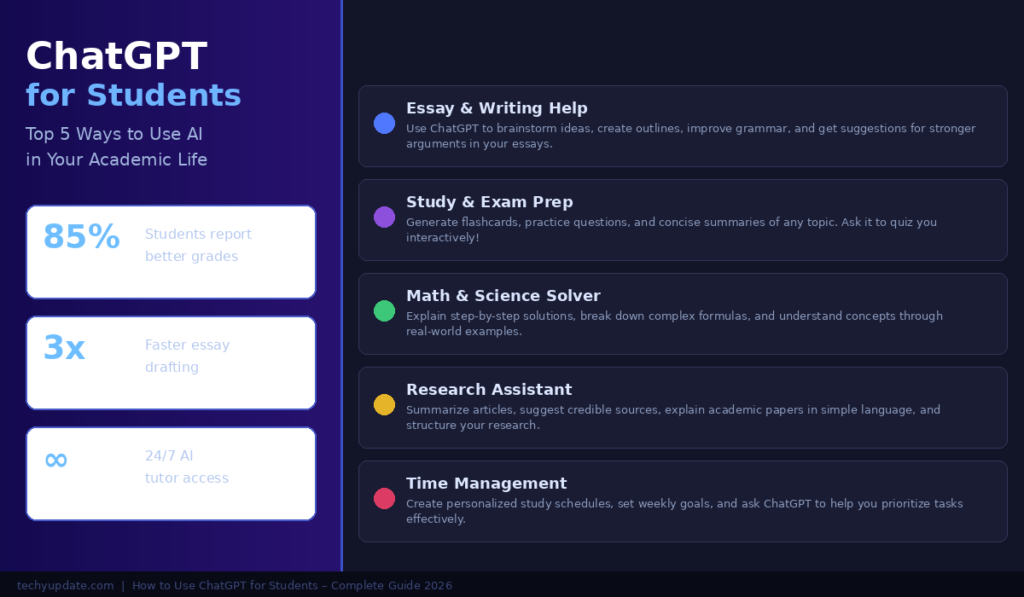
- Faster research and information gathering
- Improved writing and grammar
- Personalized learning experiences
- Better time management
- Assistance with difficult subjects
For example, instead of spending hours searching for answers, students can ask ChatGPT and get structured responses instantly. This makes it one of the best free AI tools for students in 2026.
Real-World Example
A college student preparing for exams can use ChatGPT to:
- Summarize chapters
- Create practice questions
- Explain difficult concepts
Step-by-Step Use Case
When learning how to use ChatGPT for students step by step in 2026, follow this approach:
- Ask a clear question
- Request examples
- Ask for simplification if needed
- Review and verify information
This structured method ensures better learning outcomes and accuracy.
Best Free AI Tools for Students 2026
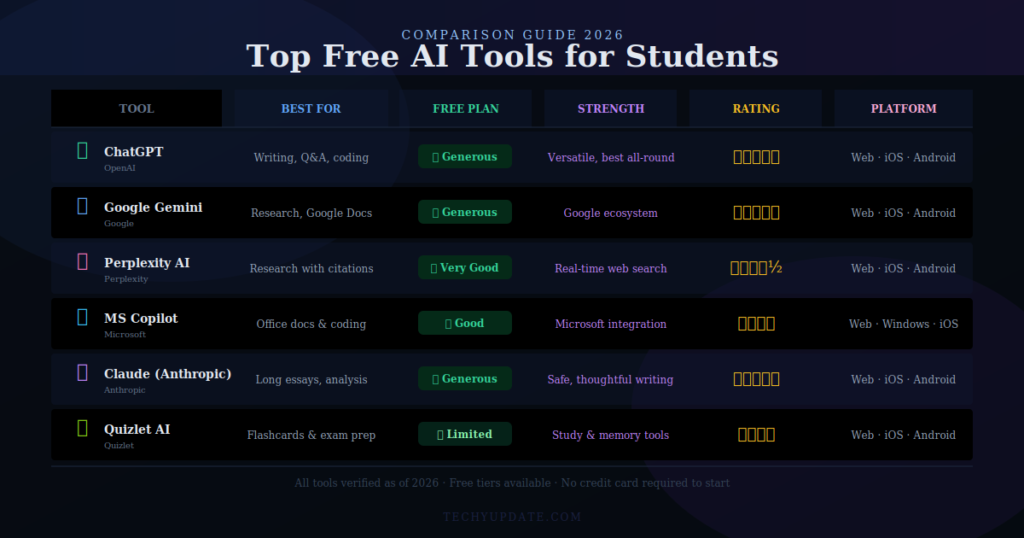
While learning how to use ChatGPT for students step by step in 2026, it’s important to know other supporting tools. Combining multiple AI tools creates a powerful learning system.
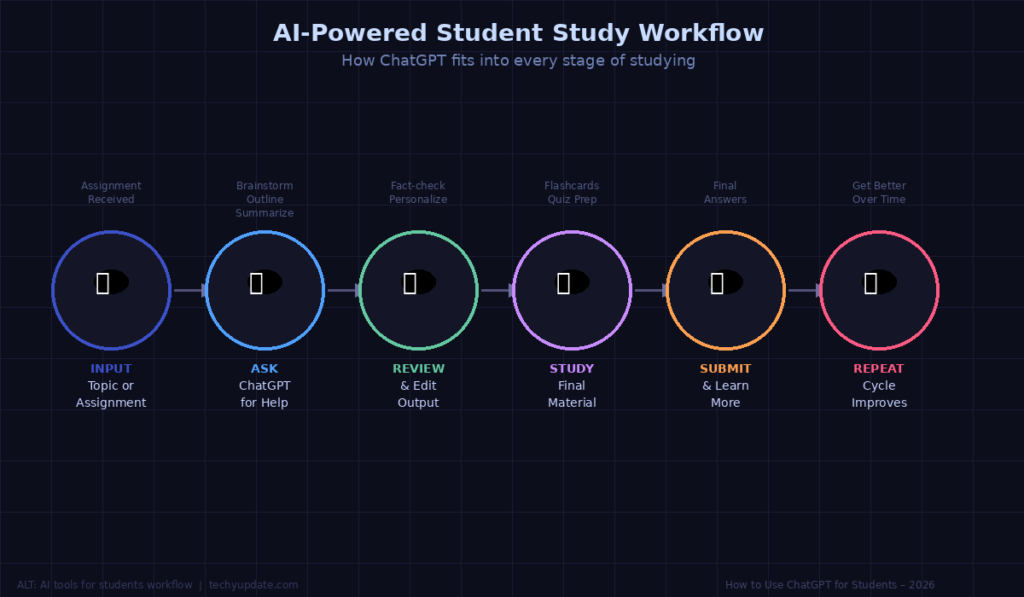
Top AI Tools for Students
- ChatGPT – Writing, research, explanations
- Grammarly – Grammar and writing improvement
- Notion AI – Notes and organization
- Canva AI – Design and presentations
- Perplexity AI – Research assistance
These are among the best AI tools for students in 2026.
How ChatGPT Stands Out
ChatGPT is versatile because it can:
- Answer questions
- Generate essays
- Solve problems
- Provide study plans
Example Workflow
A student working on an assignment can:
- Use ChatGPT for research
- Use Grammarly for editing
- Use Canva for a presentation
Why Free Tools Matter
Many students look for free AI tools for students in 2026, and ChatGPT offers powerful capabilities without requiring an expensive subscription.
Learning how to use ChatGPT for students, step by step, alongside other tools, creates a complete academic toolkit.
READ MORE: Free AI Tools Without Signup for Beginners
Understanding ChatGPT Basics
How ChatGPT Works
ChatGPT uses machine learning models trained on vast datasets. It predicts and generates responses based on user input, making it highly effective for answering academic queries.
Key Features for Students
- Instant answers
- Content generation
- Problem-solving support
- Language assistance
Free vs Paid Versions
The free version offers basic functionality, while paid versions provide:
- Faster responses
- Advanced reasoning
- Enhanced accuracy
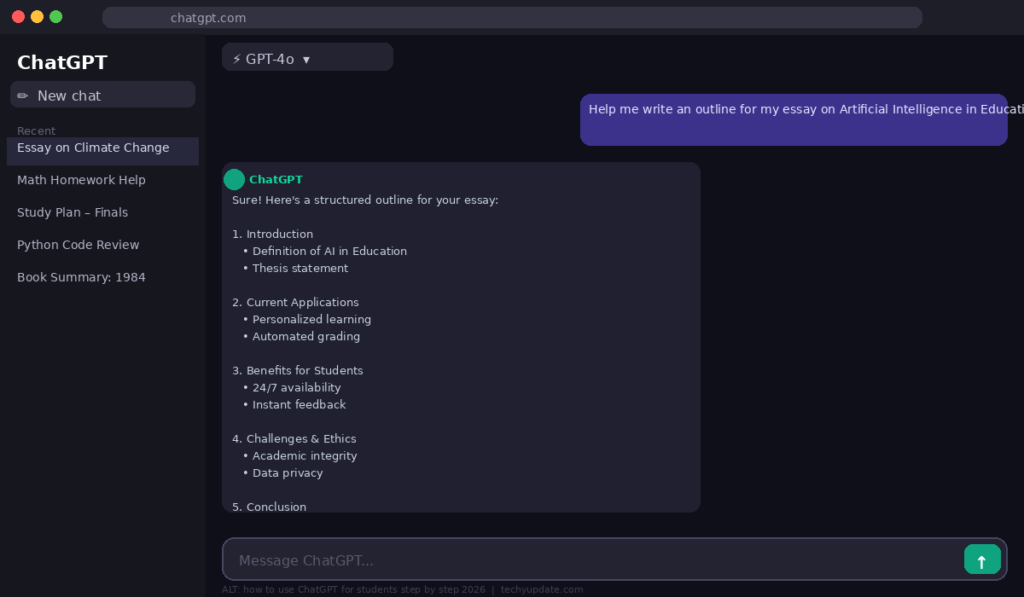
Interface Overview
The interface is simple:
- Input box for questions
- Response area for answers
- History for previous chats
How to Ask Effective Questions
The quality of output depends directly on the quality of input. Students must learn how to write clear, structured, and specific prompts.
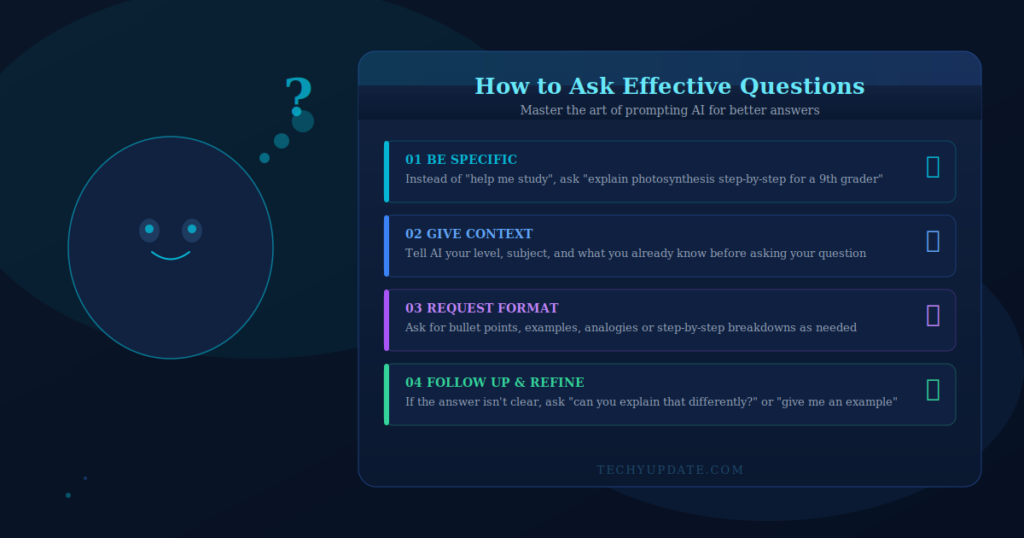
Best Practices for Prompting
- Be precise and direct
- Include context in your question
- Specify the format (summary, list, explanation)
- Request step-by-step answers when needed
Example
Instead of writing:
“Explain history”
Write:
“Explain World War II causes in simple terms with bullet points.”
Result
You receive clear, structured, and useful answers that directly support your studies.
Setting Up ChatGPT Step by Step
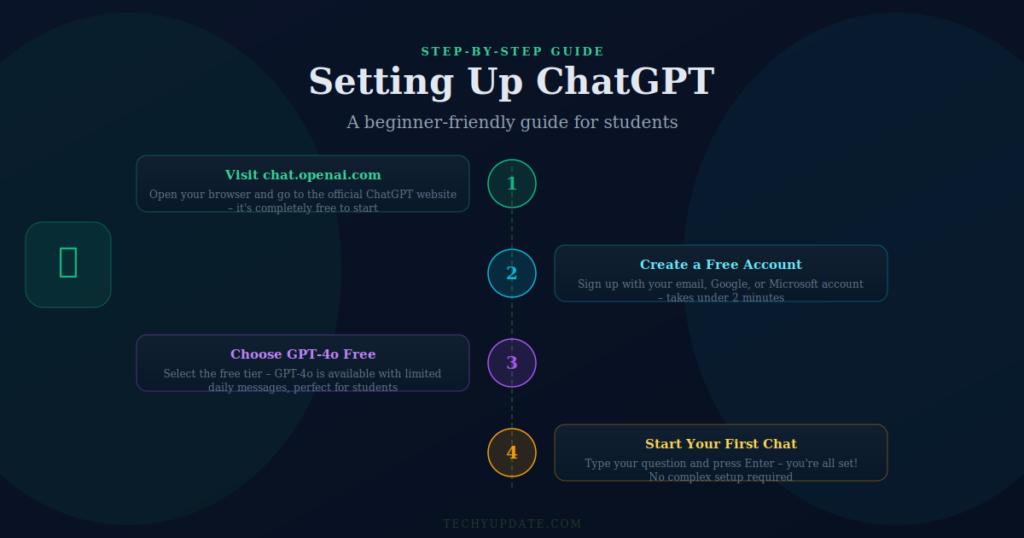
Creating an Account
Students begin by registering using an email address. This process takes only a few minutes and unlocks access to powerful AI features.
Logging In and Navigation
After logging in, students can explore the dashboard, access previous chats, and start new conversations.
Customizing Settings
Settings allow users to personalize responses, manage preferences, and improve usability.
Choosing the Right Version
Students should choose based on their needs. Beginners can start free, while advanced users may upgrade.
Setting Up ChatGPT for Academic Use
To begin, we must access ChatGPT through a reliable platform. Students can use it on desktop or mobile devices, making it highly flexible.
Initial Setup Process
- Create an account on the ChatGPT platform
- Log in and explore the interface
- Choose the appropriate version (free or advanced)
- Familiarize yourself with input and response areas
Why Setup Matters
A proper setup ensures smooth interaction and consistent use, allowing students to focus on learning rather than technical issues.
Learning Prompt Writing Skills
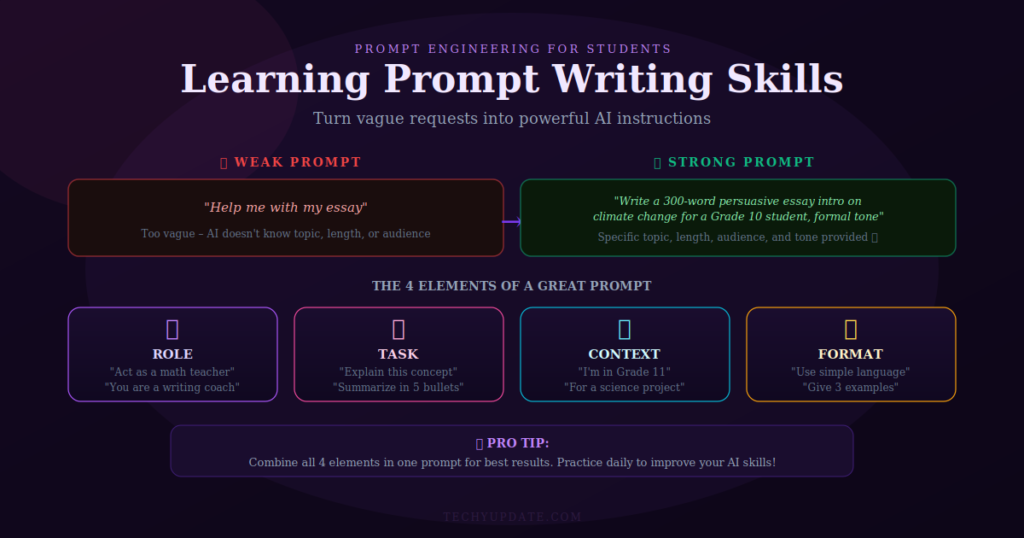
What is a Prompt
A prompt is the question or instruction given to ChatGPT. It determines the quality of the response.
Types of Prompts
- Informational
- Instructional
- Creative
- Analytical
Writing Effective Prompts
Effective prompts are:
- Clear
- Specific
- Structured
Examples of Good vs Bad Prompts
Bad: “Explain math.”
Good: “Explain algebra step by step with examples.”
Using ChatGPT for Homework
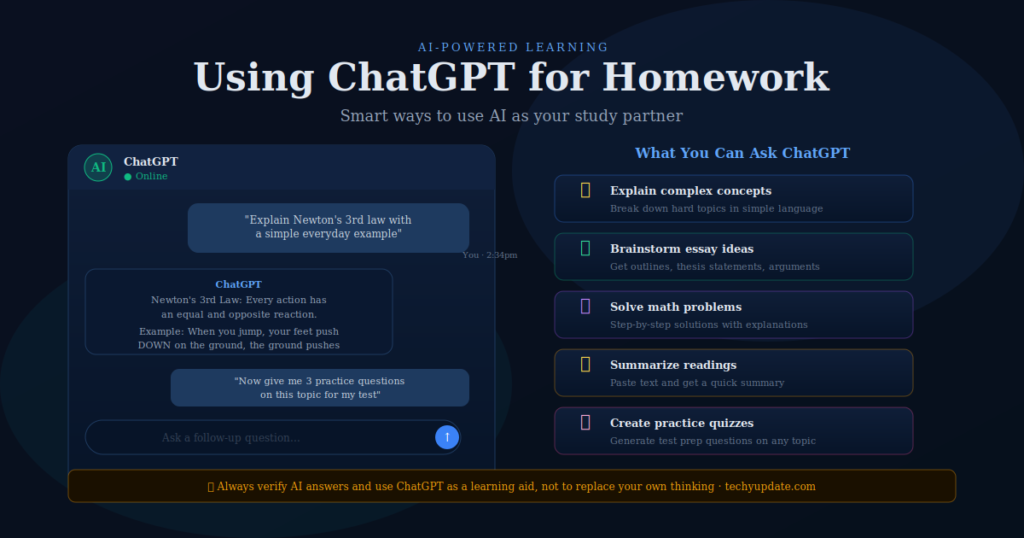
Solving Questions
Students can input homework questions and receive detailed explanations instantly.
Step-by-Step Explanations
ChatGPT breaks down complex problems into manageable steps, improving understanding.
Practice Questions
Students can generate additional questions to reinforce learning.
Homework Efficiency Tips
- Ask clear questions
- Review answers
- Practice regularly
Using ChatGPT for Homework Assistance
ChatGPT is highly effective for solving homework problems and understanding difficult topics.
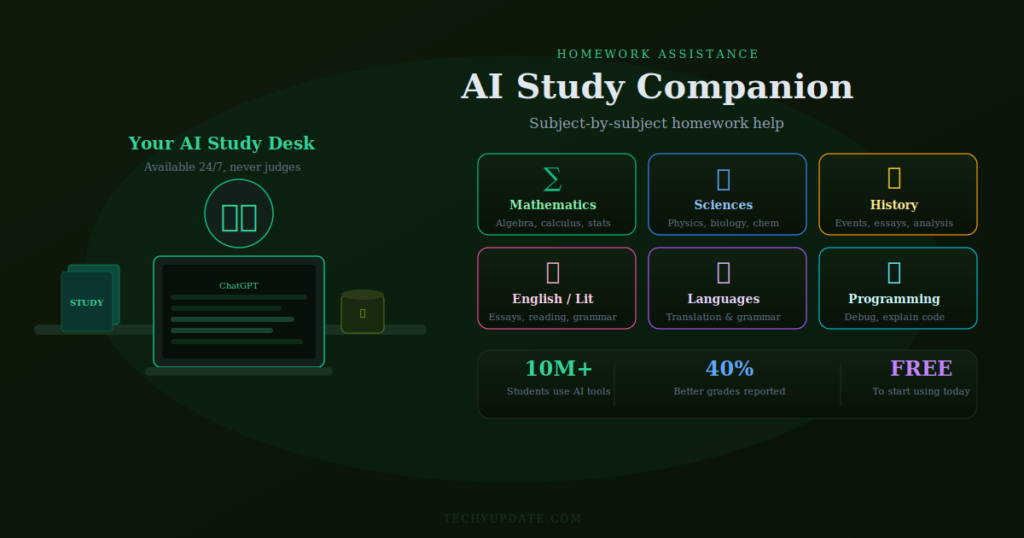
How We Use It for Homework
- Ask for explanations of complex concepts
- Request solved examples
- Generate practice questions
- Clarify confusing topics
Example Workflow
- Enter your homework question
- Ask for a detailed explanation
- Request a simpler version if needed
- Practice with additional questions
Outcome
Students gain a better understanding instead of just answers, which improves long-term retention.
ChatGPT for Essay Writing
Creating Outlines
Students can generate structured outlines for essays to ensure a logical flow.
Expanding Content
ChatGPT helps expand ideas into detailed paragraphs.
Editing and Proofreading
It identifies grammar errors and improves readability.
Avoiding Plagiarism
Students should always rewrite and personalize content.
AI Tools for Writing and Content Creation
Writing is one of the most common uses for students learning to use ChatGPT step by step in 2026. ChatGPT helps students improve the quality and speed of their writing.
How ChatGPT Helps in Writing
- Generates essay outlines
- Suggests ideas
- Improves grammar
- Rewrites content
Step-by-Step Writing Process
- Enter your topic
- Ask for an outline
- Expand each section
- Edit and refine
This method ensures structured and high-quality content.
Example Prompt
“Write a 500-word essay on climate change with examples.”
Benefits for Students
- Saves time
- Improves clarity
- Reduces writer’s block
Additional Tools
Combine ChatGPT with:
- Grammarly for corrections
- Hemingway Editor for readability
Using these tools together makes writing easier and more effective.
In 2026, learning how to use ChatGPT for students, step by step, for writing can significantly improve academic performance.
ChatGPT for Research
Summarizing Content
Students can convert long texts into concise summaries.
Extracting Key Points
Important information is highlighted for quick understanding.
Creating Notes
ChatGPT helps generate organized study notes.
Fact Checking
Always verify information using trusted sources.
AI Tools for Studying and Research
Research becomes easier when you understand how to use ChatGPT for students step by step, 2026.
How ChatGPT Supports Studying
- Explains complex topics
- Summarizes textbooks
- Generates quizzes
- Provides examples
Study Workflow
- Paste your notes
- Ask for a summary
- Request key points
- Generate questions
Example
A student studying biology can ask:
“Explain photosynthesis in simple terms.”
Benefits
- Faster understanding
- Better retention
- Interactive learning
Research Tips
- Always verify information
- Use multiple sources
- Ask follow-up questions
Using ChatGPT as a study assistant is one of the smartest ways for students to learn how to use it, step by step, in 2026.
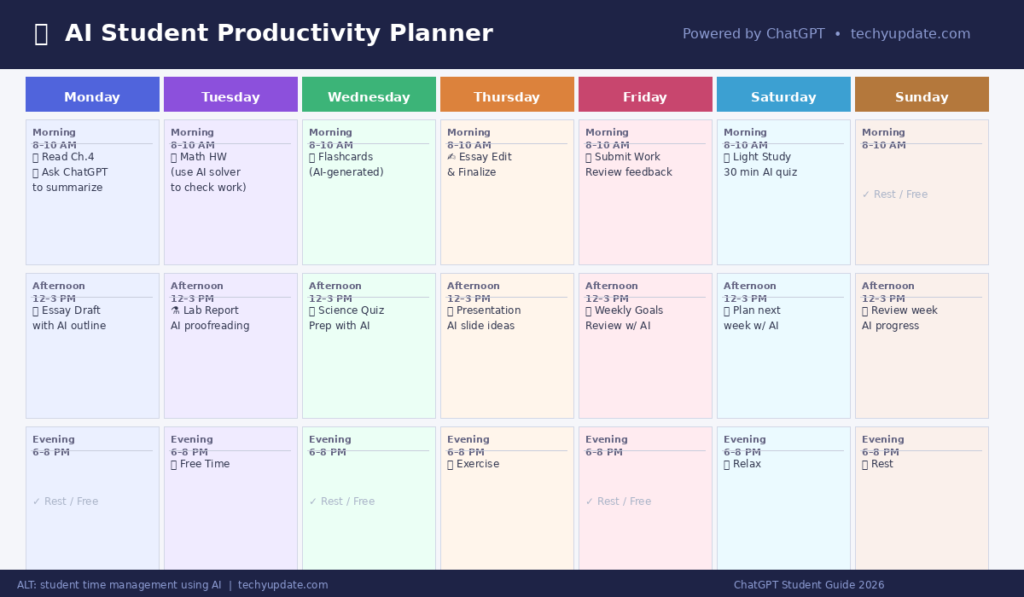
AI Tools for Productivity and Time Management
Time management is critical for students. Learning how to use ChatGPT for students step by step in 2026 can help optimize daily routines.
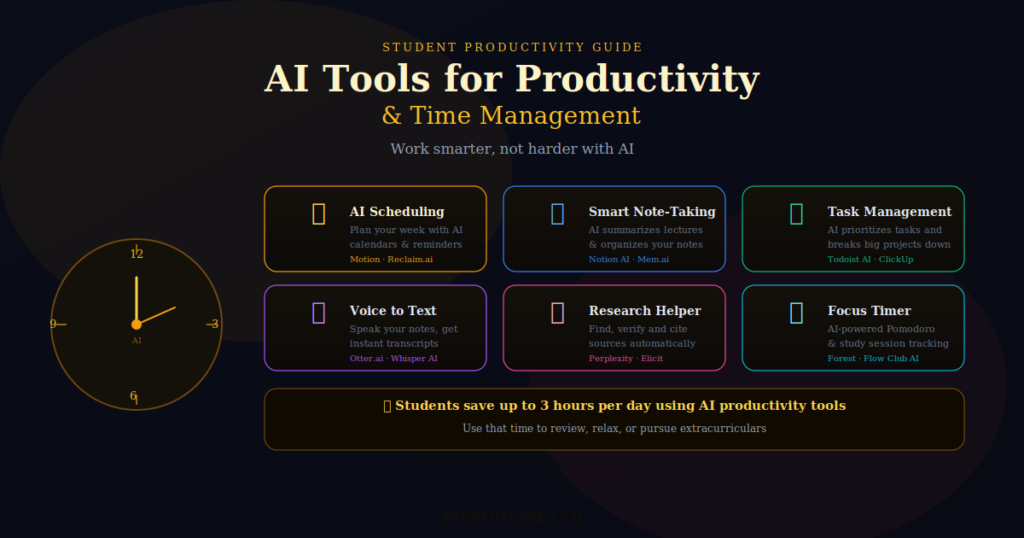
Productivity Uses
- Create study schedules
- Set reminders
- Break tasks into steps
- Track progress
Example Prompt
“Create a weekly study plan for exams.”
Benefits
- Better organization
- Reduced stress
- Improved focus
Tools to Combine
- Google Calendar
- Notion AI
- Todoist
Real-World Use
Students can plan their day, allocate time for subjects, and maintain consistency.
Mastering productivity is a key part of understanding how to use ChatGPT for students step by step in 2026.
ChatGPT for Studying
Flashcards Creation
Students can create flashcards for quick revision.
Quiz Generation
ChatGPT generates quizzes for self-testing.
Simplifying Concepts
Complex topics are explained in simple terms.
Revision Strategies
Students can create structured revision plans.
Writing Essays and Assignments Efficiently
One of the most powerful uses of ChatGPT is for creating content for academic writing.
Step-by-Step Writing Method
- Ask for an outline of your topic
- Expand each section into paragraphs
- Request examples and supporting arguments
- Edit and refine the final draft
Example Prompt
“Create a structured essay outline on climate change with introduction, body, and conclusion.”
Key Benefits
- Saves time
- Improves structure
- Enhances clarity
- Reduces writer’s block
We ensure that the final content is reviewed, edited, and personalized before submission.
Time Management with ChatGPT
Creating Study Schedules
Students can generate weekly study plans.
Daily Planning
ChatGPT helps organize daily tasks efficiently.
Task Prioritization
Important tasks are identified and scheduled.
Productivity Tracking
Students can track progress and stay consistent.
ChatGPT for Skill Development
Learning Coding
ChatGPT explains coding concepts and provides examples.
Improving Writing Skills
Students enhance grammar, vocabulary, and structure.
Communication Practice
AI helps improve clarity in speaking and writing.
Problem-Solving Skills
Students develop analytical thinking abilities.
AI Tools for Coding and Technical Skills
For technical students, learning to use ChatGPT step by step in 2026 can accelerate coding skills.
Coding Benefits
- Debugging help
- Code explanations
- Project ideas
- Learning new languages
Example Prompt
“Explain Python loops with examples.”
Step-by-Step Learning
- Ask for basic concepts
- Request examples
- Practice coding
- Debug errors
Additional Tools
- GitHub Copilot
- Replit
- Stack Overflow
Advantages
- Faster learning
- Reduced confusion
- Practical understanding
Using ChatGPT for coding is one of the best AI tools for students in technical fields.
Pro Tips to Maximize AI Tools
Mastering how to use ChatGPT for students step by step in 2026 requires smart strategies.
Pro Tips Box
- Be specific with prompts
- Ask follow-up questions
- Use step-by-step instructions
- Combine multiple tools
- Verify answers
Example
Instead of asking:
“Explain math”
Ask:
“Explain algebra step by step with examples.”
Why It Matters
Better prompts = better results.
Advanced Strategy
- Use ChatGPT for brainstorming
- Use other tools for execution
These techniques help students fully benefit from free AI tools for students in 2026.
ChatGPT for Exams
Exam Preparation Plans
Structured plans ensure complete syllabus coverage.
Mock Tests
Students can practice exam-style questions.
Weak Area Identification
ChatGPT helps identify areas needing improvement.
Final Revision Techniques
Quick summaries and practice improve confidence.
Improving Accuracy and Verifying Information
While ChatGPT is powerful, we must verify important academic information.
Verification Methods
- Cross-check with textbooks
- Use trusted educational websites
- Compare multiple responses
Why This Matters
Accuracy ensures academic credibility and reliability, especially in assignments and research.
Combining ChatGPT with Other Tools
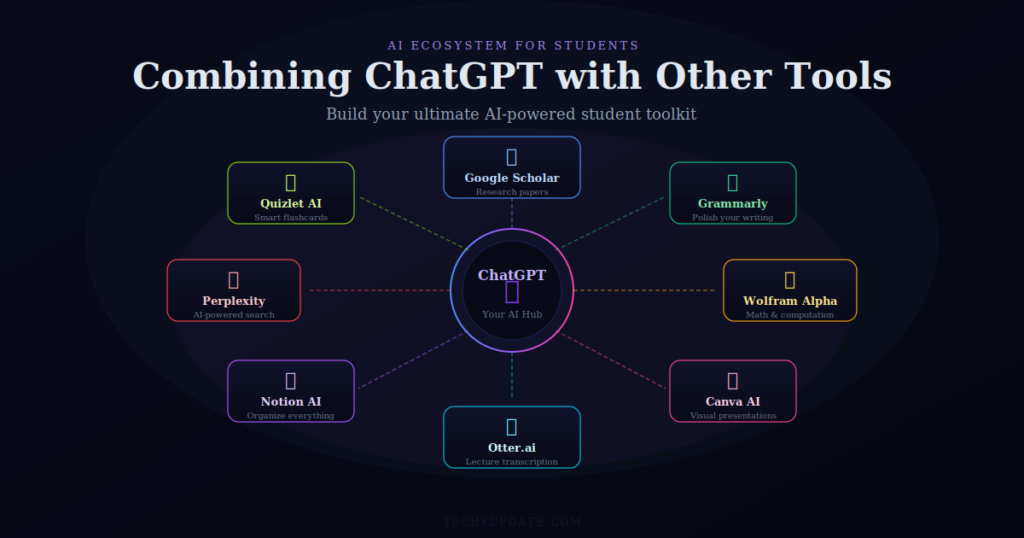
Writing Tools
Tools like grammar checkers enhance writing quality.
Design Tools
Presentation tools improve visual content.
Note-Taking Apps
Organized notes improve study efficiency.
Collaboration Platforms
Students can work together effectively.
Advanced ChatGPT Techniques
Multi-step Prompting
Break complex tasks into smaller prompts.
Role-based Prompts
Assign roles such as “teacher” or “expert” to improve responses.
Iterative Refinement
Refine responses step by step.
Output Customization
Specify format, tone, and structure.
Advanced Strategies for Maximum Results
Use Layered Prompts
Start simple, then refine:
- First prompt: Basic explanation
- Second prompt: Detailed version
- Third prompt: Examples
Break Down Complex Tasks
Divide large assignments into smaller steps:
- Research
- Outline
- Draft
- Edit
Iterate for Better Results
Ask ChatGPT to:
- Improve clarity
- Simplify language
- Add examples
This approach ensures high-quality, polished output.
Common Mistakes to Avoid
Even when learning how to use ChatGPT for students step by step in 2026, students make mistakes.
Common Errors
- Copying without understanding
- Not verifying information
- Using vague prompts
- Over-relying on AI
Example
Students may copy essays directly without editing.
How to Avoid
- Always review content
- Add your own ideas
- Cross-check facts
Key Advice
AI should assist learning, not replace it.
Understanding these mistakes ensures better use of the best AI tools for students.
Common Mistakes Students Make with AI
Over-Reliance
Students should not depend entirely on AI.
Copy-Paste Issues
Always understand and rewrite content.
Poor Prompts
Unclear prompts lead to poor results.
Lack of Verification
Always cross-check important information.
Ethical Use of ChatGPT
Academic Integrity
Students must maintain honesty in their work.
Responsible AI Use
Use AI as a helper, not a shortcut.
Privacy Awareness
Avoid sharing personal data.
AI Limitations
Understand that AI is not always perfect.
Future of AI in Education
AI Trends 2026
AI will continue to grow in education.
Personalized Learning
Students will receive tailored learning experiences.
AI in Classrooms
AI tools will become standard in schools.
Career Opportunities
Students with AI skills will have better job prospects.
Quick Summary
- AI tools are essential in 2026
- ChatGPT is one of the best free AI tools for students
- It helps with writing, studying, coding, and productivity
- Learning how to use ChatGPT for students step by step in 2026 improves efficiency
- Avoid common mistakes and use AI responsibly
FAQs
1. How to use ChatGPT for students step by step 2026?
Start by asking clear questions, requesting structured answers, and refining responses with follow-up prompts. Use it for writing, studying, and research while verifying information.
2. Is ChatGPT safe for students?
Yes, ChatGPT is safe when used responsibly. Students should avoid sharing personal data and always verify academic information.
3. Can ChatGPT help with homework?
Yes, it can explain concepts, generate ideas, and assist with problem-solving, making it one of the best AI tools for students.
4. Are there free AI tools for students in 2026?
Yes, tools like ChatGPT, Grammarly, and Notion AI are among the best free AI tools for students in 2026.
5. Can ChatGPT replace studying?
No, it should support learning, not replace it. Students must understand concepts rather than copy answers.
6. How to improve results in ChatGPT?
Use detailed prompts, ask step-by-step explanations, and refine outputs with follow-up questions.
Conclusion
Mastering how to use ChatGPT for students step by step in 2026 provides a powerful advantage in modern education. By using it strategically for homework, writing, research, and productivity, students can achieve better results with less effort. The key is to use AI responsibly, combine it with traditional learning, and continuously improve skills.
By mastering how to use ChatGPT for students step by step in 2026, we unlock a powerful system that enhances every aspect of learning. From writing and research to productivity and skill development, ChatGPT enables us to work smarter, learn faster, and achieve better results.
When used correctly, it becomes more than just a tool it becomes a personal academic assistant that supports continuous growth and success.