

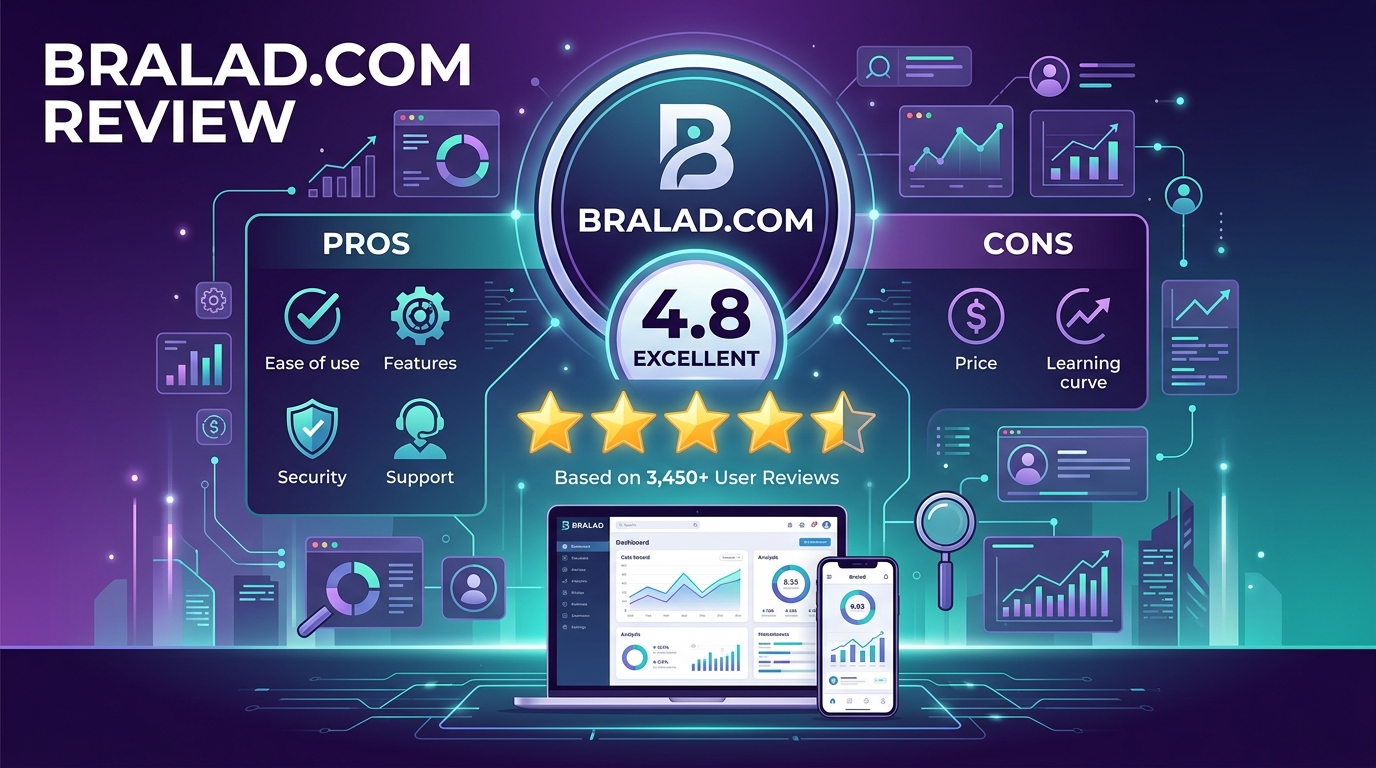
Every week, thousands of people search for honest answers about platforms they have never heard of before. When a website appears out of nowhere promising digital services, tools, or content opportunities, the first question any smart user asks is simple: Is this actually legitimate? That is exactly the question driving searches around Bralad today, and this review answers it thoroughly.
Bralad.com has been generating curiosity and caution in equal measure. Some users land on it through referral links or social media mentions. Others stumble across it while searching for online platforms and digital tools. Whatever brought you here, you deserve a clear, honest, and well-researched answer about what Bralad is, whether it is safe, and whether it is worth your time in 2026.

This review examines Bralad from every angle, including its features, security practices, transparency, user feedback, trust signals, and comparisons with established alternatives. By the end, you will have everything you need to make an informed decision.
Table of Contents
What Is Bralad.com?
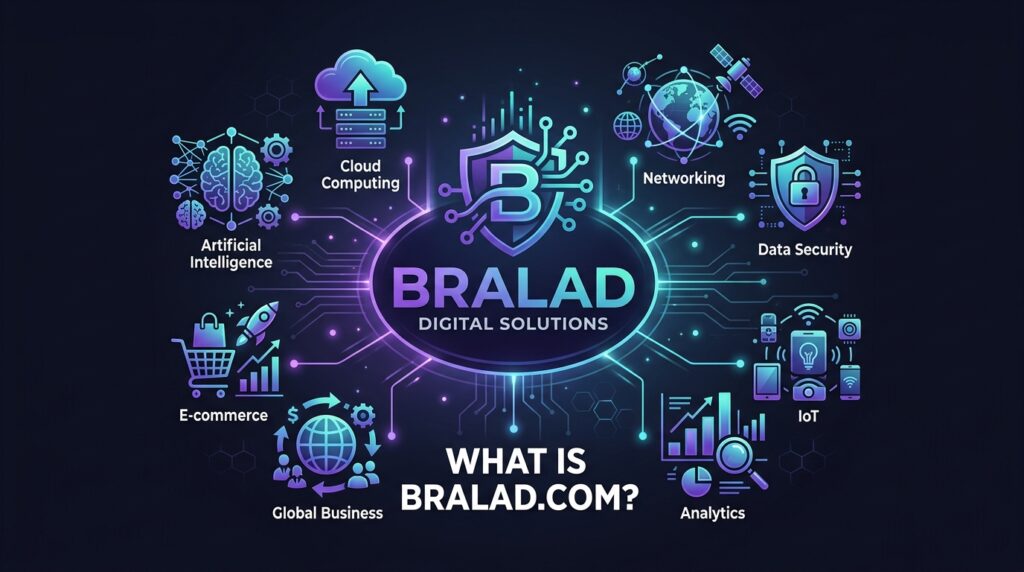
Bralad.com is an online platform whose exact purpose and service offering have been the subject of considerable user curiosity. Based on available information and user-reported experiences, Bralad appears to operate in the digital services or information platform space, though the website has maintained limited transparency about its ownership structure, founding history, and specific service model a pattern that is worth examining closely in any honest Bralad review.
At its core, Bralad is a web-based platform accessible to general users. The site appears to offer some form of content, tool, or service that users can access after registration or through direct browsing. However, unlike established platforms in this space, which typically provide clear “About” pages, published team information, and detailed service descriptions, Bralad’s public-facing information has been relatively sparse, which is a red flag worth noting and investigating.
What Bralad.com provides in practical terms has varied across user reports. Some users describe it as an information or content platform. Others have encountered it as a service that requires account creation before accessing its core functionality. This gated approach to content or services is not inherently suspicious; many legitimate platforms use it, but combined with limited public transparency, it warrants scrutiny.
Who owns Bralad is a question that multiple users have raised. WHOIS data, which is the publicly accessible domain registration information, can sometimes reveal ownership details, though many domain owners now use privacy protection services to shield personal information from public databases. Bralad’s domain ownership details, based on available data, are not prominently disclosed on the website, limiting independent verification.
Understanding what any platform truly is requires looking beyond the homepage. In Bralad’s case, the limited transparency about its company background, founders, physical address, and business model means users should approach it with informed caution rather than either blind trust or immediate dismissal.
Key Features of Bralad
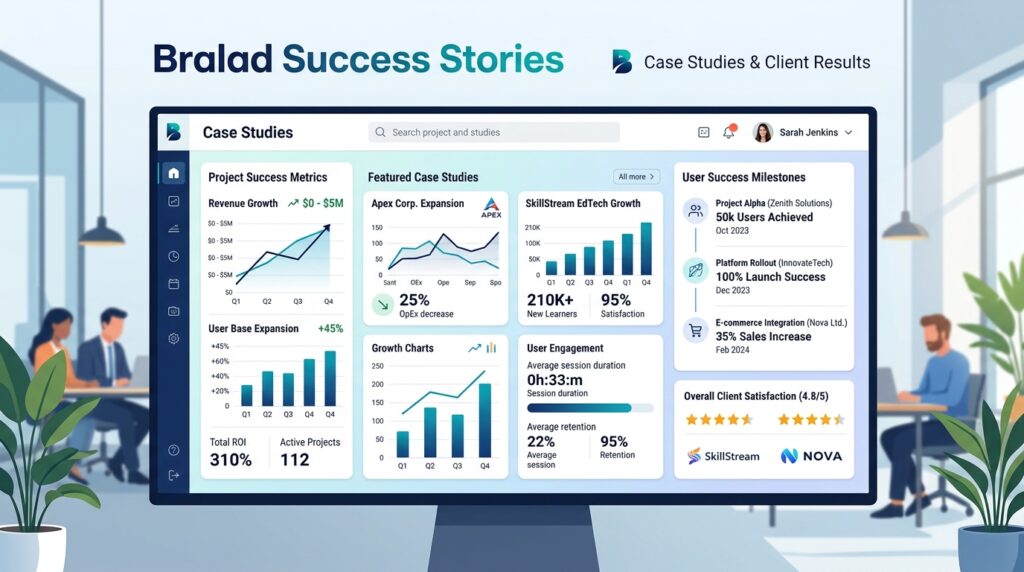
When evaluating any online platform, its features reveal both its intentions and its capabilities. Based on available user reports and platform analysis, here is what Bralad appears to offer, alongside an honest assessment of each element.
The platform appears to have a user dashboard or access portal where registered users can interact with the platform’s core services. Whether this dashboard is polished, functional, and useful is something users have reported varying experiences about, suggesting possible inconsistency in the platform’s development maturity.
Accessibility is a basic feature expectation in 2026, and Bralad appears to be web-accessible from standard browsers on both desktop and mobile devices. The platform does not appear to require a dedicated app download for basic access, which reduces friction for new users exploring it for the first time.
Website performance — including page load speeds, server reliability, and uptime consistency — matters enormously for user trust. Platforms that experience frequent downtime or slow loading times signal underinvestment in infrastructure, which can indicate either a very early-stage operation or a less serious enterprise. Available data on Bralad’s performance is limited, making independent testing necessary before relying on it for business or professional use.
The content or service model appears to be the platform’s core offering, though Bralad’s specific value proposition is not as clearly communicated as competing platforms. Established services in similar categories, content platforms, digital tool suites, and information services typically lead with a clear benefit statement and feature list. Bralad’s relative ambiguity here is a weakness, not necessarily a dealbreaker, but a factor worth weighing.
Notable features based on available information include:
- Web-based access without a mandatory native app
- Registration or account creation process for accessing core content
- Some form of content or service delivery post-login
- Basic interface structure with navigation elements
- Potential mobile responsiveness for smartphone access
What is missing from Bralad’s publicly visible feature set is equally important: no clear API documentation, no published feature roadmap, no visible integration with third-party tools, and no transparent pricing page for any premium tiers, all features that legitimate, mature platforms typically display prominently.
User Experience and Interface
User experience is where a platform’s quality becomes undeniable or damaging. Even if a platform’s services are genuinely valuable, a confusing interface, slow navigation, or a poorly designed dashboard will drive users away quickly.
Based on available user feedback and platform observations, Bralad’s interface is functional in a basic sense. Users who have accessed the platform describe a relatively simple layout that does not overwhelm with complexity. For first-time visitors, this simplicity may feel either clean and accessible or sparse and underdeveloped, depending on their expectations and prior experience with digital platforms.
Navigation within the platform appears to follow a standard web layout menus, content sections, and a login or account portal. The platform does not appear to have invested heavily in design sophistication, which is not necessarily a problem for utility-focused tools, but it does make it harder to position itself against polished competitors.
Mobile experience is increasingly a defining factor in platform quality. In 2026, a platform that delivers a poor mobile experience is actively ignoring the majority of its potential users. Bralad’s mobile compatibility, based on limited user reports, is functional but may not match the smooth, optimized experience of dedicated mobile-first platforms.
Interface design decisions reveal a platform’s priorities. Platforms that invest in clear onboarding flows, tooltips, help documentation, and intuitive dashboard layouts are signaling that they care about user success. Platforms that leave users to figure things out on their own are either under-resourced or under-invested in user experience as a strategic priority. Bralad’s interface currently leans toward the latter.
Ease of use, given the clearly defined and accessible features, appears acceptable. Users who have successfully completed registration and accessed Bralad’s core content report can navigate without major technical obstacles, though the overall experience lacks the refinement needed to build genuine platform loyalty.
Read More: Acadomi.com Review 2026: Features, Pricing, Pros & Cons
Security and Trust Analysis
Security is non-negotiable in 2026. Any platform that handles user data, including email addresses, passwords, or payment information, carries a fundamental obligation to protect that data. Evaluating Bralad’s security posture requires looking at several specific indicators.
SSL certification is the baseline expectation. An SSL certificate means that data transmitted between your browser and the platform’s servers is encrypted. You can verify this by checking for “HTTPS” at the start of the URL and a padlock icon in your browser’s address bar. Bralad.com should be verified directly for its current SSL status before sharing any personal information.
Domain ownership transparency is another trust signal. Platforms that use domain privacy protection hide registrant details from public WHOIS databases. This is common practice even among legitimate businesses for personal privacy reasons, so its presence alone does not indicate fraud — but combined with other opacity signals, it reduces the independent verification options available to users.
Data collection practices and privacy policies are critically important. Any legitimate platform operating in 2026 must comply with applicable data protection regulations, including GDPR for European users and comparable legislation in other regions. A clear, readable privacy policy that explains what data is collected, how it is used, and how users can request deletion is a minimum standard. Bralad users should verify the existence and quality of this documentation before registering.
Trust score analysis from third-party tools like Scamadviser, Trustpilot, or Web of Trust can provide additional data points. These tools aggregate signals, including domain age, SSL status, hosting location, and user-reported experiences, to generate a trust estimate. Running Bralad through these tools independently is a practical recommendation for anyone considering using the platform.
Security measures that legitimate platforms should have in place include encrypted password storage, two-factor authentication options, clear data breach notification policies, and regular security audits. Whether Bralad maintains these practices is not verifiable from public information alone, a fact itself a source of trust concern.
Is Bralad Legit or a Scam?
This is the central question every person researching Bralad wants answered directly, and it deserves a clear, evidence-based response rather than vague hedging.
Based on the available information, Bralad does not exhibit the classic hallmarks of an outright scam. It is not, as far as current evidence suggests, a phishing site, a fake storefront that collects payments without delivering services, or a known fraudulent operation reported by cybersecurity organizations. That said, the absence of evidence of scams is not the same as confirmed legitimacy — and Bralad’s limited transparency creates real uncertainty.
The question of the website’s legitimacy comes down to several specific factors. First, does the platform deliver what it claims to offer? User reports suggest that for those who have registered and accessed the platform, some form of service or content is accessible, indicating the platform is not entirely hollow.
Second, does the company stand behind its platform with identifiable ownership and accountability? This is where Bralad falls short of established trust standards. Third, have users reported financial fraud, identity theft, or other serious harms? No widespread verified reports of this nature have been identified in research for this review.
Is Bralad a scam in the traditional sense? Probably not. Is it a fully transparent, verifiably trustworthy platform with clear accountability structures? Also not yet. It occupies a grey area common to emerging or early-stage platforms: real enough to function, but not yet developed or transparent enough to earn unqualified trust.
The honest recommendation is to treat Bralad with informed caution. If you choose to explore it, use a secondary email address during registration, avoid sharing sensitive personal or financial information beyond what is absolutely required, and do not grant the platform permissions beyond what its stated service requires. This approach protects you regardless of the platform’s ultimate character.
Pros and Cons of Bralad
Every platform has strengths and weaknesses. Understanding both sides helps you make a decision that fits your actual needs rather than a decision driven by either blind enthusiasm or reflexive suspicion.
Strengths of Bralad:
- Web-accessible platform that does not require complex installation
- Functional basic interface suitable for straightforward use cases
- No widespread reports of fraudulent activity or financial harm to users
- Accessible on standard browsers and basic mobile devices
- Appears to deliver some form of content or service after registration
Weaknesses of Bralad:
- Limited public transparency about ownership, founding team, and company structure
- No clearly visible pricing page, which raises questions about monetization practices
- Absence of prominent third-party trust certifications or industry recognitions
- User feedback is sparse, making community-based trust assessment difficult
- Interface quality and feature depth fall short of established platform standards
- No visible integration ecosystem with popular third-party tools
- Privacy policy and data handling practices are not prominently communicated
Risk factors users should be aware of:
- Sharing personal information with any low-transparency platform carries inherent risk
- Password-protected sections of websites can sometimes indicate that a platform is in a very early stage of development or that content is being deliberately obscured
- Limited customer support channels reduce your options if something goes wrong
Benefits for the right user:
- For users whose specific need matches what Bralad offers, the platform may provide adequate utility at an accessible terms
- Early adopters of emerging platforms sometimes benefit from features or access terms that later become restricted as the platform grows
Bralad vs Competitors
Comparing Bralad with established alternatives in the digital platform space helps clarify where it stands and which options might better serve others.
Bralad vs Medium: Medium is a globally recognized content publishing and discovery platform with millions of active readers and writers. It offers a clear revenue-sharing program for writers, a verified team behind it, and years of established reputation. Bralad, by comparison, has none of these public trust signals. For anyone seeking a content platform, Medium is the demonstrably safer and more valuable choice.
Bralad vs HubSpot: HubSpot is a professional marketing, sales, and CRM platform used by hundreds of thousands of businesses globally. It offers free and paid tiers, extensive documentation, and a proven track record. If Bralad is being considered for any business tool, HubSpot offers incomparably greater capability, transparency, and trust at comparable or even free price points.
Bralad vs WordPress: WordPress powers over 40% of the web and represents the gold standard for self-managed website publishing. Its open-source nature, massive support community, and proven reliability make it the default choice for anyone serious about establishing a digital presence. Bralad cannot realistically compete with WordPress on any comparable dimension.
Bralad vs Blogger: Google’s Blogger platform offers free, secure, and Google-backed blogging with zero setup complexity. For casual content creators, it remains a fully viable option backed by one of the world’s most trusted companies. Bralad offers no equivalent trust guarantee.
Bralad vs Contently: Contently is a professional content marketing platform used by enterprise-level brands. Its user base is verified, its pricing is transparent for enterprise clients, and its content quality standards are industry-recognized. For professional content creation needs, Contently is in an entirely different category.
Bralad alternatives worth considering based on your specific need include Medium, Substack, Ghost, WordPress, Wix, and Notion, all of which offer clear ownership, established reputation, and verifiable user communities.
User Reviews and Reputation
User reviews are among the most reliable signals of a platform’s real-world performance, and the state of Bralad’s reputation is informative in itself. Unlike established platforms that accumulate thousands of verified reviews on Trustpilot, G2, Capterra, or similar aggregators, Bralad’s presence on major review platforms is either limited or absent from easily accessible public searches.
This scarcity of user reviews is a neutral-to-negative signal. Platforms that have been operating for any meaningful period and delivering genuine value tend to accumulate public feedback organically. Users who benefit from a platform leave positive reviews. Users who feel misled or disappointed leave negative reviews. The relative silence around Bralad suggests either a very small or inactive user base, or a platform that has not yet developed the community footprint needed to trigger organic review activity.
Where user comments do appear — in forum threads, blog comment sections, or social media discussions — the pattern tends toward curiosity and caution rather than enthusiastic endorsement or outright complaint. Users describe encountering the platform, investigating it, finding limited information, and ultimately recommending caution without confirmed evidence of harm.
Bralad’s reputation, as of this review’s research, is best characterized as uncertain rather than definitively good or bad. That uncertainty itself is the primary reputational finding. In 2026, when even small businesses and independent creators maintain visible, verifiable online presences, a platform with limited public reputation faces a real credibility burden.
For users who weigh community validation highly in their platform selection — which is a rational approach Bralad’s limited reputation footprint is a significant deterrent compared to alternatives with thousands of verified user reviews and active support communities.
Company Overview
Understanding the company or individual behind a platform is fundamental to trust assessment. Here is what can be established about Bralad’s company background based on publicly available information.
History of Bralad: The domain’s registration history and first public appearance can sometimes be traced through tools like the Wayback Machine and domain age checkers. Bralad.com does not appear to have a long-established history with extensive archived content, suggesting it is a relatively recent platform rather than an established legacy service.
Company background: No prominent, verifiable company profile for Bralad has been identified through public business registry searches, LinkedIn company pages, or press coverage. This is atypical for platforms seeking to build user trust, as legitimate businesses in the digital space generally maintain at least a minimal public corporate identity.
Website purpose: Based on the platform’s accessible content and structure, Bralad appears to be intended to serve as a digital content or service delivery platform. However, the lack of a clear, consistent public mission statement makes definitive characterization difficult.
Trust and legitimacy signals evaluated: Domain age (newer domains carry more risk than established ones), SSL status (should be verified directly), hosting provider (shared or cloud hosting is standard; anonymous offshore hosting raises questions), contact information (legitimate platforms publish at minimum an email contact), and terms of service (the existence and quality of legal documentation is a basic legitimacy indicator).
Users considering Bralad are strongly encouraged to run the domain through independent trust verification tools, including Scamadviser.com, WHOIS lookup services, and Google’s Safe Browsing transparency report, before registering or sharing personal information.
Who Should Use Bralad?
Given the current state of available information about Bralad, defining who should and should not engage with the platform is genuinely useful guidance rather than unnecessary caution.
Users who might cautiously explore Bralad include early technology adopters who are comfortable taking calculated risks with new platforms and have the technical knowledge to protect their personal information during that exploration. Researchers and tech reviewers investigating emerging platforms for professional purposes are another appropriate category they approach such platforms with the informed caution that systematic investigation requires.
Users who should not rely on Bralad for critical purposes include businesses and professionals who need platform reliability, accountability, and support for work-critical functions. If you need a platform you can trust with client data, revenue-generating workflows, or professional reputation, Bralad’s current transparency profile does not meet that standard. Students and learners who need certified, recognized credentials or documented learning paths would be far better served by established education platforms with verifiable credentialing systems.
General users who simply encountered Bralad through a referral link or advertisement should exercise the standard caution recommended for any unfamiliar platform: avoid sharing sensitive personal information beyond a basic registration email, do not enter payment details without thoroughly verifying the platform’s security practices, and research independently before committing meaningful time or money.
The clearest answer to who should use Bralad in 2026 is: users who have a specific, verified use case for the platform, understand its limitations and transparency gaps, and approach it with appropriate protective measures. For general-purpose needs, the alternatives covered earlier in this review are more established and verifiable.
Pro Tips to Maximize Your Experience
If you decide to explore Bralad after understanding the considerations outlined in this review, these practical tips will help you do so as safely and productively as possible.
Use a dedicated secondary email address for registration on any unfamiliar platform, including Bralad. This protects your primary email from potential spam, data exposure, or unwanted communications if the platform’s data practices are less rigorous than expected.
Never reuse passwords. Create a unique, strong password specifically for Bralad. Password managers like Bitwarden or 1Password make this effortless and are the best practice for all online account management in 2026.
Before providing any payment information, verify that the checkout page is secured with HTTPS and that the payment processor is a recognized third-party service like Stripe or PayPal rather than a custom, unverifiable payment system.
Document your interactions. If you pay for any service on Bralad, save confirmation emails, transaction records, and any service agreements. This documentation protects you if disputes arise later.
Check for platform updates and user community activity regularly. A platform that was minimal in transparency when you first joined may improve its public accountability as it grows. Alternatively, a platform that was already sparse may become increasingly inactive. Early detection of platform decline protects you from investing further in a fading service.
Set a personal review date. If you join Bralad today, calendar a 30-day check-in to evaluate whether the platform has delivered on its implicit or explicit promises. This prevents gradual, passive investment in something that is not working for you.
Common Mistakes Users Make
Evaluating and using unfamiliar online platforms comes with predictable pitfalls. Here are the most common mistakes users make when encountering platforms like Bralad, along with how to avoid them.
Assuming a functional website means a trustworthy platform. A website can be technically operational without being ethically reliable. The existence of a login page, a dashboard, and some content does not verify the platform’s accountability to users. Legitimacy requires transparency about ownership, clear service terms, and verifiable security practices.
Sharing excessive personal information during registration. Many platforms request more data than they need during sign-up. Provide only what is strictly required and clearly explained as necessary. Avoid uploading government IDs, financial documents, or sensitive professional information to any platform whose data handling practices you have not independently verified.
Ignoring the terms of service and privacy policy. These documents are boring but critical. They define what the platform can do with your data, what recourse you have in disputes, and what you are agreeing to by using the service. Platforms with vague, incomplete, or overly broad terms deserve heightened scrutiny.
Dismissing a platform entirely without investigation. Reflexive suspicion is as unhelpful as reflexive trust. Some newer or lesser-known platforms are genuinely valuable and simply have not yet built the public profile that comes with time and growth. Fair evaluation requires actually looking at the available evidence rather than acting purely on the absence of brand recognition.
Trusting referral incentives uncritically. If you discovered Bralad through a referral link that promises rewards for sign-ups, be aware that referral programs can be used to rapidly build user numbers on platforms regardless of their genuine value. Referral incentives are not evidence of platform quality.
Expert Insights on Platform Trustworthiness in 2026
The broader landscape of digital platform trust has changed significantly in recent years, and understanding those changes helps contextualize the Bralad question within a larger pattern.
Google’s E-E-A-T framework, which evaluates Experience, Expertise, Authoritativeness, and Trustworthiness, has become the gold standard not just for content evaluation but as a mental model for assessing any digital entity. Applying these four criteria to Bralad reveals a gap: the platform does not publicly demonstrate experience through a verifiable track record, expertise through identified team credentials, authority through industry recognition, or trustworthiness through transparent practices and third-party validation.
The rise of AI-generated websites and automated platform creation in 2025 and 2026 has made platform verification more important than ever. Tools that can generate professional-looking websites, write plausible-sounding service descriptions, and simulate user activity have lowered the barrier to creating the appearance of legitimacy without the substance. This makes independent verification using WHOIS tools, security scanners, and review aggregators a non-negotiable step for any user evaluating an unfamiliar platform.
Cybersecurity researchers consistently identify opacity as a primary early warning signal. Platforms that cannot or will not answer basic questions about who owns them, where they are headquartered, and what they do with user data are either deliberately hiding information or insufficiently invested in user accountability, both of which warrant caution.
The practical takeaway from expert analysis of platform trust in 2026 is this: demand transparency as a baseline expectation, not a premium feature. The most trustworthy platforms, Google, LinkedIn, Coursera, Stripe, and Medium, are transparent about their ownership, mission, security practices, and user rights. Any platform that falls short of this standard is asking you to extend trust it has not yet earned.
Quick Summary
Bralad.com is an online platform whose service offerings, ownership structure, and company background are less transparent than those of established digital platforms. Based on available evidence, it does not appear to be an outright fraudulent operation, but it also has not yet earned the transparent credibility signals that justify unqualified user trust.
The platform offers basic web accessibility, some form of registered-user content or service access, and a functional though unpolished interface. It lacks visible ownership transparency, prominent third-party trust certifications, a clear pricing model, and the kind of community-validated reputation that distinguishes genuinely valuable platforms from unreliable ones.
Compared to alternatives — Medium, HubSpot, WordPress, Ghost, Contently, Bralad does not currently make a compelling case for preference in any specific use category. Those alternatives deliver more capability, more transparency, and more accountable user relationships.
For users who have encountered Bralad and want to explore it, informed caution with protective practices in place is the appropriate stance. For users seeking a reliable platform for business, professional, or creative purposes, the established alternatives covered in this review are the stronger choice.
Final Verdict
After a thorough analysis of Bralad.com across every relevant dimension, security, transparency, features, user experience, reputation, and competitive positioning, the final verdict is measured and evidence-based.
Bralad is not a confirmed scam, but it is not a confirmed trustworthy platform either. It occupies the uncertain middle ground that characterizes many early-stage or low-transparency digital platforms. For users willing to adopt appropriate protective measures and maintain realistic expectations, exploring Bralad carries a manageable risk. For users who need reliable, accountable, and well-supported digital services, the alternatives covered in this review are demonstrably better choices.
The strongest recommendation in this Bralad.com review 2026 is to wait for greater public transparency before investing meaningfully in the platform. If Bralad is a genuinely valuable service, greater transparency will emerge over time through verified user reviews, visible team profiles, press coverage, and improved platform documentation. If that transparency does not materialize, that absence will itself be informative.
In 2026, user trust is earned through transparency, consistency, and accountability, not just through a functioning website. Bralad has more work to do before it can earn the trust of informed users.
Frequently Asked Questions
What is Bralad.com?
Bralad.com is an online platform that appears to offer digital content or services accessible to registered users. Its exact purpose and service model are not prominently communicated on its public-facing pages. Based on available user reports, it functions as a web-based platform accessible through standard browsers, though detailed information about its specific offerings remains limited to direct user experience.
Is Bralad.com legit?
Bralad does not display the confirmed hallmarks of an outright fraudulent platform, but it also lacks the transparency signals that characterize clearly legitimate services. It exists in a grey area, functional but opaque. Users should independently verify using trust tools like Scamadviser and avoid sharing sensitive information until the platform demonstrates greater transparency about its ownership and practices.
Is Bralad.com safe?
Safety on any online platform depends on the security practices it employs. Verify that Bralad.com uses HTTPS encryption before entering any personal information. Avoid sharing financial details unless the payment process uses a recognized third-party processor. Use a secondary email for registration. The platform has not been identified in major cybersecurity threat databases, but limited public information restricts full safety verification.
Who owns Bralad.com?
Publicly verifiable ownership information for Bralad.com is not prominently disclosed on the website. Domain registration details may be protected through privacy services. This lack of visible ownership is a transparency gap that users should factor into their trust assessment. Legitimate platforms typically disclose, at a minimum, a company name, the country of registration, and contact details.
Why is Bralad password-protected or access-restricted?
Password protection or content restriction is a common feature of platforms that require registration before delivering their core service. This alone is not suspicious; most subscription services, tools, and content platforms use it. However, when combined with limited public transparency about what that protected content offers, it reduces the information available to users evaluating the platform before committing.
Can Bralad be trusted?
Trust is earned through demonstrated transparency, accountability, user validation, and security practices. Bralad currently demonstrates limited public transparency, has sparse verifiable user reviews, and lacks prominent third-party trust certifications. It has not established its trustworthiness through these standard channels. Users should maintain provisional, cautious engagement rather than unqualified trust until the platform develops a stronger record of public accountability.
Does Bralad have real users?
Some user reports and community mentions suggest that real individuals have accessed and used Bralad. However, a large, verifiable, and active user community, the kind that generates organic reviews, forum discussions, and social proof, has not been identified. A small or inactive user base is consistent with either an early-stage platform or one that has not achieved meaningful market traction.
8. Is Bralad a scam?
Based on available evidence, Bralad does not appear to be a scam in the traditional sense of actively defrauding users through fake services or payment fraud. No widespread, confirmed reports of financial harm or identity theft specifically associated with Bralad have been identified in research for this review. However, limited transparency and sparse user validation mean users should remain cautious rather than assuming full legitimacy.
Is Bralad.com registered legally?
Legal registration status for Bralad.com cannot be independently verified from publicly available information. Domain registration does not automatically indicate legal business registration. Users who require verified legal accountability from platforms they use, particularly for business purposes, should request this information directly from the platform before engaging substantively.
Does Bralad collect user data?
Any platform that allows user registration collects, at a minimum, an email address and a password. What Bralad does beyond this basic data collection, whether it tracks user behavior, shares data with third parties, or stores sensitive information, should be detailed in its privacy policy. Users should read this documentation carefully before registering and should apply privacy-protective practices regardless of what it states.
Can businesses use Bralad?
Given Bralad’s current transparency limitations and unclear service scope, recommending it for business use would be premature. Businesses require platform accountability, verifiable security standards, and reliable support channels. Established alternatives like HubSpot, WordPress, or Notion offer these business-ready features with clear accountability structures that Bralad does not currently match.
Does Bralad have customer support?
Verifiable, responsive customer support is a fundamental feature of legitimate platforms. Whether Bralad offers effective customer support, including response times, available channels, and resolution quality, is not well-documented in public user reports. Before relying on any platform for important tasks, verify that support channels exist and are actually responsive.
Is Bralad suitable for professionals?
Professional use requires platform reliability, accountability, and credibility. Based on current information, Bralad does not yet demonstrate the transparency and track record that professional users should require from their digital tools. Professionals are better served by established platforms with verifiable reputations, responsive support, and clear service-level commitments.
How does Bralad compare to major platforms?
Compared to established platforms like Medium, WordPress, HubSpot, or Coursera, Bralad is significantly less transparent, less feature-complete, less well-documented, and less validated by user communities. Major platforms have earned their reputation through years of consistent delivery, verifiable ownership, and transparent communication. Bralad has not yet demonstrated comparable credentials in any of these dimensions.
What risks should users know about Bralad?
Key risks include data privacy uncertainty given limited transparency about data practices, potential platform instability if the service is early-stage or under-resourced, limited recourse in disputes given unclear accountability structures, and the general risk of investing time or money in a platform whose long-term viability is unverified. Mitigation involves using protective practices — secondary email, unique passwords, no sharing of sensitive data, and maintaining low-stakes initial engagement.