


Arkham alternatives are worth considering when Arkham Intelligence does not match the way you research crypto. Arkham is particularly useful for entity attribution, wallet investigation, transaction flows, visual fund tracing and alerts, but different platforms specialize in different parts of crypto research. Nansen focuses heavily on smart-money and wallet intelligence, Dune gives users powerful customizable blockchain analytics, Glassnode emphasizes digital-asset market intelligence, DeFiLlama is particularly strong for DeFi data, Etherscan is designed around blockchain exploration, and TradingView excels at market charting.
The right choice therefore depends on the question you are trying to answer.
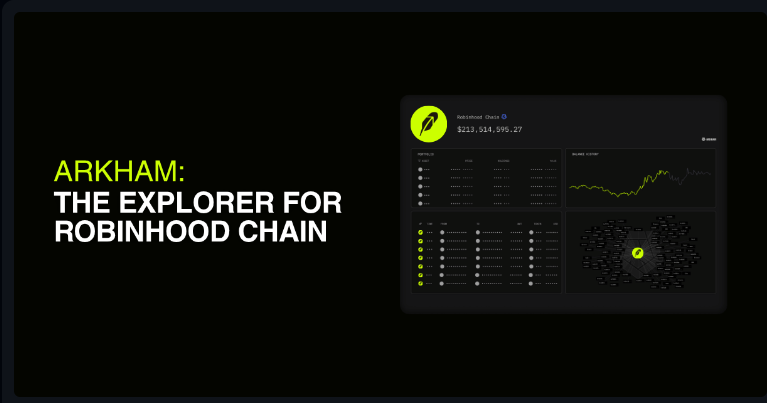
If you want to know what a particular wallet or entity is doing, a wallet-intelligence platform may be more useful. If you want to build a custom dashboard from blockchain data, a query-based platform can be better. For protocol research, TVL and revenue, DeFi-focused analytics may provide more relevant information. And when you simply need to verify a transaction or contract interaction, a blockchain explorer can be the more efficient choice.
This guide compares the most useful Arkham alternatives and explains where each platform fits, what it does best, its limitations, and which type of crypto researcher should consider it.
Read more: How to Use Arkham for Crypto Research, Charts, or On-Chain Data
Table of Contents
What Makes a Good Arkham Alternative?
A good alternative should solve a specific research problem rather than simply duplicate Arkham’s feature list.
The most important factors are:
- Wallet and entity intelligence
- Smart-money tracking
- On-chain metrics
- Custom blockchain queries
- DeFi analytics
- Market and derivatives data
- Transaction verification
- Charts and dashboards
- API access
- Multi-chain coverage
- Ease of use
- Data transparency
Arkham itself combines entity intelligence with blockchain and market data. Its current API, for example, emphasizes address attribution, labels and broader blockchain intelligence across supported chains.
The alternatives below take different approaches rather than being identical replacements.

Best Arkham Alternatives at a Glance
| Platform | Best for | Main strength | Main limitation |
|---|---|---|---|
| Nansen | Smart-money and wallet intelligence | Wallet labels, Smart Money and portfolio analysis | More specialized around investor intelligence |
| Dune | Custom blockchain analytics | SQL queries, decoded data and dashboards | Requires more analytical/technical skill |
| Glassnode | Market and on-chain metrics | Large range of digital-asset metrics and research | Less focused on individual wallet investigation |
| DeFiLlama | DeFi research | TVL, protocol, fees, revenue, DEX and stablecoin data | Less focused on entity-level investigation |
| Etherscan | Transaction verification | Detailed blockchain explorer | Primarily explorer-oriented |
| TradingView | Technical charting | Advanced market charts and indicators | Not a replacement for deep on-chain intelligence |
1. Nansen — Best for Smart-Money Tracking
Nansen is probably the closest choice when your main reason for using Arkham is wallet intelligence and identifying important crypto participants.
Nansen’s current platform centers its workflow around Smart Money, wallet tracking and on-chain activity. Its Smart Money methodology identifies wallets based on performance-related factors, while its Profiler tools let users investigate individual addresses and entity clusters.
Nansen also describes its current platform as allowing users to discover what Smart Money is buying, trade and track wallet activity.
Why choose Nansen?
Nansen is useful when your research question sounds like:
- Which experienced wallets are accumulating a token?
- What are high-performing wallets buying?
- What is a particular wallet holding?
- What are smart-money flows doing?
- Which wallets have historically performed well?
Its API also provides Smart Money net-flow and holdings endpoints, alongside wallet and profiler functionality.
Main limitation
Nansen’s strongest differentiation is investor and wallet intelligence. If your goal is highly customized blockchain querying across raw or decoded datasets, Dune may be a better fit.
Best for: Traders and investors interested in smart money, wallet behavior and token flows.
2. Dune — Best for Custom Blockchain Analytics
Dune takes a very different approach.
Instead of primarily presenting predefined wallet intelligence, Dune gives users access to decoded blockchain data that can be queried and turned into custom analytics and dashboards. Its current platform covers more than 130 chains and provides curated data collections for areas including stablecoins, transfers, DEX trading, prediction markets and labels.
Dune describes itself as an analytics platform built around decoded data, dashboards and community-created research.
Why choose Dune?
Dune is particularly useful if you want to answer questions that a predefined dashboard does not cover.
For example:
- How many transactions did a protocol process?
- Which wallets interacted with a contract?
- How did a token’s activity change over time?
- What are the largest transactions for a specific protocol?
- Can I build a custom dashboard around a particular dataset?
The ability to write SQL queries makes Dune especially powerful for researchers who understand blockchain data.
Main limitation
Dune has a steeper learning curve than a simple search-and-explore interface. Users who do not understand SQL or blockchain data structures may need more time to get useful results.
Best for: Analysts, researchers, developers and advanced crypto users who want customizable blockchain data.
3. Glassnode — Best for On-Chain and Market Metrics
Glassnode is a strong alternative when your research is more about market-wide on-chain metrics than identifying individual wallets.
Glassnode positions itself as a digital-asset market-intelligence platform for institutional investors and analysts. Its focus includes data, analytics and research designed to help users understand digital-asset markets.
Why choose Glassnode?
It is a better fit for questions such as:
- What is happening across the Bitcoin market?
- How are investor behaviors changing?
- What do long-term holder metrics show?
- How are broader on-chain conditions evolving?
- Which market metrics support a particular thesis?
This makes Glassnode especially useful for macro-level crypto research.
Main limitation
If your main goal is tracing one wallet through multiple counterparties or identifying the entity behind a particular address, Arkham’s entity-centric approach may be more suitable.
Best for: Investors, analysts and researchers studying market-wide on-chain conditions.
4. DeFiLlama — Best for DeFi Research
DeFiLlama is one of the strongest Arkham alternatives when the subject is DeFi protocols rather than individual entities.
DeFiLlama describes itself as a DeFi TVL aggregator with an emphasis on open data and transparent methodology. Its platform covers protocol TVL along with metrics such as fees, revenue, DEX volume, stablecoins and other DeFi information.
Why choose DeFiLlama?
It is particularly useful for:
- Comparing protocol TVL
- Researching DeFi categories
- Tracking stablecoin supply
- Comparing DEX activity
- Checking protocol fees and revenue
- Studying chain-level DeFi activity
- Researching yields
- Comparing protocols
Its current platform exposes metrics including TVL, stablecoin market capitalization, DEX volume, perpetuals volume, fees and revenue.
DeFiLlama also provides data access through its API and spreadsheet tools. Its enterprise Sheets offering supports metrics such as TVL, fees, yields, stablecoin statistics and historical data.
Main limitation
DeFiLlama is not designed to replace Arkham’s entity-intelligence workflow. It is much more compelling when your research revolves around protocols, chains and DeFi activity.
Best for: DeFi investors, protocol researchers and analysts comparing blockchain ecosystems.
5. Etherscan — Best for Transaction Verification
Etherscan is different from the other platforms on this list because its core purpose is blockchain exploration.
The current Etherscan platform lets users search addresses, transaction hashes, blocks, tokens and domain names. Its API documentation also describes support for many EVM-compatible chains, address portfolios, token transfers, top holders and address name tags.
Why choose Etherscan?
Use it when you need to verify something directly on-chain:
- Did this transaction happen?
- What was the transaction hash?
- Which contract was called?
- What tokens does this address hold?
- What happened in a particular block?
- Which address interacted with a contract?
For straightforward transaction verification, using a blockchain explorer can be faster than opening a broader analytics platform.
Main limitation
Etherscan does not aim to be an exact replacement for Arkham’s entity-centric research workflow.
It is primarily a blockchain explorer and infrastructure/data platform, rather than a comprehensive wallet-intelligence environment.
Best for: Transaction, contract and address verification on Ethereum and supported EVM networks.
6. TradingView — Best for Crypto Charts and Technical Analysis
TradingView is the best choice on this list when the main problem is technical market analysis.
TradingView provides charts and market information across multiple asset classes, including cryptocurrency. Its current platform includes crypto market data alongside traditional financial markets.
Why choose TradingView?
TradingView is useful for:
- Price charts
- Technical indicators
- Trend analysis
- Multi-market comparisons
- Chart layouts
- Technical analysis workflows
If you mainly use Arkham to look at price charts, TradingView can provide a much more specialized charting environment.
Main limitation
TradingView is not an entity-intelligence replacement.
It can help you understand what price is doing, but that is different from understanding which wallets are moving assets or how entities interact on-chain.
Best for: Traders who prioritize technical analysis and market charts.
Arkham Alternatives Compared
| Platform | Wallet Intelligence | Custom Queries | DeFi Metrics | Market Charts | Transaction Data | Best Use |
|---|---|---|---|---|---|---|
| Arkham | Excellent | Good | Good | Good | Excellent | Entity and wallet intelligence |
| Nansen | Excellent | Good | Good | Good | Good | Smart-money research |
| Dune | Good | Excellent | Excellent | Good | Excellent | Custom blockchain analytics |
| Glassnode | Moderate | Good | Good | Excellent | Good | On-chain market metrics |
| DeFiLlama | Limited | Good | Excellent | Good | Moderate | DeFi and protocol research |
| Etherscan | Basic | Good | Limited | Basic | Excellent | Transaction verification |
| TradingView | Limited | Limited | Limited | Excellent | Limited | Technical charting |
The table reflects each platform’s primary orientation, not a claim that a particular feature is absent. Many of these services overlap, but their workflows and strongest use cases differ.
Which Arkham Alternative Is Best for Wallet Tracking?
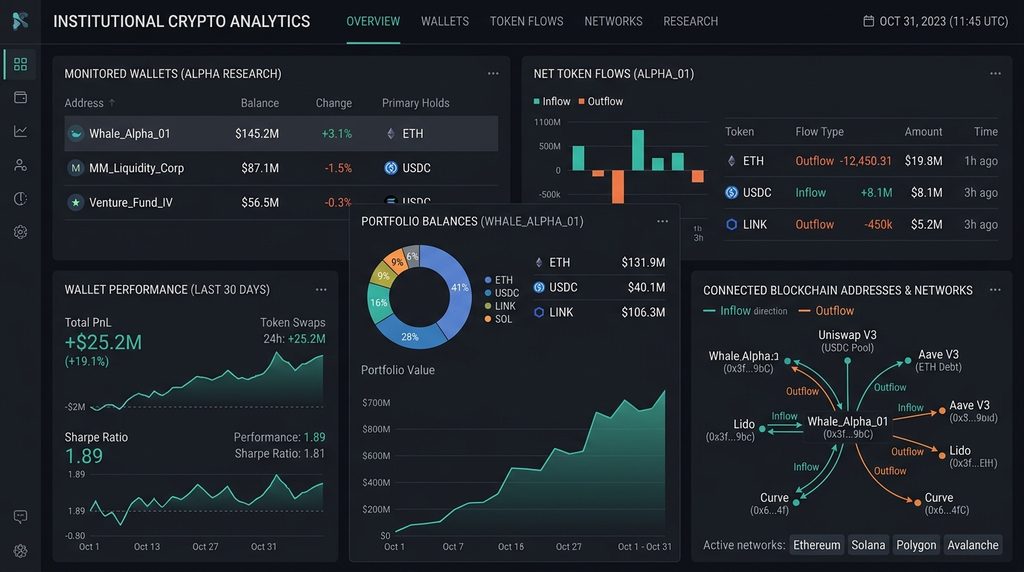
Nansen is the strongest alternative to consider if wallet and smart-money tracking is your main priority. Its Smart Money system and Profiler tools are specifically designed around wallet performance, holdings, flows and entity analysis.
Arkham remains attractive when entity attribution, address intelligence and investigative visualization are central to the workflow.
For a simpler wallet investigation, Etherscan may be sufficient when you only need transaction and balance information.
Which Arkham Alternative Is Best for DeFi?
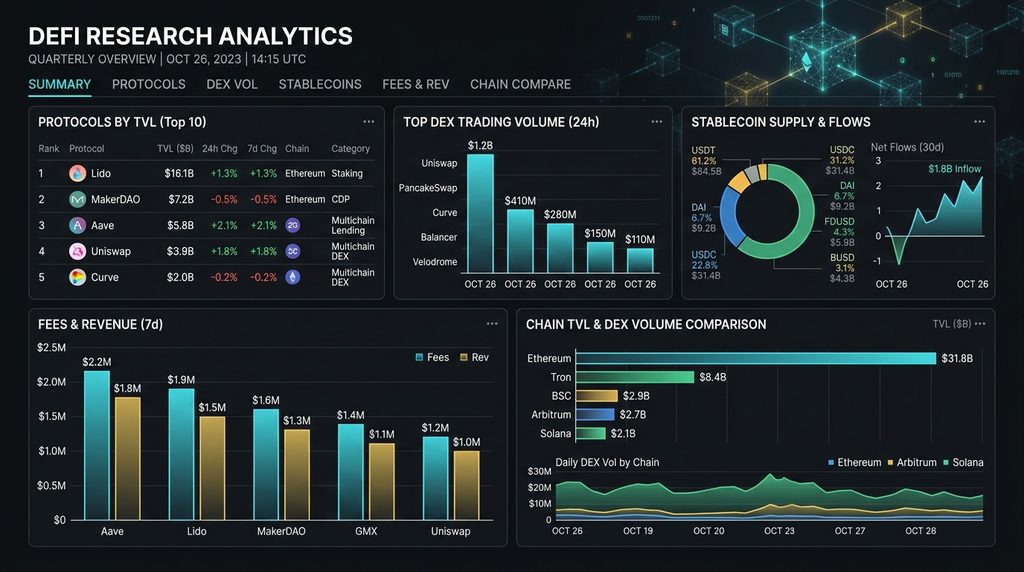
DeFiLlama is the better choice for protocol-level DeFi research.
Its platform is built around metrics such as TVL, fees, revenue, DEX volume, stablecoins and protocol rankings.
For example, if your question is:
“Which lending protocols have the largest TVL?”
DeFiLlama is a natural starting point.
If your question is:
“Which wallets are interacting with this protocol?”
A wallet-intelligence or blockchain-query platform may be more appropriate.
Read more: Arkham Data Explained: Prices, Charts, Metrics, and Alerts
Which Arkham Alternative Is Best for Custom Data?
Dune is the strongest choice when you want to build your own blockchain analysis.
Its decoded data, SQL-based workflows and dashboards allow researchers to move beyond predefined metrics. Dune currently promotes data across more than 130 chains and provides curated datasets for transfers, DEX trading, stablecoins, labels and other blockchain activity.
The trade-off is complexity.
Dune can be significantly more powerful for a technical analyst, while Arkham can be easier when the desired information already exists in its interface.
Which Arkham Alternative Is Best for Market Analysis?
There is no single answer.
Choose Glassnode when you want broader digital-asset and on-chain market intelligence.
Choose TradingView when technical charts and indicators are your priority.
Choose DeFiLlama when the focus is protocol-level DeFi activity.
The right choice depends on the market question rather than the brand name.
Can You Use Multiple Arkham Alternatives Together?
Yes, and for serious research this can be more effective than trying to make one platform do everything.
A practical crypto research stack might look like this:
Nansen → Identify interesting wallets and Smart Money activity.
Arkham → Investigate entities, wallet relationships and transaction flows.
Dune → Build custom queries when predefined dashboards are insufficient.
DeFiLlama → Evaluate protocol-level TVL, fees, revenue and DeFi activity.
Glassnode → Examine broader market and on-chain metrics.
TradingView → Study price structure and technical indicators.
Etherscan → Verify individual transactions and contract interactions.
This approach separates different research jobs instead of forcing every question into one platform.
How to Choose an Arkham Alternative
Ask these five questions before choosing a platform.
Do you need wallet intelligence?
Choose Nansen or continue with Arkham.
Do you need custom SQL analytics?
Choose Dune.
Do you need broad on-chain market metrics?
Consider Glassnode.
Do you primarily research DeFi?
Choose DeFiLlama.
Do you mainly verify transactions?
Choose Etherscan.
Do you mainly need technical charts?
Choose TradingView.
This is more useful than selecting a platform simply because it appears on a generic “best crypto tools” list.
Are Arkham Alternatives Free?
Some platforms provide free access or publicly accessible data, while advanced features, APIs, higher limits or premium datasets may require paid plans.
Pricing changes frequently, so it would be misleading to present a single fixed price for every service without checking the current pricing page.
For example, DeFiLlama provides substantial public data through its dashboard, while its ecosystem also includes paid products and data-access options.
Dune, Nansen, Glassnode, Arkham and TradingView likewise have different product tiers or feature availability depending on the specific service.
Check the official pricing page immediately before subscribing.
What Should Beginners Use?
For beginners, the best choice is usually the tool that answers the question without requiring unnecessary technical knowledge.
A simple starting combination is:
Etherscan for learning how blockchain transactions work.
DeFiLlama for understanding protocols, TVL and DeFi markets.
TradingView for learning price charts.
Then move to Arkham or Nansen when you want to understand wallets and entities.
Dune is worth learning once you want to create custom blockchain queries.
What Should Advanced Researchers Use?
Advanced researchers should generally choose based on workflow rather than loyalty to a single platform.
A researcher investigating a token launch might use:
- DeFiLlama for protocol and ecosystem metrics.
- Nansen for wallet and Smart Money behavior.
- Arkham for entity and transaction investigation.
- Dune for custom historical analysis.
- Etherscan for transaction verification.
- TradingView for market structure.
This produces a broader evidence base than relying on a single dashboard.
Important Limitations of Crypto Analytics Platforms
No crypto analytics platform should be treated as a perfect representation of reality.
Labels Can Be Imperfect
Wallet labels and entity attribution are based on available evidence and methodologies. They should be interpreted as intelligence rather than unquestionable identity proof.
On-Chain Data Does Not Explain Intent
A wallet moving tokens to an exchange does not automatically mean the owner intends to sell.
Likewise, accumulation does not guarantee a future price increase.
Metrics Can Use Different Methodologies
TVL, volume, active addresses, holder counts and other metrics can be calculated differently between providers.
When comparing platforms, check methodology rather than assuming two similarly named metrics are identical.
More Data Does Not Automatically Mean Better Research
A dashboard containing hundreds of metrics can make research harder if you do not know which measurements actually answer your question.
The best platform is usually the one that provides the right data for the specific decision.
Read more: What Is Arkham? Crypto Data, Features, and Best Uses
Pros & Cons Table
| Pros of Using Arkham Alternatives | Cons |
|---|---|
| More specialized tools for specific research needs | No single platform covers every workflow equally well |
| Nansen provides strong Smart Money and wallet intelligence | Premium features may require subscriptions |
| Dune enables highly customizable blockchain analytics | SQL and data concepts can create a learning curve |
| DeFiLlama is excellent for protocol and DeFi metrics | Less focused on individual entity investigation |
| Glassnode provides broader market/on-chain analytics | Can be excessive for simple wallet research |
| Etherscan is excellent for transaction verification | Less suitable for high-level entity intelligence |
| TradingView offers powerful market charting | Technical charts do not replace on-chain intelligence |
| Combining tools can create a stronger research workflow | Multiple subscriptions can increase cost and complexity |
Comparison Table
Nansen
What it is: On-chain intelligence platform focused heavily on Smart Money, wallets and trading activity.
Main strength: Smart Money and wallet profiling.
Main limitation: Less oriented toward fully custom SQL-based analysis than Dune.
Best for: Crypto traders and investors tracking influential wallets.
Dune
What it is: Blockchain analytics platform built around decoded data, queries and dashboards.
Main strength: Custom blockchain analysis.
Main limitation: Requires more technical knowledge.
Best for: Analysts, researchers and developers.
Glassnode
What it is: Digital-asset market intelligence platform.
Main strength: Market and on-chain metrics.
Main limitation: Not primarily an entity-investigation platform.
Best for: Investors and institutional-style market research.
DeFiLlama
What it is: Open-data DeFi analytics platform.
Main strength: Protocol, TVL, fees, revenue and ecosystem metrics.
Main limitation: Less suited to wallet-level investigation.
Best for: DeFi research.
Etherscan
What it is: Blockchain explorer and API platform.
Main strength: Transaction and contract verification.
Main limitation: Not designed as a complete replacement for entity-centric analytics.
Best for: Ethereum and EVM transaction research.
TradingView
What it is: Multi-market charting and analysis platform.
Main strength: Technical charts and market analysis.
Main limitation: Limited compared with dedicated on-chain intelligence platforms for wallet research.
Best for: Technical traders.
FAQs
What is the best Arkham alternative?
Answer: There is no universal winner. Nansen is a strong choice for Smart Money and wallet intelligence, Dune for custom blockchain analytics, Glassnode for market/on-chain metrics, DeFiLlama for DeFi, Etherscan for transaction verification, and TradingView for technical charting.
Is Nansen better than Arkham?
Answer: It depends on the research task. Nansen is particularly strong for Smart Money, wallet profiling and investor intelligence, while Arkham emphasizes entity attribution, wallet investigation and blockchain intelligence.
Is Dune better than Arkham?
Answer: Dune can be better when you need custom SQL queries and decoded blockchain datasets. Arkham can be more convenient when you want ready-made entity and wallet intelligence without building the analysis yourself.
What is the best free alternative to Arkham?
Answer: The answer depends on the task. Etherscan and DeFiLlama provide substantial publicly accessible blockchain and DeFi information, while other platforms may restrict advanced functionality to specific plans.
What is the best Arkham alternative for whale tracking?
Answer: Nansen is a strong option because its Smart Money and wallet tools are designed around tracking high-performing and influential wallets. Arkham remains useful when you need entity attribution and broader transaction investigation.
What is the best alternative for DeFi analytics?
Answer: DeFiLlama is one of the strongest choices because it focuses on protocol-level metrics such as TVL, fees, revenue, DEX volume and stablecoins.
What is the best crypto research tool for charts?
Answer: TradingView is generally the better choice when technical charting is the primary requirement. It supports crypto markets alongside other financial markets and is built around chart-based analysis.
Can I use several crypto analytics tools together?
Answer: Yes. Combining platforms can be more effective than relying on one. For example, you can use Nansen for wallet intelligence, DeFiLlama for protocol metrics, Dune for custom analysis, Etherscan for verification and TradingView for market charts.
Quick Take
Main point: The best Arkham alternative depends on the type of crypto research you perform.
Best overall wallet-intelligence alternative: Nansen.
Best for custom blockchain analytics: Dune.
Best for DeFi: DeFiLlama.
Best for market/on-chain metrics: Glassnode.
Best for transaction verification: Etherscan.
Best for technical charts: TradingView.
Main advantage of using alternatives: You can choose a platform specialized for your exact research problem.
Main limitation: No single alternative completely duplicates Arkham’s combination of entity intelligence, wallet investigation and blockchain analytics.
Conclusion
Arkham remains a strong platform for entity-centric crypto intelligence, but it is not necessarily the best tool for every research task.
Choose Nansen when smart-money and wallet behavior are your priority. Choose Dune when you want to build custom blockchain analysis. Choose DeFiLlama for protocol and DeFi metrics, Glassnode for broader on-chain market intelligence, Etherscan for transaction verification, and TradingView for technical market charts.
For serious crypto research, the most practical answer may not be replacing Arkham at all. A combination of specialized tools can provide better coverage because each platform answers a different type of question.
The key takeaway is simple: choose the data source based on the research question, not simply the number of features a platform advertises.
Author Bio
TechyUpdate Editorial Team covers practical technology, AI tools, apps, software and digital productivity, with a focus on clear, useful and independently researched guides.