

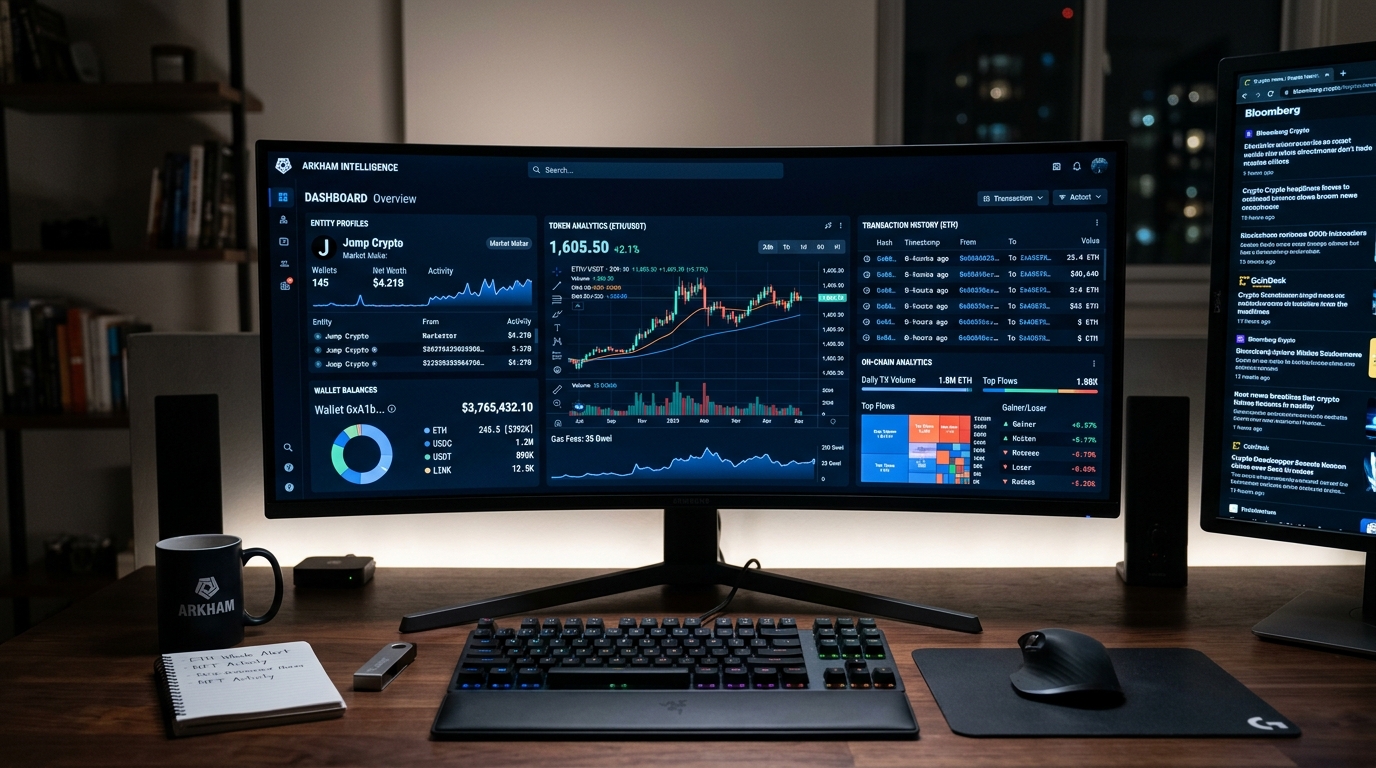
Arkham is useful for crypto research because it combines blockchain search, entity intelligence, transaction analysis, charts, dashboards, alerts and fund-flow visualization in one platform. Instead of looking only at raw wallet addresses and transaction hashes, you can use Arkham to investigate entities, compare wallet activity, follow transactions, study token holders and monitor on-chain events.
The practical challenge with blockchain data is not usually finding data. Public blockchains already expose a large amount of information. The harder problem is understanding what that information means.
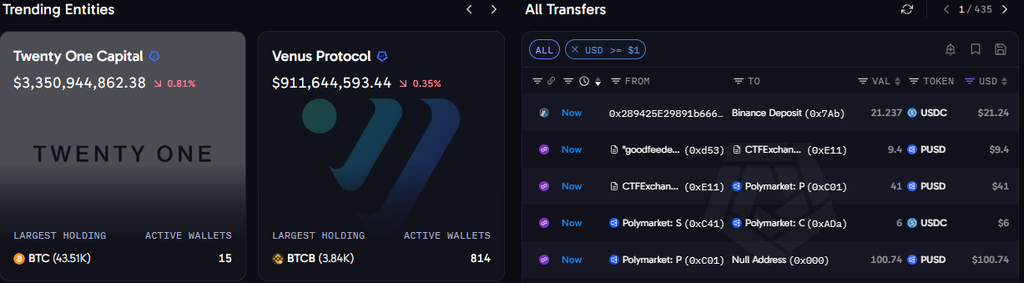
A wallet address such as 0x... tells you very little by itself. A series of transactions can also be difficult to interpret when funds move through exchanges, smart contracts, bridges and intermediary wallets.
Arkham adds an intelligence layer around this raw information. Its data model uses entities, labels and tags to provide additional context about addresses and their activity. Arkham says its attribution system combines AI, internal research and community intelligence, while its API documentation describes entity attribution as probabilistic rather than a binary claim of identity.
That makes Arkham useful for several different jobs: researching a crypto project, checking large holders, tracking a wallet, investigating a transaction, building charts, monitoring whales, following fund flows or creating a dashboard for repeated research.
This guide explains how to use those capabilities practically, what each tool is best for, and how to avoid common mistakes when interpreting on-chain data.
Read more: What Is Arkham? Crypto Data, Features, and Best Uses
Table of Contents
What Can You Use Arkham For?
Arkham can support several common crypto research workflows:
- Wallet research — investigate balances, transactions and counterparties.
- Entity research — study organizations or individuals represented by grouped addresses.
- Token research — inspect holders, flows and market information.
- Transaction analysis — investigate a transaction hash and its associated activity.
- Fund-flow tracing — follow assets between wallets and entities.
- Charts and dashboards — build visual views of data you monitor regularly.
- Alerts — receive notifications when specified on-chain conditions occur.
- Market research — study exchange activity and other market metrics.
- API-based research — bring Arkham data into external applications and workflows.
The best approach is not to use every feature at once.
Start with the question you want to answer, then choose the Arkham tool that provides the relevant evidence.
How to Start Using Arkham
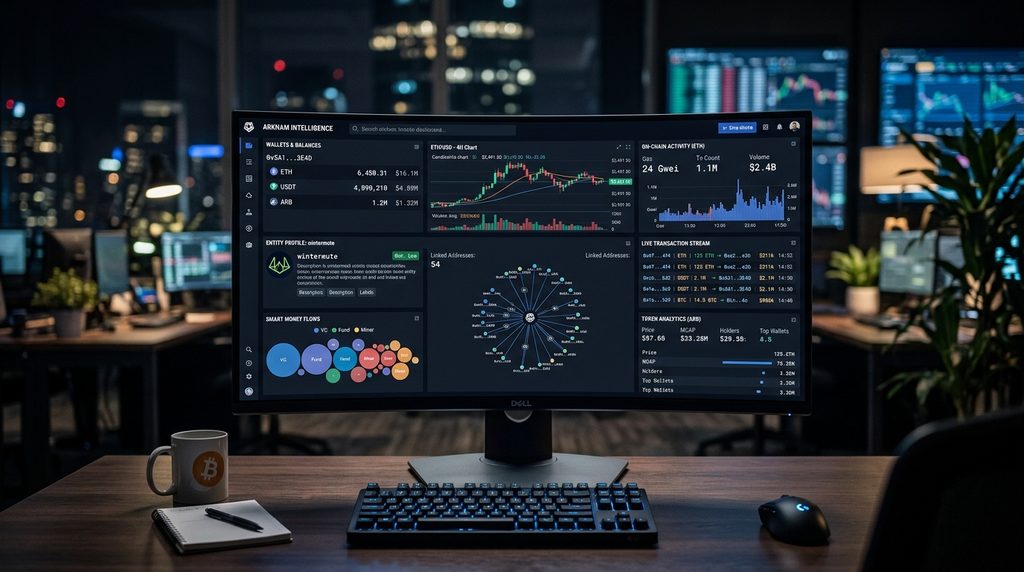
The simplest starting point is the Arkham search bar.
You can search for a known wallet address, entity, token or other supported blockchain information. Arkham’s current platform describes search across entities, addresses, tokens and markets.
For example, suppose you want to research a large crypto holder.
A practical workflow is:
- Search for the wallet or entity.
- Review the entity or address profile.
- Examine holdings and transaction history.
- Identify important counterparties.
- Visualize relationships if the transaction history is complex.
- Set an alert if you want to monitor future activity.
- Verify important conclusions against the underlying blockchain transactions.
This approach is more reliable than assuming one transaction tells the entire story.
How to Use Arkham for Wallet Research
Wallet research is one of the easiest ways to start learning Arkham.
If you already have a wallet address, paste it into the search field.
Arkham’s own wallet-tracking guide says that an address page can be used to review historical transactions, top counterparties, alerts, Tracer and Visualizer functionality.
What to Check on a Wallet
Once you’ve opened the relevant address, look at:
Portfolio and Holdings
Start by identifying which assets the wallet currently holds.
This can help answer questions such as:
- What tokens does this wallet hold?
- Which assets represent the largest portion of its portfolio?
- Has the portfolio changed significantly?
- Is the wallet concentrated in one asset?
A portfolio snapshot is useful, but it should not automatically be interpreted as an investment signal.
Transaction History
Next, examine the wallet’s transactions.
Look for:
- Large inflows
- Large outflows
- Repeated transfers
- Exchange interactions
- Contract interactions
- Changes in activity over time
A single large transfer can be misleading without understanding what happened before and after it.
Top Counterparties
Counterparties can reveal which wallets or entities regularly interact with the address.
This is especially useful when you’re researching a fund, exchange, trader or other high-activity wallet.
Example Research Question
Instead of asking:
“Did this whale buy Bitcoin?”
ask a more complete question:
“What assets entered this wallet, where did they come from, and what happened to them afterward?”
That shift from an isolated event to a transaction sequence usually produces better research.
How to Use Arkham for Entity Research
One of Arkham’s major differences from a basic block explorer is its focus on entities.
Arkham groups addresses into entities where its intelligence system has sufficient evidence to associate them with the same actor or organization. Its tagging documentation distinguishes entities from individual address labels and behavioral tags.
An entity can therefore be more useful than investigating hundreds of addresses individually.
Entity vs. Address
Think about the difference this way:
Address: One blockchain address.
Entity: A broader group of addresses associated with an individual or organization.
Label: Information describing a particular address.
Tag: A descriptor about behavior or category.
This structure can make research much easier.
For example, if an organization controls many addresses, researching the entity can provide a broader picture than examining one wallet at a time.
How to Research an Entity
A useful workflow is:
- Search the entity name.
- Open its entity profile.
- Review associated addresses.
- Examine portfolio holdings.
- Review historical transactions.
- Check counterparties.
- Use Visualizer when relationships become complex.
- Create an alert if the entity is important to your research.
Remember that an entity attribution is intelligence, not cryptographic proof of identity. Arkham’s API documentation specifically describes its attribution model as confidence-scored and probabilistic.
How to Use Arkham for Token Research
Arkham can also be used to research individual tokens.
Search for a token and examine the information available around it.
Useful questions include:
- Who are the largest holders?
- How concentrated is ownership?
- Which entities are accumulating?
- Which entities are selling?
- Are tokens moving to or from exchanges?
- How active are large holders?
- What are the recent flows?
Arkham’s current platform includes token pages and holder information, while its official API page highlights token top-holder data with entity labels attached.
Why Token Holder Data Matters
A token’s price chart tells you what the market has done.
Holder data can help answer a different question:
Who controls the supply?
Suppose a small number of wallets control a large percentage of a token.
That doesn’t automatically mean the token is unsafe, but it does give you a reason to investigate concentration, wallet relationships, vesting schedules and historical behavior.
Use holder data as one research input rather than a standalone buy-or-sell signal.
How to Use Arkham for Charts
Charts are useful when raw transaction tables become difficult to interpret.
Arkham supports customizable dashboards containing different types of information, including address and entity intelligence, token information, general charts, futures-related information and options data.
A good chart should answer a specific question.
For example:
Question: Are large wallets accumulating a token?
A useful research dashboard could combine:
- Token price
- Market capitalization
- Large-holder activity
- Exchange flows
- Recent transactions
- Relevant entity portfolios
This gives you several pieces of information in one view.
Don’t Build Charts Just Because You Can
More charts do not necessarily mean better analysis.
Avoid creating a dashboard with dozens of metrics that you never use.
Instead, create a small set of views around your research objective.
For example:
Whale-monitoring dashboard
- Selected whale entities
- Token balances
- Large transfers
- Exchange inflows
- Exchange outflows
- Recent transactions
This is more useful than a dashboard containing every metric available.
How to Use Arkham Visualizer
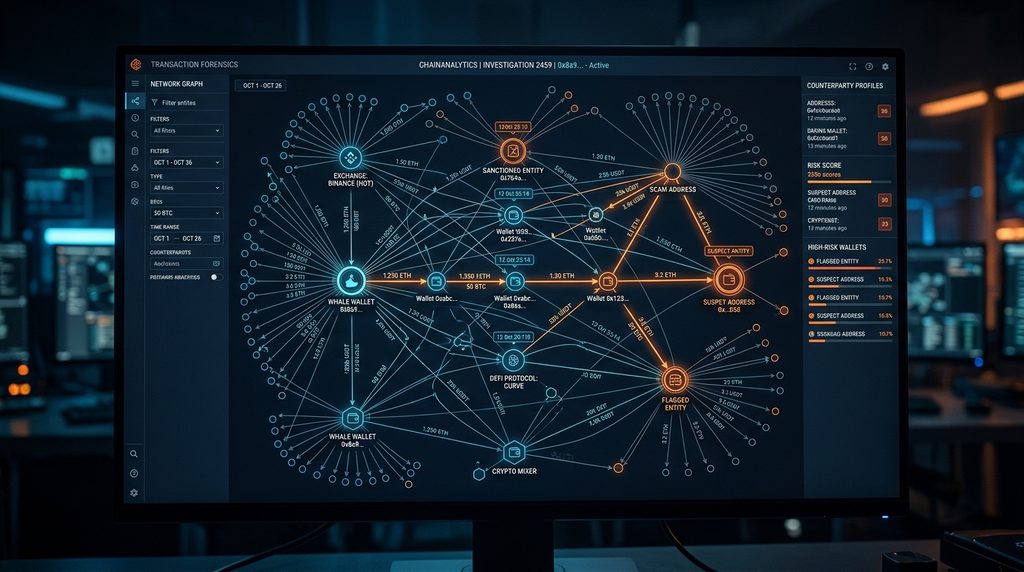
Arkham Visualizer is designed to make relationships between addresses and entities easier to understand through a network graph.
Arkham describes Visualizer as a tool for understanding an address or entity and its related counterparties.
This becomes particularly useful when money moves through several addresses.
Basic Visualizer Workflow
Start with a wallet or entity.
Then examine the connected counterparties.
You can use the resulting network to investigate:
- Where funds came from
- Where funds went
- Which entities interact
- Whether intermediary wallets are involved
- Whether a transaction path deserves closer investigation
Arkham’s forensic guidance says Visualizer can display relationships between entities and allow filtering by token type, transaction value and timeframe.
When Visualizer Is Most Useful
Visualizer is especially helpful when a normal transaction table becomes difficult to follow.
For example:
Wallet A → Wallet B → Wallet C → Exchange
A graph can make that relationship easier to understand than four separate transaction records.
How to Use Arkham Tracer
Visualizer and Tracer are related but serve slightly different purposes.
Visualizer helps you understand a network of relationships.
Tracer focuses more directly on following the movement of funds.
Arkham describes Tracer as a tool for tracking funds through counterparties and intermediary wallets.
A Simple Tracer Workflow
Start with the wallet or entity you want to investigate.
Then:
- Examine incoming and outgoing flows.
- Identify important counterparties.
- Expand relevant paths.
- Follow the assets through intermediary addresses.
- Inspect the underlying transaction records.
- Narrow the results by asset, value or timeframe where appropriate.
This is useful for blockchain investigations and transaction research.
How to Use Arkham for Transaction Research
If you already have a transaction hash, or TXID, you can search it directly.
A transaction hash is the blockchain record identifier for a transaction.
You may want to confirm:
- Whether the transaction succeeded
- Which addresses interacted
- What assets moved
- When the transaction occurred
- What fees were paid
- Which contracts were involved
Arkham’s current guide says users can paste TXIDs into its explorer and investigate transactions, including complex interactions such as smart-contract activity and bridge transfers.
Don’t Stop at the Transaction Hash
A transaction hash tells you what happened at the blockchain level.
It may not tell you why it happened.
For example, a transfer to an exchange could represent:
- A deposit
- A withdrawal
- Internal exchange movement
- A market maker’s activity
- A treasury operation
- Another operational transaction
Context matters.
How to Use Arkham for Whale Tracking
Whale tracking is one of the more popular crypto research workflows.
A whale is generally a wallet or entity holding or moving a relatively large amount of an asset.
Arkham can help you identify and monitor relevant wallets and entities.
A practical workflow is:
- Find a relevant whale or entity.
- Review its portfolio.
- Check recent transactions.
- Identify major counterparties.
- Examine exchange interactions.
- Use Visualizer or Tracer for unusual transfers.
- Create an alert for future activity.
Arkham’s alert system can monitor specified entities, tokens, addresses and transaction conditions.
Important Warning
Do not assume:
Whale buys → price will rise
or:
Whale sends tokens to exchange → price will fall
Those can be hypotheses, not guaranteed outcomes.
The wallet may be performing an internal transfer, hedging, custody operation, market-making activity or another transaction unrelated to the conclusion you’re considering.
How to Create Arkham Alerts
Alerts are useful when you don’t want to repeatedly check the same wallet or entity.
Arkham’s official guide describes creating an alert through its Alerts area and configuring conditions for transactions and other activity.
Depending on the available configuration, you can monitor factors such as:
- Entity
- Address
- Token
- Transaction size
- Chain
- Counterparty
Arkham’s research material also describes alert delivery through channels including email, Telegram, Slack and webhooks.
Useful Alert Ideas
Large Exchange Transfer
Monitor large movements of a particular token involving an exchange.
Whale Activity
Track transfers from selected high-value wallets.
Dormant Wallet Activity
Monitor an address that has been inactive for a long period.
Project Treasury
Track transactions from a project’s known treasury wallets.
Token Holder Movement
Monitor significant activity involving important holders.
The goal should be to create actionable alerts, not hundreds of notifications.
How to Build an Arkham Dashboard
Dashboards are useful if you repeatedly research the same type of data.
Arkham describes dashboards as customizable interfaces that can contain address/entity intelligence, token information, general charts, exchange/futures information and options data.
Example: Crypto Whale Dashboard
A simple whale dashboard could contain:
| Dashboard Section | What to Monitor |
|---|---|
| Portfolio | Holdings of selected entities |
| Transactions | Recent large transfers |
| Token flows | Accumulation and distribution |
| Exchanges | Deposits and withdrawals |
| Charts | Price and activity trends |
| Alerts | New significant transactions |
Example: Token Research Dashboard
For a token, consider tracking:
- Price
- Market cap
- Largest holders
- Holder activity
- Exchange flows
- Entity exposure
- Large transactions
- Historical activity
This gives you a repeatable research workspace instead of starting from scratch every time.
How to Use Arkham for On-Chain Analysis
On-chain analysis means examining blockchain activity to understand behavior, flows, ownership patterns and market activity.
Arkham can be one part of that process.
A strong workflow looks like this:
Research question → identify entity/wallet → inspect raw transactions → analyze counterparties → visualize flows → compare historical activity → monitor future changes
For example, if you’re researching whether a large investor is accumulating an asset:
- Identify the relevant entity.
- Check its known addresses.
- Review the asset balance.
- Examine historical purchases.
- Identify where the assets came from.
- Check whether assets later moved to exchanges or other wallets.
- Compare the activity with market data.
- Set an alert for future transactions.
That is much more useful than simply watching a single wallet balance.
How to Use Arkham for Crypto Charts and Market Research
Arkham can also support broader market analysis.
Its official guide lists market information such as open interest, funding, options and other market data alongside blockchain intelligence.
This allows researchers to combine on-chain activity with market information.
For example:
On-chain question: Are large entities moving BTC?
Market question: What is happening with price, volume, open interest or exchange activity at the same time?
Combining these perspectives can provide more context than relying on either one alone.
A Practical Research Framework
When studying a market event, compare:
Price
What happened to the market?
Volume
Was activity unusually high?
On-chain flows
Were large wallets moving assets?
Exchange flows
Were significant assets entering or leaving exchanges?
Entity activity
Were known funds, whales or organizations involved?
Historical context
Has something similar happened before?
This approach helps prevent overreacting to one data point.
How to Use Arkham for Smart-Money Research
Arkham can also be used to investigate sophisticated market participants.
The platform’s entity and wallet intelligence can help researchers examine activity associated with known traders, funds, market makers and other entities.
The objective should not be simply to copy another wallet.
Instead, investigate:
- What assets does the entity hold?
- How long does it hold them?
- Where does it trade?
- What counterparties does it use?
- Does it repeatedly behave in a particular way?
- Is the observed strategy consistent over time?
A wallet that made one successful trade is not necessarily evidence of a repeatable strategy.
Smart Money Research Example
Suppose you identify an entity that has historically traded a particular sector.
You could:
- Review its portfolio.
- Examine historical transactions.
- Identify repeated positions.
- Study entry and exit behavior.
- Compare activity with market conditions.
- Monitor future transactions.
The result is research rather than simple wallet copying.
How to Use Arkham for Crypto Project Research
Arkham can be useful when researching a crypto project before investing or writing about it.
Look at:
Token Distribution
Who owns the supply?
Team and Investor Wallets
Are known project-related entities holding significant balances?
Treasury
How does the project’s treasury operate?
Exchange Activity
Are significant amounts moving to or from exchanges?
Large Holder Behavior
Are major holders accumulating, distributing or remaining inactive?
Contract Activity
Are wallets interacting with the project’s contracts?
This can reveal useful information, but it does not replace reviewing the project’s documentation, tokenomics, governance, code, audits and other evidence.
How to Use Arkham for Investigations
Arkham is particularly useful when the research question involves following money.
For example:
Known wallet → intermediary wallet → another wallet → exchange
A researcher can use Visualizer and Tracer to understand the relationships and transaction path. Arkham’s forensic documentation specifically describes these tools for following fund movements and investigating multi-hop transaction flows.
However, blockchain investigation requires caution.
A transfer does not automatically prove ownership, intent or criminal behavior.
A wallet receiving funds from a suspicious address does not necessarily mean the wallet owner participated in wrongdoing.
Always distinguish:
- What the blockchain proves
- What Arkham attributes
- What the transaction pattern suggests
- What remains unknown
That distinction is essential for responsible research.
Using Arkham API for On-Chain Data
If you need Arkham data outside the normal website interface, the Arkham API is the relevant option.
Arkham’s API documentation describes access to addresses, entities, labels and tags, along with authentication, rate limits, pagination and credit-based usage.
This is more appropriate for:
- Developers
- Data analysts
- Compliance systems
- Research platforms
- Trading tools
- Internal dashboards
- Automated monitoring
The API can turn Arkham from a research website into a data source within a larger application.

When You Don’t Need the API
If you are manually researching ten wallets, you probably don’t need an API.
If you’re monitoring thousands of addresses or integrating blockchain intelligence into a software product, an API becomes much more relevant.
How to Avoid Common Arkham Research Mistakes
Mistake 1: Treating Labels as Absolute Proof
A label is useful context, but important identity claims should be independently verified.
Arkham’s API documentation explicitly describes attribution as confidence-scored and probabilistic.
Mistake 2: Looking at Only One Transaction
One transfer rarely explains an entire strategy.
Look at the surrounding transaction history.
Mistake 3: Assuming Exchange Deposits Mean Selling
A transfer to an exchange can have multiple explanations.
Investigate the broader activity before drawing conclusions.
Mistake 4: Copying Whale Trades
A whale may have a different strategy, cost basis, risk tolerance and information set.
Their transaction is data—not automatically a recommendation.
Mistake 5: Ignoring Timeframes
A $1 million transfer means something different if it occurred once in five years versus repeatedly every week.
Always put transaction activity into historical context.
Mistake 6: Building Too Many Charts
A dashboard should answer questions.
If you cannot explain why a metric is included, you probably don’t need it.
A Beginner’s Arkham Research Workflow
If you’re new to on-chain analysis, use this five-step process.
Step 1: Define the Question
Don’t start by randomly browsing wallets.
Start with a question:
Who owns this token?
Where did these funds go?
Is this wallet active?
What are major holders doing?
Step 2: Find the Entity or Address
Search Arkham for the wallet, entity or token.
Step 3: Review the Raw Data
Check transactions, balances and counterparties.
Step 4: Add Context
Use labels, tags, Visualizer, Tracer, charts or historical information.
Step 5: Verify the Conclusion
Cross-check important claims against the underlying blockchain record and other reliable sources.
This workflow is simple enough for beginners but also scales into more advanced research.
Arkham vs. a Basic Blockchain Explorer
A basic blockchain explorer is often better for straightforward verification.
For example:
“Did this transaction occur?”
A conventional explorer can answer that.
Arkham becomes more useful when your question is:
“Who appears to control these addresses, where did the funds move afterward, and which entities are connected to the activity?”
The difference is largely context and intelligence.
| Research Need | Basic Explorer | Arkham |
|---|---|---|
| Transaction verification | Excellent | Excellent |
| Wallet balance | Excellent | Excellent |
| Raw transaction history | Excellent | Excellent |
| Entity context | Limited | Stronger |
| Address labels | Varies | Extensive |
| Fund-flow investigation | Basic | Advanced |
| Visual relationship analysis | Limited | Visualizer |
| Alerts | Varies | Available |
| Custom dashboards | Usually limited | Available |
| API/data integration | Varies | Available |
| Best use | Blockchain verification | Broader on-chain intelligence |
Is Arkham Good for Crypto Research?
Yes, Arkham can be particularly useful for research questions that require context around blockchain activity.
Its strongest use cases are not simply checking transaction hashes. They are:
- Entity research
- Wallet monitoring
- Fund-flow analysis
- Token-holder research
- Whale tracking
- On-chain investigation
- Custom dashboards
- Automated alerts
- Data integration
Arkham’s own recent on-chain-analysis guide describes the platform as useful for studying entity portfolios, visualizing activity, receiving alerts and building custom dashboards.
The limitation is that more information does not automatically produce better conclusions.
Good on-chain research still requires skepticism, historical context and independent verification.
Who Should Use Arkham?
Arkham is a good fit for:
- Crypto traders researching market participants
- Investors investigating token holders and project activity
- Researchers studying blockchain behavior
- Journalists investigating fund movements
- Developers integrating blockchain intelligence
- Compliance teams monitoring counterparties
- Blockchain investigators tracing transactions
- Crypto businesses building internal analytics
Who May Not Need It?
If you only need to:
- Check a transaction hash
- Confirm a wallet balance
- Look up a smart contract
- Verify a basic blockchain transaction
a traditional block explorer may be simpler.
Pros & Cons Table
| Pros | Cons |
|---|---|
| Combines wallet, entity and transaction research | Entity attribution should not be treated as absolute proof |
| Visualizer makes complex relationships easier to understand | Large datasets can overwhelm beginners |
| Tracer helps follow fund movements | On-chain behavior can have multiple interpretations |
| Alerts support ongoing monitoring | Advanced data workflows may require more technical knowledge |
| Dashboards support repeatable research | Too many metrics can create unnecessary noise |
| Entity labels and tags add context to raw addresses | Users should independently verify important claims |
| API supports external data workflows | API access and usage involve separate technical considerations |
| Useful across trading, research and investigation | Blockchain data alone does not explain intent |
Comparison Table — only if relevant
| Feature | Arkham | Basic Block Explorer |
|---|---|---|
| Transaction lookup | ✓ | ✓ |
| Wallet balances | ✓ | ✓ |
| Raw transaction data | ✓ | ✓ |
| Entity intelligence | ✓ | Limited |
| Address labels | ✓ | Varies |
| Wallet tracking | ✓ | Basic |
| Fund-flow visualization | ✓ | Limited |
| Transaction tracing | ✓ | Basic |
| Custom alerts | ✓ | Varies |
| Custom dashboards | ✓ | Usually limited |
| Market/on-chain research | ✓ | Limited |
| API | ✓ | Varies |
| Best for | Research and intelligence | Transaction verification |
Alternatives — only if relevant
Etherscan
What it is: A widely used Ethereum blockchain explorer.
Main strength: Direct access to Ethereum transactions, contracts and wallet information.
Main limitation: Less focused on the broader entity-intelligence workflow.
Best for: Verifying Ethereum transactions and smart-contract activity.
Dune
What it is: A blockchain analytics platform for querying and visualizing blockchain datasets.
Main strength: Highly customizable data analysis.
Main limitation: Requires more analytical effort and is less focused on ready-made entity attribution.
Best for: Analysts who want to build custom blockchain queries and dashboards.
Nansen
What it is: A blockchain analytics platform focused heavily on wallet and on-chain intelligence.
Main strength: Wallet and token-flow research.
Main limitation: Its data model and workflows differ from Arkham.
Best for: Traders and researchers comparing wallet-intelligence platforms.
FAQs
What is Arkham used for?
Answer: Arkham is used to research blockchain activity, investigate wallets and entities, analyze token holders, trace fund flows, create charts and dashboards, set alerts, and work with on-chain data.
How do I track a wallet on Arkham?
Answer: Search for the wallet address, open its profile, review its holdings and transaction history, examine counterparties, and use Visualizer or Tracer when you need to investigate connected activity.
Can Arkham show who owns a crypto wallet?
Answer: Arkham can associate addresses with entities using its intelligence and attribution systems, but those associations are not automatically proof of legal ownership. Arkham describes its attribution as confidence-scored and probabilistic.
How do I use Arkham Visualizer?
Answer: Start with an address or entity and use the resulting network graph to examine connected counterparties and transaction relationships. Filters can help narrow the analysis by factors such as token, transaction value and timeframe.
What is Arkham Tracer used for?
Answer: Tracer is designed to follow the flow of funds between addresses and counterparties. It is particularly useful when you need to investigate where assets moved after leaving an original wallet.
Can Arkham be used for crypto trading research?
Answer: Yes. You can use Arkham to research whale activity, entity portfolios, token holders, exchange flows, transactions and other on-chain information. However, on-chain activity should be treated as research data rather than an automatic trading signal.
Can I create charts and dashboards in Arkham?
Answer: Yes. Arkham supports customizable dashboards containing address and entity intelligence, token information, general charts and market-related data.
Does Arkham have an API?
Answer: Yes. Arkham provides an API for integrating blockchain intelligence into applications, data pipelines and other workflows. Its documentation covers addresses, entities, labels, tags, authentication, rate limits and pagination.
Quick Take
Main point: Arkham is most useful when you need context around raw blockchain data.
Best use case: Wallet, entity, token and fund-flow research.
Main advantage: It combines entity intelligence with transaction analysis, Visualizer, Tracer, dashboards and alerts.
Main limitation: Attribution and transaction patterns still require human interpretation and verification.
Best alternative: Use Etherscan for straightforward Ethereum transaction verification, Dune for custom blockchain analytics, or Nansen when you want another wallet-intelligence-focused platform.
Conclusion
Arkham can turn a difficult blockchain research task into a more structured workflow.
Instead of examining isolated wallet addresses, you can move from entity discovery → wallet activity → counterparties → transaction flows → visualization → alerts. Its Visualizer and Tracer tools are especially useful when fund movements become complicated, while dashboards and alerts help turn one-time research into ongoing monitoring.
For beginners, the best approach is to start with one clear research question rather than exploring every available feature. Search a wallet or entity, inspect the underlying transactions, add context with Arkham’s intelligence tools, and verify important conclusions against the blockchain record.
Arkham is therefore most valuable not as a crystal ball for predicting crypto prices, but as a research layer for understanding what is happening on-chain.
Author Bio
TechyUpdate Editorial Team covers practical technology, AI tools, apps, software and digital productivity, with a focus on clear, useful and independently researched guides.
1 Comment
Pingback: Arkham Alternatives: Best Crypto Analytics Tools 2026