

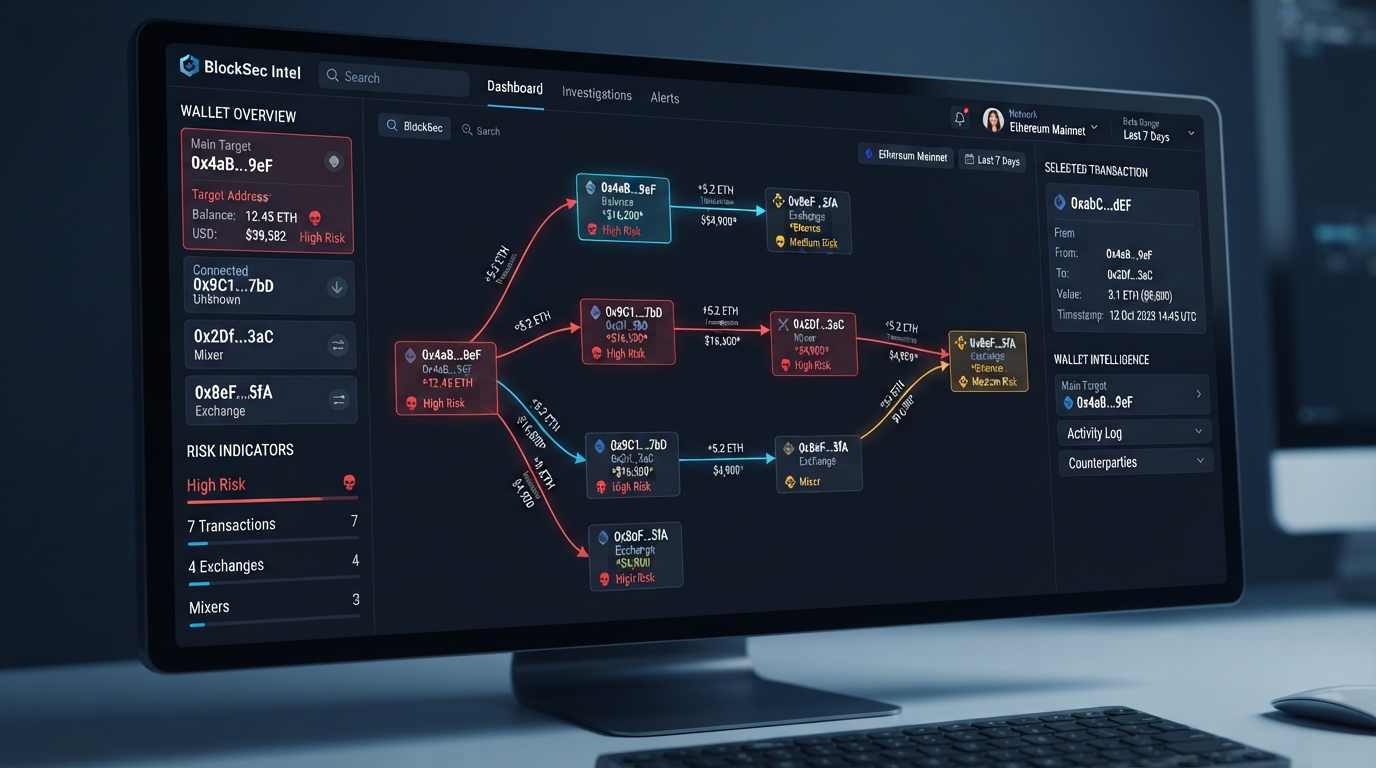
BlockSec data is blockchain intelligence used to understand transactions, wallet activity, fund flows, asset values, address identities, risk signals, and security events. Instead of functioning only as a cryptocurrency price tracker, BlockSec brings together blockchain investigation, transaction analysis, security monitoring, compliance intelligence, and real-time alerts across products such as MetaSleuth and the Phalcon ecosystem.
For beginners, the term “blockchain data” can sound simpler than it actually is. A blockchain transaction may show an address, token amount, timestamp, contract interaction, and transaction hash, but those details do not always explain what happened in a useful way. Investigators often need to know where funds came from, where they went, which addresses interacted with them, whether the activity crossed multiple networks, and whether any associated risk signals exist.
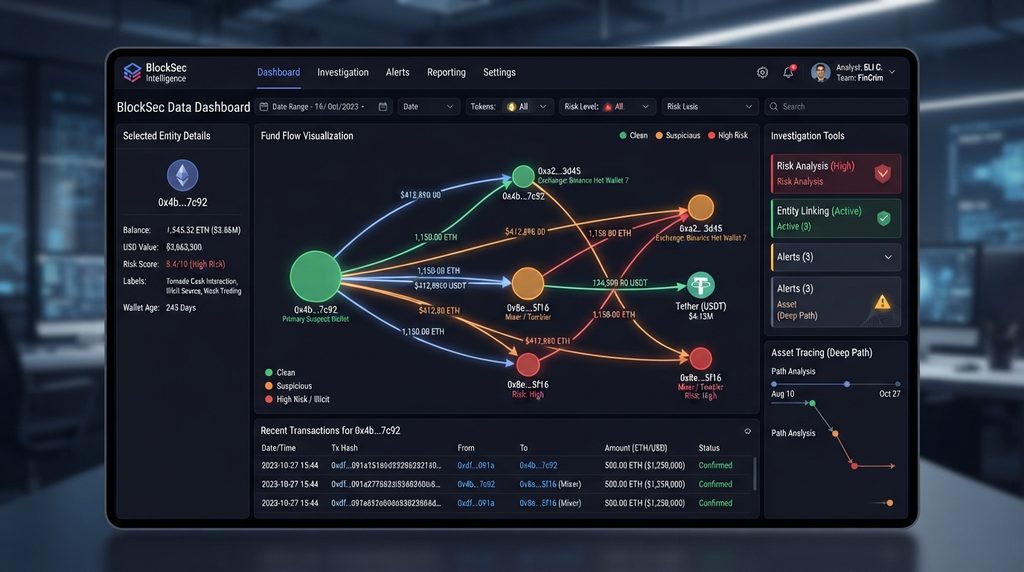
This is where BlockSec data becomes more useful. MetaSleuth focuses on visual blockchain investigation and fund tracing, while Phalcon Explorer is designed around transaction visualization, simulation, and debugging. Other Phalcon products address security monitoring, illicit-fund intelligence, and crypto compliance.
The important distinction is that BlockSec is not simply another cryptocurrency market dashboard. Its data is designed to add context to blockchain activity.
This guide explains what BlockSec data means, how prices and USD values are used, what its charts and metrics can tell you, how address labels and risk information work, and how alerts can help users monitor wallets, transactions, threats, and suspicious activity.
Continue Reading: How to Use BlockSec for Crypto Research, Charts, or On-Chain Data
Table of Contents
What Is BlockSec Data?
BlockSec data refers to blockchain intelligence organized around transactions, addresses, assets, fund flows, risk signals, security events, and compliance activity.
Depending on the BlockSec product being used, the available information can include:
- Blockchain transactions
- Wallet addresses
- Token balances
- Token amounts
- Estimated USD values
- Transaction relationships
- Fund-flow paths
- Address labels
- Entity information
- Risk scores
- Cross-chain activity
- Security threats
- Illicit-fund indicators
- Monitoring alerts
- Compliance information
The exact information available depends on the product, blockchain, investigation, and subscription or service level.
The key point is that BlockSec attempts to turn raw on-chain records into information that can be interpreted more easily.
What Kind of Data Does BlockSec Provide?
BlockSec’s ecosystem covers several different types of blockchain intelligence.
| Data Type | What It Helps Explain |
|---|---|
| Transaction data | What happened on-chain |
| Token amount | How many assets moved |
| USD value | Approximate financial value of an asset movement |
| Wallet balance | Assets associated with an address |
| Address labels | Known or categorized address information |
| Fund-flow charts | How assets moved between addresses |
| Risk information | Potential exposure or suspicious activity |
| Cross-chain data | Movement between blockchain networks |
| Alerts | Activity requiring attention |
| Security intelligence | Potential attacks and threats |
| Compliance data | Screening and transaction-monitoring information |
These categories are connected. For example, a transaction may show a token movement, while an address label adds entity context and a risk indicator helps determine whether the transaction deserves additional investigation.
Does BlockSec Show Crypto Prices?
BlockSec can display asset values and USD-denominated information associated with blockchain activity, but it is important not to confuse this with the purpose of a dedicated cryptocurrency market-data platform.
A conventional crypto market website generally focuses on information such as:
- Current asset price
- Market capitalization
- Trading volume
- Price changes
- Exchange markets
- Historical market charts
BlockSec’s investigation tools use price information mainly as context around on-chain activity.
For example, knowing that a wallet transferred a certain quantity of a token is useful. Knowing the estimated financial value of that transfer can make the transaction easier to evaluate.
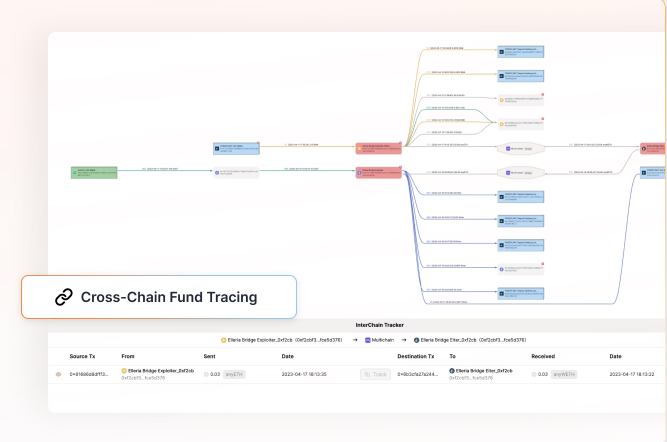
Why USD Value Matters in Blockchain Analysis
Suppose an address transfers a large quantity of a token.
The raw token amount does not necessarily communicate the financial importance of the transaction. A USD estimate provides another way to understand the size of the movement.
This becomes particularly useful when investigating:
- Stolen assets
- Suspicious transfers
- Large wallet movements
- Exploit proceeds
- Exchange deposits
- Cross-chain transfers
- Potentially illicit funds
However, USD values should not be treated as permanent prices.
Cryptocurrency prices change continuously, and low-liquidity assets can move especially quickly. An estimated value therefore needs to be understood in relation to the valuation time used by the relevant data system.
How BlockSec Charts Work
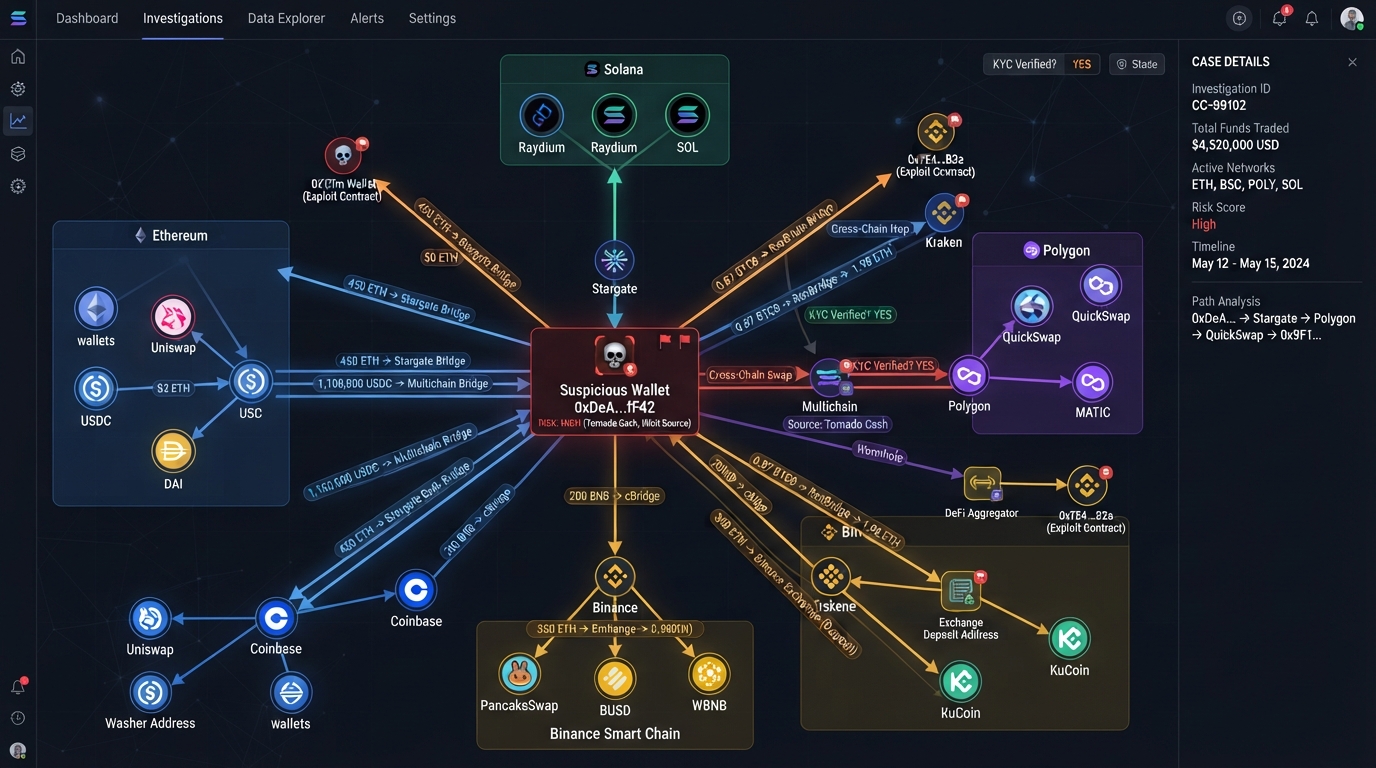
One of the most important parts of blockchain investigation is understanding relationships between addresses.
Reading individual transactions one by one can become difficult when an investigation involves dozens or thousands of transfers.
Visual charts can simplify that process.
A basic fund flow might look like:
Wallet A → Wallet B → Bridge → Wallet C → Exchange
Instead of treating each transaction as an isolated record, the chart provides a connected view of the movement.
MetaSleuth is particularly focused on this type of visual investigation. Its current product information describes interactive transaction-flow graphs, cross-chain tracking, address labels, pathfinding, monitoring, and evidence-oriented investigation workflows.
What Can a BlockSec Fund-Flow Chart Show?
Depending on the investigation, a chart can help reveal:
- Sending addresses
- Receiving addresses
- Transaction relationships
- Token movements
- Important transfers
- Fund-flow direction
- Known entities
- Risk-related addresses
- Cross-chain movements
- Connections between wallets
The value of the chart is not simply visual presentation.
It helps investigators identify relationships that may be difficult to understand from a long list of transaction records.
BlockSec Metrics Explained
Not every blockchain metric answers the same question.
Understanding what a metric represents is important before drawing conclusions from it.
Transaction Value
Transaction value describes the financial size of an asset movement.
It can help an investigator determine whether a transfer was relatively small, moderate, or significant in the context of a particular investigation.
Token Amount
Token amount represents the quantity of an asset involved in a transaction.
It should be considered separately from USD value because the market price of the asset can change.
Wallet Balance
A wallet balance represents assets associated with an address.
Balance information can provide financial context, but it does not automatically reveal who controls the address or why the assets are being held.
Transaction Activity
Transaction activity helps show how frequently an address interacts with other addresses or contracts.
A highly active wallet is not automatically suspicious. Exchanges, market makers, protocols, bots, and active users can naturally generate large numbers of transactions.
Fund-Flow Direction
Fund-flow direction can be more informative than transaction count.
Investigators may want to know whether assets are:
- Entering an address
- Leaving an address
- Moving between related wallets
- Passing through bridges
- Moving toward exchanges
- Moving into smart contracts
- Moving through multiple intermediate addresses
Address Relationships
Related-address information can help show which wallets have interacted with a target address.
This can provide context for an investigation, particularly when several addresses appear to form part of the same transaction network.
BlockSec Address Labels Explained
Blockchain addresses are normally represented by long strings of characters.
For example:
0x1234...abcd
That format alone does not explain what the address represents.
Address labels add context where an address has been identified or categorized by the underlying intelligence system.
Depending on the available data, labels may help identify relationships with:
- Centralized exchanges
- Decentralized exchanges
- Attackers
- Compromised addresses
- Sanctioned entities
- Known services
- Other blockchain entities
Labels can make large investigations easier to navigate because analysts can distinguish important entities without repeatedly working with unfamiliar address strings.
However, an address label should be treated as analytical information rather than automatic proof of a person’s real-world identity.
What Is a BlockSec Risk Score?
A risk score is an analytical signal designed to help users identify addresses or activity that may require additional investigation.
MetaSleuth documentation describes compliance risk levels ranging from No Risk through Low, Medium, High, and Critical Risk.
Risk information can be useful when investigating:
- Suspicious wallets
- Scam-related activity
- Exploit proceeds
- Sanction exposure
- High-risk counterparties
- Potentially illicit fund flows
A risk score should not be treated as the entire investigation.
For example, a high-risk address may deserve additional review, but the analyst should still examine the underlying transaction history, counterparties, timing, fund flows, and available evidence.
Cross-Chain BlockSec Data
Crypto assets do not always remain on one blockchain.
Funds can move through:
- Bridges
- Centralized exchanges
- Decentralized exchanges
- Smart contracts
- Intermediate wallets
- Multiple networks
This can make investigations considerably more complicated.
An address might appear relatively quiet on one blockchain while related funds are active on another.
Cross-chain analysis attempts to connect those movements.
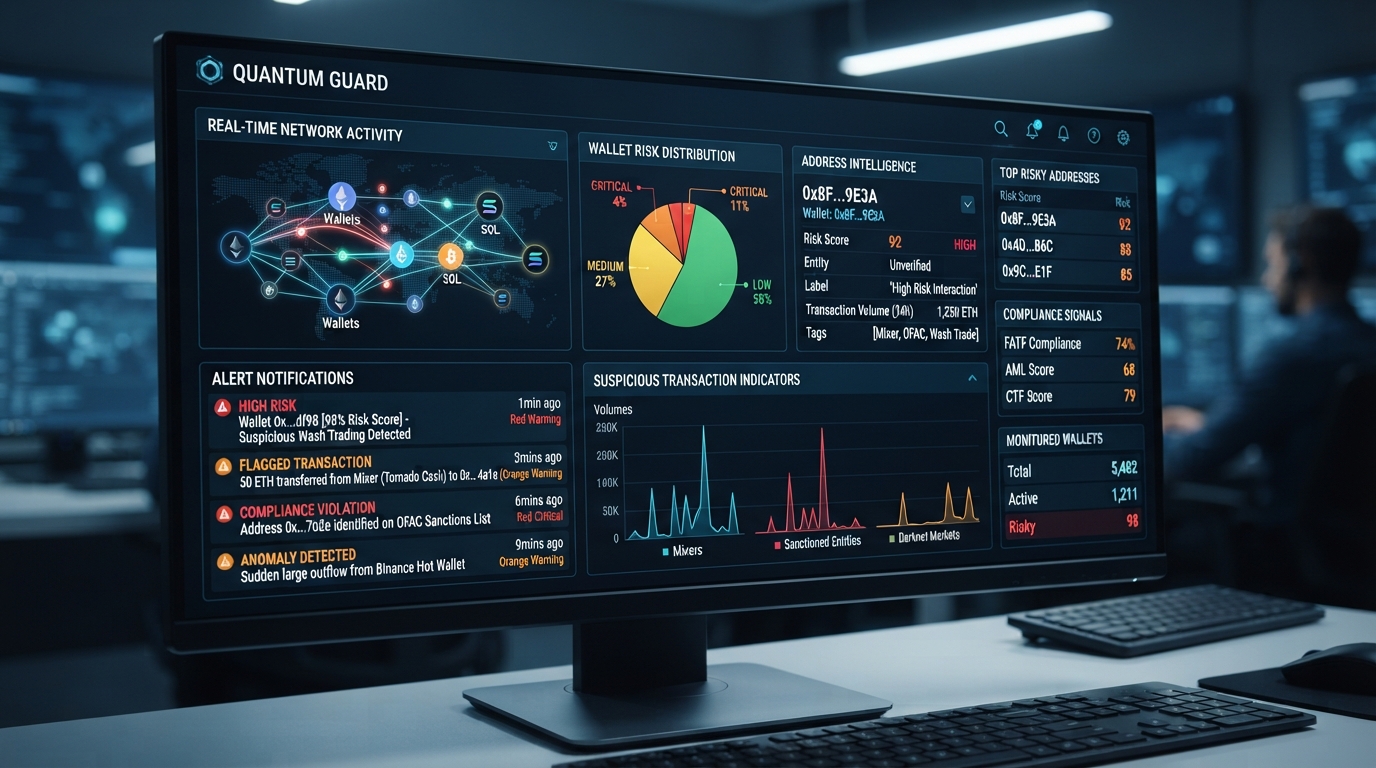
MetaSleuth currently promotes cross-chain investigation capabilities that allow users to trace assets across supported networks and follow movements through bridges and decentralized exchanges.
This is especially important for investigations where a simple single-chain explorer cannot provide the full picture
Read the Complete Article: What Is BlockSec? Crypto Data, Features, and Best Uses
What Are BlockSec Alerts?
BlockSec alerts are notifications or monitoring signals designed to bring important blockchain activity to a user’s attention.
The exact alert type depends on the BlockSec product.
For example, wallet monitoring, security monitoring, and compliance monitoring address different problems.
Wallet Monitoring Alerts
MetaSleuth provides monitoring for addresses and can notify users when monitored wallets move funds.
This can be useful for tracking:
- A suspicious wallet
- An attacker address
- A treasury wallet
- A counterparty
- An address involved in an investigation
- Funds connected to a particular case
Instead of manually checking an address repeatedly, monitoring allows relevant activity to surface automatically.
Security Alerts
Phalcon Security focuses on blockchain security threats rather than ordinary wallet activity.
Its current product information describes early transaction analysis, including mempool-stage detection, and detection across more than 200 attack characteristics.
This makes security alerts particularly relevant to protocols and Web3 security teams.
Illicit-Fund Alerts
Phalcon Network focuses on illicit-fund intelligence and monitoring.
Its purpose is different from a market-price alert. The objective is to identify potentially illicit fund movements and provide real-time intelligence before funds move further or are withdrawn.
Compliance Alerts
Phalcon Compliance focuses on crypto compliance workflows.
Compliance teams may need alerts when transactions or counterparties meet particular risk conditions.
The platform includes capabilities around alert assignment, case management, risk screening, monitoring, and reporting.
How to Use BlockSec Data for a Wallet Investigation
A basic wallet investigation can follow a structured process.
Start With a Wallet or Transaction
Begin with the wallet address or transaction hash that you want to investigate.
The purpose at this stage is to establish the starting point rather than immediately deciding whether the activity is legitimate or suspicious.
Check Address Information
Review available labels, entity information, and risk indicators.
This can provide initial context before you examine the transaction network.
Examine the Fund Flow
Look at where the funds came from and where they moved afterward.
Pay attention to:
- Large transfers
- New counterparties
- Bridges
- Exchanges
- Smart contracts
- Multiple intermediate wallets
- Unusual transaction patterns
Follow Cross-Chain Movements
If funds move to another supported blockchain, continue following the relevant path.
This prevents the investigation from stopping simply because the assets moved outside the original network.
Review Monitoring Alerts
If the address is already monitored, review new alerts alongside the underlying transaction details.
The notification should be treated as a starting point for analysis, not automatically as the final conclusion.
Preserve Investigation Evidence
For professional investigations, retain relevant transaction hashes, timestamps, charts, labels, and supporting information.
This makes the investigation easier to review later and helps other analysts understand how a conclusion was reached.
BlockSec Data for Security Teams
Security teams use blockchain data differently from ordinary investors.
Their primary concern may be whether a transaction represents an attack or whether an attacker is attempting to move assets.
Phalcon Security is designed around threat detection, transaction analysis, monitoring, and attack prevention.
The distinction is important.
A normal blockchain explorer primarily helps answer:
What happened?
A security platform attempts to answer:
Is something dangerous happening, and should action be taken?
This makes security-oriented blockchain data particularly relevant to DeFi protocols, Web3 applications, infrastructure providers, and other blockchain projects.
BlockSec Data for Crypto Compliance
Compliance teams have a different set of questions.
They may need to determine:
- Whether a wallet has known risk indicators
- Whether a transaction involves a high-risk counterparty
- Whether funds may be associated with illicit activity
- Whether a transaction should be reviewed
- Whether an alert should become a case
- Whether an investigation needs documented evidence
Phalcon Compliance is designed around these types of workflows, including screening, monitoring, risk analysis, alert handling, case management, and regulatory reporting.
This makes BlockSec data more relevant to organizations that need continuous blockchain risk monitoring than to casual crypto users.
BlockSec Pricing
BlockSec does not have one universal price for all of its products.
Pricing depends on whether you are using MetaSleuth, APIs, compliance services, or other enterprise products.
For MetaSleuth’s current individual plans, the published pricing includes:
| Plan | Published Monthly Price |
|---|---|
| Free | $0 |
| Basic | $30 |
| Pro | $100 |
| Ultra | $500 |
The plans provide different limits for investigations, advanced analysis, inter-chain tracking, saved charts, monitoring addresses, notifications, exports, and other features.
The current published MetaSleuth plan information also lists separate team pricing, with prices based on seats and different collaboration capabilities.
For organizations using BlockSec APIs, pricing is separate. The current API service lists plans for address-label and risk-score data, while the pay-per-request x402 Compliance API has separate per-request pricing.
Because product pricing and limits can change, users should verify the relevant official pricing information before purchasing.
BlockSec vs a Traditional Blockchain Explorer
BlockSec and a conventional blockchain explorer can overlap in some areas, but they are designed for different levels of analysis.
| Factor | BlockSec | Traditional Blockchain Explorer |
|---|---|---|
| Transaction lookup | Strong | Strong |
| Raw blockchain data | Strong | Strong |
| Visual fund tracing | Core capability | Varies |
| Address intelligence | Strong | Usually more limited |
| Risk intelligence | Strong | Varies |
| Cross-chain investigation | Supported | Varies |
| Wallet monitoring | Available | Varies |
| Security monitoring | Available through dedicated products | Usually limited |
| Compliance workflows | Available | Usually limited |
| Investigation evidence | Advanced | Usually basic |
| Best use case | Investigation and monitoring | Transaction verification |
If you simply want to confirm a transaction, a traditional explorer may be enough.
If you need to understand how funds moved between multiple addresses and networks, identify relevant entities, monitor wallets, or investigate risk, BlockSec can provide a broader analytical workflow.
Limitations of BlockSec Data
BlockSec data can be valuable, but it should not be treated as infallible evidence.
Address Labels Need Context
An address label provides useful intelligence, but investigators should still examine the underlying transaction evidence.
USD Values Can Change
Cryptocurrency values can change rapidly. A USD figure represents a valuation at a particular point rather than a permanent value.
Wallets Are Not Automatically People
A blockchain address is an on-chain identifier. Connecting it to a real-world individual or organization may require additional evidence.
Cross-Chain Investigations Can Be Complex
Bridges, swaps, intermediaries, contracts, and multiple wallets can create complicated transaction paths.
Risk Scores Are Signals
A risk score can help prioritize investigation, but it should not automatically be interpreted as proof of wrongdoing.
Data Coverage Varies
Available information can depend on the blockchain, asset, address, product, and data source. Users should therefore consider the scope of the specific tool when interpreting results.
Who Should Use BlockSec Data?
BlockSec can be useful for:
- On-chain investigators
- Blockchain researchers
- Web3 security teams
- Crypto compliance teams
- Exchanges
- DeFi projects
- Crypto payment providers
- Blockchain analysts
- Law-enforcement investigators
- Institutional crypto teams
- Investors performing deeper due diligence
It may be unnecessary if you only want to check the current market price of Bitcoin, Ethereum, or another major cryptocurrency.
The use case changes when the question becomes:
“What happened to these funds, where did they go, and what risks are associated with the addresses involved?”
That is where BlockSec’s blockchain intelligence becomes more useful.
Is BlockSec Mainly a Crypto Price Tool?
No.
BlockSec is better understood as a blockchain security, investigation, analytics, and compliance ecosystem.
Prices and USD values can provide useful financial context, but the platform’s more distinctive purpose is understanding on-chain behavior.
For market-focused research, a dedicated crypto market-data platform may provide deeper information about price movements, trading volume, liquidity, and exchange markets.
For blockchain investigations, BlockSec’s combination of transaction visualization, address intelligence, fund tracing, monitoring, and risk information is more directly relevant.
Pros & Cons Table
| Pros | Cons |
|---|---|
| Strong visual blockchain investigation capabilities | More complex than a basic blockchain explorer |
| Fund-flow and cross-chain analysis | Advanced features vary by product and plan |
| Extensive address intelligence | Labels require contextual interpretation |
| Wallet monitoring and alerts | Not primarily a conventional crypto price terminal |
| Security and compliance products | Pricing differs across products |
| Investigation and reporting workflows | Complex investigations still require human judgment |
Comparison Table
| Factor | BlockSec | Traditional Blockchain Explorer | Crypto Market Data Platform |
|---|---|---|---|
| Main purpose | Blockchain investigation, security and compliance | Transaction and blockchain lookup | Market and price analysis |
| Wallet analysis | Strong | Basic to moderate | Usually limited |
| Fund-flow visualization | Strong | Varies | Usually limited |
| Address intelligence | Strong | Varies | Limited |
| Risk intelligence | Strong | Limited or varies | Usually limited |
| Cross-chain investigation | Supported | Varies | Varies |
| Security monitoring | Available | Usually limited | Not usually the focus |
| Compliance workflows | Available | Usually limited | Usually limited |
| Crypto prices | Supporting context | Basic asset information | Core feature |
| Real-time alerts | Available | Varies | Usually market-focused |
| Best for | On-chain investigations | Transaction verification | Market research |
Alternatives
Etherscan
What it is: A blockchain explorer focused primarily on Ethereum and its ecosystem.
Main strength: Straightforward access to transactions, addresses, contracts, tokens, and on-chain records.
Main limitation: Complex investigations can require considerably more manual analysis.
Best for: Users who need to verify Ethereum transactions and inspect contracts.
Arkham
What it is: A blockchain intelligence platform focused on wallet and entity-level crypto analysis.
Main strength: Entity-oriented wallet intelligence and blockchain investigation.
Main limitation: Its product approach differs from BlockSec’s combination of investigation, security, and compliance services.
Best for: Users researching wallets, entities, and on-chain activity.
Chainalysis
What it is: An enterprise blockchain intelligence and compliance platform.
Main strength: Institutional blockchain intelligence, investigation, and compliance capabilities.
Main limitation: Primarily designed for organizations rather than casual individual users.
Best for: Financial institutions, exchanges, governments, and professional compliance teams.
Nansen
What it is: A blockchain analytics platform focused on wallets, tokens, and on-chain market intelligence.
Main strength: Investor-oriented wallet and token analytics.
Main limitation: Its focus is different from BlockSec’s security and compliance ecosystem.
Best for: Investors and researchers performing on-chain market analysis.
FAQs
What is BlockSec data?
Answer: BlockSec data is blockchain intelligence covering transactions, wallets, asset values, fund flows, address labels, risk information, security events, and monitoring activity.
Does BlockSec provide crypto prices?
Answer: BlockSec can provide asset values and USD-denominated transaction information where supported, but its primary purpose is blockchain investigation, analytics, security, and compliance rather than conventional cryptocurrency price tracking.
What is MetaSleuth used for?
Answer: MetaSleuth is used for blockchain investigation, fund tracing, visual transaction analysis, cross-chain tracking, address intelligence, and wallet monitoring.
What are BlockSec charts?
Answer: BlockSec charts, particularly MetaSleuth investigation graphs, visualize relationships between wallets and transactions so users can follow complex fund movements more easily.
What is a BlockSec risk score?
Answer: A BlockSec risk score is an analytical signal that helps users identify addresses or activity that may require further investigation. It should be considered alongside transaction evidence and other context.
Can BlockSec track wallets?
Answer: Yes. Relevant BlockSec products support address monitoring and alerts, allowing users to follow activity associated with monitored wallets.
Is BlockSec free?
Answer: Some BlockSec tools offer free access, while MetaSleuth also has paid plans and BlockSec provides separate paid API, security, and compliance services.
Is BlockSec useful for crypto investigations?
Answer: Yes. Its major investigation use cases include fund tracing, wallet analysis, cross-chain tracking, address intelligence, risk analysis, and monitoring.
Quick Take
Main point: BlockSec is primarily a blockchain intelligence, investigation, security, and compliance ecosystem rather than a conventional crypto price website.
Best use case: Investigating wallets, tracing funds, analyzing transactions, monitoring risks, and responding to security or compliance events.
Main advantage: It combines blockchain transaction data with visual investigation, address intelligence, risk information, cross-chain tracking, and alerts.
Main limitation: It can be more advanced than a basic blockchain explorer, and capabilities and pricing vary between products.
Best alternative: Use a conventional blockchain explorer for simple transaction verification, or a dedicated market-data platform when price and trading statistics are the main requirement.
Conclusion
BlockSec data becomes most valuable when raw blockchain records need additional context.
A transaction hash can confirm that a transfer occurred, but deeper analysis may require information about the addresses involved, the direction of funds, cross-chain movements, associated entities, risk signals, and subsequent activity.
That is where BlockSec’s ecosystem is most useful. MetaSleuth focuses on investigation and fund tracing, Phalcon Explorer focuses on transaction analysis, while other Phalcon products address security monitoring, illicit-fund intelligence, and compliance.
For simple cryptocurrency price checking, BlockSec is not necessarily the first tool to choose.
For on-chain investigation, wallet monitoring, fund tracing, security analysis, and crypto compliance, however, its data can provide considerably more context than a basic blockchain explorer.
The most important takeaway is simple: BlockSec is less about telling you what a cryptocurrency costs and more about helping you understand what is happening on-chain.
Author Bio
TechyUpdate Editorial Team covers practical technology, AI tools, apps, software and digital productivity, with a focus on clear, useful and independently researched guides.