

The Future of Artificial Intelligence Innovation Act of 2026 is emerging as one of the most transformative legislative initiatives in the modern tech era. As artificial intelligence continues to redefine industries from healthcare and finance to education and automation, governments worldwide are stepping in to shape its direction. This Act is not just about regulation; it is about building a sustainable, competitive, and ethical AI ecosystem.
In recent years, AI has shifted from experimental technology to a core driver of global economies. However, this rapid growth has created challenges, including ethical concerns, a lack of standardized frameworks, and uneven access to resources. The Future of Artificial Intelligence Innovation Act of 2026 addresses these issues by establishing a structured approach to innovation, governance, and collaboration.
For tech enthusiasts, developers, businesses, and policymakers, understanding this Act is crucial. It will influence how AI systems are developed, deployed, and regulated for years to come. More importantly, it will define who leads the global AI race.
Table of Contents
Table of Contents
- What is the Future of Artificial Intelligence Innovation Act of 2026
- Why the Act Was Introduced
- Key Objectives of the Act
- Major Provisions Explained
- Current Trends Driving the Act
- Impact on Tech Industry
- Step-by-Step Implementation Strategy
- Real-World Use Cases
- Benefits and Advantages
- Challenges and Limitations
- Pro Tips for Professionals
- Common Mistakes to Avoid
- Expert Insights
- Future Trends in AI Policy
- Quick Summary
- FAQs
What is the Future of Artificial Intelligence Innovation Act of 2026
The Future of Artificial Intelligence Innovation Act of 2026 is a comprehensive legislative initiative designed to accelerate AI development while ensuring responsible usage. It aims to create a balanced ecosystem where innovation thrives without compromising safety, ethics, or transparency.
At its core, the Act focuses on three pillars:
- Innovation and research growth
- Standardization and governance
- Public-private collaboration
Unlike previous policies, this Act takes a proactive approach. Instead of reacting to AI advancements, it establishes a framework that anticipates future challenges. This makes it a forward-looking strategy rather than a reactive one.
The legislation also recognizes AI as a national strategic asset. It seeks to strengthen the country’s position in global technology leadership by investing heavily in research, infrastructure, and talent development.
In simple terms, the Future of Artificial Intelligence Innovation Act of 2026 is a roadmap that defines how AI should evolve in a structured, ethical, and competitive way.
Why the Act Was Introduced
The introduction of the Future of Artificial Intelligence Innovation Act of 2026 is driven by multiple critical factors that have emerged over the past decade.
Rapid AI Growth
AI technologies have advanced exponentially, driving breakthroughs in automation, natural language processing, and predictive analytics. However, this rapid growth has outpaced regulatory frameworks.
Global Competition
Countries around the world are investing heavily in AI. Without a clear strategy, there is a risk of falling behind in the global tech race.
Ethical Concerns
AI systems have raised concerns about bias, privacy violations, and a lack of transparency. These concerns require structured oversight.
Workforce Transformation
AI is reshaping job markets, creating new roles while eliminating others. Governments need policies to manage this transition effectively.
Lack of Standardization
Different organizations follow different AI practices, leading to inconsistencies. The Act aims to establish uniform standards.
By addressing these challenges, the Future of Artificial Intelligence Innovation Act of 2026 ensures that AI development is both innovative and responsible.
Future Smart City AI-Powered Infrastructure 2026
The concept of a Future Smart City powered by AI in 2026 is no longer a distant vision—it is rapidly becoming a reality. Cities around the world are integrating artificial intelligence into their infrastructure to improve efficiency, sustainability, and quality of life. From intelligent traffic systems to automated energy management, AI is transforming how urban environments function on a daily basis.
In 2026, smart cities will rely heavily on real-time data, machine learning, and automation to make faster and smarter decisions. Sensors, IoT devices, and AI platforms work together to monitor everything from air quality to public safety. This allows city authorities to respond proactively rather than reactively, creating safer and more efficient urban spaces.
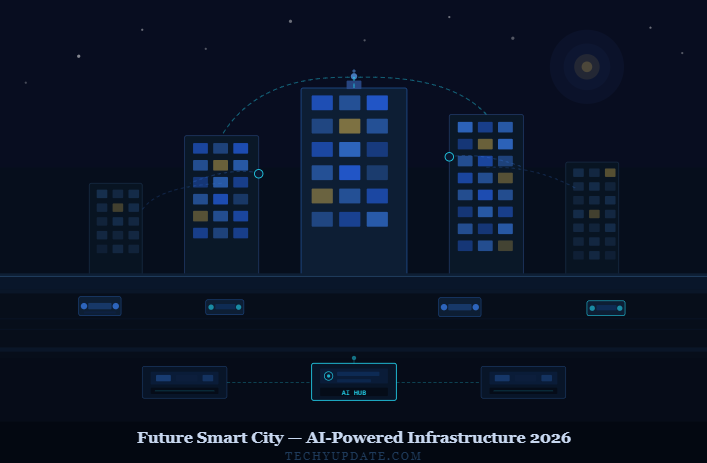
Key Features of AI-Powered Smart Cities
- Smart Traffic Management: AI optimizes traffic flow, reduces congestion, and improves commute times
- Energy Efficiency: Intelligent grids adjust energy usage based on demand, reducing waste
- Public Safety: AI-powered surveillance detects unusual activities and enhances security
- Waste Management: Automated systems improve recycling and waste collection efficiency
- Healthcare Integration: Smart systems support emergency services and telemedicine
- Sustainable Planning: AI helps design eco-friendly infrastructure and reduce carbon emissions
Beyond convenience, AI-powered infrastructure plays a critical role in urban sustainability. Cities can now predict energy demand, manage water resources, and reduce pollution using advanced analytics. This not only benefits the environment but also reduces operational costs for governments.
However, the rise of smart cities also poses challenges, including data privacy concerns, cybersecurity risks, and high implementation costs. Ensuring ethical AI use and secure systems is essential for long-term success.
Key Objectives of the Act
The Future of Artificial Intelligence Innovation Act of 2026 outlines several strategic objectives designed to shape the future of AI.
1. Promote Innovation
The Act encourages research and development by providing funding, resources, and infrastructure for AI projects.
2. Establish Standards
It aims to create consistent guidelines for AI development, ensuring reliability and transparency.
3. Strengthen Collaboration
The legislation promotes partnerships between government agencies, private companies, and academic institutions.
4. Enhance Workforce Skills
It focuses on preparing the workforce for AI-driven changes through training and education programs.
5. Ensure Ethical AI
The Act emphasizes fairness, accountability, and transparency in AI systems.
These objectives highlight the comprehensive nature of the Future of Artificial Intelligence Innovation Act of 2026, making it a cornerstone of modern AI policy.
AI Innovation Lab — Research Under the 2026 Act
The AI Innovation Lab under the 2026 Act represents a cornerstone initiative designed to accelerate artificial intelligence research while ensuring responsible and ethical development. As part of the broader Future of Artificial Intelligence Innovation Act of 2026, these labs serve as collaborative ecosystems where government agencies, private companies, and academic institutions come together to push the boundaries of AI innovation.
In 2026, AI Innovation Labs are not just research centers; they are real-world testing grounds for next-generation technologies. These labs focus on developing scalable AI solutions across industries such as healthcare, cybersecurity, transportation, and climate science. By combining advanced computing resources with high-quality datasets, researchers can experiment, validate, and refine AI models in controlled yet practical environments.
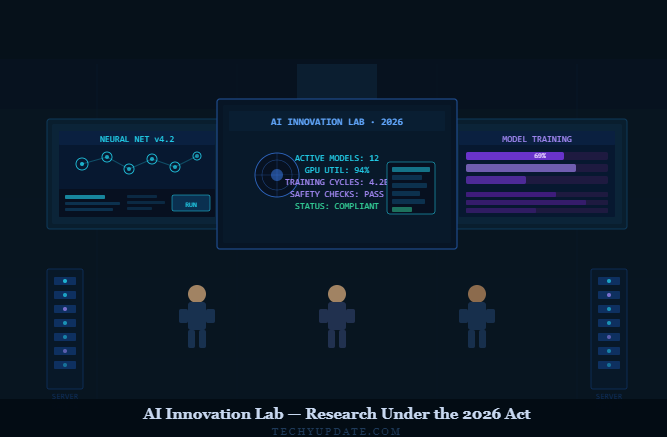
Key Functions of AI Innovation Labs
- Advanced Research & Development: Focus on cutting-edge AI fields like generative AI, robotics, and autonomous systems
- Public-Private Collaboration: Connect startups, tech giants, and universities for joint innovation
- AI Testing & Validation: Provide safe environments to test AI systems before public deployment
- Data Accessibility: Offer structured datasets for training and improving AI models
- Policy Alignment: Ensure AI solutions comply with national standards and ethical guidelines
- Talent Development: Train the next generation of AI professionals through hands-on research
These labs also play a critical role in bridging the gap between theoretical research and practical implementation. Instead of remaining confined to academic papers, innovations are rapidly transformed into deployable solutions that benefit society.
Major Provisions Explained
The Future of Artificial Intelligence Innovation Act of 2026 includes several important provisions that define its implementation.
AI Research Centers
The Act proposes the creation of dedicated AI research centers that focus on innovation and experimentation.
National AI Testbeds
These test environments allow developers to test AI systems in real-world conditions, improving reliability and performance.
Data Accessibility Programs
The legislation promotes access to high-quality datasets, which are essential for training AI models.
Innovation Competitions
Government-backed competitions encourage startups and researchers to develop cutting-edge AI solutions.
Policy Frameworks
The Act introduces guidelines for the ethical use of AI, ensuring accountability and transparency.
Together, these provisions create a robust ecosystem that supports both innovation and regulation.
Current Trends Driving the Act
Several emerging trends have influenced the creation of the Future of Artificial Intelligence Innovation Act of 2026.
AI Automation
Automation is replacing repetitive tasks, increasing efficiency, but also raising concerns about job losses.
Generative AI Growth
Tools capable of generating content, code, and designs are transforming industries.
Data Explosion
The availability of massive datasets is accelerating AI development.
Cybersecurity Threats
AI is being used both for defense and cyberattacks, making regulation essential.
Remote Work and Digital Transformation
AI plays a key role in enabling remote work and digital operations.
These trends underscore the urgency of implementing structured policies, such as the Future of Artificial Intelligence Innovation Act of 2026.
Impact on Tech Industry
The Future of Artificial Intelligence Innovation Act of 2026 is expected to have a significant impact on the tech industry.
Positive Impacts
- Increased funding for AI research
- Clear regulatory guidelines
- Growth in AI startups
- Enhanced global competitiveness
Potential Challenges
- Compliance costs for companies
- Slower deployment due to regulations
- Need for continuous adaptation
Industry Shift
The Act will likely shift the industry towards:
- Responsible AI development
- Quality-focused innovation
- Collaborative ecosystems
Overall, the Future of Artificial Intelligence Innovation Act of 2026 will redefine how technology companies operate.
Step-by-Step Implementation Strategy
The implementation of the Future of Artificial Intelligence Innovation Act of 2026 follows a structured approach.
1: Policy Development
Government agencies develop guidelines and frameworks.
2: Infrastructure Setup
Establishment of research centers and testbeds.
3: Collaboration Initiatives
Partnerships with industry and academia.
4: Funding Allocation
Investment in AI projects and innovation programs.
5: Monitoring and Evaluation
Continuous assessment of AI systems and policies.
This step-by-step strategy ensures effective execution of the Act.
Real-World Use Cases
The Future of Artificial Intelligence Innovation Act of 2026 will impact various industries.
Healthcare
- AI-powered diagnostics
- Personalized treatment plans
Finance
- Fraud detection
- Automated trading systems
Education
- AI tutors
- Personalized learning
Transportation
- Autonomous vehicles
- Traffic management systems
These real-world applications demonstrate the transformative potential of the Act.
Benefits and Advantages
The Future of Artificial Intelligence Innovation Act of 2026 offers numerous benefits.
Key Advantages
- Encourages innovation
- Improves AI reliability
- Enhances global competitiveness
- Promotes ethical practices
Long-Term Impact
- Sustainable AI growth
- Better workforce readiness
- Stronger economy
This makes the Act a critical step toward a balanced AI future.
Challenges and Limitations
Despite its benefits, the Future of Artificial Intelligence Innovation Act of 2026 faces challenges.
Major Challenges
- Risk of overregulation
- High implementation costs
- Political disagreements
Limitations
- Slow policy adaptation
- Complexity in enforcement
Addressing these challenges is essential for the success of the Act.
Pro Tips for Professionals
- Learn AI fundamentals and tools
- Stay updated with policy changes
- Focus on ethical AI practices
- Build interdisciplinary skills
- Engage in continuous learning
Common Mistakes to Avoid
- Ignoring policy developments
- Relying on outdated skills
- Avoiding collaboration
- Underestimating AI impact
Expert Insights
Experts believe the Future of Artificial Intelligence Innovation Act of 2026 is a turning point in AI governance.
They emphasize:
- Need for proactive regulation
- Importance of collaboration
- Role of ethical AI
This reflects a shift towards responsible innovation.
Government & AI Collaboration — Building the Future Together
In 2026, government and AI collaboration has evolved into a strategic partnership that is shaping how nations innovate, regulate, and compete globally. Rather than acting only as regulators, governments are now active participants in AI development, working closely with tech companies, startups, and research institutions to create smarter, safer, and more scalable solutions.
This collaboration is essential because artificial intelligence impacts critical areas such as national security, healthcare, education, and economic growth. By joining forces, governments and private organizations can combine policy direction with technical expertise, ensuring that innovation happens responsibly without slowing progress.
Key Areas of Collaboration
- Policy & Regulation Development: Governments create frameworks while tech companies provide real-world insights
- Public Sector Innovation: AI is used to improve services like traffic control, healthcare systems, and digital governance
- Research Funding: Governments invest in AI labs, universities, and innovation hubs
- Data Sharing Initiatives: Secure data exchange helps improve AI models while maintaining privacy standards
- National Security & Defense: AI supports cybersecurity, threat detection, and intelligence analysis
- Workforce Development: Joint programs focus on training citizens for AI-driven careers
One of the biggest advantages of this collaboration is the ability to scale innovation quickly. Governments provide infrastructure and funding, while private companies bring speed, creativity, and cutting-edge technology. This creates a balanced ecosystem where ideas can move from concept to implementation faster.
Read More: Tech Layoffs 2026 Latest
AI Policy Concept — Balancing Law & Innovation
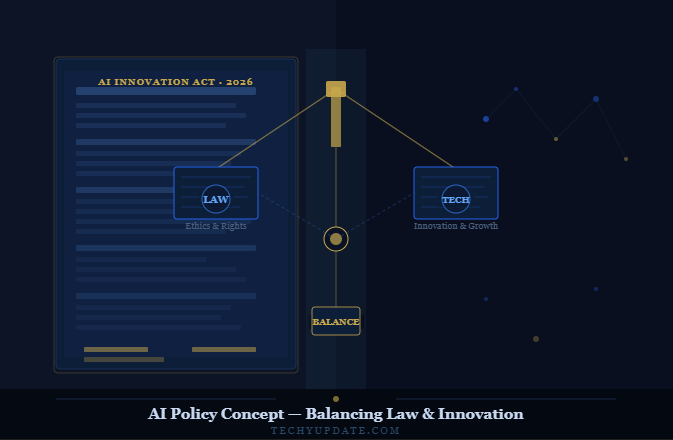
In 2026, the concept of AI policy has become a critical foundation for shaping how artificial intelligence evolves across industries. Governments and global organizations are working to strike a careful balance between encouraging innovation and enforcing regulations that protect individuals, businesses, and society. The challenge lies in ensuring that AI can grow rapidly without creating risks related to privacy, bias, or misuse.
AI policy is no longer about restricting technology; it is about guiding its development responsibly. Modern frameworks aim to support innovation while establishing clear rules for transparency, accountability, and ethical use. This balance is essential because overly strict regulations can slow progress, while a lack of rules can lead to harmful consequences.
Core Elements of Balanced AI Policy
- Innovation Support: Encouraging research, startups, and technological breakthroughs
- Ethical Standards: Ensuring fairness, reducing bias, and promoting responsible AI use
- Data Privacy Protection: Safeguarding user data and maintaining trust
- Transparency Requirements: Making AI systems explainable and understandable
- Accountability Mechanisms: Defining responsibility for AI-driven decisions
- Global Cooperation: Aligning policies across countries for consistent standards
A well-balanced AI policy enables governments to foster growth while minimizing risks. For example, regulatory sandboxes allow companies to test AI solutions in controlled environments without facing immediate legal barriers. This encourages experimentation while maintaining oversight.
However, achieving this balance is complex. Rapid technological advancements often outpace policy development, and differences in global regulations can create inconsistencies. Policymakers must remain flexible and adaptive to keep up with innovation.
Future Trends in AI Policy
The Act is expected to influence future policies.
Emerging Trends
- Global AI cooperation
- Stronger ethical frameworks
- Increased investment in AI
Long-Term Vision
A world where AI is:
- Safe
- Transparent
- Beneficial for all
Quick Summary
- The Act promotes AI innovation and regulation
- Focuses on collaboration and standards
- Impacts industries worldwide
- Encourages ethical AI development
FAQs
1. What is the main goal of the Act?
The main goal is to promote AI innovation while ensuring ethical and responsible use.
2. Who will benefit from the Act?
Tech companies, researchers, and professionals will benefit from funding and resources.
3. Does the Act regulate AI strictly?
It balances innovation with regulation, not strict control.
4. How does it impact jobs?
It creates new opportunities while transforming existing roles.
5. Is the Act global?
It is national but influences global AI policies.
6. Why is it important?
It ensures sustainable and ethical AI growth.
Final Thoughts
The Future of Artificial Intelligence Innovation Act of 2026 represents a bold step toward shaping the future of AI. It is not just about controlling technology but enabling it to grow responsibly.
As AI continues to evolve, policies like this will determine how it impacts our lives, economies, and societies. For anyone involved in technology, staying informed about such developments is no longer optional; it’s essential.
The Future Smart City in 2026 represents a powerful blend of technology and urban planning. As AI continues to evolve, cities will become more connected, responsive, and efficient, ultimately creating a smarter and more sustainable future for everyone.
AI Innovation Lab under the 2026 Act is a powerful driver of technological progress. By fostering collaboration, innovation, and responsible AI practices, these labs are shaping the future of intelligent systems and ensuring that AI development aligns with societal needs.
Government and AI collaboration in 2026 is not just a trend; it’s a necessity. By working together, both sectors can unlock the full potential of AI while ensuring that its benefits are distributed safely and ethically across society.
The AI policy concept in 2026 centers on harmony, with law and innovation coexisting. By creating smart, flexible, and forward-looking policies, societies can unlock the full potential of AI while ensuring it is used safely, ethically, and for the greater good.
The AI policy concept in 2026 centers on harmony, with law and innovation coexisting. By creating smart, flexible, and forward-looking policies, societies can unlock the full potential of AI while ensuring it is used safely, ethically, and for the greater good.