

The latest developments in 2026 tech layoffs are reshaping the global technology landscape faster than ever before. From major Silicon Valley giants to fast-growing startups, layoffs have become a recurring headline, raising concerns among professionals, students, and investors alike. What started as post-pandemic corrections has now evolved into a deeper structural shift driven by automation, AI, and changing business priorities.
In 2026, the wave of layoffs is not just about cost-cutting; it’s about transformation. Companies are restructuring teams, replacing roles with AI tools, and focusing on profitability over aggressive growth. This makes understanding the latest 2026 tech layoffs trends crucial for anyone connected to the tech ecosystem.
Whether you are a developer, marketer, student, or entrepreneur, this guide will help you understand what’s happening, why it matters, and how you can stay ahead in this rapidly changing environment.
Table of Contents
- Introduction to Tech Layoffs 2026
- Current Trends in Tech Layoffs 2026
- Major Companies Affected
- Key Reasons Behind Layoffs
- Impact on Tech Professionals
- Step-by-Step Survival Guide
- Real-World Examples
- Benefits & Industry Reset
- Challenges & Risks
- Pro Tips to Stay Safe
- Common Mistakes to Avoid
- Expert Insights
- Future Trends in Tech Jobs
- Quick Summary
- FAQs
Introduction to Tech Layoffs 2026
The latest tech layoffs in 2026 reflect a major transition in how technology companies operate. Unlike in previous cycles, layoffs today are not limited to economic downturns—they are deeply tied to shifts in innovation.
Companies are prioritizing:
- AI-driven automation
- Lean workforce models
- High-impact roles over large teams
- Sustainable revenue growth
This means traditional job roles are evolving rapidly. For example, roles in manual testing, customer support, and basic coding are increasingly being replaced by AI-powered systems.
At the same time, demand is rising for:
- AI engineers
- Data scientists
- Cybersecurity experts
- Cloud architects
The latest wave of tech layoffs in 2026 is not just about job losses; it’s about redefining the future of work.
Current Trends in Tech Layoffs 2026
The latest tech layoffs trends for 2026 highlight a clear pattern across the industry.
Key Trends:
- AI replacing repetitive roles
- Mass restructuring instead of random layoffs
- Shift from growth to profitability
- Outsourcing to reduce costs
- Hiring freezes in non-core departments
What’s Different in 2026?
Unlike earlier years, layoffs are now strategic rather than reactive. Companies are proactively restructuring teams to align with AI-driven operations.
Emerging Patterns:
- Mid-level roles are most affected
- Entry-level hiring is shrinking
- Freelancing and contract work are rising
The latest 2026 tech layoffs data suggest that adaptability is now more important than experience alone.
Major Companies Affected
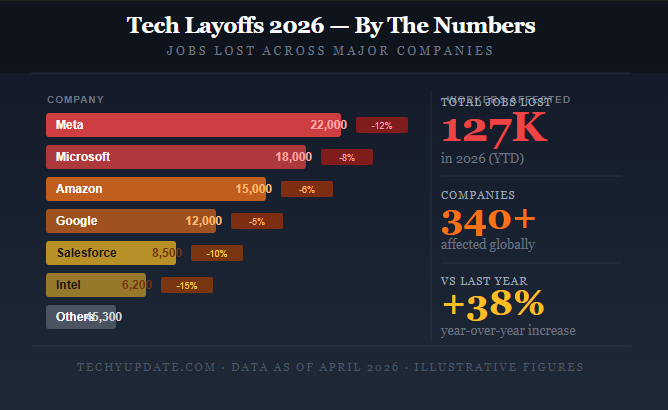
Several global tech giants have been part of the latest wave of tech layoffs.
Notable Companies:
- Google – restructuring AI divisions
- Microsoft – focusing on cloud and AI
- Amazon – reducing logistics tech roles
- Meta – cutting metaverse-related jobs
- Startups – shutting down due to funding issues
What This Means:
- Even top companies are not immune
- Job security in tech is decreasing
- Skill relevance matters more than brand value
The latest reports on 2026 tech layoffs confirm that layoffs are industry-wide, not company-specific.
Key Reasons Behind Layoffs
Understanding the reasons behind the tech layoffs of 2026 is crucial.
Major Causes:
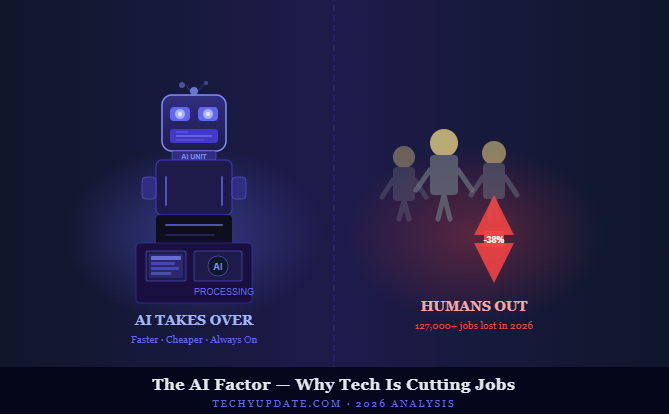
- AI Automation: Replacing human roles
- Economic Pressure: Inflation and global slowdown
- Overhiring in 2020–2023: Correction phase
- Investor Pressure: Demand for profitability
- Changing Business Models
Deep Insight:
AI tools can now perform tasks like:
- Coding assistance
- Customer support
- Data analysis
This reduces the need for large teams.
The latest tech layoffs trend in 2026 is driven more by technological evolution than by an economic crisis.
Impact on Tech Professionals
The latest wave of tech layoffs in 2026 has deeply impacted professionals worldwide.
Key Impacts:
- Job insecurity
- Increased competition
- Pressure to upskill
- Mental health challenges
Who Is Most Affected?
- Junior developers
- Non-technical roles
- Support staff
Who Is Safe?
- AI specialists
- Cybersecurity experts
- Cloud engineers
The latest tech layoffs in 2026 underscore the need for continuous learning to stay relevant.
Read More: Tech Layoffs 2026 Latest | Shocking Trends & Survival Strategies
Step-by-Step Survival Guide
If you’re worried about tech layoffs in 2026, here’s a practical survival plan.
1: Upgrade Skills
Focus on:
- AI & Machine Learning
- Cloud Computing
- Data Analytics
2: Build Personal Brand
- Create a LinkedIn presence
- Share insights
- Build portfolio
3: Diversify Income
- Freelancing
- Side projects
- Consulting
4: Network Smartly
- Attend tech events
- Join communities
5: Stay Updated
Follow the latest news on tech layoffs 2026 regularly.

Real-World Examples
Example 1:
A software tester who transitioned into a QA automation engineer.
Example 2:
A content writer shifted to an AI content strategist role.
Example 3:
Startup employees are pivoting to freelance consulting.
These examples show how professionals adapted to the latest tech layoffs challenges.
Benefits & Industry Reset
While negative, the latest wave of tech layoffs in 2026 has some benefits.
Positive Outcomes:
- Leaner companies
- Higher productivity
- Innovation boost
- Better resource allocation
Industry Reset:
- Focus on quality over quantity
- Smarter hiring practices
The tech layoffs of 2026, the latest phase, are also a reset for the tech ecosystem.
Challenges & Risks
Major Risks:
- Long-term unemployment
- Skill mismatch
- Increased automation
Hidden Challenges:
- Burnout among remaining employees
- Reduced job satisfaction
The tech layoffs 2026 latest environment is highly competitive and uncertain.
Pro Tips to Stay Safe
- Learn AI tools before they replace your role
- Focus on problem-solving skills
- Stay adaptable and flexible
- Build multiple income streams
- Keep updating your resume
Common Mistakes to Avoid
- Ignoring skill upgrades
- Relying on one job only
- Avoiding networking
- Not tracking industry trends
- Overconfidence in job security
Avoiding these mistakes can help you survive the tech layoffs of 2026 latest challenges.
Expert Insights
Industry experts believe that:
- AI will eliminate 30% of current roles
- New job categories will emerge
- Continuous learning is mandatory
Experts emphasize adaptability as the key to surviving tech layoffs in 2026.
Future Trends in Tech Jobs
What’s Coming Next?
- AI-first companies
- Remote-first workforce
- Gig economy growth
- Hybrid skill roles
High-Demand Skills:
- AI engineering
- Cybersecurity
- Blockchain
The tech layoffs 2026 latest trend signals a shift, not an end.
Quick Summary
- Tech layoffs are rising in 2026
- AI is the biggest driver
- Skill upgrades are essential
- Job roles are evolving
- Adaptability is the future
FAQs
1. Why are tech layoffs happening in 2026?
Tech layoffs in 2026 are mainly driven by AI automation, economic pressure, and companies shifting toward profitability rather than rapid growth.
2. Which jobs are most affected?
Entry-level, support, and repetitive roles are most impacted, while AI, cybersecurity, and cloud roles remain in demand.
3. Are tech layoffs temporary?
Some layoffs are cyclical, but many are structural due to automation and changing business strategies.
4. How can I avoid layoffs?
Upskilling, networking, and staying up to date with industry trends can significantly reduce your risk.
5. Is AI replacing tech jobs?
AI is replacing repetitive tasks but also creating new job opportunities in advanced tech fields.
6. What industries are safe?
Cybersecurity, AI development, and cloud computing are currently the safest tech sectors.
Final Thoughts
The latest wave of tech layoffs in 2026 is not just a crisis—it’s a transformation. While job losses are real, opportunities are also expanding for those willing to adapt.
The future belongs to those who:
- Learn continuously
- Embrace AI
- Stay flexible