

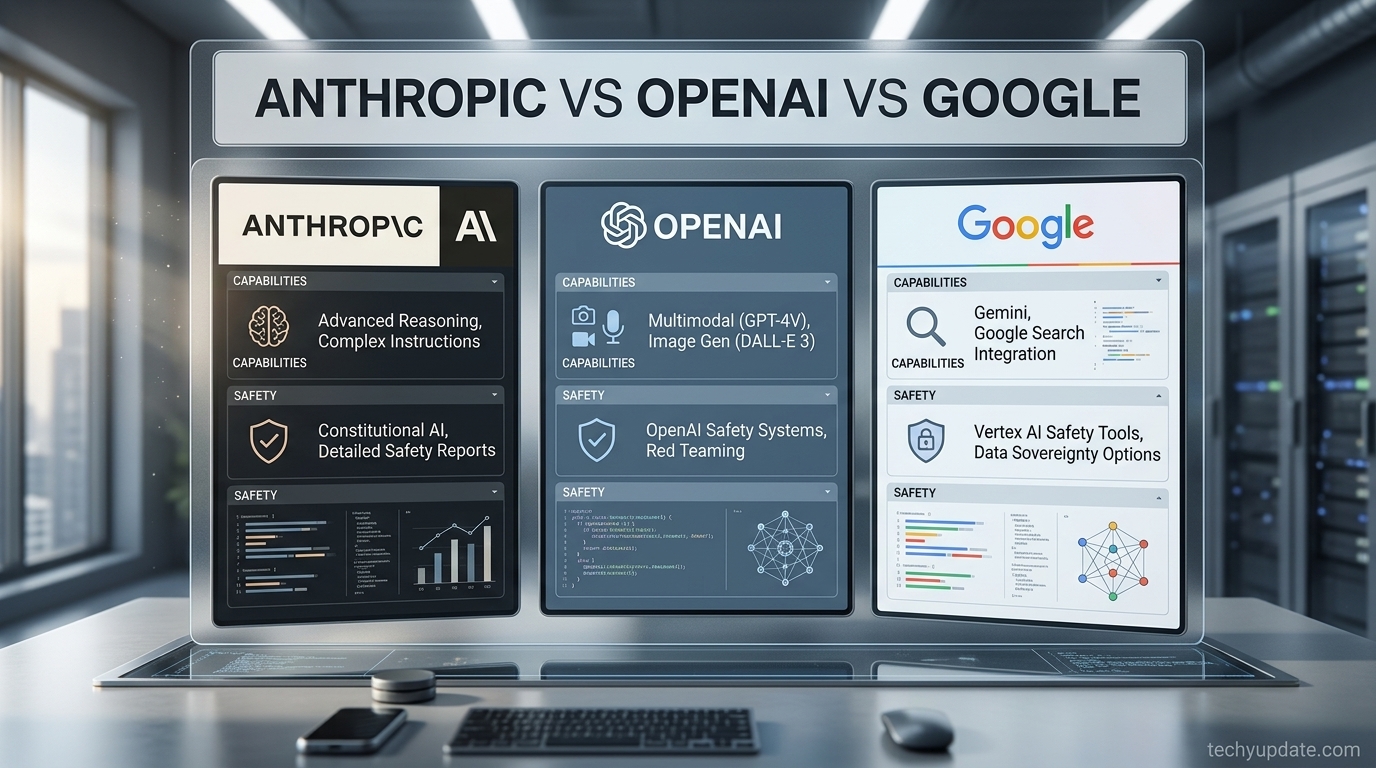
Choosing between Anthropic, OpenAI, and Google increasingly comes down to more than raw model benchmarks—trust, safety posture, and compliance documentation matter just as much to enterprise buyers. This section compares all three directly on those grounds, using Anthropic’s public Trust Center as the primary source for its claims.
We pulled Anthropic’s certification and security details from trust.anthropic.com and cross-checked competitor claims against each company’s own published trust and security documentation rather than secondhand summaries.
If you already know you want Claude and just need pricing or feature depth, the sections above cover that — this section is specifically for readers deciding between the three major frontier labs.
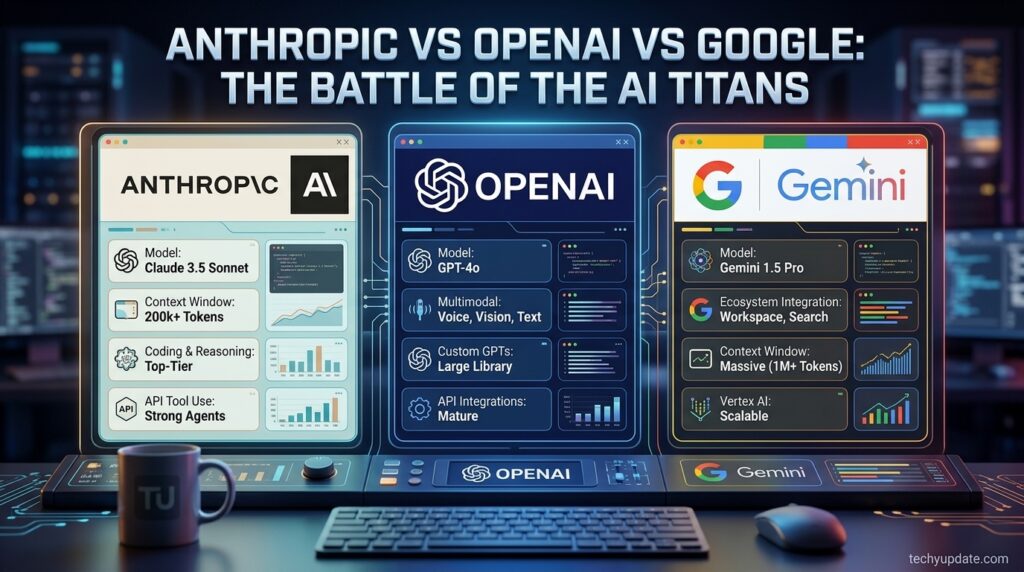
Quick Comparison Table
| Anthropic Claude | OpenAI ChatGPT | Google Gemini | |
|---|---|---|---|
| Flagship models | Opus 5, Sonnet 5, Fable 5 | GPT-5.5 series | Gemini 3 series |
| Starting price | $17-20/mo | $20/mo | Bundled w/ Google One |
| Agentic coding tool | Claude Code | Codex | Gemini CLI / Jules |
| Public Trust Center | Yes (trust.anthropic.com) | Yes | Yes (Google Cloud Trust Center) |
| 2026 regulatory event | Fable/Mythos export-control suspension | None publicly reported | None publicly reported |
Feature-by-Feature Breakdown
All three labs offer a consumer chat app, a developer API, and an agentic coding tool — Claude Code, OpenAI Codex, and Google’s Gemini CLI/Jules, respectively — making feature parity closer than pricing pages suggest at first glance. Anthropic differentiates most clearly through Claude Code’s sub-agents and Agent Teams for parallelized large-scale work, while Google leans on tight Workspace integration and OpenAI leans on ecosystem breadth across ChatGPT’s consumer install base.
Pricing Comparison
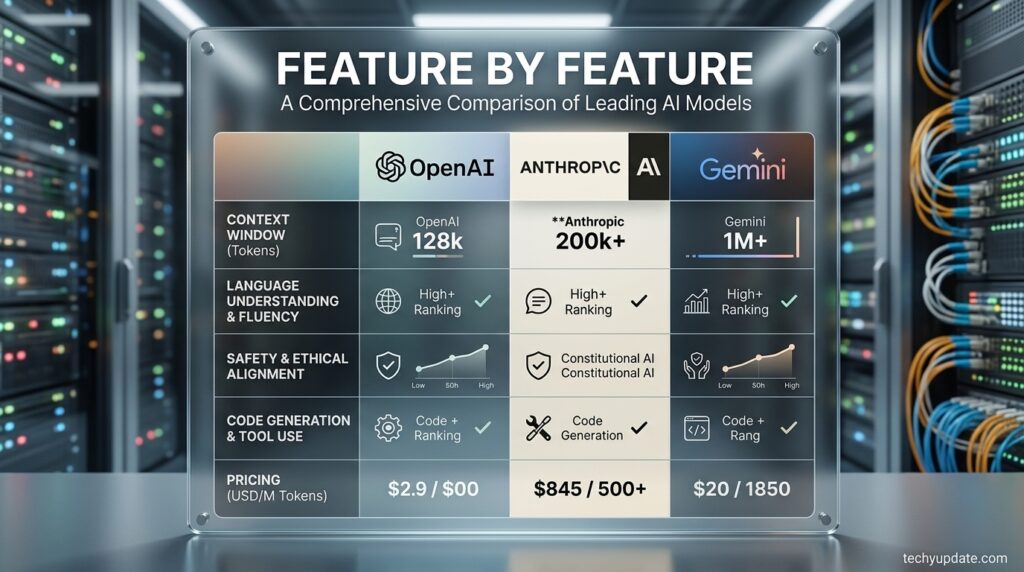
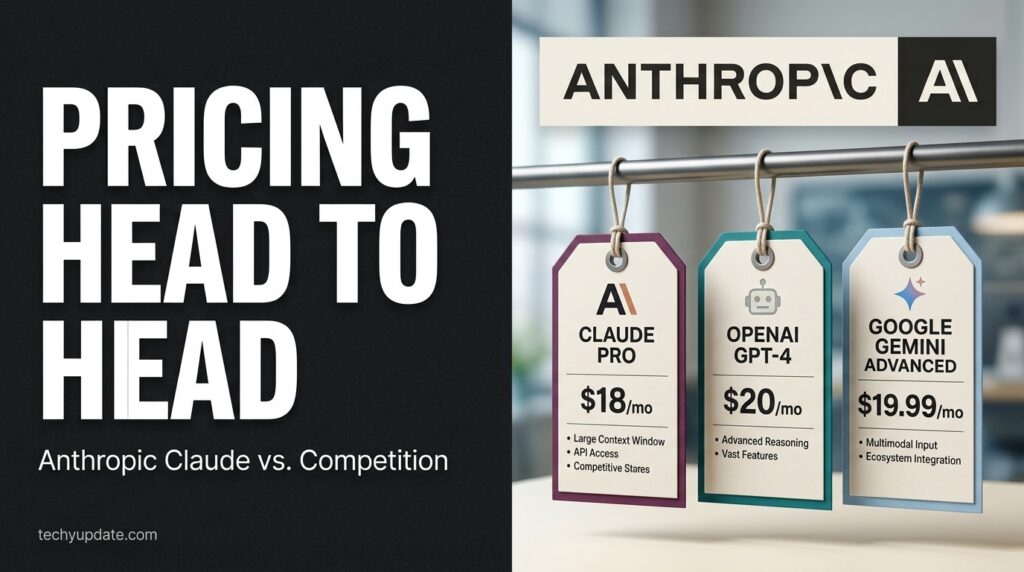
Entry-level pricing across all three is close — Claude Pro at $17-20/month, ChatGPT Plus at $20/month, and Gemini Advanced bundled into Google One AI Premium — so pricing alone rarely decides the choice at the consumer tier. The real divergence shows up at the API level, where per-token rates and context-window limits vary enough to matter for high-volume developer use.
Performance Comparison
Independent developer sentiment through 2026 generally credits Claude Sonnet and Opus with strong coding and long-context performance, GPT-5.5 with broad general-purpose strength and ecosystem polish, and Gemini 3 with particularly strong multimodal and Workspace-integrated tasks. None of the three is a universal winner — the right pick depends heavily on the specific workload being tested.
Ease of Use
ChatGPT generally has the gentlest learning curve for casual users, given its massive install base and familiar interface, while Claude Code and Gemini’s CLI tools both require more technical skill in exchange for deeper agentic capabilities. Non-technical teams may find Gemini’s native Workspace integration the easiest on-ramp of the three.
Best-For Split
Anthropic Claude best fits developers and teams wanting agentic, safety-conscious AI with strong coding performance. OpenAI ChatGPT best fits general consumers and teams wanting the broadest ecosystem and plugin support. Google Gemini best fits organizations already deep in Google Workspace who want native integration over standalone power.
Persona Verdicts
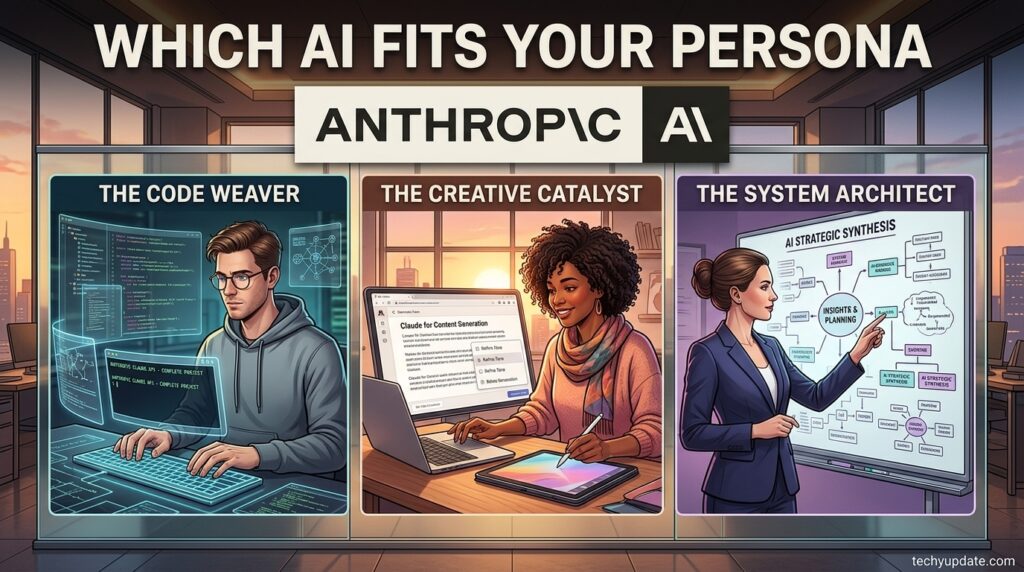
A solo indie developer building a SaaS product will likely get the most leverage from Claude Code. A marketing team drafting everyday content across a large organization will likely find ChatGPT the path of least resistance. An enterprise already paying for Google Workspace will likely default to Gemini for convenience alone.
Security & Privacy Comparison
Anthropic publishes a dedicated Trust Center at trust.anthropic.com listing SOC 2 Type II, ISO 27001, ISO 42001, and HIPAA-ready compliance documentation, along with a public sub-processor list and a GDPR data processing addendum template.
Both OpenAI and Google publish comparable enterprise trust and compliance documentation through their own platforms, though the specific certification lists and audit scopes differ, so buyers with strict compliance requirements should compare each company’s current published documentation directly rather than assuming parity.
The clearest recent trust-relevant event across the three is Anthropic’s June 2026 Fable/Mythos suspension — the government cited an unspecified national security concern tied to a reported jailbreak, Anthropic disputed the finding’s severity while complying immediately, and access was restored on July 1, 2026. Neither OpenAI nor Google faced a comparable public regulatory suspension in the same period, though all three labs operate under the same general U.S. export-control framework and could face similar action in the future.
Customer Support Comparison
All three companies primarily support consumer and Pro-tier users through self-serve documentation and help centers rather than live chat, reserving dedicated account support for Team and Enterprise customers. Enterprise buyers across all three get assigned sales and customer-success contacts, making support quality roughly comparable at that tier regardless of which lab is chosen.
Pros & Cons of Each Tool
| Tool | Pros | Cons |
|---|---|---|
| Anthropic Claude | Strong coding, public Trust Center, transparent incident comms | Newest models saw a real suspension event |
| OpenAI ChatGPT | Largest ecosystem, broad plugin support | Less specialized agentic coding depth |
| Google Gemini | Deep Workspace integration, strong multimodal | Less standalone appeal outside Google ecosystem |
Read more: Anthropic Claude
Read more: Anthropic Pricing
Read more: OpenAI Review: Features, Pricing, Plans
Read more: Google Gemini AI Review 2026
FAQ
Is Anthropic safer than OpenAI or Google?
All three publish trust and compliance documentation, and each has a different safety philosophy; “safer” depends on which specific certifications or practices matter most to your use case.
Why were Claude Fable and Mythos suspended?
The U.S. government issued an export-control directive in June 2026 over a disputed jailbreak finding; Anthropic complied immediately, and access was restored weeks later.
Does Google Gemini have a Trust Center like Anthropic’s?
Yes — Google publishes its own compliance and security documentation through Google Cloud’s trust resources, covering similar certification categories.
Which is better for coding, Claude or ChatGPT?
Claude Code is generally considered stronger for deep, multi-file agentic coding work, while ChatGPT’s Codex is a capable alternative with a larger general ecosystem behind it.
Conclusion
On trust, safety, and raw capability, Anthropic, OpenAI, and Google are closer to parity than any single marketing page suggests — all three publish real compliance documentation and compete hard on both pricing and model performance. Anthropic’s clearest differentiator is its public handling of the 2026 Fable/Mythos suspension, disclosing the issue rather than staying silent, alongside genuinely strong agentic coding performance through Claude Code.
The right choice ultimately comes down to workload: developers wanting deep agentic coding lean toward Claude, general consumers wanting ecosystem breadth lean toward ChatGPT, and Google Workspace-heavy organizations lean toward Gemini. None of the three is a wrong choice on trust grounds alone.